Generating consistent leads is one of the biggest challenges for many local businesses. Having a website is important, but simply having a website does not guarantee that potential customers will find or contact the business.
This is where PPC Services in Springfield, VA can play an important role.
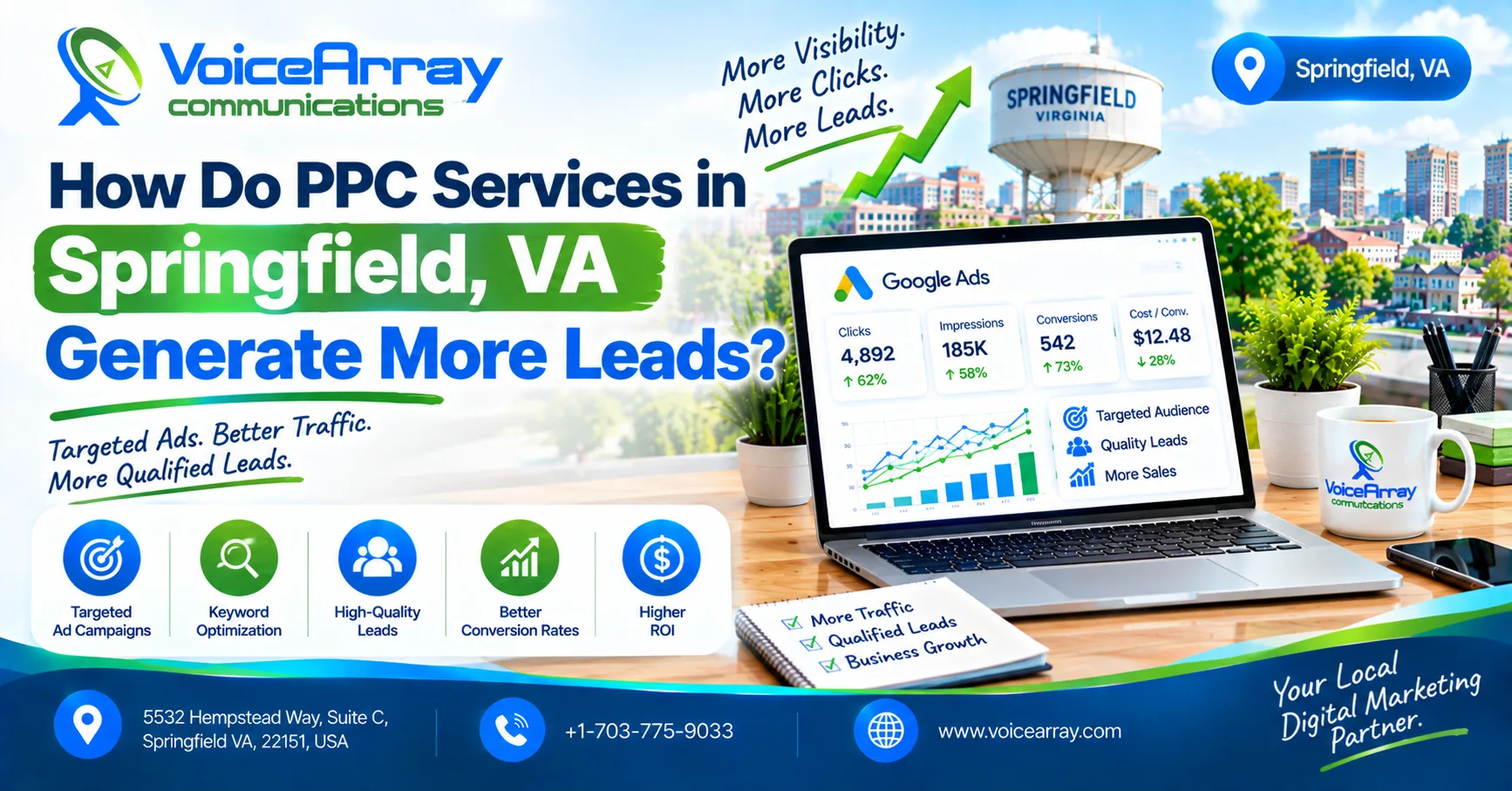
Pay-per-click advertising allows businesses to target specific search queries and audiences through paid advertising platforms. When campaigns are properly structured, they can connect businesses with people who are actively looking for relevant products or services.
But how exactly do PPC campaigns generate leads?
The process involves much more than placing an advertisement on a search engine. Effective PPC lead generation combines keyword research, audience targeting, compelling advertisements, landing pages, conversion tracking, and continuous optimization.
What Is PPC Lead Generation?
PPC lead generation is the process of using paid advertising to encourage potential customers to take a valuable action.
A lead-generating PPC campaign may encourage someone to:
- Submit a contact form
- Request a quote
- Call a business
- Schedule an appointment
- Book a consultation
- Sign up for a service
- Request more information
The objective is to move a potential customer from a search or advertisement toward a measurable business action.
How Do PPC Services Generate More Leads?
1. By Targeting High-Intent Keywords
Keyword research is one of the foundations of PPC.
Instead of targeting every possible search term, businesses can focus on queries that demonstrate commercial or transactional intent.
For example, a local service business may target searches involving:
- “near me”
- “in Springfield VA”
- “service provider”
- “company”
- “agency”
- “quote”
- “pricing”
- “hire”
- “services”
These searches can indicate that the person is actively researching providers or solutions.
2. By Using Local Geographic Targeting
For a Springfield business, advertising nationally may waste part of the budget on people who cannot become customers.
Local PPC campaigns can focus on relevant geographic markets.
Depending on the business, targeting may include Springfield and surrounding Northern Virginia communities.
Geographic targeting can help align advertising exposure with the company's actual service area.
3. By Creating Relevant Ad Copy
An advertisement needs to communicate why a searcher should take the next step.
Effective ad messaging generally connects the searcher's intent with a relevant business solution.
For example, an ad may communicate:
- Service availability
- Local service area
- Key business benefit
- Relevant solution
- Call to action
The messaging should accurately represent what the landing page offers.
Why Are Landing Pages Important for PPC Leads?
A PPC advertisement is only the beginning of the customer journey.
After clicking the advertisement, the visitor reaches a landing page.
If the landing page is confusing, slow, irrelevant, or difficult to navigate, the visitor may leave without becoming a lead.
A PPC landing page should generally provide:
- Clear headline
- Relevant service information
- Strong value proposition
- Visible contact option
- Simple form
- Trust signals
- Mobile-friendly design
- Clear call to action
The page should also match the search intent and advertisement that brought the visitor there.
How Does Conversion Tracking Improve Lead Generation?
PPC platforms can generate large amounts of performance data.
But businesses need to know which actions actually matter.
Conversion tracking can help identify actions such as:
- Phone calls
- Form submissions
- Purchases
- Appointment bookings
- Quote requests
- Downloads
- Other defined business goals
Once meaningful conversions are tracked, campaign decisions can be based on actual outcomes rather than clicks alone.
Can PPC Generate Better-Quality Leads?
PPC does not automatically guarantee high-quality leads.
Lead quality depends on targeting, keyword selection, ad messaging, landing page experience, offer, and qualification process.
For example, a campaign may generate many clicks but relatively few qualified inquiries if the keywords are too broad.
A more focused campaign may produce fewer clicks but a greater percentage of relevant prospects.
This is why PPC management should consider lead quality and business value, not just traffic volume.
What Role Does Negative Keyword Management Play?
Negative keywords can help prevent advertisements from appearing for searches that are unlikely to be relevant.
For example, a company offering professional services may not want its advertisements triggered by searches related to:
- Free services
- Jobs
- Training
- Tutorials
- DIY solutions
- Unrelated products
The exact negative keyword strategy depends on the business and campaign data.
Regular search-term analysis can reveal opportunities to refine targeting.
How Can Remarketing Support Lead Generation?
Not every visitor becomes a lead during their first website visit.
Remarketing can help businesses reconnect with eligible previous visitors through supported advertising channels.
This can be useful when customers need additional time to:
- Compare providers
- Research pricing
- Review services
- Discuss the purchase internally
- Return later to complete an inquiry
Remarketing should be implemented according to advertising platform policies and applicable privacy requirements.
How Does PPC Budget Optimization Affect Leads?
A PPC budget should be allocated toward campaigns, keywords, audiences, and locations that support business objectives.
Optimization may involve evaluating:
- Cost per click
- Conversion rate
- Cost per lead
- Search terms
- Geographic performance
- Device performance
- Ad performance
- Landing page performance
This information can help identify where budget is producing useful outcomes and where adjustments may be appropriate.
PPC for Different Springfield Businesses
Different businesses can use PPC in different ways.
Professional Services
Law firms, consultants, accountants, and other professional businesses may use PPC to generate consultation or quote requests.
Home Services
Contractors, HVAC companies, electricians, plumbers, and other service providers can target customers actively searching for immediate assistance.
Technology Companies
IT companies and technology providers can target searches related to specific technical services and business solutions.
eCommerce Businesses
Online retailers can use paid search and shopping-focused campaigns to promote products to relevant audiences.
Local Restaurants and Hospitality
Businesses in hospitality and food service can use paid advertising to promote services, locations, offers, or reservations where appropriate.
How Should Businesses Measure PPC Lead Generation?
Businesses should establish measurable KPIs before launching a campaign.
Useful metrics may include:
MetricWhat It Helps MeasureImpressionsAdvertising visibilityClicksTraffic generatedCTRAd engagementConversion RatePercentage of visitors taking an actionCost Per LeadAdvertising cost associated with leadsQualified LeadsRelevance of generated inquiriesCustomer Acquisition CostOverall cost of acquiring customersThe most important metric depends on the business model and campaign objective.
Common PPC Lead Generation Mistakes
Using Broad Keywords Without Proper Control
Broad targeting can attract searches that are not relevant to the business.
Ignoring Mobile Users
Local searchers frequently use mobile devices, so landing pages and conversion paths should work smoothly on smaller screens.
Failing to Test Ads
Different messaging can produce different results. Testing can help identify which approaches better align with customer intent.
Sending All Traffic to One Page
Different services and keywords may require different landing pages.
Measuring Only Clicks
A click is not necessarily a lead.
Businesses should connect PPC reporting to meaningful conversion actions.
How Can Voice Array Support a Broader Digital Strategy?
PPC works best when it is connected to the rest of a business's digital presence.
Voice Array provides digital marketing, SEO, web development, and related business technology solutions. This allows businesses to consider paid advertising alongside website performance, search visibility, content, and conversion optimization.
For a Springfield business, PPC campaigns can be developed around its specific services, geographic market, customer journey, and lead-generation objectives.
FAQs
How do PPC Services in Springfield, VA generate leads?
They can generate leads by targeting relevant search queries, creating focused advertisements, directing users to optimized landing pages, and tracking valuable conversion actions.
Can PPC generate local leads?
Yes. Geographic targeting allows businesses to focus campaigns on relevant locations and service areas.
Does PPC guarantee leads?
No. PPC provides an opportunity to reach relevant audiences, but lead volume and quality depend on targeting, competition, advertising, landing pages, offer, and conversion processes.
What is a good PPC conversion?
It depends on the business. A conversion might be a phone call, quote request, appointment, purchase, consultation, or another action that represents meaningful customer intent.
How can a business improve PPC lead quality?
Businesses can refine keywords, use negative keywords, improve ad relevance, create dedicated landing pages, qualify leads, and analyze conversion data.
Should Springfield businesses use PPC and SEO together?
They can. PPC can provide paid search visibility while SEO works toward organic visibility. Using both can help businesses address different stages of the search journey.
Final Thoughts
PPC Services in Springfield, VA can generate leads by connecting local businesses with people actively searching for relevant products and services.
However, successful PPC lead generation requires more than launching advertisements. Keyword strategy, geographic targeting, ad relevance, landing pages, conversion tracking, negative keywords, and continuous optimization all contribute to campaign performance.
For local businesses, the goal should be to attract relevant and qualified prospects, not simply maximize the number of clicks.