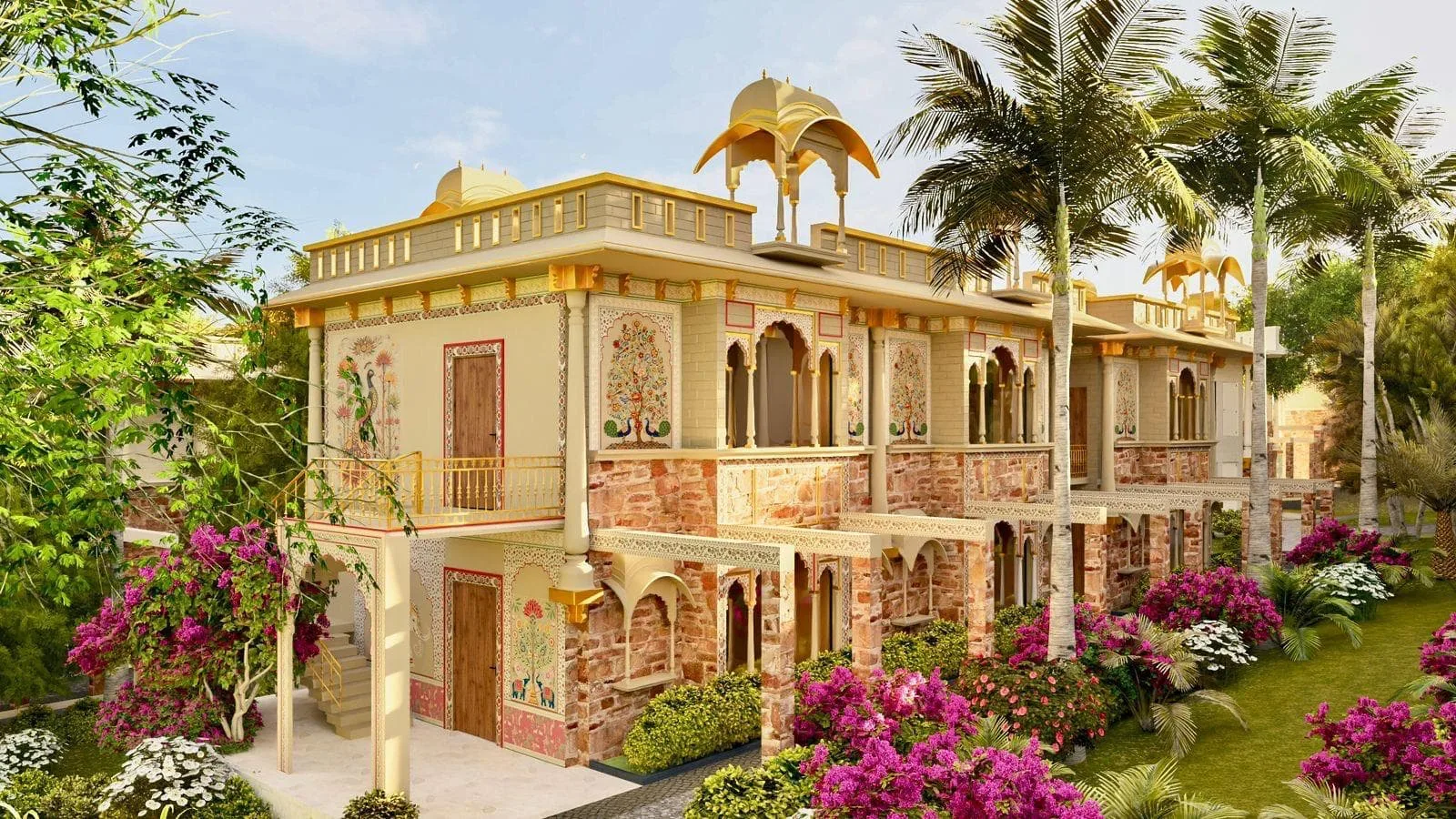
Location is central to real estate, but a resort villa project cannot be understood through location alone. A well-connected site may create potential, yet the eventual guest experience also depends on design, hospitality management, service quality and the practical appeal of the destination.
Similarly, professional resort management cannot compensate indefinitely for unsuitable access or weak demand.
Buyers must therefore study location and hospitality as two connected parts of the same project. This is particularly relevant when examining development along the Jaipur–Delhi Highway property corridor.
Why is resort location evaluated differently from residential location?
A residential buyer often prioritises daily requirements such as schools, workplaces, healthcare and local shopping.
A resort property serves a different purpose. Its location may be evaluated through:
- Access from the principal city
- Road connectivity
- Travel time for potential guests
- Tourism movement
- Weekend demand
- Natural or visual surroundings
- Nearby attractions
- Privacy and distance from congestion
- Availability of utilities
- Suitability for events and leisure stays
The right location depends on the guest market and operating concept of the project.
Does being near a highway guarantee investment growth?
No. Highway proximity can improve access, but it does not guarantee appreciation, occupancy or rental performance.
Buyers should ask:
- How far is the property from the highway in practical driving time?
- What is the condition of the connecting road?
- Is the entry easy to locate and access?
- Are official infrastructure improvements planned?
- What hospitality demand already exists nearby?
- Who is the expected guest?
- Is the location suited to leisure stays, weddings, events or weekend travel?
- Are there environmental or development restrictions?
A location should be analysed through present facts and officially supported developments, not speculative claims alone.
Why does practical travel time matter more than distance?
Two projects may both be described as being the same distance from Jaipur, but the guest experience can differ significantly.
Travel time may be affected by:
- Traffic
- Road quality
- Entry and exit points
- Congestion
- Construction
- Toll routes
- Last-mile connectivity
- Seasonal conditions
Buyers should personally travel to the site at realistic times rather than depending entirely on a map estimate.
What does hospitality management add to real estate?
Hospitality management converts physical infrastructure into a functioning guest experience.
The operator may be responsible for areas such as:
- Reservations
- Guest arrival and departure
- Housekeeping
- Food and beverage
- Maintenance coordination
- Common-area operations
- Staff training
- Service standards
- Events
- Marketing and distribution
A resort villa may be visually attractive, but sustained hospitality requires organised daily operations.
This distinction is important when evaluating a professionally managed resort villa concept.
Why should the target guest be clearly defined?
A project cannot serve every type of traveller equally well.
Its main guest groups might include:
- Couples
- Families
- Weekend travellers
- Wedding guests
- Corporate groups
- Long-stay visitors
- Event attendees
- International tourists
Each group has different expectations involving accommodation, dining, privacy, activities, service and access.
If the target guest is unclear, the project may include disconnected facilities without a coherent hospitality identity.
How do location and guest profile interact?
The location should make practical sense for the intended guest.
For example, a weekend-oriented project should consider how easily guests can arrive and return. A wedding-focused resort must assess guest transportation, vendor access and event logistics. A leisure property should offer reasons for people to spend time at the resort rather than treating it merely as overnight accommodation.
Buyers should ask what genuine demand the location is expected to serve and which evidence supports that assumption.
Why are amenities not enough?
A long amenities list can create a strong first impression, but operational details determine whether those amenities remain useful.
Buyers should verify:
- Which amenities are approved
- Whether they form part of the registered plan
- Construction timelines
- Access conditions
- Maintenance responsibility
- Usage charges
- Whether all owners and guests can use them
- Rules during private events
- What happens if an amenity is delayed
An amenity has value only when it is completed, maintained and managed effectively.
What should buyers know about management fees?
A managed resort requires ongoing expenditure. Staffing, utilities, housekeeping, landscaping, repairs and marketing involve costs.
Before purchasing, buyers should understand:
- Fixed management charges
- Percentage-based charges
- Common-area maintenance
- Reserve funds
- Furniture and equipment replacement
- Utility allocation
- Marketing expenses
- Insurance
- Taxes
- Charges deducted before income distribution
The agreement should explain who can revise these fees and how owners will be informed.
Can rental income be predicted from location alone?
No. Rental performance may be influenced by numerous factors, including:
- Seasonality
- Room rates
- Occupancy
- Competition
- Marketing
- Guest reviews
- Service quality
- Economic conditions
- Events
- Management costs
- Maintenance periods
- Regulatory changes
A good location may support demand, but it cannot guarantee a specific financial outcome.
Buyers should request the documented calculation behind any income representation and distinguish projections from contractual commitments.
Why does the operating agreement matter?
The operating agreement may control how the villa participates in the hospitality system.
It should explain:
- Whether participation is mandatory
- How bookings are allocated
- How revenue is calculated
- Which costs are deducted
- When statements are issued
- When owners receive payments
- Personal-use rights
- Furnishing requirements
- Damage and repair responsibility
- Duration and termination
- Dispute resolution
The buyer should understand this agreement before purchase rather than treating it as a later operational formality.
What role does the developer play after possession?
Buyers should clarify whether the developer will continue managing the resort, appoint another operator or transfer certain responsibilities to an association or management company.
Important questions include:
- Who maintains common areas?
- Who appoints hospitality staff?
- Who owns and operates shared facilities?
- Who manages guest bookings?
- Who handles repairs?
- Can the operator be replaced?
- What voting rights do owners have?
- What happens if operations are interrupted?
A project’s long-term experience depends upon this structure.
How should buyers assess future infrastructure claims?
Only officially supported infrastructure should be treated as confirmed.
Buyers should request the original government notification, approved plan or responsible authority’s publication. News reports, agent statements and proposed maps may help identify possibilities but should not be treated as guarantees.
Even officially announced projects can experience changes or delays, so investment decisions should remain viable without depending completely on one future development.
Why is the homepage useful but not sufficient?
The official project website can introduce the concept, location, proposed units and contact information. A buyer examining a hospitality-focused property near Jaipur should use it as a starting point.
However, a website is not a replacement for:
- RERA verification
- Legal review
- Site inspection
- Agreement analysis
- Independent financial advice
- Written clarification of promises
Marketing information and legal documentation perform different roles.
What should a site visit investigate?
During a physical inspection, assess:
- Actual approach and travel time
- Surrounding land use
- Site boundaries
- Construction progress
- Location of the selected unit
- Orientation and nearby structures
- Proposed amenity areas
- Access for guests and services
- Utility arrangements
- Consistency with approved plans
Photographs and notes can help buyers compare the visit with the documents later.
What is a balanced evaluation method?
A project can be examined through four connected questions:
Location
Can the intended guest reach it conveniently?
Product
Does the proposed villa and resort environment suit that guest?
Operation
Can the management structure deliver a consistent hospitality experience?
Documentation
Are the ownership rights, obligations, costs and representations clearly recorded?
Weakness in any one area can influence the complete project.
Final Thoughts
Location and hospitality management should never be evaluated separately in a resort villa project.
Location creates access and context. Design creates the physical product. Management transforms that product into an operating guest experience, while legal documents define what the buyer owns and how the arrangement functions.
A responsible buyer examines all four dimensions before making a commitment. The objective is not to be persuaded by one strong feature, but to determine whether location, product, operation and documentation work together as a coherent system.