
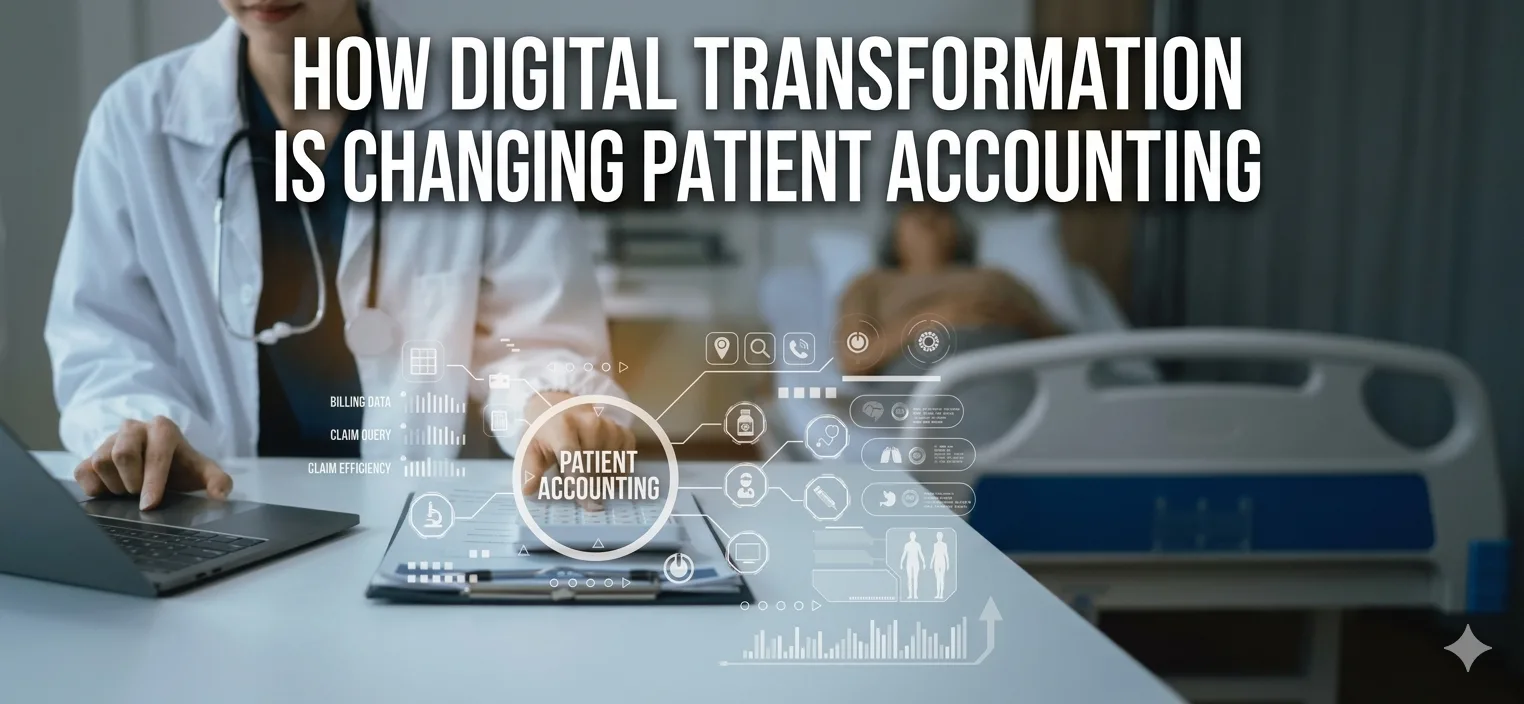
Healthcare organizations are under increasing pressure to improve financial performance while delivering a better patient experience. As a result, digital transformation has become a key focus across the healthcare industry, particularly within patient accounting operations. Modern technologies are helping providers simplify financial workflows, reduce administrative burdens, and improve revenue cycle outcomes.
The Shift from Traditional to Digital Patient Accounting
Traditionally, patient accounting relied heavily on manual processes, paper-based records, and disconnected systems. These challenges often led to billing errors, delayed reimbursements, and inefficient account management. Today, healthcare providers are adopting advanced patient accounting software solutions that automate routine tasks and provide greater visibility into financial operations.
Automation Is Improving Operational Efficiency
One of the most significant benefits of digital transformation is automation. Modern patient accounting platforms can automate charge capture, billing, payment posting, and account reconciliation. By reducing manual intervention, healthcare organizations can minimize errors and accelerate payment cycles. Staff members can also spend more time addressing complex financial issues instead of handling repetitive administrative tasks.
Better System Integration Supports Accurate Billing
Another major advancement is the integration of patient accounting software with electronic health records (EHRs) and other healthcare systems. Integrated platforms create a seamless flow of information between clinical and financial departments. This improves data accuracy, supports compliance efforts, and reduces the likelihood of claim rejections caused by incomplete or inaccurate patient information.
Enhancing the Patient Financial Experience
Digital transformation is also improving the patient financial experience. Today's healthcare consumers expect the same level of convenience they receive from other industries. Modern accounting systems provide online payment portals, digital billing statements, payment plans, and real-time account access. These features make it easier for patients to understand their financial responsibilities and manage healthcare payments efficiently.
Using Data Analytics to Drive Better Decisions
Data analytics has become another powerful tool within patient accounting. Advanced reporting capabilities allow healthcare organizations to monitor key performance indicators, identify revenue leakage, and evaluate collection performance. Financial leaders can use these insights to make informed decisions that support long-term organizational growth and stability.
The Growing Role of Artificial Intelligence
Artificial intelligence and predictive analytics are beginning to play an increasingly important role as well. These technologies can identify billing patterns, flag potential claim issues, and prioritize accounts that require immediate attention. As a result, providers can improve collections, reduce denials, and strengthen overall revenue cycle performance.
Strengthening Security and Compliance
Security and compliance remain critical priorities during digital transformation initiatives. Modern patient accounting solutions include advanced security features designed to protect sensitive patient and financial data. Automated compliance monitoring also helps organizations stay aligned with evolving regulatory requirements while reducing operational risk.
Finding Healthcare Patient Accounting Technology Partners.
Healthcare organizations evaluating patient accounting technology often need to compare providers based on capabilities, integration requirements, workflow support, scalability, and healthcare experience. A structured vendor directory can make this research easier by helping teams identify providers that fit their specific requirements.
Revenue Cycle Resources (RCR|HUB) provides a healthcare-focused directory where organizations can find revenue cycle technology companies and service providers across different categories. This can be useful when building an initial list of potential partners for patient accounting, patient payment technology, billing, accounts receivable, and related revenue cycle functions.
When comparing potential providers, organizations should evaluate technology capabilities, integrations, security requirements, implementation approach, scalability, and fit with their existing workflows.
Conclusion
Digital transformation is reshaping patient accounting by introducing automation, data-driven insights, improved patient engagement, and stronger financial controls. Healthcare organizations that embrace modern technologies will be better equipped to optimize operations, improve reimbursement outcomes, and meet the evolving expectations of patients and payers alike.