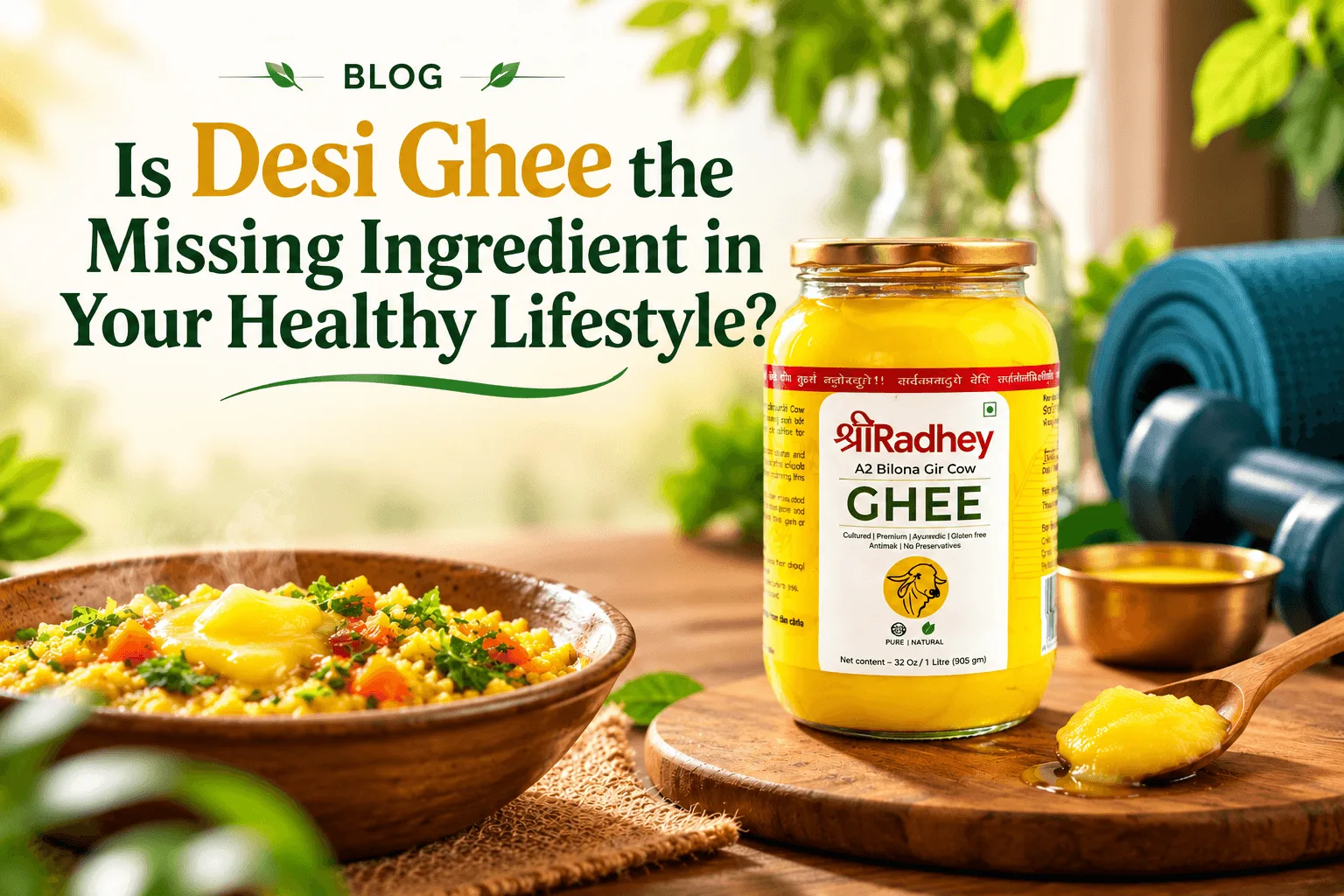
Desi ghee has been a familiar part of Indian kitchens for generations, traditionally used in everything from dal and roti to rice and sweets. While modern diets often focus on reducing fats, ghee continues to attract attention among people looking for traditional foods that can fit into a balanced lifestyle. But is Desi ghee really worth adding to your daily diet, or is its popularity simply based on tradition?
A2 Desi Ghee is a rich source of fat, therefore, serving size is important. Meanwhile, it can help to flavor and enhance food, while also serving as a source of fat-soluble vitamins and other naturally-occurring compounds. By understanding about the benefits ghee has to offer, one can make an informed decision on whether to incorporate it into their regular diet.
What Makes Desi Ghee Different?
Ghee is a clarified butter. It is made when you heat butter and then skim off the milk solids and water. This gives ghee a wonderful aroma, golden color and smooth consistency. Ghee has more condensed butter fat than regular butter.
Ghee has further been appreciated throughout Indian usage for its adaptability. It is utilized for cooking, by eating warm food items, or spreading above prepared food items for flavor. Its increased smoking points than butter make sure it is suited for most preparations.
A nutritious diet is built around a variety of foods, including vegetables, fruits, whole grains, legumes, quality protein sources, and appropriate amounts of healthy fats.
Ghee for Health Benefits: What Does It Offer?
People looking for ghee for health reasons might want to consider this traditional food in the context of a healthy diet. One of the key nutrition properties of ghee is that it is fat. Fats are essential for a range of bodily functions including aiding the absorption of vitamins A, D, E and K.
Desi Gir Cow Ghee has small levels of some other natural compounds, but the nutritional profile can change according to the type of milk and method of preparation. Due to the high energy density of ghee, moderate use is normally most convenient rather than treating it as a food to be used in large quantities.
This is an important distinction. The potential nutritional value of ghee comes as part of an overall eating pattern rather than from consuming ghee alone. Click to learn more about the desi ghee health benefits.
Ghee Benefits for Health and Everyday Nutrition
Ghee health benefits are typically related to it being a source of dietary fat. Fat helps us to feel full and can help to make a meal more satisfying when we include the right quantities. A small amount of ghee added to a meal may also improve the flavor which can help to make plain dal, veg, rice or roti more enjoyable.
Ghee can also be used for sauteing, cooking or adding to foods without significant alteration to the food's own character, which is another reason that it is popular as a fat. For those who eat Indian food on a regular basis, ghee is an easy substitution.
But, it's all about moderation. Ghee is high in saturated fat and calories, so consuming large amounts of ghee often may not fit everyone's diet. The quantity of ghee you can have should depend on your diet, nutritional requirements and health goals.
Benefits of Ghee for Overall Health
People have many myths related to ghee, but not all the claims seem to have any strong evidence to support its benefits for health. So, whether ghee is good for health should be taken with a pinch of salt, and should not be used as an alternative to balanced diet and treatment.
For instance, ghee is used as a remedy for digestion or weight loss, or for immunity or some other health condition. Ghee can be a healthy part of a diet, but it's not a cure for diseases. In addition to the benefits, additional research may be required on the specific health outcomes of ghee.
How Much Ghee Should You Eat?
The exact quantity of ghee depends on the individual. Dietary needs differ for each person, depending on various factors including activity levels, calorie consumption, food preferences and health issues.
Rather than consuming a lot of cooking fat at one time, consider cooking with ghee, a concentrated form of cooking fat. Ghee can add a lot of flavour without adding too many calories.
You should also take your total intake of saturated fat into account if you are already consuming other saturated fats such as butter, cream or some high fat foods, and not just ghee.
Simple Ways to Add Desi Ghee to Your Diet
The simplest way to include ghee into your diet is to take a small amount during cooking your regular food. You can put it in the dal, along with cooking the vegetables, or use on roti, or mixing with rice, among other ways. Use it in your Indian dishes to enjoy the full flavor of ghee.
The key is not to completely change your diet around ghee. Rather, include ghee as an addition to a meal that has other nutrient-dense foods in it as well. Incorporate ghee into a meal consisting of vegetables, beans, whole grains and a protein source rather than just ghee itself. Click to learn the reasons to include a2 in your diet.
The Takeaway
A2 Cow Bilona Ghee is one of the best sources of diet fat and works well as it is so flavorful and a superfood for regular cooking for those who love quality traditional food items. You can use it as a healthy alternative to it that you can make and it enhances the taste of your daily meals.
Understanding how good ghee is good for health and deciding its usage can help you get the benefits of ghee benefits for health. Ghee can be used in moderation with other healthy foods to cook your favorite meals like dal, roti, and vegetables. A healthy life is definitely a combination of diverse foods and consistent, moderate exercise.
Originally Posted On: Is Desi Ghee the Missing Ingredient in Your Healthy Lifestyle?