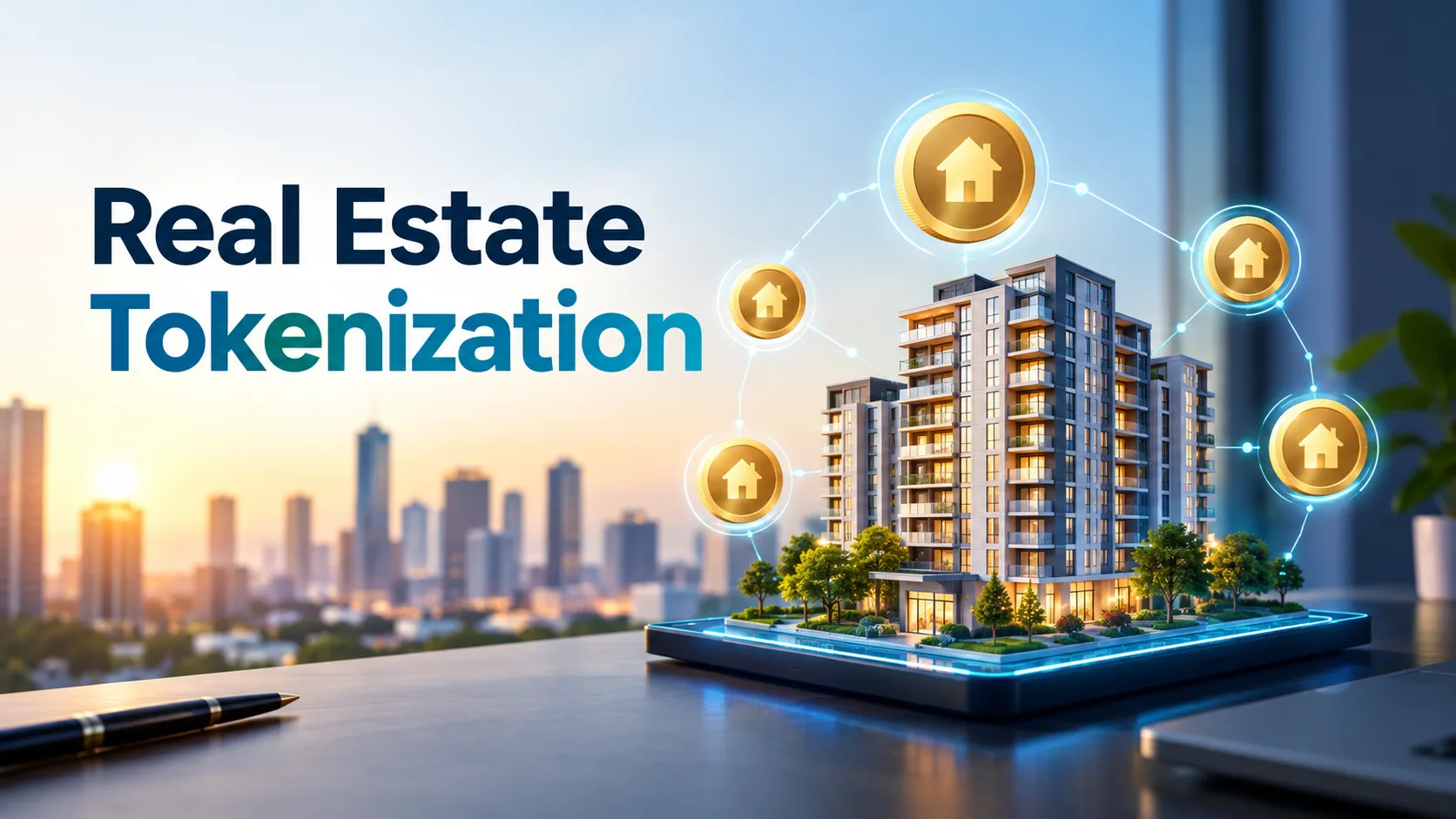
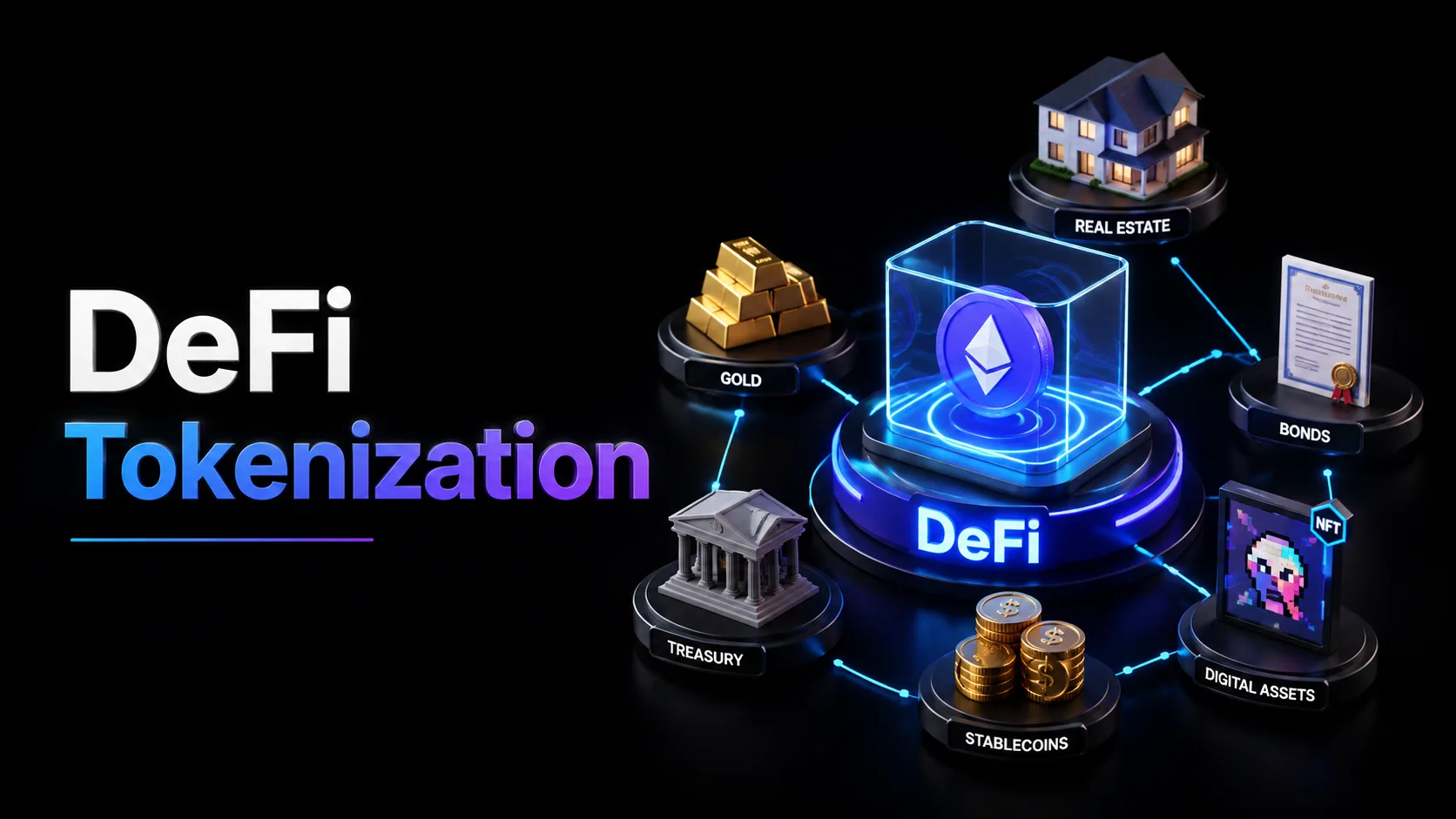
Decentralized Finance (DeFi) has reshaped how financial services operate by removing traditional intermediaries and enabling open, permissionless financial systems. At the same time, asset tokenization has introduced a method for representing real-world assets in digital form on blockchain networks.
When these two innovations converge, a powerful model emerges: DeFi tokenization of physical assets. This approach allows tangible assets such as real estate, commodities, infrastructure, and even revenue-generating instruments to be converted into digital tokens that can be traded, lent, staked, or used across decentralized financial ecosystems. This shift is transforming traditionally illiquid markets into dynamic, programmable, and globally accessible financial systems.
What Is DeFi Tokenization of Physical Assets?
DeFi tokenization refers to the process of converting ownership rights or economic value of physical assets into blockchain-based tokens that can interact with decentralized finance protocols. These tokens represent real-world value and are integrated into DeFi ecosystems such as lending platforms, decentralized exchanges, liquidity pools, and yield-generating protocols. Unlike traditional financial systems, where assets are locked within institutional frameworks, DeFi tokenization enables assets to move freely across digital markets without centralized control.
How Physical Assets Become Digital Tokens
The tokenization process typically follows a structured workflow:
- Asset Selection and Structuring
A physical asset such as real estate or commodities is legally structured for tokenization. - Valuation and Compliance Setup
The asset is valued, and legal frameworks are established to ensure regulatory compliance. - Digital Representation Creation
Ownership rights are converted into blockchain tokens using smart contracts. - On-Chain Issuance
Tokens are minted and recorded on a blockchain network. - DeFi Integration
Tokens are introduced into decentralized platforms for trading, lending, or staking.
This process bridges the physical and digital financial worlds, enabling real-world value to flow into decentralized ecosystems.
1. Unlocking Liquidity in Traditionally Illiquid Assets
Physical assets like real estate, private equity, and infrastructure projects are typically difficult to sell quickly. Their liquidity is constrained by legal processes, high transaction costs, and limited buyer pools. DeFi tokenization solves this problem by converting these assets into divisible digital tokens. These tokens can be traded on decentralized exchanges or used in liquidity pools. This creates continuous market activity and allows investors to enter or exit positions without waiting for traditional asset sale cycles.
2. Enabling Fractional Ownership and Broader Access
One of the most important impacts of DeFi tokenization is fractional ownership. High-value physical assets can be divided into smaller units, making them accessible to a wider range of investors. Instead of requiring large capital commitments, investors can purchase fractional exposure to real-world assets. This democratizes access to investment opportunities and increases participation across global markets, aligning with the open financial principles of DeFi.
3. Integrating Real-World Assets into DeFi Ecosystems
Tokenized physical assets can interact with decentralized finance protocols in multiple ways:
- Used as collateral for crypto-backed loans
- Traded on decentralized exchanges (DEXs)
- Staked in yield-generating protocols
- Included in liquidity pools
- Bundled into index-like investment products
This integration transforms static assets into active financial instruments that can generate additional utility beyond ownership.
4. Increasing Transparency and Reducing Trust Dependencies
Traditional asset markets often rely on centralized institutions to verify ownership and manage transactions. This introduces trust dependencies and potential inefficiencies.
DeFi tokenization replaces much of this structure with blockchain-based transparency. Ownership records, transactions, and smart contract rules are publicly verifiable and immutable. This reduces fraud risk, improves accountability, and eliminates many intermediaries that traditionally manage asset flows.
5. Automating Financial Processes with Smart Contracts
Smart contracts are essential to DeFi tokenization. They automate key financial processes such as:
- Asset transfers
- Interest payments
- Revenue distribution
- Collateral liquidation
- Compliance checks
By automating these functions, DeFi systems reduce manual intervention, lower operational costs, and improve transaction speed.
This automation enables real-time financial execution that traditional systems cannot match.
6. Expanding Global Investment Accessibility
Physical asset markets are typically restricted by geography, regulatory environments, and institutional barriers. DeFi tokenization removes many of these constraints by enabling global participation through blockchain networks. Investors from different regions can access tokenized assets without relying on traditional banking infrastructure. This expands the investor base and increases capital inflow into previously localized markets.
7. Creating New Yield Opportunities
Tokenized physical assets integrated into DeFi ecosystems can generate multiple layers of yield.
For example, a tokenized real estate asset may generate rental income, while also being used in lending protocols to earn additional returns.
This multi-layered yield structure enhances capital efficiency and creates new financial strategies for investors.
8. Reducing Settlement Time and Transaction Friction
Traditional asset transactions often involve long settlement cycles due to legal verification, banking processes, and intermediary coordination.
DeFi tokenization enables near-instant settlement through blockchain-based transfers. Once conditions are met, ownership changes are recorded immediately on-chain.
This reduces counterparty risk and significantly improves transaction efficiency.
Challenges in DeFi Tokenization of Physical Assets
Despite its advantages, several challenges remain:
- Regulatory uncertainty around tokenized securities and real-world assets
- Legal enforceability of on-chain ownership rights
- Oracle dependency for real-world data accuracy
- Liquidity fragmentation across platforms
- Security risks in smart contract infrastructure
These challenges require careful system design and regulatory alignment to ensure sustainable adoption.
The Future of DeFi-Enabled Real-World Assets
The future of DeFi tokenization is closely linked to the expansion of real-world asset (RWA) integration into decentralized ecosystems. As infrastructure matures, more physical assets are expected to become digitally represented and financially programmable.
Emerging trends include cross-chain asset interoperability, institutional DeFi adoption, and hybrid financial systems that combine traditional finance with decentralized protocols.
Over time, physical assets may become fully integrated into global digital financial networks, enabling seamless movement between real-world value and decentralized markets.
Conclusion
DeFi tokenization is fundamentally reshaping how physical assets are owned, traded, and utilized. By converting real-world value into digital, tradable tokens, it introduces liquidity, accessibility, transparency, and financial programmability into traditionally rigid markets. As blockchain technology continues to evolve, DeFi tokenization is expected to play a central role in bridging physical and digital economies. This transformation is paving the way for a more open, efficient, and globally connected financial system where real-world assets operate seamlessly within decentralized financial ecosystems.