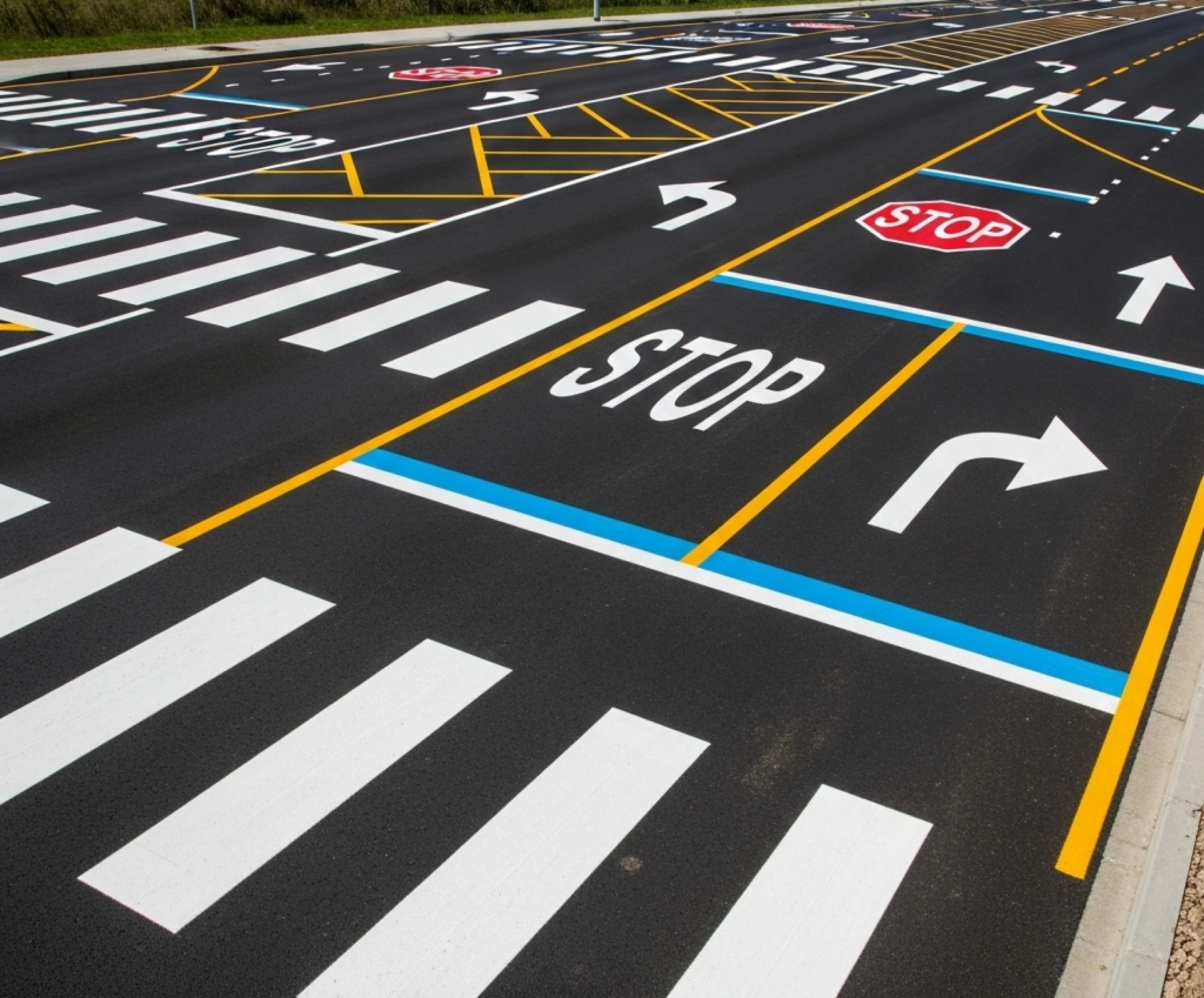
Imagine driving through a dense fog or heavy rain, and the only thing guiding your vehicle safely is the clarity of the road markings beneath you. These painted lines, though often overlooked, are critical for preventing accidents, directing traffic flow, and enhancing road safety. As urban infrastructure evolves, so too does the demand for smarter, more durable traffic marking solutions.
With increasing traffic density, growing populations, and a higher need for sustainable city planning, road authorities and contractors are turning to custom thermoplastic solutions to meet modern safety and performance standards. These aren’t your average markings, they’re engineered for precision, visibility, and long-term durability.
The Importance of Effective Traffic Markings
Road markings serve as silent traffic regulators. They organize lanes, warn drivers of hazards, and guide both pedestrians and cyclists. In high-speed zones or accident-prone intersections, even a minor flaw in visibility can lead to life-threatening outcomes.
Traditional paint-based markings, while cost-effective, tend to fade quickly, especially in areas exposed to extreme weather or heavy vehicular flow. That’s where traffic marking solutions that incorporate thermoplastic technologies come in. These solutions are highly reflective, skid-resistant, and can last several years longer than paint.
Thermoplastic: The Science Behind the Surface
So, what exactly makes custom thermoplastic solutions so reliable?
Thermoplastic is a road marking material made from a mix of synthetic resin, glass beads, pigments, and filler materials. When heated, it becomes a liquid and is applied to roads in specific patterns. Once cooled, it forms a hard, durable surface that resists wear and tear.
A standout feature of thermoplastic markings is their retro reflectivity, the ability to reflect headlights back toward drivers, greatly enhancing night visibility. Add anti-skid aggregates to the mix, and you’ve got a solution designed for both safety and performance.
Real-World Example:
In Tokyo, pedestrian crossings and lane dividers near schools are created using thermoplastic materials with high retroreflective beads. The result? A 20% reduction in pedestrian-related accidents in school zones since implementation.
Customization Meets Safety
Not all roads are the same. Urban streets, rural highways, industrial zones, and parking lots all have different safety and functionality needs. This is where custom thermoplastic solutions shine.
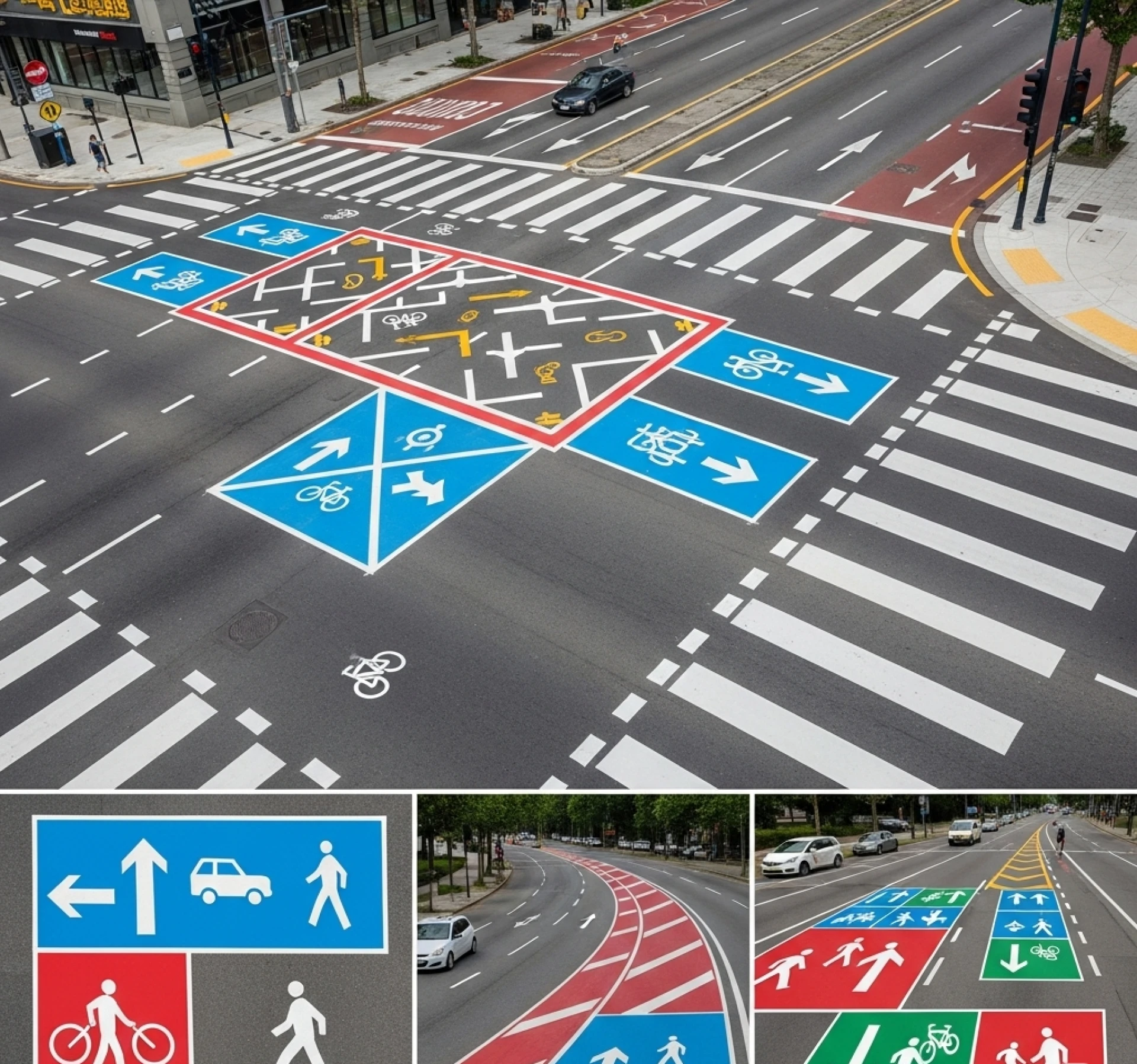
From pre-cut symbols and logos to multilingual pedestrian signs and branded parking zones, customization makes markings more relevant and easier to interpret. These tailored designs also help maintain brand consistency in private properties like corporate parks and airports.
Case in Point:
A major logistics company in Germany replaced standard warehouse markings with color-coded thermoplastic arrows and signs tailored to their workflow. The result was a 40% increase in operational efficiency and a marked drop in internal traffic incidents.
Smart Cities Need Smart Markings
Smart city infrastructure relies on integrated technologies, sensors, AI, and data analytics, to make roads safer and more efficient. But even the most intelligent system falls short without visible, reliable road guidance.
Advanced traffic marking solutions now include embedded sensors, anti-skid materials, and environmentally sustainable components. Thermoplastics, with their long lifespan and adaptability, support this integration.
For example, certain cities are piloting thermoplastic markings embedded with QR codes readable by autonomous vehicles. These act as digital breadcrumbs that assist in navigation, traffic pattern learning, and even vehicle-to-infrastructure (V2I) communication.
Environmental and Economic Considerations
Municipalities are under pressure to reduce carbon footprints while managing tight budgets. Fortunately, custom thermoplastic solutions strike a balance between sustainability and cost-efficiency.
Compared to traditional paints, thermoplastic markings:
- Require fewer applications over time
- Are less likely to wash away, reducing environmental runoff
- Offer higher visibility, lowering accident-related costs
Moreover, the use of recycled glass beads and low-VOC (Volatile Organic Compounds) formulations in many thermoplastics adds to their green appeal.
Installation and Maintenance: What to Expect
The installation process of thermoplastic markings is fast and efficient. Applied with heat torches or preformed sheets, they bond to the road surface securely. Preformed thermoplastic kits are particularly useful in urban environments where downtime must be minimized.
Routine maintenance is generally minimal. Depending on traffic levels and weather conditions, thermoplastic lines can last 4 to 8 years without significant degradation. That’s significantly better than the 6–12 months typical of regular road paint.
Versatility Across Environments
From airport runways to bicycle lanes, from industrial loading zones to high-speed freeways, traffic marking solutions using thermoplastic can be adapted to virtually any environment.
For instance:
- Urban Roads: Pre-cut symbols for bike lanes and pedestrian crossings
- Highways: Reflective lane dividers that maintain visibility at night and in the rain
- Warehouses: Safety zones and directional arrows in custom colors for specific workflows
The ability to adapt markings to unique spaces helps promote not just safety but also user confidence and smoother traffic behavior.
Challenges and Considerations
Despite their advantages, thermoplastic markings come with considerations:
- Initial Cost: Higher upfront investment compared to paint
- Temperature Sensitivity: Needs the right surface temperature for proper adhesion
- Skilled Labor: Requires trained personnel for installation
However, when weighed against long-term performance, these challenges are minor. Most municipalities and private companies find that the ROI justifies the initial cost, especially when factoring in safety improvements.
The Future: Data-Driven Road Markings?
As the automotive world leans further into automation, the future of road markings could involve embedded data systems. Think of markings that change color based on traffic flow, temperature-sensitive visuals that warn of ice, or markings that double as sensors.
In this new world, custom thermoplastic solutions will continue to evolve, not just as passive guides, but as active participants in road safety and traffic management.
In conclusion, road markings might seem like simple lines, but they carry the weight of safety, guidance, and efficiency. With the rise of advanced traffic marking solutions and customizable thermoplastic materials, we're no longer limited by traditional methods. Instead, we're entering an age where markings are smarter, more sustainable, and tailored to meet real-world challenges.
Whether it’s enhancing visibility for night drivers or organizing chaotic warehouse traffic, custom thermoplastic solutions are helping shape the future of road infrastructure, one line at a time.
Frequently Asked Questions
Q1: What are the main benefits of thermoplastic traffic markings?
A: They offer superior durability, better visibility (especially at night), reduced maintenance costs, and can be customized for various applications. They also adhere well to different surfaces and weather conditions.
Q2: How long do thermoplastic markings last compared to paint?
A: While road paint may last 6–12 months, thermoplastic markings can last anywhere from 4 to 8 years, depending on usage and climate.
Q3: Are thermoplastic markings environmentally friendly?
A: Yes. Many formulations use recycled materials and produce lower emissions during application. They also reduce the need for frequent reapplications, thereby cutting down on waste.
Q4: Can thermoplastic markings be customized?
A: Absolutely. From color and shape to embedded symbols and multilingual instructions, custom thermoplastic solutions can be tailored to meet specific project needs.
Q5: Is thermoplastic suitable for private properties like warehouses and malls?
A: Yes. These markings are widely used in private and commercial spaces for zoning, navigation, and safety. Their durability makes them a smart long-term investment.