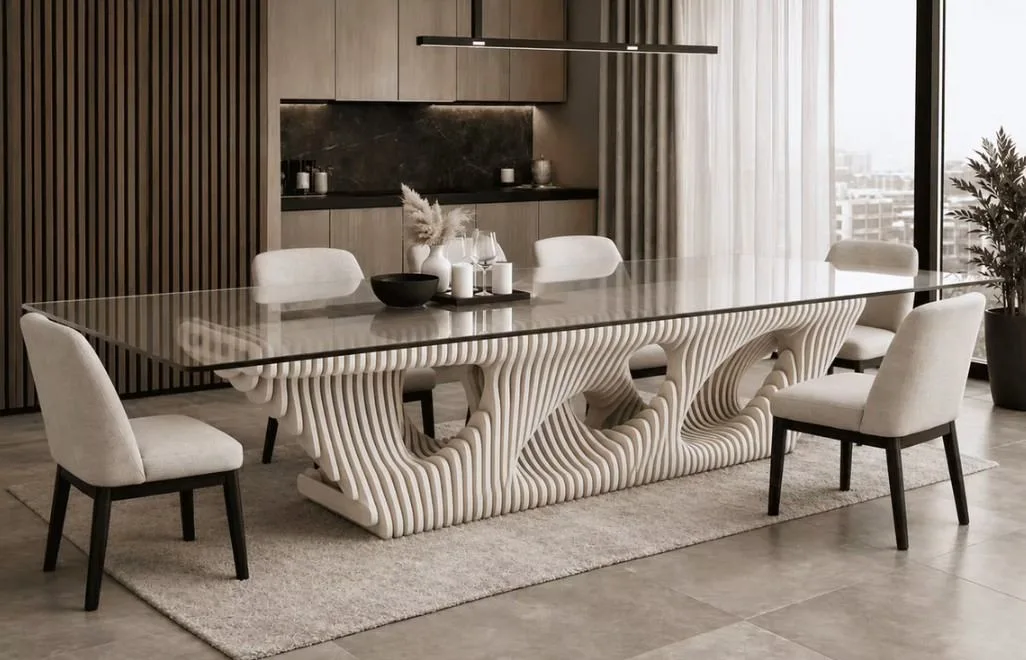
For years, dining tables served a straightforward purpose: a flat surface supported by simple, functional legs. Today, that approach has evolved considerably, as more homeowners seek custom made dining room tables that go beyond basic function to become genuine works of sculptural art. Rather than blending quietly into a room, these tables are designed to command attention, reflecting a broader shift in how furniture is valued within modern interiors.
At Zorka Furniture, this evolution is approached with a clear design philosophy: a dining table should be more than a place to eat. It should serve as a centerpiece that reflects craftsmanship, artistic vision, and the personality of the home it belongs to.
From Functional Furniture to Artistic Expression
The shift toward sculptural dining tables reflects a broader movement in interior design, where furniture is increasingly treated as an opportunity for artistic expression rather than a purely utilitarian object. This change has been driven by several factors:
- A growing appreciation for craftsmanship, as homeowners move away from mass-produced furniture
- Advances in design technology, enabling more complex, computationally-generated forms
- A desire for individuality, seeking pieces that feel distinct from standard retail options
- Increased exposure to architectural and sculptural design trends through social media and design publications
Together, these influences have helped position dining tables as a canvas for genuine artistic expression within the home.
What Makes a Dining Table Feel Sculptural
Several specific design elements distinguish sculptural dining tables from traditional, purely functional designs:
- Organic, flowing bases that replace straight, symmetrical legs
- Asymmetrical or irregular forms, avoiding predictable, uniform shapes
- Dramatic structural details, such as dramatic curves or layered elements
- A sense of movement, as if the design captures motion frozen in solid material
These characteristics transform a table from a simple surface into a piece that visually anchors an entire room.
The Role of Parametric Design in Sculptural Tables
Many of today's most striking sculptural dining tables rely on parametric design techniques, using computational modeling to generate complex, organic forms with structural precision. This approach allows designers to achieve shapes that would be extremely difficult to create using traditional woodworking methods alone.
Parametric design offers several advantages, including:
- Precise control over intricate curves and structural details
- Engineering accuracy, ensuring the table remains stable despite its artistic complexity
- The ability to merge natural-inspired forms with modern fabrication methods
- Greater design flexibility, allowing for highly customized, one-of-a-kind pieces
This combination of artistry and technical precision has played a significant role in bringing sculptural dining tables into the mainstream of custom furniture design.
How Sculptural Tables Transform a Dining Room
Choosing a sculptural dining table can dramatically change the atmosphere of a dining space, shifting it from a purely functional area into a design-forward focal point.
Key effects include:
- A stronger visual identity for the room as a whole
- Enhanced conversation potential, as unique designs often become a talking point for guests
- A greater sense of craftsmanship and investment reflected throughout the space
- A lasting design element that doesn't rely on trend-driven decor to feel relevant
These effects make sculptural tables particularly appealing for homeowners looking to create a distinctive, memorable dining environment.
Materials That Enhance Sculptural Design
The right material choice plays a significant role in enhancing a table's sculptural qualities. Popular options include:
- Solid wood, allowing natural grain to complement the table's organic form
- Acrylic or resin accents, creating a modern contrast against natural materials
- Mixed-material bases, combining wood with metal for both structural support and visual interest
- Live-edge detailing, preserving the natural contours of the wood for added authenticity
Selecting materials that align with the table's artistic inspiration helps ensure the final piece feels cohesive rather than disjointed.
Choosing the Right Design Partner
Because sculptural dining tables often involve more complex design and engineering considerations than standard furniture, working with an experienced craftsman is essential. A trusted maker should be able to translate artistic vision into a structurally sound, functional final product, balancing creativity with practicality throughout the process.
Many homeowners exploring this design direction describe their search as looking for a dining table custom to reflect their personal style, rather than settling for a predictable, mass-produced alternative.
The Custom Design Process
Creating a sculptural custom dining table typically follows these key stages:
- Consultation to discuss design inspiration, space, and functional needs
- Design development, often using digital modeling to refine complex forms
- Material selection, balancing aesthetic goals with durability
- Crafting, translating the design into a precise, handcrafted piece
- Delivery and setup, ensuring proper fit within the dining space
This process ensures the final table successfully balances artistic ambition with everyday practicality.
Extending the Aesthetic Beyond the Dining Room
For homeowners who appreciate this design philosophy, the same sculptural approach often extends into outdoor spaces as well. Many turn to luxury outdoor furniture to create a similar sense of artistic continuity on patios, terraces, or garden dining areas, ensuring the home's design language feels cohesive both indoors and out.
Final Thoughts
The evolution of custom made dining room tables into sculptural statement pieces reflects a broader shift in how homeowners value furniture within their homes. By blending artistic vision with modern fabrication techniques, these tables offer a distinctive alternative to traditional, purely functional designs. Working with a dedicated craftsman like Zorka Furniture ensures this transformation is achieved with both creative integrity and lasting quality.
FAQ
1. What makes a dining table "sculptural"?
Sculptural tables feature organic, often asymmetrical forms that prioritize artistic expression alongside everyday functionality.
2. Are sculptural dining tables as practical as traditional designs?
Yes, when properly engineered, sculptural tables offer the same functionality as traditional designs while adding significant visual interest.
3. Does parametric design play a role in sculptural dining tables?
Yes, many sculptural designs use parametric modeling to achieve complex, natural-looking forms with structural precision.
4. What materials work best for sculptural dining table designs?
Solid wood, live-edge detailing, and mixed-material bases are popular choices that enhance a table's artistic qualities.
5. How long does it take to create a sculptural custom dining table?
Timelines vary based on design complexity, but most custom tables take several weeks from consultation to final delivery.