In today's competitive retail environment, product presentation plays an important role in attracting customers and influencing purchasing decisions. With countless products competing for attention, businesses need more than quality and affordable prices to create a memorable impression.
Consumers often notice visual elements before exploring product features. Attractive designs, clear information, and organized displays can encourage shoppers to consider unfamiliar products. For brands, effective presentation provides an opportunity to communicate quality, establish recognition, and improve the overall shopping experience.
Modern retailers are exploring creative display solutions that combine functionality with visual appeal. By understanding customer expectations and retail requirements, businesses can develop strategies that make their products easier to recognize and more appealing to potential buyers.
Why Product Presentation Matters in Modern Retail
Product presentation influences how customers interact with items in physical stores.
Shoppers frequently compare several brands before making purchasing decisions. Products with clear labeling, attractive designs, and convenient displays may receive more attention than poorly organized alternatives.
A professional appearance can also communicate consistency and attention to detail.
For businesses introducing new products, presentation helps customers understand what makes an item different from competing options.
However, visual appeal should always support accurate product information and dependable quality.
When businesses combine these elements effectively, they create shopping experiences that encourage confidence and improve brand recognition.
The Role of Custom Display Boxes in Retail Branding
Retailers use different display strategies to organize products and communicate their brand identity.
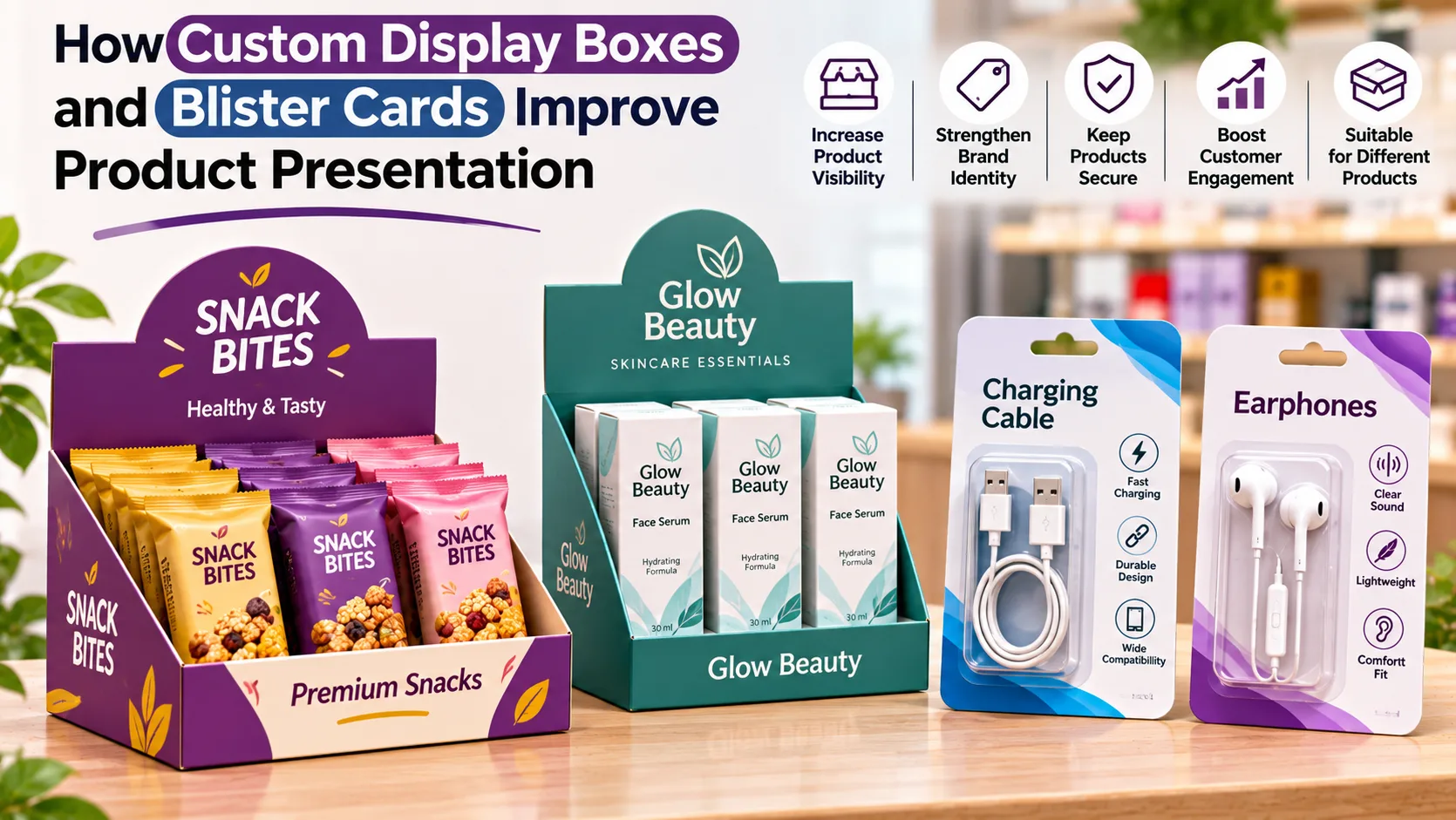
Custom Display Boxes can help businesses create recognizable presentations that complement their retail environment and promotional objectives.
For example, a cosmetics brand might use coordinated colors and clear product arrangements to introduce a new collection.
A confectionery company could develop countertop displays that highlight individual flavors while maintaining consistent branding.
These approaches make products easier to identify and encourage customers to explore different options.
Businesses should consider available shelf space, product dimensions, and customer behavior when planning their displays.
A well-organized retail presentation can support both brand visibility and convenient product selection.
Understanding How Blister Cards Support Product Visibility
Customers often prefer to examine products before making a purchase, especially when shopping for small accessories, hardware items, or electronic components.
Blister Cards are commonly used in retail presentations where products are secured in a formed transparent plastic cavity attached to a backing card.
This format allows customers to view the actual item while providing space for essential product information.
For example, retailers selling batteries, stationery accessories, or small household tools may use this presentation style to organize individual products.
Businesses should evaluate material suitability, product weight, and sealing requirements before choosing a specific design.
Clear visibility can help customers identify the correct item and make more informed purchasing decisions.
Creating Strong First Impressions Through Thoughul Packaging
Thoughtful packaging can influence customer perceptions from the moment a product appears on a retail shelf. Businesses should consider material quality, structural strength, appropriate dimensions, and practical handling requirements when developing their product presentation. Attractive colors, readable typography, and clear visual elements help communicate important information without overwhelming shoppers. Functional designs can also protect products from dust, damage, and unnecessary handling. Some brands explore materials and structures that reduce waste while maintaining suitable protection. When visual appeal and practicality work together, the overall presentation can create a professional impression and support a more convenient shopping experience.
Improving Shelf Visibility Through Creative Design
Retail shelves contain numerous competing products, making visual differentiation essential.
Businesses can improve visibility by selecting distinctive colors, balanced layouts, and recognizable brand elements.
The position of a product's name, logo, and primary information should make it easy for customers to identify the item.
For example, a personal care brand might use soft colors and minimalist graphics to create a clean appearance.
A children's toy company may prefer bright illustrations and playful typography.
Businesses should also evaluate how designs appear from different viewing distances.
A visually balanced approach helps products stand out while maintaining clarity and professionalism.
Using Consistent Branding to Build Customer Recognition
Consistency helps businesses establish recognizable identities across different retail environments.
Logos, typography, color combinations, and graphic elements should communicate a unified message.
When customers encounter familiar visual details repeatedly, they may find it easier to recognize the brand during future shopping visits.
Companies can maintain consistency while introducing variations for individual products or seasonal collections.
For example, a skincare business might use the same logo and layout across its entire range while assigning different colors to individual formulations.
This approach makes products easier to distinguish without weakening the overall brand identity.
Strong visual consistency can also connect physical retail experiences with online marketing campaigns.
Making Product Information Clear and Accessible
Customers appreciate information that helps them understand product features before purchasing.
Businesses should communicate essential details through readable text, organized layouts, and accurate descriptions.
Depending on the product category, this information may include dimensions, materials, usage instructions, safety warnings, or compatibility details.
Important information should not be hidden behind decorative graphics or unnecessarily complicated designs.
For example, an electronics accessories brand should clearly explain which devices are compatible with its products.
Similarly, household product manufacturers may need to include handling instructions or relevant warnings.
Clear communication supports informed purchasing decisions and helps reduce confusion.
Balancing Attractive Presentation With Product Protection
Visual appeal is important, but businesses must also consider the physical condition of their products.
Retail items may experience repeated handling, storage, transportation, and shelf restocking.
Suitable structural designs help reduce the likelihood of damage during these activities.
Businesses should evaluate product weight, dimensions, and sensitivity before selecting display formats.
Delicate accessories may require additional support, while lightweight items might need simpler structures.
Testing samples under realistic conditions can reveal weaknesses before products reach customers.
A dependable presentation should provide an appropriate balance between protection, convenience, and visual quality.
Creating Better Customer Experiences in Retail Stores
A positive shopping experience depends partly on how easily customers can find and examine products.
Organized displays make browsing more convenient and reduce frustration.
Retailers can arrange products by category, size, function, or collection to help shoppers locate suitable options.
Clear labels and consistent layouts also make it easier for employees to restock shelves.
Businesses should consider how customers interact with products and whether the presentation supports quick decision-making.
For example, small accessories displayed with visible specifications may be easier to compare than items with unclear information.
Convenient product presentation can encourage satisfaction and support repeat visits.
Considering Sustainable Material Choices
Environmental considerations are becoming increasingly relevant to modern retail businesses.
Companies can explore responsible material sourcing, reduced material consumption, and designs that limit unnecessary waste.
However, sustainability decisions should account for product protection and practical performance.
A lightweight material may reduce resource use but could create problems if it fails during transportation.
Businesses should also verify claims about recyclability and consider available local recycling systems.
Different combinations of materials may require separation before disposal.
Clear and accurate environmental information helps customers understand their options without creating misleading expectations.
Managing Costs Without Compromising Quality
Retail businesses must balance presentation quality with operational expenses.
Material selection, printing methods, structural complexity, and order quantities can influence total costs.
Companies should compare suppliers and request samples before making large purchasing decisions.
Bulk orders may reduce unit prices, but excessive inventory can create storage challenges.
Businesses should prioritize features that improve usability, protect products, and communicate brand identity.
Simple, professionally executed designs can often provide a strong visual impact without unnecessary decoration.
Careful planning helps maintain quality while supporting efficient financial management.
Testing Product Displays Before a Full Launch
Testing is an important step when introducing new retail presentation solutions.
Businesses can evaluate structural strength, product fit, printing quality, and ease of handling.
Retail employees may provide useful feedback about stocking efficiency and shelf organization.
Companies can also observe how customers interact with products during limited trials.
If shoppers struggle to identify product information or remove items from displays, adjustments may be necessary.
Testing different arrangements helps businesses identify practical improvements before wider distribution.
These insights support informed decisions and reduce avoidable operational problems.
Conclusion
Effective product presentation helps businesses improve visibility, communicate their identity, and create more convenient shopping experiences.
Creative retail displays, clear product information, consistent branding, and reliable structural designs all contribute to a professional appearance.
Businesses should carefully evaluate customer expectations, product requirements, material quality, and overall costs before choosing their preferred solutions.
By combining visual creativity with practical functionality, brands can strengthen customer confidence, improve product recognition, and build lasting relationships in competitive retail markets.