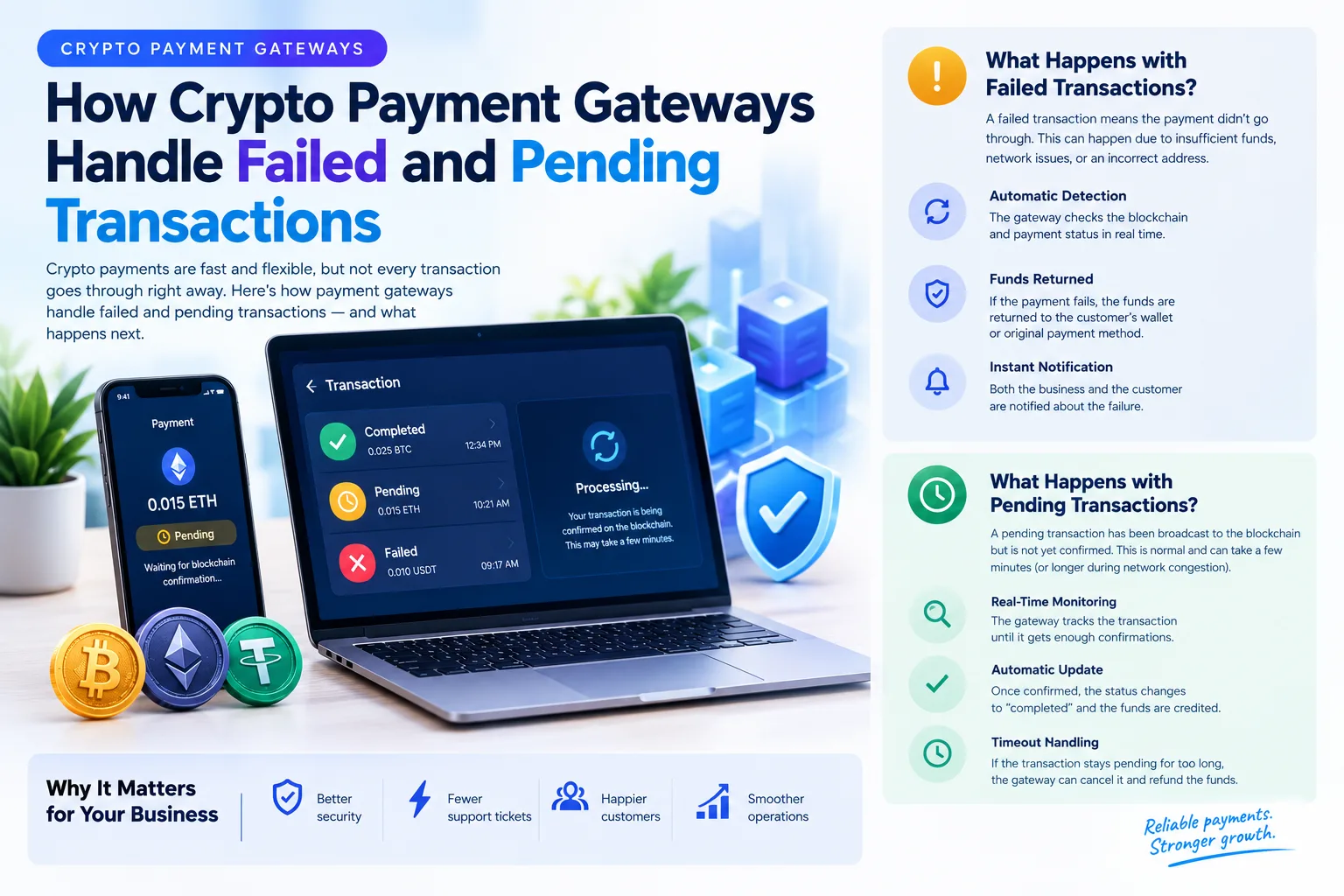
Cryptocurrency payments offer businesses another way to accept payments from customers around the world. However, not every transaction is completed immediately. Some payments remain pending for several minutes, while others fail because of network congestion, incorrect payment details, insufficient funds, or other technical issues.
For businesses accepting cryptocurrency, understanding how payment gateways handle these situations is important. A delayed or failed payment can affect customer experience, order processing, account balances, and financial records.
Payment providers such as Oppi Payment help businesses explore crypto payment processing options. A reliable payment setup should do more than generate payment addresses. It should also track transaction statuses, identify payment problems, and provide clear information that helps merchants decide what to do next.
1. What Is a Pending Crypto Transaction?
A pending crypto transaction is a payment that has been submitted to a blockchain network but has not yet received the required confirmation or completed the expected processing steps.
When a customer sends cryptocurrency, the transaction is usually broadcast to the relevant blockchain network. It then waits to be included in a block and confirmed according to the network's rules.
During this period, the payment gateway may display the transaction as pending.
Common Reasons for Pending Transactions
- Network congestion: A large number of transactions may compete for limited blockchain capacity.
- Low transaction fees: A transaction with a lower network fee may take longer to be processed.
- Confirmation requirements: Some gateways wait for a specific number of blockchain confirmations before marking a payment as complete.
- Network processing delays: Temporary blockchain or infrastructure issues can slow transaction updates.
- Payment amount verification: The gateway may need to check whether the received amount matches the requested payment.
A pending status does not necessarily mean that the payment has failed. It means the gateway has not yet received enough information to treat the transaction as completed.
2. What Causes a Crypto Payment to Fail?
A failed crypto payment occurs when a transaction cannot be completed according to the payment gateway's requirements or when the payment process is unsuccessful.
The reason can be related to the customer, the blockchain network, or the payment provider's processing system.
Incorrect Wallet Address
Cryptocurrency transactions require accurate destination addresses. If a customer sends funds to an incorrect address, the payment may not reach the intended merchant.
Since confirmed blockchain transactions are generally irreversible, recovering funds sent to the wrong address can be difficult or impossible.
Insufficient Payment Amount
A customer may send less cryptocurrency than the amount requested at checkout. This can happen because of calculation mistakes, network fees, or changes in the exchange rate.
Some gateways may identify the payment as underpaid rather than failed. The merchant may then need to request the remaining amount or follow a manual payment review process.
Unsupported Blockchain Network
A cryptocurrency can operate on more than one blockchain network. For example, a stablecoin may be available on several supported networks.
If a customer selects the wrong network, the gateway may not detect the payment through its expected monitoring process. This can result in a missing or unrecognized transaction.
Expired Payment Request
Some payment gateways generate invoices with a limited payment window. If a customer sends funds after the invoice expires, the system may not automatically associate the transaction with the original order.
The business may need to review the transaction and decide whether to accept it, refund it, or request further action.
Technical or Provider Issues
Payment monitoring services, APIs, blockchain nodes, and merchant integrations can experience temporary interruptions. These issues may prevent a gateway from receiving transaction updates even when a customer has successfully broadcast a payment.
A good payment system should be able to identify monitoring or integration problems and provide enough information for the merchant to investigate them.
3. How Crypto Payment Gateways Track Transaction Status
Crypto payment gateways use blockchain monitoring and transaction verification processes to follow payments from initiation to completion.
Although the exact workflow varies by provider, most systems follow several common steps.
Step 1: Generate a Payment Request
When a customer selects cryptocurrency at checkout, the gateway creates a payment request. It may include:
- The payment amount
- The selected cryptocurrency
- The supported blockchain network
- The destination wallet address
- A payment reference or transaction identifier
- An expiration time, where applicable
These details help the gateway identify the expected payment.
Step 2: Detect the Incoming Transaction
After the customer sends funds, the gateway monitors the relevant blockchain network to detect an incoming transaction.
The system checks whether the transaction is connected to the payment request and whether it was sent through the expected network.
Step 3: Verify the Transaction
The gateway checks important transaction details, including the destination address, asset, amount, and blockchain confirmation status.
This step helps prevent a payment from being marked complete before the required verification has taken place.
Step 4: Update the Payment Status
Once the transaction meets the gateway's processing requirements, the system updates its status.
Common statuses include:
StatusMeaningAwaiting PaymentThe customer has not yet sent the payment.PendingA transaction has been detected but is awaiting confirmation or further verification.ConfirmedThe transaction has received the required blockchain confirmations.UnderpaidThe received amount is lower than the requested amount.OverpaidThe customer has sent more than the requested amount.ExpiredThe payment request has passed its payment deadline.FailedThe payment could not be completed according to the gateway's processing rules.The exact status names and rules can differ between providers. Businesses should understand what each status means before connecting the gateway to their order or account management systems.
4. How Payment Gateways Handle Pending Transactions
Pending transactions require careful monitoring because they may eventually become successful. Automatically treating every pending payment as failed can create unnecessary problems for customers and merchants.
A payment gateway may continue monitoring the blockchain until the transaction receives the required confirmations or reaches a defined processing limit.
Confirmation Monitoring
The gateway checks whether the transaction has been included in a block and whether additional confirmations are required.
The number of confirmations depends on the blockchain, asset, provider policies, and transaction risk. A payment should not be considered final merely because it has appeared in a wallet or transaction explorer.
Status Notifications
Payment systems may send status updates through merchant dashboards, API responses, or webhooks. These notifications help businesses understand whether a payment is still processing or has reached a completed state.
For example, an online store can keep an order on hold while the transaction is pending and release the order only after receiving the required confirmation.
Timeout and Escalation Rules
If a transaction remains pending for an extended period, the gateway may apply a timeout or flag it for review. The merchant can then investigate whether the issue relates to network congestion, a missing confirmation, or a technical monitoring problem.
Businesses should establish clear rules for handling these situations rather than relying on assumptions about how long every blockchain payment should take.
5. How Gateways Handle Underpaid, Overpaid, and Late Payments
Not all payment problems involve a transaction failure. Sometimes the customer sends cryptocurrency successfully, but the amount or timing does not match the original payment request.
Underpaid Transactions
An underpayment occurs when the gateway receives less than the requested amount.
For example, a customer receives a payment request for 100 USDT but sends only 95 USDT. Depending on the provider's rules, the gateway may flag the payment for review instead of marking the order as paid.
The merchant can then decide whether to request the remaining amount or follow another documented procedure.
Overpaid Transactions
An overpayment occurs when the customer sends more cryptocurrency than required.
The business should have a clear policy for handling the difference. Depending on its refund rules and applicable regulations, it may process a refund or apply the excess amount to the customer's account.
Late Payments
Some payment requests expire after a specified period. However, a customer may send funds shortly after the deadline.
In this situation, the gateway may detect the transaction but not automatically match it with the expired invoice. The merchant may need to review the transaction details before deciding how to handle it.
Clear payment instructions and customer notifications can reduce confusion in these cases.
6. Why Payment Infrastructure Matters for Transaction Monitoring
Transaction monitoring depends on more than a blockchain connection. A payment gateway also needs reliable infrastructure to process payment requests, receive blockchain updates, communicate with merchant systems, and maintain accurate transaction records.
If any part of this process experiences an interruption, the merchant may receive delayed or incomplete payment information.
A suitable crypto payment infrastructure can support important operational functions such as transaction monitoring, payment verification, API communication, and merchant reporting.
Businesses should evaluate whether a provider offers:
- Reliable blockchain monitoring
- Clear transaction status updates
- API and webhook support
- Payment history and reporting
- Tools for identifying incomplete transactions
- Technical support for processing issues
These capabilities can help reduce manual checks and make it easier for merchants to manage payment problems.
7. Custodial vs Non-Custodial Gateways: Does It Affect Failed Payments?
The payment gateway's custody model can influence how funds are managed and what happens after a transaction is confirmed.
In a custodial model, the provider may control the wallets or private keys used to hold funds. Depending on the arrangement, it may also manage settlement and withdrawals.
In a non-custodial model, the gateway is designed to process payment information without taking custody of the merchant's private keys or funds. Payments may be directed to wallets controlled by the merchant.
However, neither model eliminates blockchain transaction delays or incorrect transfers. Both still require accurate payment monitoring, verification, and clear procedures for handling exceptions.
Businesses comparing these approaches can read more about custodial and non-custodial crypto payment gateway models before deciding which arrangement fits their operations.
8. How Businesses Can Reduce Failed and Pending Payments
Although blockchain networks and payment providers can experience delays, businesses can take practical steps to reduce payment problems.
Provide Clear Payment Instructions
Customers should see the correct cryptocurrency, network, wallet address, and payment amount before sending funds. Clear instructions can help prevent incorrect-network transfers and underpayments.
Set Realistic Payment Expiration Times
Payment windows should account for the selected blockchain's typical processing conditions. Very short expiration periods may create unnecessary problems when network activity increases.
Use Automated Payment Notifications
API and webhook notifications can help merchant systems respond to transaction updates without requiring staff to check every payment manually.
Explain Confirmation Requirements
Customers should understand that a payment may not be credited immediately after sending it. Displaying a pending status and explaining the confirmation process can reduce support requests.
Establish a Refund and Dispute Policy
Businesses should explain how they handle overpayments, underpayments, late transactions, and transfers sent through unsupported networks. A consistent policy makes payment issues easier to manage.
Monitor Payment Performance
Regularly reviewing pending transactions, failed payments, confirmation times, and common customer errors can help businesses identify recurring problems and improve their checkout process.
9. Why Different Industries Need Different Payment Handling Rules
The impact of a failed or pending crypto payment depends on the type of business involved.
An online retailer may delay order fulfillment until payment confirmation. A forex broker may need to reconcile deposits with trading accounts, while a SaaS company may need to update subscription access after a payment is verified.
For example, crypto payment requirements across casinos, forex, and SaaS businesses can differ significantly because each industry has its own customer workflows, reporting needs, and operational risks.
This is why businesses should configure payment status rules around their actual operations. A single generic approach may not be suitable for every industry.
Conclusion
Failed and pending transactions are part of cryptocurrency payment processing. Network congestion, insufficient amounts, incorrect addresses, unsupported networks, expired invoices, and technical interruptions can all affect whether a payment is completed successfully.
A reliable crypto payment gateway helps businesses identify these issues through transaction monitoring, confirmation checks, status updates, and payment records. However, merchants also need clear customer instructions, refund policies, and internal procedures for handling exceptions.
By understanding how payment statuses work and choosing infrastructure that supports accurate monitoring, businesses can reduce confusion, improve payment management, and provide a more dependable checkout experience.