In the highly competitive insurance industry, retaining clients is just as important as acquiring new ones. Insurance businesses thrive on long-term relationships, policy renewals, and customer trust. However, managing multiple clients, policy updates, claims, and follow-ups manually can become overwhelming and lead to poor customer experiences.
This is where Insurance CRM software plays a vital role. By organizing customer data, automating communication, and improving engagement, CRM systems help insurance businesses build stronger relationships and increase client retention. For growing agencies, CRM for small business solutions provide an affordable and efficient way to manage customer interactions while improving operational efficiency.
Why Client Retention Matters in Insurance
Customer retention is critical in the insurance industry because loyal clients:
- Renew policies regularly
- Purchase additional coverage
- Refer new customers
- Increase long-term revenue
Acquiring new clients often costs more than retaining existing ones. This is why many agencies are investing in Insurance CRM software to improve customer satisfaction and loyalty.
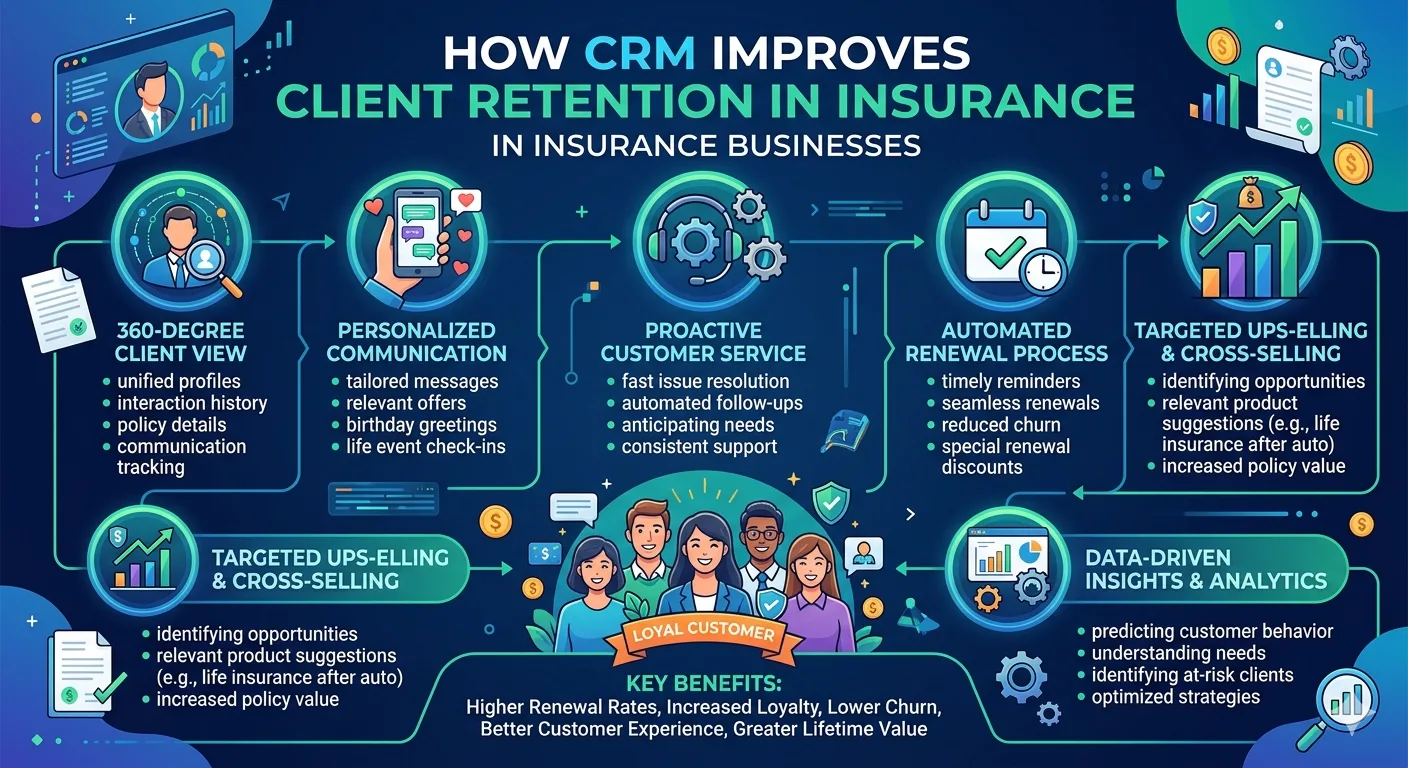
How CRM Improves Client Retention
1. Centralized Customer Information
CRM systems store all customer information in one place, including:
- Contact details
- Policy history
- Claims records
- Communication logs
This allows insurance agents to access accurate information quickly and provide personalized support.
With CRM for small business, agencies can stay organized and ensure every client interaction is smooth and professional.
2. Personalized Customer Communication
Customers expect personalized experiences. CRM systems help insurance agencies understand customer needs and communicate more effectively.
Insurance agents can:
- Send customized policy recommendations
- Provide renewal reminders
- Share relevant updates
Using Insurance CRM software, businesses can strengthen customer relationships through tailored communication.
3. Automated Follow-Ups and Reminders
One of the biggest reasons clients leave is lack of communication. CRM systems automate follow-ups and reminders to keep customers engaged.
Automation can include:
- Policy renewal reminders
- Appointment notifications
- Follow-up emails after claims
With CRM for small business, agencies can maintain consistent communication without increasing workload.
4. Faster Customer Support
Quick response times are essential for customer satisfaction. CRM systems help agents track customer inquiries and resolve issues efficiently.
Benefits include:
- Faster responses
- Better issue tracking
- Improved customer experience
Insurance CRM software enables agencies to provide reliable and responsive support.
5. Improved Customer Insights
CRM systems provide analytics and reporting tools that help businesses understand customer behavior and preferences.
Insurance agencies can:
- Identify high-value clients
- Monitor engagement levels
- Predict renewal opportunities
These insights allow businesses to improve retention strategies and customer experiences.
6. Better Policy Renewal Management
Policy renewals are essential for insurance businesses. Missing renewal dates can result in lost revenue and dissatisfied customers.
CRM systems help by:
- Tracking renewal schedules
- Sending automated reminders
- Managing follow-up tasks
With Insurance CRM software, agencies can improve renewal rates and maintain long-term relationships.
7. Enhanced Customer Experience
A positive customer experience increases loyalty and trust. CRM systems help businesses deliver consistent and professional service.
This includes:
- Personalized communication
- Faster issue resolution
- Organized customer management
By implementing CRM for small business, insurance agencies can improve overall client satisfaction.
8. Increased Team Collaboration
Insurance agencies often involve multiple team members handling the same client. CRM systems provide a shared platform where everyone can access customer information.
This improves:
- Internal communication
- Workflow efficiency
- Service consistency
Better collaboration leads to a better customer experience.
Real-World Example
An insurance agency using Insurance CRM software can automatically send policy renewal reminders, track customer interactions, and follow up after claims processing.
As a result:
- Customers feel valued
- Response times improve
- Renewal rates increase
This demonstrates how CRM directly impacts client retention and business growth.
Best Practices for Using CRM in Insurance
To maximize retention benefits:
- Keep customer data updated
- Use automation strategically
- Personalize communication
- Monitor customer engagement
- Train staff properly
These practices ensure that your CRM for small business delivers maximum value.
Conclusion
Client retention is essential for long-term success in the insurance industry. By centralizing customer data, automating communication, and improving customer experiences, CRM systems help insurance agencies build stronger relationships and increase loyalty.
Whether you are implementing Insurance CRM software or adopting a CRM for small business, the benefits are clear—better organization, improved customer satisfaction, and higher retention rates. In today’s customer-focused market, CRM is not just a tool; it is a powerful strategy for sustainable growth and long-term success.