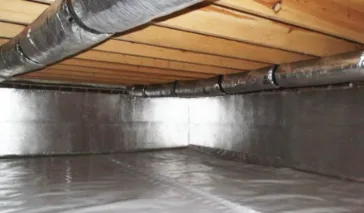
You notice a musty smell that seems to come from nowhere. Your floors feel damp. Family members are sneezing more than usual inside the house. These are not unrelated problems. They often share a single source hidden beneath your feet. The crawl space under your home is one of the most moisture-prone areas in any residential structure, and when it is not properly insulated and sealed, that moisture moves upward into your living space every single day. In this guide, you will learn exactly how crawl space insulation stops moisture at its source, why moisture prevention in the crawl space protects your entire home, and what solutions deliver the most reliable long-term results.
Why Crawl Spaces Are So Vulnerable to Moisture
Crawl space insulation and vapor control systems interrupt this process. Without them, moisture accumulates in the wood framing, insulation materials, and air within the crawl space. Over time, this creates exactly the conditions that mold, mildew, and wood rot need to take hold and spread.
The problem is not limited to wet climates or flood-prone areas. Even in dry regions, soil moisture is a year-round source of humidity that slowly damages unprotected crawl spaces regardless of how dry the outdoor air feels above ground.
How Moisture Travels From the Crawl Space Into Your Home
Understanding how moisture moves helps explain why crawl space insulation is so important for protecting the entire home, not just the space itself.
The stack effect is the primary mechanism. As warm air rises through a building, it draws air upward from the lowest available source, which is the crawl space. Every time this happens, moisture-laden air from below gets pulled up through gaps in the floor framing, around pipes, through electrical penetrations, and into the living areas above.
This continuous upward movement of humid air is why homes with inadequate moisture prevention in the crawl space often have elevated humidity levels throughout the entire structure, not just at ground level. The crawl space acts as a humidity pump that feeds the whole building.
What Happens When Moisture Goes Unaddressed
The consequences of poor moisture prevention in the crawl space develop gradually but become increasingly serious over time. The progression typically follows a predictable pattern.
According to the Environmental Protection Agency, mold can begin growing on damp surfaces within 24 to 48 hours under the right conditions. Once established, mold releases spores continuously into the air, which then travel upward into living spaces through the stack effect described above.
Long-term exposure to elevated mold spore concentrations in the home is associated with respiratory irritation, allergic reactions, and worsened asthma symptoms, making crawl space insulation and moisture management a genuine health investment, not just a structural one.
How Crawl Space Insulation Addresses the Moisture Problem
Crawl space insulation addresses moisture in two distinct ways depending on the installation approach used. Understanding both approaches helps homeowners choose the right solution for their specific situation.
The first approach is vented crawl space insulation. In this model, insulation is installed between the floor joists above the crawl space, and the crawl space itself remains vented to the outside. A vapor barrier on the ground limits soil evaporation. This approach is the traditional method and works adequately in dry climates with good drainage.
The second and more effective approach is sealed crawl space encapsulation. In this model, crawl space insulation is installed on the crawl space walls and rim joists rather than in the floor above. The entire space is sealed with a heavy-duty vapor barrier on the floor and walls, effectively turning the crawl space into a conditioned zone that shares the thermal and moisture management of the living space above.
The crawl space insulation and moisture barrier combination in a sealed encapsulation system is consistently more effective at moisture prevention than the vented approach, particularly in humid climates or homes with a history of moisture problems.
Mosture Prevention Comparison: Insulation Methods Side by Side
ApproachMoisture BarrierMold Risk ReductionEnergy ImpactBest ClimateNo insulation or barrierNoneNonePoorNot recommended anywhereGround vapor barrier onlyPartialModerateMinimalDry climates onlyVented with floor joist battsPartialModerateModerateDry to moderate climatesSealed encapsulation with spray foamCompleteVery highSignificantAll climatesRigid foam on walls with barrierGoodHighGoodModerate to humid climatesThe data confirms what building science research consistently shows. Full encapsulation with closed cell crawl space insulation on the walls and rim joists provides the most complete moisture prevention and mold protection available for residential crawl spaces across all climate types.
The Role of Closed Cell Spray Foam in Moisture Prevention
Closed cell spray foam is the most effective insulation material for moisture prevention applications in crawl spaces because it combines thermal resistance with a built-in vapor barrier in a single application. Unlike fiberglass batts or open cell foam, closed cell spray foam does not absorb water, does not support mold growth, and actually blocks vapor transmission at sufficient thicknesses.
When applied to crawl space walls and rim joists, closed cell foam creates a seamless surface with no gaps for air or moisture to penetrate. This is the diy spray foam insulation distinction that matters most for homeowners researching their options: while small DIY kits exist for minor gap filling, crawl space encapsulation with closed cell spray foam requires professional equipment, proper thickness control, and thorough surface preparation to perform correctly over the long term.
Additional Moisture Prevention Strategies That Work With Insulation
Crawl space insulation performs best when combined with complementary moisture management measures that address all sources of moisture entry simultaneously.
Supporting moisture prevention strategies include:
- Installing a minimum 6 to 20 mil reinforced vapor barrier on the crawl space floor, sealed at all seams and edges
- Directing all foundation drainage away from the structure with properly graded soil and functional gutters
- Sealing all crawl space vents in an encapsulation system to prevent humid outdoor air from entering
Each of these measures works together with crawl space insulation to create a complete moisture management system that protects the structure from multiple angles simultaneously.
Key Takeaways
- Soil evaporation continuously releases moisture into unprotected crawl spaces regardless of outdoor climate conditions
- The stack effect draws crawl space air upward into living spaces, spreading moisture and mold spores throughout the home
- Mold can begin growing on damp surfaces within 24 to 48 hours, making rapid moisture prevention critical
- Full encapsulation with closed cell spray foam on crawl space walls and rim joists provides the most complete moisture and mold protection
- Crawl space insulation combined with a vapor barrier, sealed vents, and proper drainage creates a complete moisture prevention system
Stop Moisture and Mold Before They Damage Your Home
Crawl space insulation and moisture prevention are not projects you can afford to delay indefinitely. Every season that passes with an unprotected crawl space adds more moisture exposure to your wood framing, more opportunity for mold to establish and spread, and more humid air cycling through your living space. The team at Butler Professional Sprayfoam specializes in crawl space encapsulation and closed cell spray foam applications that stop moisture permanently and protect your home from the ground up. Contact the team today and take the first step toward a drier, healthier, better protected home.
Frequently Asked Questions
Q1: How does crawl space insulation specifically prevent mold growth? Crawl space insulation reduces the moisture levels and temperature differentials that mold needs to grow.
Q2: Is a vapor barrier enough on its own, or do I need insulation as well? A vapor barrier alone addresses ground moisture evaporation but does not control air temperature or seal air movement through the crawl space.
Q3: How do I know if my crawl space already has a mold problem? Signs of mold in a crawl space include visible dark or discolored patches on wood framing and insulation, a persistent musty odor in the home, and elevated allergy or respiratory symptoms among occupants.
Q4: Can crawl space insulation help reduce humidity levels throughout my entire home? Yes. Because the stack effect draws air upward from the crawl space into the living areas, sealing and insulating the crawl space reduces the volume of humid air entering the home from below.
Q5: How long does crawl space encapsulation with spray foam last? Closed cell spray foam applied in a crawl space encapsulation system can last for the lifetime of the structure, typically 80 years or more, without degrading or losing performance.