When your child is diagnosed with autism, one of the first things you start asking is: what kind of support is available, and where do we even begin? Clinic-based therapy is often the starting point, and for good reason. But for many families, the bigger challenge is what happens outside the clinic walls at home, at the grocery store, at school, in the neighborhood. That is exactly where community autism services come in.
Community autism services are supports and therapies delivered in the everyday environments where children actually live and grow. They are not a replacement for structured clinical care. They are a complement to it, helping children use what they learn in therapy in the moments and places that matter most to daily life.
This article walks you through what these services look like, why they matter, and how families play a central role in making them work.
What Are Community Autism Services?
Community autism services for children cover a wide range of supports provided in natural, real-world settings rather than in a clinical office or center. Depending on where you live and what your child needs, these services might be delivered at home, at school, in a park, at a community center, or anywhere your child regularly spends time.
The goal is not to drill skills in a controlled environment. The goal is to build skills that travel with your child into real life.
Some common examples of community-based autism services include:
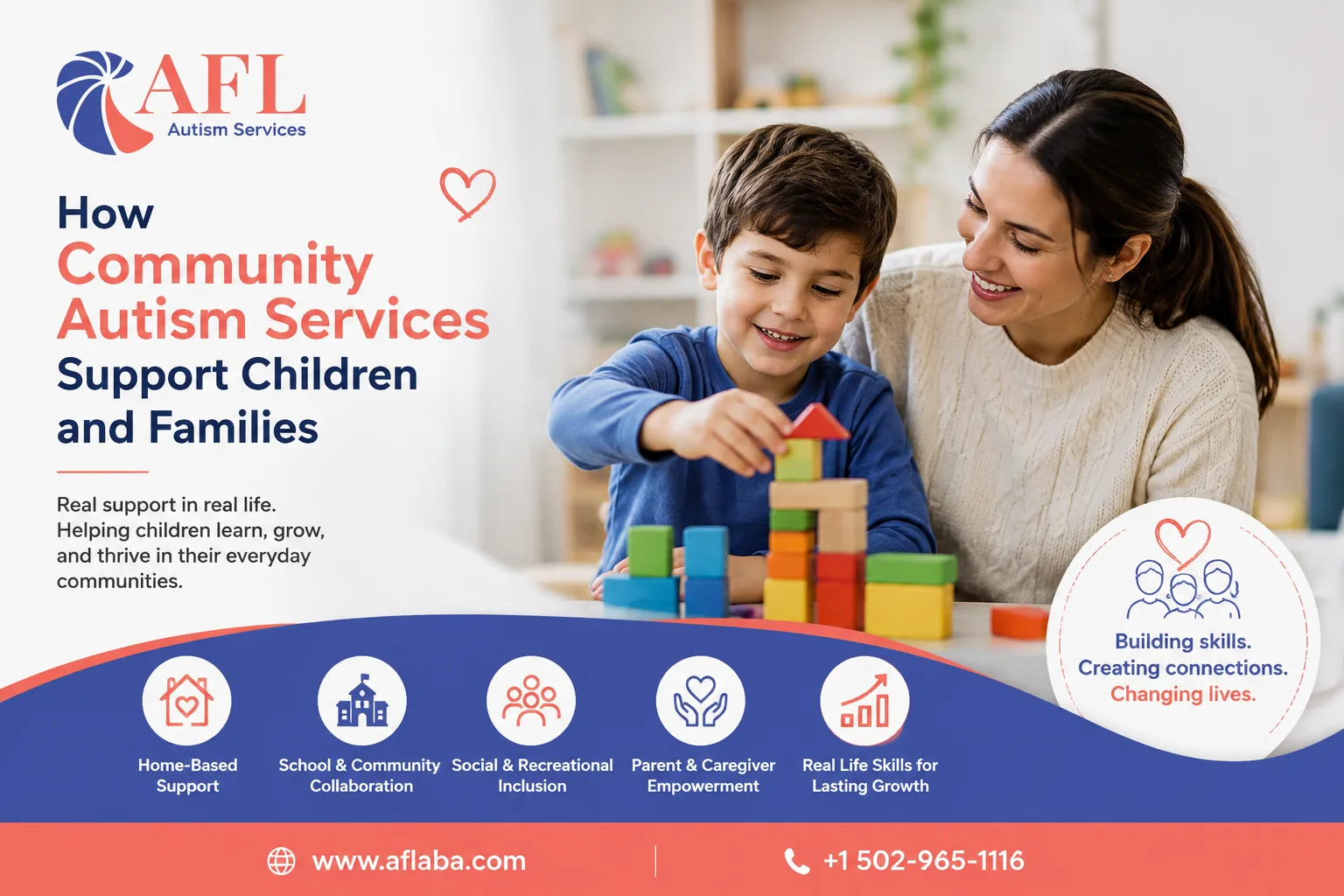
- Home-based ABA therapy, where a behavior technician works with your child in your living room, kitchen, or backyard
- School-based support, where therapists or specialists collaborate with teachers to support your child during the school day
- Social skills groups run in community settings like libraries or recreation centers
- Parent and caregiver training conducted in the home so parents can practice the same strategies their child's therapy team uses
- Recreational inclusion programs that help children participate in sports, camps, or community activities alongside peers
What ties all of these together is the idea that children learn best when skills are practiced in the context where they need them. If you are just starting this journey and want a grounded overview of how ABA works before diving into setting-specific questions, the post on what ABA therapy is for children is a helpful place to start.
Why Community-Based Autism Services Matter
Here is something many parents discover along the way: a child can master a skill in therapy and still struggle to use it at home or at school. This is not a failure of the therapy. It is a common challenge called the generalization gap.
Generalization means being able to use a learned skill across different settings, people, and situations. A child might learn to ask for help during a therapy session with their behavior technician, but freeze up when they need to ask their teacher, a grandparent, or a stranger at a store.
Community-based autism services are specifically designed to close that gap. By practicing skills in the environments where they will actually be used, children get real experience with the natural variations in people, settings, and cues that clinic practice cannot fully replicate.
Therapy delivered at home also gives clinicians visibility into things that matter your child's actual routine, the specific sensory features of your home, family dynamics, sibling interactions. That information helps teams design support that fits your family's real life, not a generic version of it.
For a closer look at how ABA therapy improves the specific areas most affected communication, behavior, and daily skills the post on how ABA therapy improves behavior, communication, and skills walks through this in parent-friendly detail.
How Community Services Complement Clinic-Based Care
Clinic-based therapy and community autism services work best when they are connected. Many families access both, and understanding how they work together helps you make the most of each.
Clinic-based autism therapy provides a structured environment where children can build foundational skills with close supervision, reliable routines, and trained staff. The clinic setting is ideal for introducing new behaviors, managing complex challenges, and collecting consistent data on progress.
Community-based services then take those same skills and help children practice them in real situations. A child who has learned a communication strategy in a clinic session might work with their therapist at home to use that strategy when asking for a snack or navigating a sibling disagreement.
This bridge between settings does not happen automatically. It requires communication between team members, shared goals, and consistent strategies across environments. When families are part of that communication loop, outcomes are noticeably stronger.
Parents often ask how long it takes before they start seeing meaningful change. That depends on many factors, but the post on how long ABA therapy takes to show results covers realistic timelines and what to watch for at different stages.
If your child is already enrolled in home and community-based ABA therapy, the team working in natural settings is already doing this bridge work.
The Role of Families in Community Autism Services
Family involvement is not optional in good community autism services. It is built into how the work is done.
Parents and caregivers spend far more time with their children than any therapist does. That makes parents, in many ways, the most important people on the support team.
Autism family support through community-based programs often includes:
Parent training. Therapists show parents the specific techniques and strategies they use with the child, then practice those strategies together in the home. This is sometimes called Behavioral Skills Training (BST). The post on the power of parent training in ABA therapy goes deeper on what this looks like in practice and why it makes such a meaningful difference.
Shared goals. Families help set the goals. What does independence look like for your child? What routines are the hardest right now? What skills would make the biggest difference in your daily life? These answers shape the plan.
Coaching during everyday routines. Instead of a therapist taking over, many home-based sessions involve the therapist coaching the parent through a routine like mealtime, getting ready for school, or bedtime so the parent feels confident handling it independently.
Regular check-ins. Good providers keep communication open. Updates are not just progress reports. They are conversations where parents can ask questions, raise concerns, and adjust the plan as the child grows.
When families understand the strategies their child's team uses and apply them consistently at home, children make faster progress. It is not about putting pressure on parents. It is about recognizing the real influence parents have.
Starting Early Makes a Real Difference
One of the most consistent things the research supports is the value of starting autism intervention services as early as possible. Young children's brains are especially receptive to new learning, and early ABA therapy gives children a head start on building communication, social, and adaptive skills before challenges become harder to address.
The post on the benefits of early intervention with ABA therapy breaks down why timing matters and what families can expect when they start services in the toddler and preschool years.
That said, starting at any age is better than waiting. Community autism services can be beneficial for school-age children and adolescents too. The key is that the plan is individualized and the goals are meaningful for where the child is right now.
If you are unsure whether your child's behaviors could be early signs of autism, the post on early signs of autism in toddlers can help you understand what to look for before pursuing a formal evaluation.
Autism Resources for Families: Where to Start
Finding autism resources for families can feel like trying to drink from a fire hose. There is a lot of information, and not all of it is well-organized or easy to act on.
Here are some practical steps if you are just getting started or trying to expand your child's current support:
Start with a diagnostic evaluation if you do not have one yet. A diagnosis is the gateway to most funded services. Autism diagnostic services can clarify what your child needs and open doors to insurance coverage.
Talk to your child's current therapy team. If your child is already in clinic-based therapy, ask whether they offer or can coordinate community-based support. Many providers offer both. And if you are still weighing whether ABA is right for your family, the post on whether ABA therapy is effective covers the evidence honestly and answers the questions parents most commonly raise.
Check your insurance. In most states, insurance is required to cover ABA therapy, including home and community-based services. The specifics vary. Your provider's intake team can often help you navigate this.
Connect with other parents. Local parent groups, school district parent liaisons, and autism family networks can point you toward community resources you might not find through a web search.
Explore what your school district offers. Children with autism are often eligible for services through their school under IDEA (Individuals with Disabilities Education Act). These services work alongside, not instead of, private therapy.
How Adapt For Life Supports Children and Families in the Community
At Adapt For Life, supporting children with autism means showing up in the places where children actually live not just in the clinic, but at home and in their communities.
The home and community-based ABA therapy program at Adapt For Life is built around the understanding that skills need to work in real life, not just in a therapy room. BCBAs design individualized programs, RBTs deliver sessions in natural settings, and families are kept in the loop every step of the way.
Whether your child is just starting their autism journey or you are looking for ways to expand existing support, the Adapt For Life team is ready to talk. Reach out today to get started and learn more about what community autism services might look like for your family.