Anxiety is often brushed off as “just in the mind.” But when anxiety becomes chronic—lingering for months or even years—it can quietly affect the body in deep and complex ways. One of the most overlooked areas it influences is reproductive health.
For individuals and couples trying to conceive, understanding how chronic anxiety disrupts reproductive signals can help remove guilt and bring clarity. Fertility struggles are rarely only physical; the mind and body are always communicating.
Understanding Anxiety as a Biological Response
Anxiety is the body’s natural response to perceived threat. In short bursts, it’s protective. But when anxiety becomes constant, the nervous system stays in a prolonged state of alert.
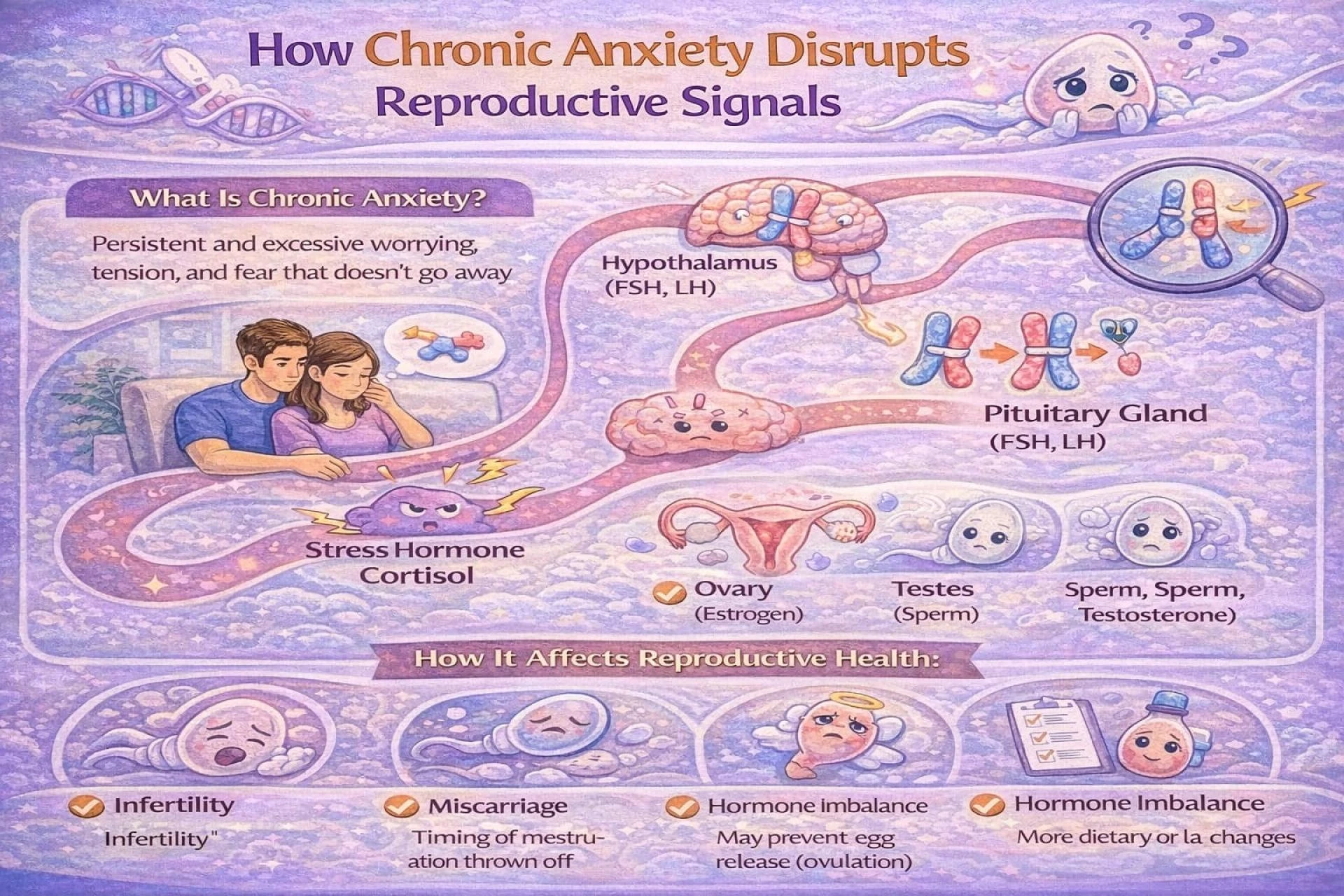
This activates the hypothalamic-pituitary-adrenal (HPA) axis, increasing the release of stress hormones like cortisol and adrenaline. While useful for survival, these hormones can interfere with the delicate hormonal signals needed for reproduction.
The Brain–Hormone Connection
Reproductive hormones are regulated by the hypothalamic-pituitary-gonadal (HPG) axis. This system relies on precise timing and balance.
Chronic anxiety disrupts this system by:
- Suppressing GnRH (gonadotropin-releasing hormone)
- Reducing FSH and LH hormone signals
- Altering estrogen, progesterone, and testosterone levels
When stress signals dominate, the body often prioritizes survival over reproduction.
Impact of Chronic Anxiety on Women’s Fertility
In women, ongoing anxiety may lead to:
- Irregular or missed ovulation
- Changes in menstrual cycle length
- Luteal phase defects
- Hormonal imbalances that affect implantation
Some women also experience heightened physical symptoms—pain, bloating, or fatigue—that further increase emotional stress, creating a cycle that’s hard to break.
Impact on Male Reproductive Health
Men are equally affected, though it’s discussed less openly. Chronic anxiety can:
- Lower testosterone levels
- Reduce sperm concentration and motility
- Increase oxidative stress affecting sperm DNA
- Affect sexual desire and performance
Because sperm production takes about 70–90 days, long-term stress can influence multiple cycles of sperm development.
Anxiety, Sleep, and Fertility Signals
Anxiety often disrupts sleep, and sleep disruption further amplifies hormonal imbalance. Poor sleep affects melatonin production, which indirectly influences reproductive hormones.
This can lead to:
- Altered ovulation timing
- Reduced egg and sperm quality
- Increased fatigue and emotional sensitivity
Sleep, anxiety, and fertility are tightly interconnected.
Emotional Weight of Fertility Struggles
Fertility challenges themselves can cause anxiety. Doctor visits, test results, social pressure, and repeated disappointments can build emotional exhaustion.
It’s important to understand:
- Anxiety does not mean weakness
- Fertility struggles do not mean failure
- Emotional distress is a natural response to uncertainty
Blaming oneself only increases stress hormone levels further.
Can Anxiety Reduce IVF Success?
Research suggests that severe, unmanaged anxiety may influence treatment outcomes by affecting hormonal response, medication adherence, and overall well-being.
This is why leading fertility clinics increasingly integrate emotional support into treatment plans. A Top IVF centre in Bangalore or any advanced fertility setup often emphasizes counseling, stress management, and compassionate care alongside medical treatment.
Breaking the Stress–Fertility Cycle
Reducing anxiety doesn’t mean eliminating stress entirely—it means managing it in a healthier way.
Helpful approaches include:
- Fertility-focused counseling
- Mindfulness or relaxation techniques
- Moderate physical activity
- Limiting social media triggers
- Open communication with partners
Small emotional shifts can bring measurable hormonal benefits over time.
Role of Professional Support
When anxiety feels overwhelming or persistent, professional mental health support can be life-changing. Therapy doesn’t mean something is “wrong”—it means something deserves care.
Some fertility centers collaborate with psychologists to support patients emotionally, recognizing that mental health is part of reproductive health.
Supporting the Body While Treating the Mind
Medical treatment and emotional care are not separate paths—they work best together. When anxiety is addressed:
- Hormonal signaling becomes more stable
- Sleep improves
- Treatment decisions feel less overwhelming
- Emotional resilience increases
This creates a healthier internal environment for conception, whether naturally or through assisted methods.
Final Thoughts
Chronic anxiety doesn’t just affect thoughts—it affects hormones, timing, and biological communication. Reproductive health depends on harmony between the brain and body, and anxiety can disrupt that harmony when left unaddressed.
Understanding this connection replaces self-blame with self-compassion. Fertility journeys are demanding, and emotional care is not optional—it’s essential. Supporting mental well-being is not a distraction from fertility treatment; it is a powerful part of it.