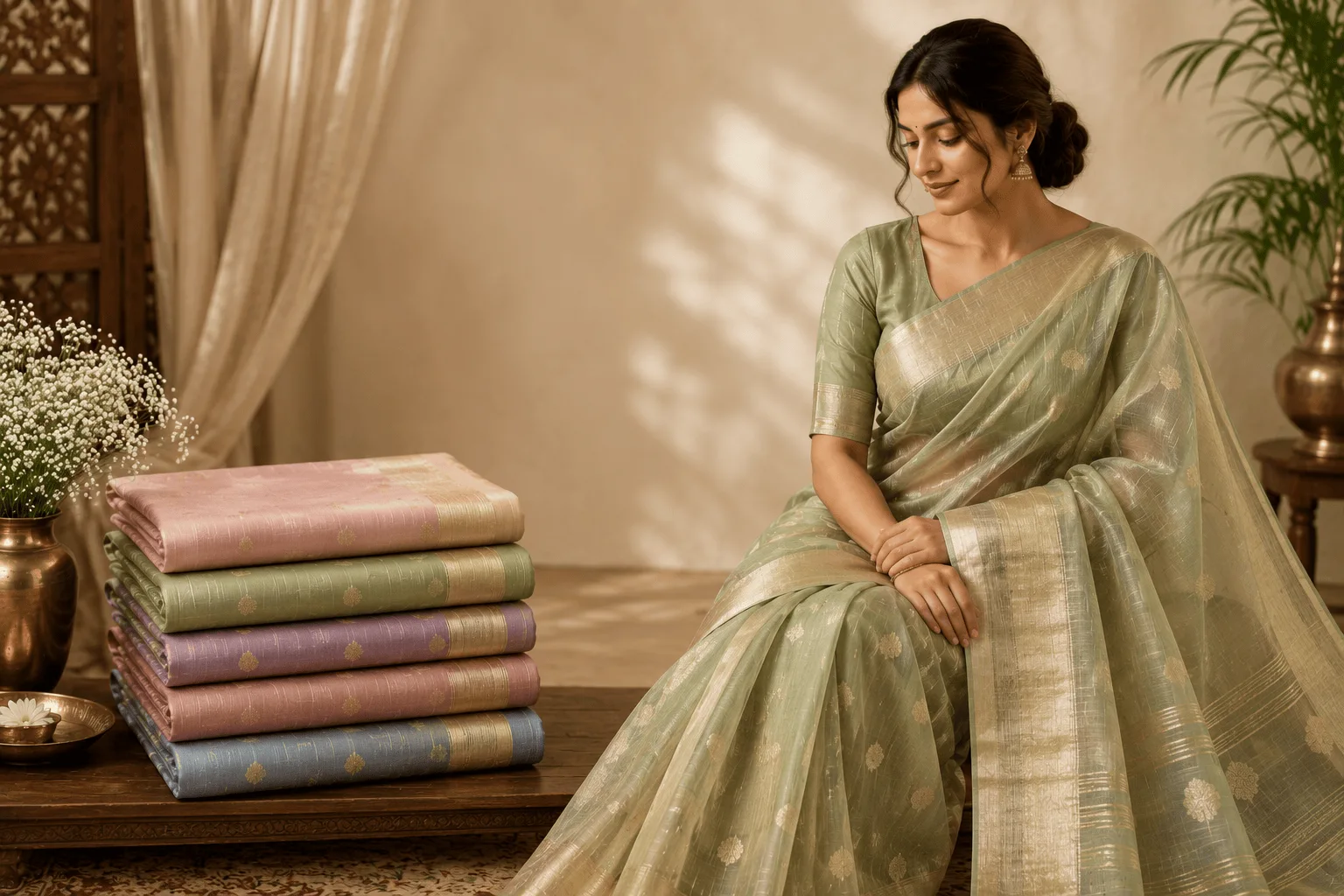
How Chanderi Silk Sarees Are Made is a story of patience, artistry, and centuries-old craftsmanship passed down through generations of skilled Indian weavers. Every Chanderi Silk saree reflects a remarkable journey that begins with carefully selected silk and cotton threads and ends with an elegant drape admired across the world. Known for its lightweight texture, delicate transparency, and intricate zari motifs, a Chanderi saree has become a timeless symbol of India's rich textile heritage.
Unlike mass-produced fabrics, handwoven Chanderi sarees require precision at every stage of the Chanderi weaving process. From preparing natural silk yarn to setting up traditional handlooms and weaving each motif by hand, artisans dedicate days—and often weeks—to completing a single masterpiece. This slow and thoughtful process not only preserves traditional Indian weaving techniques but also supports sustainable fashion and rural artisan communities.
For those who appreciate authentic handloom sarees, understanding how these elegant garments are created adds even greater value to every purchase. Brands like Indeloom celebrate this heritage by offering handcrafted collections that honor skilled Indian artisans while preserving the beauty of heritage weaving for future generations.
The Rich Heritage Behind Chanderi Silk Sarees
The Historical Roots of Chanderi Weaving
The history of Chanderi weaving dates back several centuries to the historic town of Chanderi in Madhya Pradesh. Once favored by royal families and noble courts, these exquisite fabrics became known for their exceptional craftsmanship and luxurious appearance. Over generations, artisan families carefully preserved traditional weaving techniques, passing their knowledge from parents to children. Even today, many skilled weavers continue using handlooms to create authentic masterpieces. This centuries-old tradition remains one of India's finest examples of living textile heritage, blending culture, artistry, and craftsmanship into every woven saree.
Why Chanderi Remains a Symbol of Timeless Elegance
Every Chanderi Silk saree stands apart because of its graceful balance between luxury and comfort. The unique silk and cotton blend creates a lightweight fabric with a soft sheen that drapes beautifully for every occasion. Delicate zari borders, floral motifs, geometric patterns, and traditional designs further enhance its charm. Whether worn during weddings, festivals, or formal celebrations, the saree offers elegance without feeling heavy. This versatility has allowed Chanderi weaving to remain relevant for modern fashion lovers while preserving the authenticity of traditional Indian handloom artistry.
How Chanderi Silk Sarees Are Made Step by Step
Selecting Premium Silk and Cotton Threads
The weaving journey begins with selecting premium-quality silk yarn, fine cotton threads, and pure zari. Experienced artisans examine each material carefully because the final texture, durability, and appearance depend largely on the quality of these raw materials. Silk provides the characteristic shine, while cotton adds strength and breathability to the fabric. Zari threads contribute intricate decorative elements that make every saree distinctive. Choosing superior materials ensures that the finished saree maintains its elegance for years while preserving the lightweight characteristics that define authentic Chanderi fabric.
Preparing the Yarn Before Weaving
Once the raw materials are selected, artisans prepare the yarn through several detailed processes. The threads are carefully cleaned, dyed using vibrant colors, dried naturally, and wound onto bobbins before weaving begins. Proper yarn preparation helps maintain consistent thread thickness and prevents breakage during loom weaving. Artisans also inspect every spool to remove imperfections that could interrupt the weaving process. This careful preparation creates smooth movement across the loom and allows the finished fabric to achieve an even texture with exceptional durability.
Setting Up the Traditional Handloom
Preparing a traditional handloom is one of the most demanding stages of Chanderi weaving. Artisans carefully arrange the warp threads, adjust thread tension, and align every section of the loom with remarkable precision. Even a slight imbalance can affect the final pattern or create weaving defects. Depending on the complexity of the design, loom preparation may take several days before weaving begins. This meticulous setup forms the foundation for producing flawless handcrafted sarees with intricate motifs and consistent fabric quality throughout the entire length.
The Intricate Weaving Process
After the loom is ready, skilled weavers begin interlocking the warp and weft threads using traditional handloom techniques. Each movement requires rhythm, concentration, and years of experience to maintain perfect alignment. Unlike automated manufacturing, artisans monitor every inch of fabric as it develops, correcting tiny irregularities immediately. A single handcrafted Chanderi saree can take anywhere from 7 to 20 days to complete, depending on the complexity of the design and zari work involved. This slow process ensures exceptional quality that machines cannot easily replicate.
Creating Signature Zari Motifs
One of the defining characteristics of a Chanderi saree is its beautiful zari work. Skilled artisans weave shimmering metallic threads directly into the fabric, creating elegant floral vines, peacocks, geometric patterns, coins, temple borders, and nature-inspired motifs. Unlike printed decorations, these intricate designs become part of the fabric itself through careful loom weaving. The delicate balance between lightweight fabric and luxurious zari detailing creates an elegant appearance suitable for weddings, festive occasions, and traditional celebrations while preserving the graceful drape that Chanderi is famous for.
Finishing, Washing, and Quality Inspection
Once weaving is complete, every saree undergoes several finishing processes before reaching customers. Loose threads are trimmed, the fabric is gently washed, polished, ironed, and carefully folded. Experienced artisans inspect every inch for weaving consistency, color accuracy, border alignment, and motif perfection. Even minor imperfections are corrected wherever possible to maintain premium quality standards. This final inspection ensures that every handcrafted saree reflects the dedication, precision, and artistry invested throughout the weaving journey.
Stages of Chanderi Saree Production
Production StagePurposeTime RequiredYarn SelectionChoose premium silk, cotton, and zari1–2 DaysDyeingAdd vibrant and lasting colors1 DayYarn PreparationWinding and bobbin setup1 DayLoom SetupArrange warp threads accurately2–3 DaysHand WeavingCreate the saree by hand7–20 DaysFinishingInspection, polishing, and ironing1–2 Days
Why Handmade Chanderi Sarees Take Time
Every Motif Is Carefully Woven by Hand
Unlike machine-made textiles that rely on automated embroidery or digital printing, handcrafted Chanderi sarees are created motif by motif on traditional handlooms. Every floral pattern, geometric design, and zari border requires precise hand movements and continuous concentration. A small mistake may require hours of correction, making patience one of the weaver's greatest skills. This careful attention ensures that every saree is unique, carrying subtle variations that reflect genuine artisan craftsmanship rather than factory uniformity.
Human Skill Cannot Be Replaced by Machines
Modern textile machines can produce fabric quickly, but they cannot reproduce the artistic depth of traditional handloom weaving. Skilled artisans instinctively adjust thread tension, weaving rhythm, and motif placement while working, creating subtle details that automated systems often miss. Handmade sarees also retain a softer texture, greater durability, and authentic cultural value. By choosing handcrafted pieces, buyers support sustainable fashion while helping preserve one of India's oldest weaving traditions for future generations.
Handmade vs Machine-Made Chanderi Sarees
Comparison Between Handmade and Machine-Made Chanderi Sarees
FeatureHandmade Chanderi SareeMachine-Made SareeCraftsmanshipArtisan wovenAutomatedUniquenessEvery piece is uniqueMass producedDurabilityHighModerateTextureSoft and breathableUniformMotifsHandwovenPrinted/AutomatedProduction TimeSeveral daysFew hoursCultural ValueHighLowSustainabilityEco-friendlyLess sustainableUnderstanding the Difference Before Buying
Buying a Chanderi saree becomes easier when you know how to identify genuine handloom craftsmanship. Authentic handcrafted sarees often feature slight natural variations that reflect the artisan's work rather than machine perfection. Examine the texture, transparency, selvedge finish, and woven zari motifs closely. Handwoven designs are integrated into the fabric instead of being printed or embroidered afterward. While machine-made sarees may appear similar at first glance, they lack the depth, individuality, and cultural significance of authentic Chanderi weaving. Choosing handmade means investing in craftsmanship, tradition, and long-lasting quality.
The Role of Skilled Weavers in Preserving Tradition
Passing Skills Across Generations
The art of Chanderi weaving survives because families have preserved their knowledge for centuries. Young artisans learn by observing experienced weavers, gradually mastering techniques such as loom preparation, thread alignment, and intricate motif creation. This apprenticeship model ensures that traditional Indian weaving methods remain alive despite changing fashion trends and industrial production. Every handcrafted saree represents years of learning, discipline, and dedication. By continuing these traditions, artisan communities protect an important part of India's cultural identity while creating livelihoods for future generations.
Supporting Artisan Communities Through Ethical Purchases
Purchasing authentic handloom sarees directly contributes to the well-being of weaving communities. Ethical buying practices encourage fair wages, sustainable production, and continued investment in traditional craftsmanship. Rather than supporting mass manufacturing, customers help preserve heritage weaving techniques that might otherwise disappear. Brands like Indeloom work closely with skilled artisans to celebrate authentic Indian handloom craftsmanship while promoting responsible fashion choices. Every genuine purchase supports rural families, strengthens local economies, and helps preserve India's remarkable textile legacy for years to come.
Tips for Identifying Authentic Chanderi Silk Sarees
Small Details That Reveal Authenticity
Authentic Chanderi Silk sarees possess characteristics that are difficult for machine-made fabrics to imitate. Look for a lightweight feel, soft transparency, neatly finished selvedges, and finely woven zari motifs that become part of the fabric instead of sitting on the surface. Small irregularities in the weave are often signs of genuine handloom craftsmanship rather than defects. Purchasing from trusted brands and artisan-focused sellers also increases confidence in authenticity. Understanding these details helps buyers appreciate the value behind every handcrafted masterpiece instead of making decisions based only on price.
Conclusion
Understanding How Chanderi Silk Sarees Are Made offers a deeper appreciation for one of India's most celebrated handloom traditions. From selecting premium silk and cotton yarn to preparing the threads, setting up traditional looms, weaving intricate motifs, and performing careful finishing, every stage demands remarkable patience and expertise. The journey from thread to drape is not simply a manufacturing process—it is a reflection of India's artistic heritage, cultural identity, and centuries of artisan craftsmanship.
Every authentic Chanderi Silk saree tells a unique story through its lightweight texture, elegant zari work, and handcrafted details. Unlike mass-produced alternatives, each saree carries the personal touch of skilled weavers who dedicate days, sometimes weeks, to creating a single masterpiece. Supporting these artisans also encourages sustainable fashion, ethical production, and the preservation of traditional Indian weaving techniques.
Whether you are purchasing your first Chanderi saree or adding another timeless piece to your collection, choosing authentic handloom creations ensures lasting quality and cultural value. Brands like Indeloom continue to honor India's weaving legacy by connecting modern buyers with genuine handcrafted collections that celebrate heritage, craftsmanship, and timeless elegance. Every purchase becomes a meaningful investment in preserving one of India's finest textile traditions for future generations.
Frequently Asked Questions
1. How Chanderi Silk Sarees Are Made?
Chanderi silk sarees are handcrafted by preparing silk yarn, setting handlooms, weaving intricate motifs, finishing carefully, and performing quality inspections.
2. Why are Chanderi silk sarees lightweight?
Fine silk, cotton blends, and expert handloom weaving create breathable fabric, making Chanderi sarees comfortable, elegant, and lightweight for occasions.
3. How long does it take to weave one Chanderi saree?
Depending on design complexity, skilled artisans usually require seven to twenty days to complete one authentic handcrafted Chanderi saree beautifully.
4. How can I identify an authentic Chanderi Silk saree?
Check transparency, handwoven motifs, lightweight texture, neat borders, traditional weaving patterns, and trusted artisan-focused brands before purchasing carefully.
5. Are handmade Chanderi sarees better than machine-made ones?
Handmade Chanderi sarees offer superior craftsmanship, durability, uniqueness, cultural authenticity, and sustainable value compared with machine-produced alternatives every time.
6. Why should I choose handcrafted Chanderi sarees from trusted brands?
Trusted brands like Indeloom promote authentic craftsmanship, ethical sourcing, artisan livelihoods, premium quality, and genuine Indian handloom heritage preservation.