A safari-inspired nursery can capture a sense of adventure while remaining peaceful and uncluttered. Achieving this balance involves choosing a few animal-themed accents, using a soothing color palette, selecting functional furniture, and preserving open space for daily activities. A rug can anchor the design, wall mounts can create visual depth, blankets can add softness, and plush animals can give shelves or reading corners a playful touch.
Using complementary colors, textures, and animal details helps each decorative element feel connected without overwhelming the room. ClaraLoo’s handcrafted collection allows parents to incorporate safari animal nursery decor into the space while creating a gentle, comfortable setting where their baby can rest, play, and grow.
Why Is Safari Animal Décor a Good Choice for a Nursery?
Safari themes work well in nurseries because they are playful, flexible, and suitable for many design preferences. Lions, giraffes, elephants, tigers, and other familiar animals introduce personality while giving parents many choices for colors and accessories.
A safari creatures nursery can feature warm neutrals, natural greens, muted earth tones, or brighter accents. This flexibility makes the theme suitable for a baby boy, baby girl, or gender-neutral room. It can also adapt as a child grows. A decorative animal rug, wall mount, or plush toy can continue to suit a toddler bedroom, reading corner, or playroom.
Safari styling also makes it easier to combine decorative and functional items. Instead of relying only on wallpaper or framed art, parents can develop the theme through textiles and dimensional pieces. The result is a room that feels layered, inviting, and visually interesting.
How Do You Build a Coordinated Safari Nursery Theme?
Begin with a simple color palette before selecting individual products. Ivory, beige, tan, cream, warm gray, and soft brown provide a calm foundation. Muted green, terracotta, mustard, dusty blue, or rust can then be introduced as accent colors.
Next, choose two to four featured animals. A nursery centered on lions, elephants, and giraffes will generally feel more cohesive than a room filled with every type of safari animal. These animals can appear in different forms throughout the room, such as a lion rug, elephant wall mount, giraffe blanket, and a small collection of matching toys.
It is not necessary for every item to match exactly. Coordination is more effective when pieces share one or two visual qualities. For example, a beige rug can complement an ivory wall mount and a tan blanket even if each piece features a different animal.
Balance is especially important when using animal-themed nursery decor. If the rug and walls contain detailed designs, choose solid curtains, simple furniture, and restrained bedding. If the walls are plain, textured accessories can add depth without making the nursery feel cluttered.
How Can Safari Animal Rugs Anchor the Room?
Safari animal rugs can establish the theme as soon as someone enters the nursery. Their shape, texture, and scale naturally attract attention, making them effective statement pieces. Because a rug occupies a significant part of the floor, it can connect nearby furniture and visually define a specific area.
A rug can be placed beside a crib, in front of a dresser, beneath an adult reading chair, or in an open area used for supervised play. Before choosing a size, measure the available floor space and consider how doors, drawers, and furniture will move around it. The rug should support the room’s layout without obstructing walkways.
In a compact nursery, one medium-sized animal rug may provide enough decoration to communicate the theme. In a larger room, the rug can anchor a reading or play zone while leaving other sections more understated.
Texture is another important benefit. A soft rug can visually warm hardwood or tile floors and make a neutral space feel more comfortable. However, parents should keep the rug flat and secure. An appropriate non-slip pad may help reduce movement or bunching, depending on the flooring and rug design.
When choosing among safari nursery accessories, treat the rug as one of the largest visual elements. Select its color first, then repeat that color in smaller items such as baskets, curtains, artwork, or blankets.
How Can Safari Animal Wall Mounts Add Character?
Safari animal wall mounts add shape and dimension that framed pictures cannot provide. They create a strong focal point while preserving valuable floor and shelf space. A single lion, elephant, giraffe, or tiger mount can make a plain wall feel complete without requiring elaborate wallpaper.
Place a statement wall mount above a dresser, low storage cabinet, bookshelf, or reading corner. Avoid installing heavy or decorative objects directly above a crib or any location where a baby sleeps. Every wall-mounted item should be securely installed according to the product instructions and appropriate for the wall material.
For a gallery-style arrangement, group two or three complementary animals with consistent spacing. Keep the center of the display aligned with the furniture below it. Small framed prints, wooden letters, or a child’s name may be added, but they should not compete with the animal pieces.
ClaraLoo safari animal wall mounts can also help parents build a distinct theme without covering an entire wall. Their dimensional texture works especially well in rooms with solid paint colors, subtle wallpaper, or neutral furniture.
The scale of the wall décor should suit the room. One large piece usually works better than several small decorations on a narrow wall. On a wider wall, a balanced group can create the impression of a small safari collection.
How Can Safari Nursery Blankets Add Color and Comfort?
Safari nursery blankets introduce softness, color, and pattern without requiring permanent design changes. A blanket can reinforce the nursery palette through animal illustrations, earthy shades, or tactile materials. It can also be changed seasonally or replaced as the child’s room develops.
When not being used, a decorative blanket may be folded over the back of an adult chair, placed on a blanket ladder, or stored inside an open basket. This makes it part of the room’s design while keeping it accessible for supervised cuddling, feeding, or floor time.
Avoid placing a loose blanket inside an infant’s crib or sleep space. The American Academy of Pediatrics recommends keeping soft objects and loose bedding out of a baby’s sleep area. A fitted sheet designed for the crib mattress should be the only bedding in the sleep space unless a healthcare professional provides different guidance for a specific situation.
Blankets do not need to reproduce the exact animal shown on the rug or wall. A blanket with a coordinating color can provide enough continuity. For example, an olive or beige blanket can complement a lion rug and giraffe wall mount while keeping the design subtle.
Parents should also review care instructions before selecting a blanket. Nursery textiles are more practical when their cleaning requirements suit the household’s routine. Following the manufacturer’s directions helps preserve their texture, shape, and decorative details.
How Can Safari Plush Toys Be Styled in the Nursery?
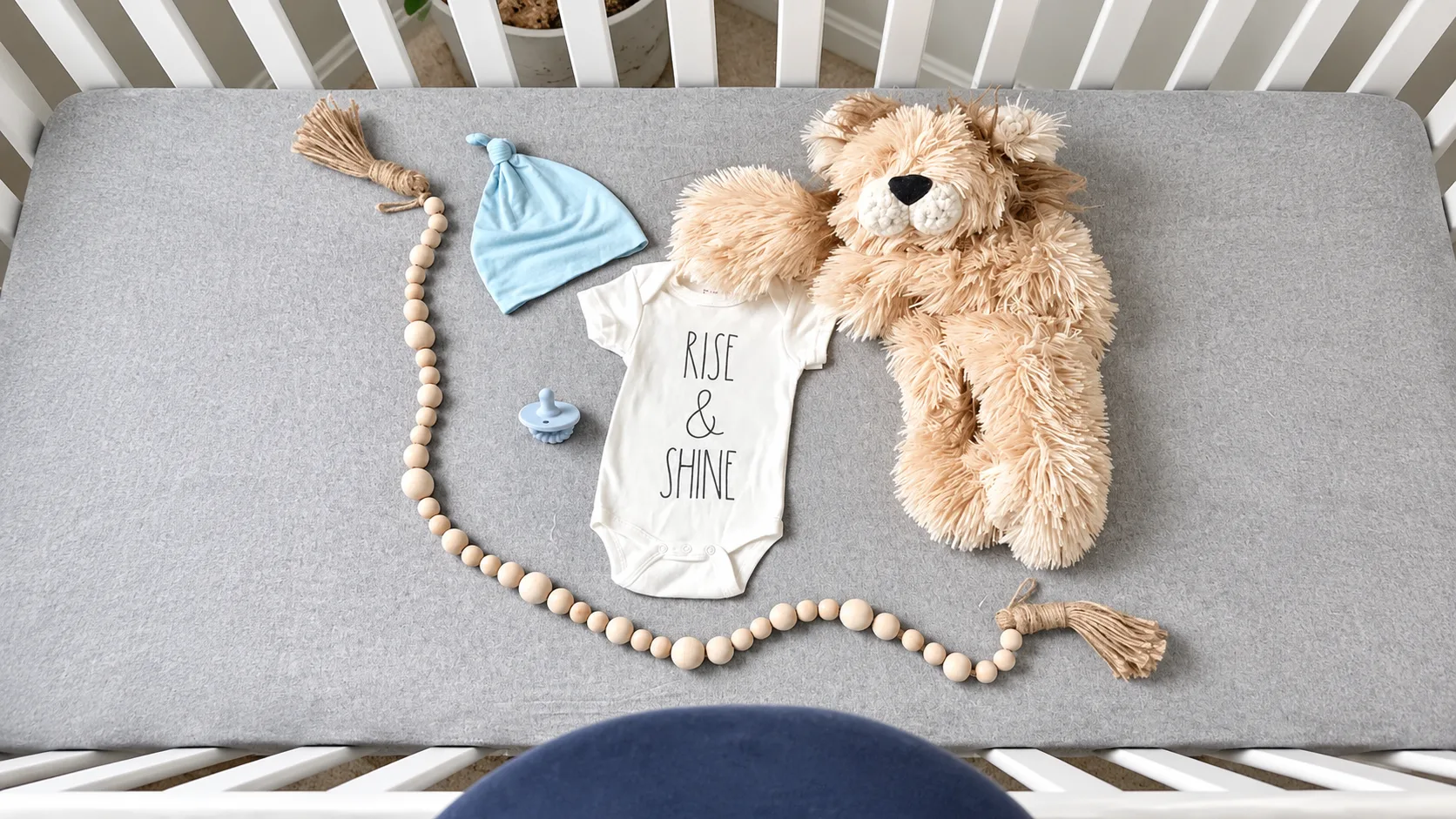
Safari plush toys can function as decorations during the early months and become companions for age-appropriate play later. A small, curated collection looks intentional and makes individual animals easier to notice.
Display plush animals on a secure shelf, inside a floor basket, on top of a stable storage unit, or on an adult reading chair when it is not in use. Varying the size of the toys can create visual interest, but avoid crowding every surface. One larger animal paired with two smaller figures often looks more balanced than a large group.
Plush animals can also support a nursery reading corner. Pair a lion, elephant, or giraffe toy with animal books to create a clear connection between the décor and the activity area. As the child grows, the toys can support storytelling, animal recognition, and imaginative play.
Keep all stuffed toys outside an infant’s crib and sleep area. They can remain on secure furniture or in storage until they are appropriate for supervised interaction. Parents should also inspect plush items regularly for damaged seams, detached decorations, or signs of wear.
How Do You Combine All Four Elements Without Overcrowding the Nursery?
The easiest approach is to choose one statement piece and allow the other items to support it. If a large animal rug is the main feature, select a smaller wall display, one coordinating blanket, and a limited collection of toys. If several wall mounts form the focal point, keep the floor covering and textiles relatively simple.
Use repetition thoughtfully. Repeating the same neutral shade across the rug, wall décor, and blanket creates unity. Repeating one animal in two places can reinforce the theme, but placing the same character on every product may make the room feel overly coordinated.
Leave open areas between decorative pieces. Clear surfaces, visible wall space, and unobstructed flooring help the nursery remain practical. Babies require storage, changing supplies, feeding essentials, and space for caregivers to move comfortably.
A useful arrangement may include:
- One statement animal rug in a reading or play area
- One wall mount or a group of two to three coordinated mounts
- One or two blankets stored outside the crib
- Two to four plush animals displayed on a shelf or in a basket
This structure allows safari animal nursery decor to feel intentional while supporting the nursery’s daily functions.
Where Should Safari Décor Be Positioned?
Different nursery zones serve different purposes, so decorations should support the activity taking place in each area.
Crib Area
Keep the crib area visually calm and physically clear. Loose blankets, pillows, plush toys, and other soft objects should remain outside the infant’s sleep space. Avoid hanging wall mounts or heavy decorations directly above the crib.
Reading Corner
A reading corner is an ideal place for a rug, adult chair, blanket basket, books, and displayed plush animals. Repeating one or two colors in this zone can make it feel separate from the sleeping area without introducing a new design theme.
Dresser and Changing Area
A securely installed wall mount above or beside a dresser can create a focal point. Keep frequently used supplies accessible, and avoid placing loose decorative items where they can interfere with changing routines.
Storage Area
Use baskets and shelves to organize blankets and toys. Attractive storage allows these pieces to contribute to the room’s style while helping parents maintain clear walking surfaces.
What Safety and Care Details Should Parents Consider?
Nursery design should always account for secure installation, age-appropriate use, and easy maintenance. Attach wall décor using hardware suited to its weight and the wall material. Check the installation regularly, especially if furniture or room arrangements change.
Keep rugs smooth and securely positioned. Follow product-specific cleaning instructions rather than assuming every textile can be machine washed. Inspect seams, stitching, and decorative details on plush items and blankets for damage.
Most importantly, distinguish between nursery decoration and safe sleep. Blankets, pillows, rugs, wall mounts, and plush toys can enhance the room, but loose products should not be placed in an infant’s crib. Parents should follow current pediatric safe-sleep recommendations and product instructions.
How Can the Safari Theme Grow With Your Child?
A well-planned safari nursery can transition beyond infancy. The animal rug may move from beside the crib to a toddler reading area. Wall mounts can remain as distinctive bedroom décor, while plush animals can shift from shelf displays to supervised play.
Blankets may continue to be used for reading, travel, or quiet time when developmentally appropriate. New books, storage bins, and artwork can update the room without replacing its main features.
This adaptability makes safari animal nursery decor a practical design choice. Parents can establish a clear theme during the nursery stage and gradually adjust how each piece is used as their child’s needs change.
Create a Nursery Filled With Safari Character
Rugs, wall mounts, blankets, and plush toys each contribute something different to a safari nursery. Rugs anchor the layout, wall mounts add dimension, blankets introduce color and texture, and plush toys bring warmth and opportunities for future play.
Choose a calm palette, feature a limited group of animals, and let one item serve as the room’s main statement. Keep infant sleep areas free from loose objects and position decorations where they can be enjoyed safely.
Explore handcrafted safari pieces from ClaraLoo and Shop Nursery Decor to create a coordinated room that feels welcoming, imaginative, and ready to evolve with your child.
FAQ's
What are the best colors for a safari-themed nursery?
Warm neutrals such as ivory, beige, tan, cream, and soft brown create a calm foundation. Muted green, terracotta, mustard, dusty blue, or rust can add restrained color. Choose two or three main shades and repeat them across the room.
Where should an animal rug be placed in a nursery?
An animal rug can be placed near a reading chair, in front of a dresser, beside the crib, or in an open supervised play area. It should lie flat, avoid blocking doors or drawers, and remain clear of main walking paths.
Can safari wall mounts be installed above a crib?
Wall décor should not be installed directly above an infant’s crib. Place securely mounted pieces above a dresser, bookshelf, storage cabinet, or reading area instead. Follow the installation instructions and use hardware appropriate for the wall and product weight.
Are blankets safe to leave inside a baby’s crib?
Loose blankets should not be placed in an infant’s sleep space. Store decorative or functional blankets in a basket, on a blanket ladder, or over an adult chair for supervised use. Follow current safe-sleep guidance from qualified pediatric authorities.
Can plush safari animals be kept in a crib?
Plush toys should remain outside an infant’s crib. Display them on secure shelves, in storage baskets, or in another supervised area. They can become part of age-appropriate play as the child grows.
How many safari animals should be included in the theme?
Focusing on two to four featured animals usually creates a balanced result. For example, parents might combine lions, elephants, and giraffes across the rug, wall display, blanket, and toys without filling every surface.
How can I prevent a safari nursery from looking too busy?
Choose one statement piece, limit the color palette, leave open wall and floor space, and use solid-colored furniture or curtains to balance detailed animal designs. Smaller accessories should support the main feature rather than compete with it.
Can safari nursery décor transition into a toddler room?
Yes. Rugs can define reading or play areas, wall mounts can remain as bedroom art, blankets can support quiet time, and plush animals can become play companions. Updating books, bedding, and storage may be enough to adapt the room.