Pick up two polo t shirts that look almost identical on a hanger and you can usually tell within ten seconds which one is the better piece. The collar sits differently. The fabric feels different in your fingers. One holds its shape when you tug the hem, the other sags like it already gave up. None of this is guesswork once you know what to actually check, and it matters a lot more than people assume when a business is ordering fifty or a hundred of the same polo for a team.
Start With the Fabric, Not the Logo
A printed logo or an embroidered crest is the first thing most people look at, but it tells you nothing about how the garment will hold up. The fabric underneath is doing all the real work.
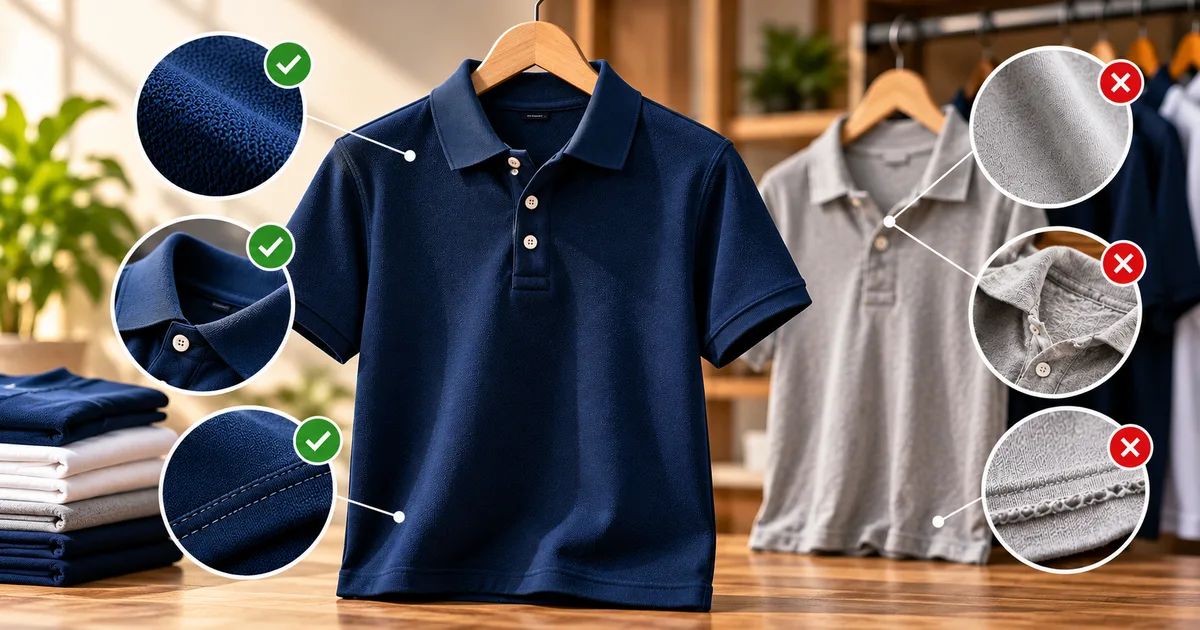
Piqué knit is the classic premium choice for Custom Polo T-Shirts because its slightly textured, waffle like weave holds its shape, resists stretching out of place, and drapes more evenly than a flat jersey knit. Jersey knit polos are smoother and a bit more stretchy, which some wearers prefer, but a thin jersey fabric sags faster and shows wear earlier. Either weave can be premium, as long as the fabric feels substantial between your fingers rather than thin or papery.
Rub the fabric gently. A good cotton or cotton blend feels smooth and slightly cool, not rough or fuzzy. Hold it up toward light. If a lighter shade turns see through, the fabric is thinner than it should be for daily wear or repeated washing.
Check the Collar Before Anything Else
The collar is the single fastest giveaway. It is also the part that fails first on a cheap polo. A well built collar lies flat without needing an iron, holds a slight natural roll, and keeps its shape through dozens of washes instead of curling up at the edges after just three or four.
Gently fold the collar and let it go. A reinforced, ribbed, or structured collar springs back into shape almost immediately. A collar that stays creased or flops to one side is a clear sign of thin, under supported construction. For office uniforms or client facing roles, a collar that holds its line all day is not a small detail. It is often the difference between looking put together and looking like you forgot to iron.
Look Closely at the Stitching
Flip the polo inside out for a moment. Premium construction shows up here faster than anywhere else. Seams should be straight, tight, and even, with no loose threads hanging off the shoulders, sleeves, or side seams. Double stitched hems and seams are the standard for anything meant to survive regular wear, since a single row of stitching tends to unravel much sooner.
Pay attention to the placket, the strip of fabric that holds the buttons near the collar. On a well made polo it lies completely flat against the chest without puckering or pulling when buttoned. Buttons themselves should feel sturdy and sit tightly against the fabric rather than hanging loose. Uneven button spacing or threads that look rushed usually point to corners being cut somewhere else too.
Weight Tells You More Than You Think
Fabric weight, measured in GSM or grams per square meter, is a quiet but reliable quality signal. Lighter fabric in the 180 to 200 GSM range works well for warm climates and everyday wear, while anything heading toward 220 GSM and above feels noticeably more structured and premium, suited to uniforms or branded wear that needs to look sharp through a full shift. Very light fabric below that range can feel breezy in summer but tends to show wear and transparency sooner.
There is no single correct GSM for every order. What matters is that the weight matches the job the polo is meant to do, and that it feels consistent and well finished rather than thin and cut rate.
A Simple Five Point Check Before You Order
Before placing a bulk order, it helps to run through a short checklist rather than trusting a photo on a catalog page. Feel the fabric for thickness and smoothness. Fold and release the collar to see how fast it recovers its shape. Turn the garment inside out and inspect the stitching at the seams and hem. Check that the placket and buttons sit flat and secure. And ask what GSM the fabric is, since a manufacturer who knows this number off the top of their head usually knows their fabric well.
The Bottom Line
Spotting a premium polo does not require special training, just a few seconds of close attention to fabric, collar, stitching, and weight. These details rarely show up clearly in a product photo, which is why requesting an actual sample before a large order remains one of the smartest habits in custom apparel. A dependable custom apparel manufacturer in Patna or anywhere else should be glad to walk through these details with you, since a manufacturer confident in their own construction has nothing to hide behind a glossy picture. Custom apparel built on fabric and stitching that actually holds up tends to look just as sharp on day two hundred as it did on day one.