A Jeep should feel steady on the road, even on rough patches. But sometimes, a strong shake can hit the steering wheel and make the ride feel out of control. This shaky movement is known as death wobble, and it can feel scary when it starts at higher speeds. A professional Jeep death wobble diagnosis helps find what sits behind this issue, so the real cause becomes clear and safe handling can return.
Death wobble does not come from one small problem. It grows from several weak points in the vehicle working together. Tires, alignment, and steering parts all play a big role. When one part goes off balance, the rest can follow, and the shake begins.
What Does Jeep Death Wobble Mean?
Death wobble is a strong shaking in the front wheels. The steering wheel moves side to side very fast. It feels like the Jeep has lost calm control for a moment.
This does not mean the Jeep will stop working. It means something in the front system needs expert attention. The issue usually shows up after hitting a bump or driving at certain speeds. A proper Jeep steering wobble diagnosis helps pinpoint where the problem starts.
How Tire Problems Trigger the Shake
Tires are the first contact point with the road. If they are not in good shape, the Jeep can lose balance fast.
Here are common tire-related triggers:
- Uneven tire wear
- Wrong air pressure
- Poor tire balance
- Damaged tire edges
When tires wear unevenly, they do not roll smoothly. Instead, they bounce slightly on the road. This small bounce grows into a bigger shake at higher speeds.
Unbalanced tires also create vibration. That vibration travels straight into the steering wheel. Over time, it adds pressure to the front suspension parts and increases the risk of wobble. Tire condition is one of the first checks during a professional Jeep death wobble diagnosis, since it sets the base for stability.
How Alignment Issues Make the Problem Worse
Wheel alignment keeps the tires pointing in the right direction. When alignment goes off, tires start pulling in different ways.
This creates a chain reaction:
- Tires fight against each other
- Steering feels loose
- Front wheels lose straight balance
Even a small shift in alignment angles can disturb smooth driving. The Jeep may drift or feel heavy on one side. On rough roads, this imbalance becomes stronger and can trigger wobbles.
A clear Jeep steering wobble diagnosis always checks alignment angles like camber, caster, and toe. These angles control how tires sit on the road. If they shift, stability drops.
How Steering Parts Contribute to Death Wobble
The steering system connects the driver to the wheels. If any part becomes loose or worn, control reduces.
Key steering parts involved:
- Tie rods
- Drag link
- Steering stabilizer
- Ball joints
When these parts wear out, small gaps appear in the system. These gaps allow movement in places where there should be tight control.
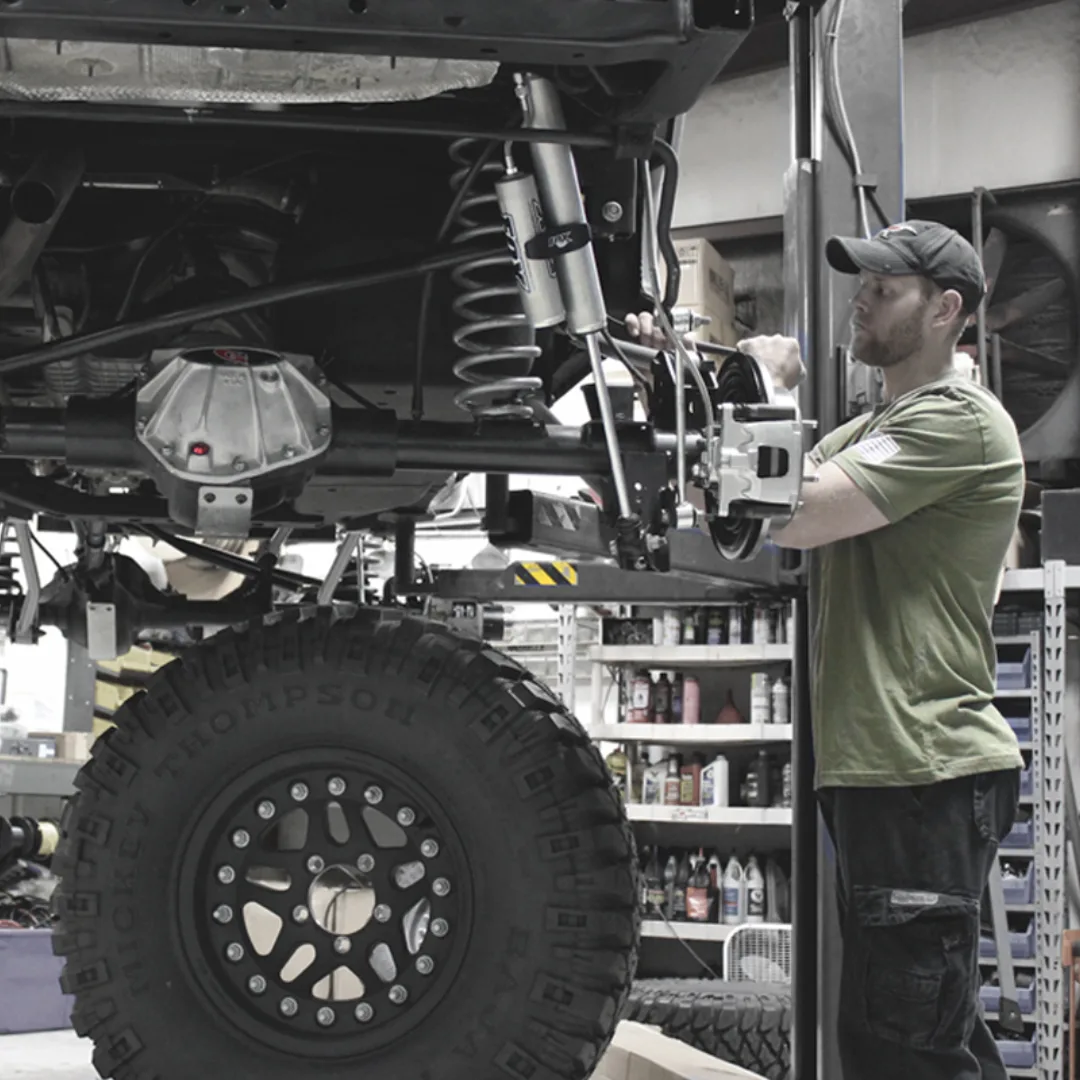
Once movement starts, road impact can shake the front axle. The steering wheel reacts quickly, sending vibration back to the driver. This is where wobble begins to grow. During Jeep death wobble diagnosis, experts inspect each steering joint carefully to find looseness or wear.
Why Tire, Alignment, and Steering Work Together
These three systems do not work alone. They depend on each other for smooth driving.
- Tires need alignment to stay straight
- Alignment depends on strong steering parts
- Steering relies on stable tires for control
If one system weakens, the others struggle to keep balance. This is why death wobble feels sudden. It is actually a chain reaction building up under the Jeep. A full Jeep steering wobble diagnosis looks at all three systems together instead of checking only one part.
Why Professional Diagnosis Matters
Death wobble is not a surface-level issue. It comes from hidden wear or imbalance inside key systems.
Professional inspection includes:
- Checking tire balance with machines
- Measuring alignment angles with tools
- Testing steering joint movement under load
- Inspecting suspension connections
Experts use proper tools to read small changes in structure and movement. These details help locate the real source of the shake. Skipping a full inspection can leave the issue unresolved, since multiple parts may be involved at once.
Safety Concerns You Should Know
A shaking steering wheel reduces control. It can make braking and turning harder during high-speed driving.
Some risks include:
- Delayed steering response
- Reduced road grip
- Sudden loss of control on rough roads
A professional Jeep death wobble diagnosis helps prevent these risks by finding weak points early. Fixing the root cause supports safer driving and better handling.
Final Thought
Death wobble does not come from one simple fault. It builds when tires, alignment, and steering systems lose balance together. Each part plays a role in keeping the Jeep steady on the road.
A complete Jeep steering wobble diagnosis gives a clear view of what is going wrong inside the system. With the right inspection, experts can trace the issue step by step and restore smooth control. Keeping these systems in good shape helps the Jeep stay strong, stable, and ready for any road ahead.