With the evolution of retail, customers nowadays require easy and personalized shopping experience through mobile applications, websites and physical stores. To enhance customer engagement, make their operations easier and maximize sales, retail businesses invest in various technological solutions. Here is how retail application development can assist businesses in this matter.
The correctly implemented retail application can help the business connect with its customers, manage the products, process orders, accept payments, control deliveries and analyze customer behavior using just one digital interface.
What Is Retail Application Development?
Retail application development is the process of creating mobile or web applications for retail businesses. These applications can be used to facilitate online shopping, manage inventory, interact with customers, process orders and payments, implement loyalty programs and many other processes within the retail business.
Depending on the needs of the business, the retail application can be created for customers, employees, administrators or several groups of users at once.
Why Are Retail Applications Important for Modern Businesses?
People need convenience and speed in shopping. Through a retail app, it becomes possible to provide services to people via their phones and other digital gadgets.
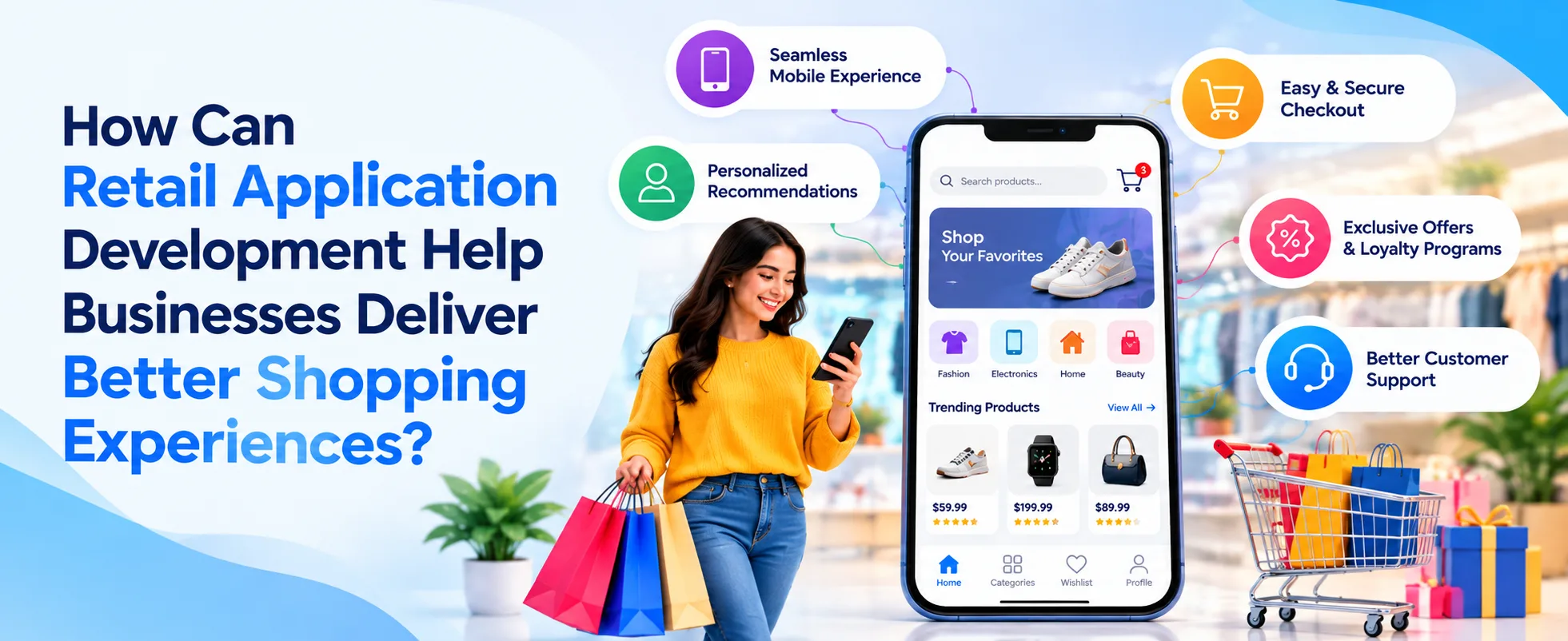
Among the main advantages of the software are such points as:
- convenience in browsing and ordering products
- fast checkout
- personalized recommendations
- real-time order tracking
- digital payment options
- loyalty program
- better customer communication
- inventory management
- data-based business decisions
Through the app, businesses can keep good contact with their clients after the purchases with notifications, recommendations, offers, loyalty programs.
What Features Should a Retail Application Include?
There is a list of the features which should be considered depending on the business and its potential clients. However, there are some typical features used in retail applications.
User Registration and Profiles
The clients can register themselves via email, phone number or even social media. The profile can contain the following information: address, order history, payment methods, etc.
Product Catalog
Well-built product catalog will help users to find products by using the following features: categorization, filtering, searching, images, description, price, availability.
Shopping Cart
The shopping cart allows clients to view the chosen items, modify the quantity, enter promotional codes, and view the final cost before ordering.
Secure Payment Integration
Retail software can accommodate several methods of payment, such as using cards, digital wallets, bank payments, and any other payment gateway available.
Order Management
The clients will be able to place orders and track their progress from the time of ordering to delivery.
Push Notifications
Firms will be able to send push notifications for new products, discounts, order updates, abandoned carts, and promotions.
Loyalty Programs
Points, loyalty membership, coupons, and other bonuses will motivate customers to buy more.
Inventory Management
The retail firms will be able to track the available stock and update information on inventory across all sales channels.
Analytics and Reporting
Analytics dashboard provides sales statistics and other information.
How Does Retail Application Development Improve Customer Experience?
Customer experience is one of the most crucial aspects in today's retail industry. The retail application can enhance customer experience through integrating various services into one.
The customer will be able to look for products, compare prices, add items to favorites, place orders, make payments, and track the delivery without going to any physical store.
Customer experience can even be enhanced through personalization. An application can suggest products depending on the behavior and interests of the customer.
How Can Retail Apps Help Businesses Increase Sales?
There are some ways in which the retailer can use retail applications to boost its sales.
Some of these include personalized product recommendations, push notifications of promotions, loyalty programs that will reward the customer after making several purchases, and an easy-to-use checkout option.
Technologies Used in Retail Application Development
There are many technologies that are available for modern retail applications.
These technologies include:
- Android and iOS application development
- Cross-platform development frameworks
- Cloud computing
- Artificial Intelligence and Machine Learning
- API integration and third-party integrations
- Secure payment gateways
- Real-time analytics
- Location based services
- Chatbots and conversational AI
- Internet of Things integration
AI technology can be especially helpful for personalized recommendations, customer support, demand forecasting, and product search.
Retail Application Development for Omnichannel Commerce
A customer interacts with a retail brand in many channels.
For example, he discovers the product on social media, does his research about the product on the website, buys it in the application and picks up from the physical store.
Retail application development helps companies to integrate these different channels.
By using an omnichannel approach, companies can ensure consistency in product information, customer accounts, inventory information, promotions, and order information.
Security Considerations for Retail Applications
Retail applications process private data like customers' profiles, payments, addresses, transaction data, etc. Therefore, it is important to keep in mind security issues at all stages of development.
Among the key security practices are:
- Authentication
- Data encryption
- Secure payments integration
- Secured API
- Access roles
- Regular security testing
- Cloud infrastructure security
Defense against the most common application vulnerabilities
Following certain security practices will help businesses to protect customer data.
How Much Does Retail Application Development Cost?
The price for developing a retail application will depend on many factors, including:
- Complexity of the application
- Choice of platform
- Requirements for design
- Requirements for integrations and features
- Development team location
- Testing and support services
A simple retail app that includes product browsing, shopping cart, customer account management and payments will not require so much effort from developers as a complicated solution with AI personalization, analytics, multi-vendor capabilities, inventory syncing, etc.
Businesses need to determine the main requirements for the application first.
How to Choose a Retail Application Development Approach?
Prior to starting the development, it is vital for companies to understand their customers, business model, features to develop, platforms to use, additional integrations, and future goals.
Standard development procedure consists of such stages as:
- Market research
- Requirements gathering
- Designing the user interface/user experience
- Technology choice
- Application development
- API integration with third-party services
- Testing and QA
- Deployment
- Performance management
- Updates and maintenance
Moreover, developing a minimum viable product can help companies validate certain features before launching the full application.
Future of Retail Application Development
It is expected that in the future, technologies that personalize, connect, and facilitate the shopping experience would be widely adopted by the retail sector.
Among those, AI-based product recommendations, conversational assistants, visual search, predictive analytics, automated inventory management, digital wallets, and augmented reality experiences may become significant.
As customers' expectations change, it becomes necessary for companies to have flexible applications that adjust to new technologies and changes in customers' shopping behavior.
Conclusion
Retail application development can help businesses create convenient shopping experiences while improving operational efficiency and customer engagement. From product discovery and secure payments to inventory management, loyalty programs, analytics, and personalized recommendations, a retail application can support multiple aspects of the modern retail journey.
By selecting the right features, technology architecture, security practices, and development strategy, businesses can create a scalable retail solution that supports both current requirements and future growth.