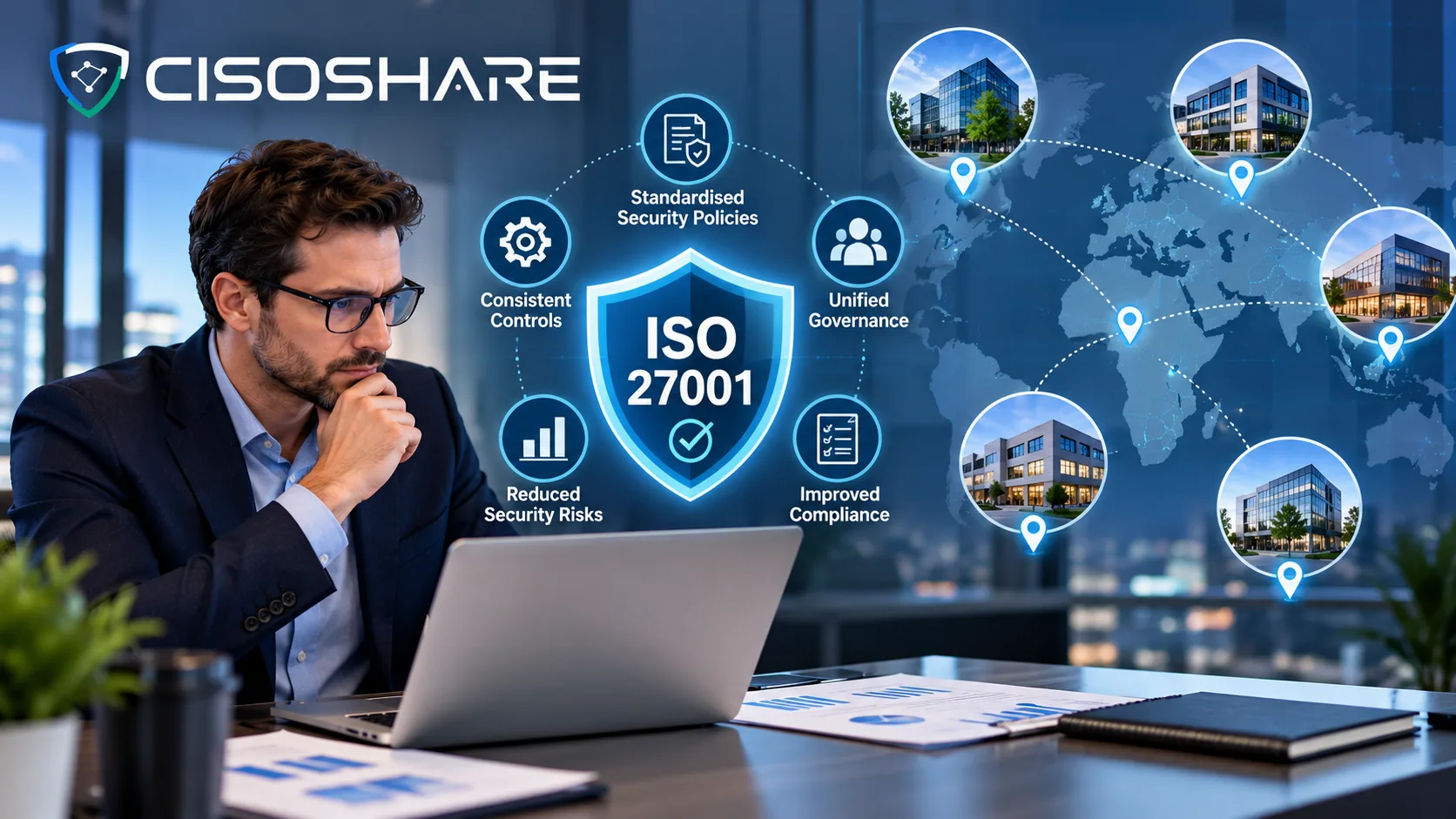
Managing information security across multiple business locations presents significant challenges for organisations operating in today's interconnected digital environment. Each office, branch, or regional facility may use different technologies, security procedures, and access management practices, creating inconsistencies that increase cybersecurity exposure. As businesses expand across cities, states, or countries, maintaining consistent information security controls becomes essential for protecting sensitive data and supporting regulatory compliance. ISO 27001 Certification Services can help organisations establish a structured information security management system that supports consistent policies, risk assessments, and security responsibilities across locations. By adopting a unified approach to information security, multi-location businesses can strengthen governance, improve accountability, and reduce operational security gaps.
Why Is Information Security Standardisation Important for Multi-Location Businesses?
Businesses operating across multiple locations often face different cybersecurity risks depending on their infrastructure, workforce, and operational requirements. One office may have strong access controls and security monitoring, while another relies on outdated systems or inconsistent security procedures. These differences can create vulnerabilities that attackers may exploit to access connected networks or sensitive business information. Standardising security controls helps organisations establish consistent protection requirements while allowing appropriate adjustments for local risks. A coordinated security framework also makes it easier for leadership to monitor security performance and maintain accountability across the organisation.
Common Security Challenges Across Multiple Business Locations
Multi-location businesses frequently struggle with inconsistent security policies, fragmented technology environments, and unclear cybersecurity responsibilities. Different offices may use separate software platforms, network configurations, and authentication procedures that complicate centralised security oversight. Employees working across locations may also encounter inconsistent data handling requirements or security awareness practices. Without coordinated governance, identifying vulnerabilities and implementing corrective actions can become difficult. Addressing these challenges requires an organisation-wide security strategy supported by documented policies, defined responsibilities, and regular assessments.
How Do ISO 27001 Certification Services Support Consistent Security Controls?
ISO 27001 provides an internationally recognised framework for establishing, implementing, maintaining, and continually improving an information security management system, commonly known as an ISMS. The framework requires organisations to assess information security risks, define appropriate controls, and evaluate whether those controls remain effective. For multi-location businesses, this creates an opportunity to develop shared security policies while addressing risks specific to individual facilities. ISO 27001 Certification Services can support organisations in preparing their management systems, documentation, risk treatment processes, and internal assessments for independent certification. This structured approach helps businesses establish consistent security expectations across departments, branches, and operational environments.
Establishing a Centralised Information Security Management System
A centralised ISMS provides a common foundation for managing information security across multiple business locations. It defines organisational security objectives, governance responsibilities, risk assessment procedures, and requirements for monitoring control effectiveness. Each location can follow the same overarching security policies while implementing additional safeguards based on its operational risks. Centralised documentation also helps management track compliance activities, corrective actions, and security improvements across the business. This approach supports consistent oversight without requiring every location to operate an identical technology environment.
Creating Uniform Security Policies and Procedures
Consistent security policies help employees understand their responsibilities regardless of where they work. Organisations should establish clear requirements for password management, access permissions, data classification, incident reporting, and acceptable technology use. These policies should apply across business locations while accounting for relevant legal requirements and local operational needs. Regular reviews help ensure that security procedures remain appropriate as technologies, business processes, and threat conditions change. Standardised documentation also makes it easier to train employees and evaluate whether security expectations are being followed.
How Can Multi-Location Businesses Standardise Access Management?
Access management is a critical component of information security because employees, contractors, and third-party providers may require access to systems across several locations. Inconsistent access controls can result in excessive permissions, inactive user accounts, and unauthorised access to sensitive information. Organisations should establish common identity management policies that define how access is requested, approved, reviewed, and revoked. Centralised authentication systems and role-based access controls can help enforce consistent security requirements across offices and departments. Regular access reviews also support accountability by ensuring that permissions remain appropriate for each user's responsibilities.
Implementing Consistent Authentication and User Permissions
Multi-location businesses should evaluate whether authentication requirements are applied consistently across applications, networks, and cloud services. Multifactor authentication can provide additional protection for sensitive systems and accounts with elevated privileges. Role-based access management helps organisations assign permissions according to job responsibilities rather than individual preferences. Security teams should also establish procedures for promptly removing access when employees change roles or leave the organisation. Applying these controls consistently can reduce the likelihood of unauthorised access and improve visibility into user activity.
Why Are Risk Assessments Essential for Multi-Location ISO 27001 Implementation?
Different business locations may face unique cybersecurity threats based on their infrastructure, services, and geographic operating conditions. A regional office handling sensitive customer information may require different security safeguards from a facility primarily supporting administrative operations. ISO 27001 requires organisations to establish a consistent methodology for assessing information security risks and determining appropriate treatment actions. Professional Cyber Security Risk Management Services can support businesses in identifying critical assets, evaluating potential threats, and prioritising security improvements. A coordinated risk management approach helps leadership compare security exposures across locations and allocate resources according to business priorities.
Creating a Unified Risk Register Across Business Locations
A centralised risk register helps organisations document and monitor information security risks identified across their operating locations. Each entry should describe the relevant threat, affected assets, potential business impact, existing controls, and planned risk treatment activities. Local management teams can contribute location-specific findings while following a common risk assessment methodology. Security leadership can then review these findings to identify recurring vulnerabilities or weaknesses affecting multiple facilities. Maintaining this information in a consistent format improves reporting and supports more informed security investment decisions.
How Can ISO 27001 Improve Security Governance Across Different Offices?
Effective information security governance requires clear responsibilities, consistent reporting, and active management involvement. Multi-location organisations should define which security decisions are handled centrally and which responsibilities belong to local teams. ISO 27001 encourages organisations to establish information security roles, communicate responsibilities, and regularly evaluate management system performance. These practices help reduce confusion when security incidents, audit findings, or compliance concerns involve multiple business units. Strong governance also allows leadership to identify whether security improvements are being implemented consistently across the organisation.
Defining Security Responsibilities at Every Location
Each business location should understand its role in implementing and maintaining organisational security requirements. Local managers may be responsible for employee awareness, physical security, access requests, and reporting security incidents. Central security teams can oversee policies, risk assessments, security monitoring, and organisation-wide improvement initiatives. Documented responsibilities help prevent critical security activities from being overlooked or duplicated. Regular communication between central and local teams supports consistent implementation and faster resolution of security issues.
Can ISO 27001 Certification Services Support Security Compliance Across Multiple Locations?
Businesses operating in different regions may need to manage overlapping contractual, regulatory, and industry-specific security requirements. A structured ISMS can provide a common foundation for documenting controls, managing risks, and demonstrating security governance across the organisation. ISO 27001 Certification Services can help businesses prepare for certification by aligning security management practices with the standard's requirements and the agreed certification scope. However, certification does not automatically establish compliance with every law, regulation, or industry framework applicable to the business. Organisations should evaluate additional requirements separately and determine how their existing security controls can support those obligations.
Supporting Healthcare Information Security Requirements
Healthcare organisations operating multiple clinics, administrative offices, or service facilities must carefully manage access to sensitive patient information. In the United States, covered entities and business associates subject to HIPAA must implement applicable safeguards for protected health information. Businesses seeking hipaa compliance services can assess how their security policies, access controls, and risk management practices support relevant regulatory obligations. An ISO 27001-aligned management system may complement these activities by providing structured processes for managing information security risks. However, HIPAA requirements must be evaluated independently because ISO 27001 certification does not establish HIPAA compliance.
Addressing Cybersecurity Requirements for Defense Contractors
Defense contractors operating across multiple facilities may need to implement cybersecurity requirements associated with federal contracts and controlled information. The Cybersecurity Maturity Model Certification program establishes assessment and security requirements for applicable Department of Defense contractors and subcontractors. Organisations exploring cmmc consulting services can evaluate their existing cybersecurity practices and identify gaps against applicable CMMC requirements. An established ISMS may support governance, documentation, and risk management activities relevant to these efforts. However, businesses must assess CMMC obligations separately because ISO 27001 certification does not replace required CMMC assessments or certifications.
How Can Vulnerability Management Improve Security Consistency Across Locations?
Multi-location organisations often maintain numerous servers, endpoints, applications, and network devices that require ongoing security oversight. Without a coordinated vulnerability management process, different offices may follow inconsistent patching schedules or overlook critical security weaknesses. Vulnerability management as a service can support organisations by helping identify, prioritise, and track vulnerabilities across distributed technology environments. Centralised reporting allows security teams to compare remediation progress and identify recurring issues affecting multiple locations. This approach strengthens security visibility and supports consistent vulnerability management practices across the business.
Standardising Vulnerability Identification and Remediation
Organisations should establish common procedures for vulnerability scanning, risk classification, remediation planning, and verification. Critical vulnerabilities affecting internet-facing systems or sensitive information may require faster remediation than lower-risk findings. A centralised tracking process helps security teams assign responsibilities and monitor whether corrective actions are completed within established timelines. Local IT teams can implement required fixes while following organisation-wide security policies and reporting procedures. Consistent vulnerability management reduces operational fragmentation and supports continual improvement within the ISMS.
What Role Does a Fractional CISO Play in Multi-Location Security Governance?
Managing information security across multiple business locations requires strategic oversight that connects technical controls with organisational risk and business objectives. Companies without a dedicated senior security executive may benefit from fractional ciso support to help coordinate security governance and compliance preparation. This leadership model can assist with developing security strategies, defining responsibilities, reviewing risk assessments, and communicating security priorities to management. It can also support collaboration between central IT departments, regional offices, compliance teams, and external security providers. Executive-level cybersecurity guidance helps businesses maintain a consistent security direction while adapting to changing operational requirements.
Coordinating Security Leadership Across Business Units
Security leadership should establish clear communication channels between headquarters and individual business locations. Regular meetings can help teams review emerging risks, policy changes, audit findings, and progress toward security objectives. A shared reporting framework allows management to compare security performance without relying on inconsistent local measurements. Security leaders should also establish escalation procedures for incidents or control failures that could affect multiple locations. These activities help organisations maintain coordinated cybersecurity oversight as their operations expand.
How Should Businesses Prepare for Multi-Location ISO 27001 Certification?
Preparing for ISO 27001 certification requires organisations to understand their existing security practices and define the scope of their information security management system. Multi-location businesses should identify which offices, departments, technologies, services, and information assets will fall within the certification scope. A gap assessment can help determine where current policies and controls differ from the standard's requirements. Organisations should then develop a risk treatment plan, implement necessary controls, and establish procedures for monitoring ISMS effectiveness. Internal audits and management reviews are also important steps before proceeding with an independent certification audit.
Step 1 – Define the Certification Scope
The certification scope determines which organisational activities, systems, and locations are covered by the ISMS. Businesses should consider how information moves between offices, cloud platforms, third-party providers, and central business systems. Dependencies between locations must be evaluated carefully to avoid overlooking relevant information security risks. The scope should accurately reflect the activities and organisational boundaries included in the management system. Clear scope documentation helps certification auditors understand which operations and controls are subject to assessment.
Step 2 – Conduct a Security Gap Assessment
A gap assessment compares existing information security practices against applicable ISO 27001 requirements. Multi-location organisations should examine security policies, asset management procedures, access controls, incident response processes, and risk assessment activities. The assessment may reveal inconsistencies between locations or areas where security responsibilities are not clearly documented. Findings should be prioritised according to risk, implementation effort, and their impact on certification readiness. This process provides a practical foundation for planning security improvements across the organisation.
Step 3 – Implement and Document Security Controls
After identifying gaps, organisations should establish appropriate security controls and document how they are implemented. Control selection should reflect the results of information security risk assessments and relevant legal, contractual, and business requirements. Policies and procedures should explain responsibilities, implementation expectations, and methods for evaluating effectiveness. Each location should maintain appropriate evidence showing that applicable controls are operating as intended. Consistent documentation supports internal oversight and helps prepare the organisation for certification assessments.
Step 4 – Conduct Internal Audits and Management Reviews
Internal audits evaluate whether the ISMS conforms to the organisation's requirements and the applicable provisions of ISO 27001. Auditors should review relevant processes, documentation, and evidence across the locations included in the certification scope. Management reviews assess ISMS performance, changing risks, audit findings, and opportunities for improvement. Identified nonconformities should be addressed through documented corrective actions before the certification assessment where appropriate. These activities help organisations evaluate readiness and demonstrate commitment to continual information security improvement.
How Can CISOSHARE Support Multi-Location Information Security Standardisation?
CISOSHARE, based in San Clemente, California, United States, provides cybersecurity consulting and compliance-related services for organisations seeking to strengthen information security governance. Multi-location businesses can benefit from guidance on developing consistent security policies, evaluating risks, and coordinating control implementation across different operational environments. Through ISO 27001 Certification Services, organisations can receive support with assessing existing security practices, preparing documentation, and addressing management system requirements. CISOSHARE's broader cybersecurity capabilities can also support risk management, vulnerability identification, and security leadership activities that complement certification preparation. A coordinated approach helps businesses improve security consistency while supporting their operational and compliance objectives.
Build Consistent Information Security Across Every Business Location
Expanding across multiple locations creates opportunities for business growth but also introduces additional information security responsibilities. Organisations must ensure that security policies, risk assessments, access controls, and incident management procedures remain effective across distributed environments. A structured ISMS based on ISO 27001 can provide the governance framework needed to manage these responsibilities consistently. Regular assessments, documented controls, and management oversight help businesses identify security gaps and maintain accountability as their operations evolve. By standardising information security practices, multi-location organisations can strengthen resilience, support compliance efforts, and improve confidence in their cybersecurity governance.
Ready to strengthen information security across your business locations? Visit CISOSHARE to explore ISO 27001 preparation, cybersecurity risk management, and compliance support for your organisation.