A customer may make a purchase at your counter, but the brand experience does not end there.
The bag they carry out of your store can be one of the final physical touchpoints between your business and the customer. For gift purchases, that moment can be even more important. The packaging needs to protect the product while making the purchase feel complete and ready to give.
That is where a brown paper bag with handles can become more than a practical carrier. When chosen carefully, it can help businesses create a more polished transition from checkout to gifting.
Why Does the Bag Matter After Checkout?
Think about what happens after a customer leaves your business.
They may carry the purchase to a dinner, take it to a birthday celebration, place it under a Christmas tree or hand it directly to someone as a gift. The packaging remains visible throughout that journey.
A bag that looks appropriate for the product can help maintain the impression your business created inside the store.
For jewellery shops, gift boutiques and accessory brands, this can be particularly useful. A well-presented package can make a carefully selected item feel more complete, while practical features such as strong handles make the purchase easier to carry.
The bag becomes part of the handover rather than something that simply holds the product.
What Makes Handles Important?
Handles change how customers interact with packaging.
When someone is carrying one or several purchases, a well-designed handle provides a more convenient way to transport the bag. For gift purchases, handles can also make it easier to carry the package from the store to an event, home or another destination.
Businesses should consider the size and weight of the products they commonly sell when choosing their bags.
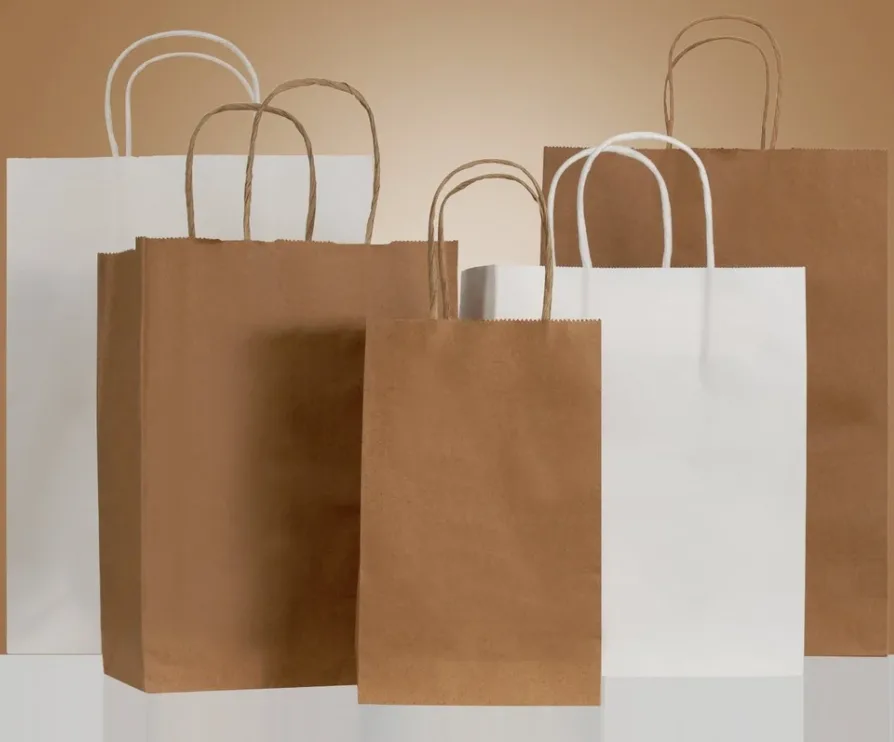
Prestige and Fancy offers classic paper shopping bags in different sizes, giving retailers options for smaller purchases as well as larger products and gift combinations.
Choosing the right size is important because the bag should provide enough space for the product without making the package look unnecessarily oversized.
How Should Businesses Match the Bag to the Gift?
The product going inside the bag should be the starting point.
A small jewellery box requires a different format from a larger gift set. If the bag is too large, the product may move around and the presentation can feel unfinished. If it is too small, placing the product inside may become difficult.
Businesses can create a simple packaging range based on their most common purchases:
- Jewellery boxes: Choose a compact bag that keeps the box positioned neatly.
- Small accessories: A smaller format can provide a more balanced presentation.
- Gift sets: Allow enough room for the complete set and protective tissue.
- Boutique purchases: Select a size that works with the typical combination of products customers purchase.
- Larger gifts: Consider a wider or deeper format that provides comfortable carrying space.
This is why kraft paper bags should be selected according to actual product dimensions rather than treated as a one-size-fits-all solution.
Can Tissue Paper Improve the Presentation?
Yes. Small finishing details can make a noticeable difference.
Tissue paper can create a finished layer between the product and the opening of the bag. It can also introduce colour or texture that complements the business's branding.
Businesses can combine tissue paper with ribbons, stickers or gift tags to create different presentation styles without changing the entire packaging format.
For example, a jewellery boutique might use understated tissue paper and a simple ribbon for everyday purchases, then introduce a more distinctive combination during holidays, birthdays or other special occasions.
The base bag remains practical while the finishing details can change according to the purpose of the purchase.
What Role Do Brown Paper Bags Play in Gifting?
Gifting is not always planned in advance.
A customer may walk into a jewellery store looking for a birthday gift. Someone shopping at a boutique may find an accessory that would be perfect for a friend. Another customer may be purchasing something for themselves and decide to buy an additional item as a gift.
In these situations, packaging needs to accommodate a change in purpose.
A well-sized paper bag with handles gives customers a convenient way to take their purchase away while keeping the presentation suitable for gifting.
This is where the difference between a basic shopping bag and a gift-ready presentation becomes important. The product does not necessarily need to be wrapped from scratch every time. The bag, tissue paper, ribbon and gift tag can work together to create a more finished result.
Does the Material Affect Brand Perception?
It can.
Customers may notice the feel, structure and overall finish of packaging, particularly when the product itself is positioned as premium.
Paper bags can be available in different materials, sizes, finishes and handle styles. Depending on the brand, businesses may choose a simple kraft appearance or explore options such as decorative handles, ribbon details or custom finishes.
A brown shopping bag can create a straightforward and understated appearance, while a more decorative finish may suit businesses that want a different presentation style.
The important consideration is consistency.
Packaging should feel connected to the product and the overall identity of the business. When the bag, product and other packaging elements work together, the customer experience can feel more intentional.
How Can Businesses Make the Packaging Experience More Consistent?
A simple packaging system can make everyday fulfilment easier.
Instead of selecting bags based only on appearance, businesses can establish a practical range around their most common product sizes.
For example:
Small format: Jewellery, accessories and compact gifts.
Medium format: Boxed purchases and small gift sets.
Large format: Larger boxes, multiple purchases and substantial gift collections.
Tissue paper, ribbons and tags can then provide the finishing layer.
This approach gives staff clear options at checkout and makes it easier to select an appropriately sized bag for each purchase. It can also reduce the chance of placing a premium product into packaging that is visibly too large, too small or poorly matched to the item.
What Should Businesses Consider Before Ordering?
Choosing packaging involves more than simply selecting a colour or style.
Businesses should consider:
- Product dimensions: Will the most common products fit comfortably?
- Handle construction: Are the handles practical for the expected load?
- Paper quality: Does the structure suit the products being carried?
- Quantity: Does the order size match the business's normal purchasing cycle?
- Presentation: Can the bags work with tissue paper, ribbons or tags?
- Brand consistency: Does the design complement the business's overall appearance?
- Occasions: Can the same packaging work for everyday purchases and gifts?
Prestige and Fancy offers paper bags in multiple sizes and formats, allowing businesses to build a packaging selection around their actual product mix.
Can the Bag Become Part of the Gift Experience?
It can, when every element has a purpose.
A brown paper bag with handles can make the transition from checkout to gifting feel simple and considered. The right size supports the presentation, the handles make the purchase easier to carry, and finishing elements such as tissue paper, ribbon or a gift tag can make the package feel ready for its next moment.
For jewellery stores, gift boutiques, accessory brands and other retailers, this creates an opportunity to make packaging part of the overall customer experience.
The customer does not simply leave with a product. They leave with something that already feels presentable and ready for its next destination.
Prestige and Fancy provides paper packaging for jewellery, gifts and retail applications, with options designed to balance practical carrying needs with presentation.
When packaging is considered as part of the customer journey, even a simple paper bag can help carry the brand experience beyond the checkout.