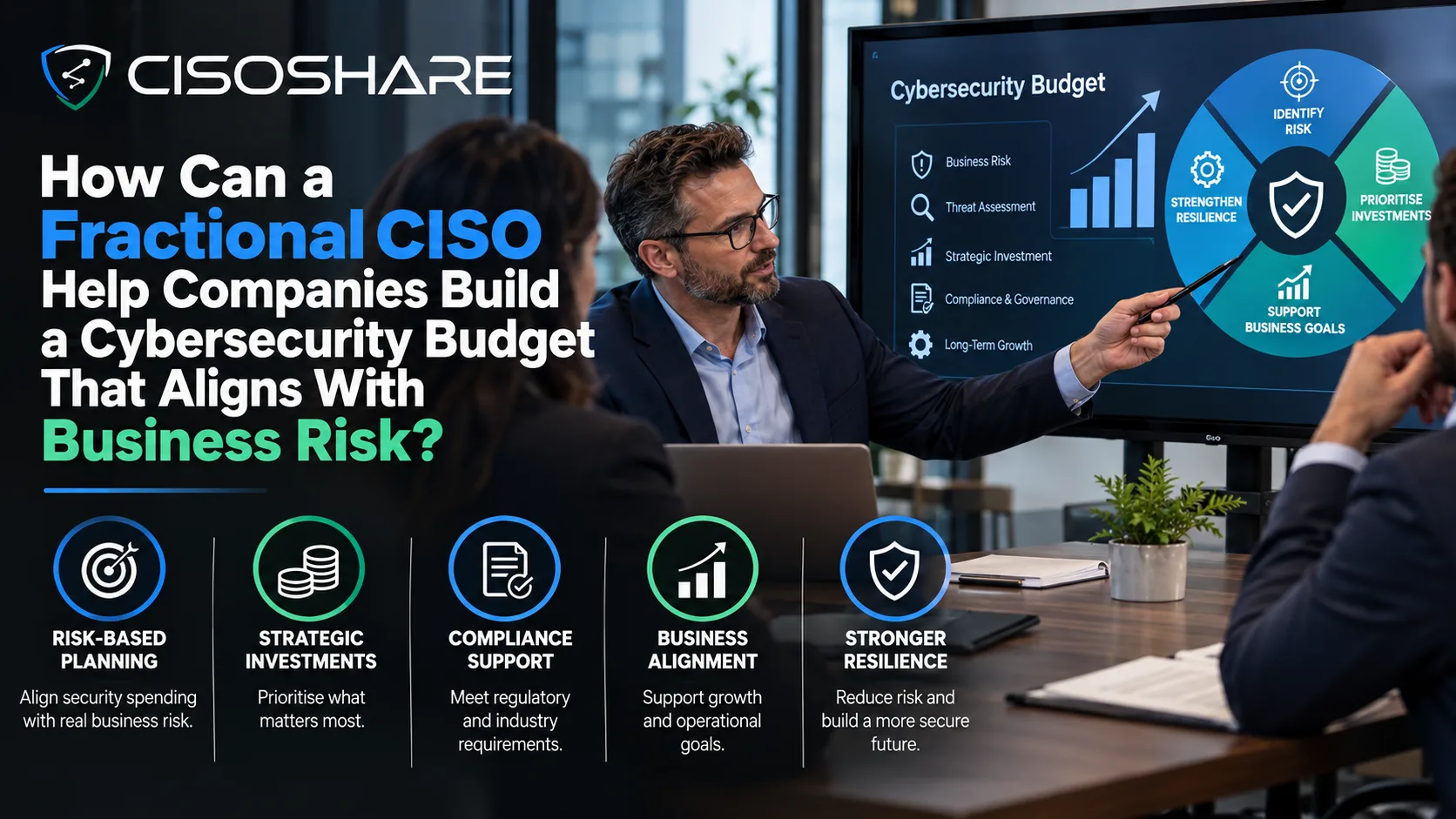
Cybersecurity budgeting is becoming increasingly important for businesses that need to protect sensitive information, maintain operational continuity, and meet customer security expectations. However, many organizations struggle to determine how much they should spend on cybersecurity and which investments deserve priority. Hiring a fractional ciso can help companies develop a risk-based cybersecurity budget that connects security spending with business objectives. Rather than purchasing security tools without a clear strategy, organizations can evaluate their most significant threats, vulnerabilities, and compliance obligations before allocating resources. This approach helps leadership teams make informed financial decisions while improving the effectiveness of their cybersecurity programs.
Why Do Companies Struggle to Create an Effective Cybersecurity Budget?
Cybersecurity spending can be difficult to forecast because threats, technology requirements, and regulatory expectations continue to evolve. Many businesses allocate funds based on previous spending patterns rather than current security risks. Others purchase software or services in response to individual incidents without considering how those investments fit into a broader security strategy. Limited internal expertise can also make it difficult to distinguish essential controls from optional improvements. A structured budgeting process helps organizations prioritize spending according to risk exposure and business impact.
What Happens When Cybersecurity Budgets Are Not Risk-Based?
A cybersecurity budget that does not reflect actual business risks may leave critical vulnerabilities unaddressed. Companies might invest heavily in advanced technology while overlooking basic controls such as access management, backup testing, or employee security awareness. This imbalance can create unnecessary costs without meaningfully improving security. In some cases, organizations may also struggle to demonstrate why particular investments are necessary. Aligning spending with documented risks provides a clearer justification for cybersecurity decisions.
What Is the Role of a Fractional CISO in Cybersecurity Budget Planning?
A fractional ciso provides part-time or contracted cybersecurity leadership without requiring an organization to hire a full-time executive. This role can include evaluating security risks, developing cybersecurity strategies, establishing governance processes, and advising senior management. Budget planning becomes an important part of these responsibilities because security priorities must be supported by appropriate financial resources. The security leader helps translate technical vulnerabilities into business considerations that executives can evaluate. This allows cybersecurity spending to become part of broader organizational planning rather than an isolated IT expense.
How Does Fractional Security Leadership Differ From Traditional IT Management?
IT management typically focuses on maintaining technology systems, supporting users, and ensuring that infrastructure operates effectively. Cybersecurity leadership takes a broader view of organizational risk, including governance, regulatory requirements, third-party exposure, and incident preparedness. Although these responsibilities overlap, they are not identical. A security executive evaluates how technical weaknesses could affect revenue, operations, customer relationships, and business continuity. This perspective helps leadership teams understand why certain security investments should receive priority.
How Can Companies Identify Their Most Significant Cybersecurity Risks?
An effective cybersecurity budget begins with understanding the risks that could cause the greatest harm to the organization. These may include ransomware, business email compromise, unauthorized access, data breaches, or interruptions involving critical service providers. The assessment should consider the likelihood of relevant threats and the potential consequences for business operations. Companies should also examine existing security controls to determine whether they adequately reduce identified risks. This information provides a foundation for allocating cybersecurity resources.
Why Should Businesses Identify Critical Assets First?
Not every system, application, or dataset has the same importance to an organization. Customer information, financial records, production systems, and intellectual property may require different levels of protection. Identifying critical assets helps businesses understand where security failures could create the most significant consequences. This process should consider confidentiality, integrity, availability, and operational dependencies. Resources can then be directed toward protecting the assets that matter most to business continuity and organizational performance.
How Does a Risk Assessment Influence Cybersecurity Spending?
A cybersecurity risk assessment helps organizations identify vulnerabilities, evaluate potential threats, and estimate business impact. Findings can be organized according to risk severity, existing safeguards, and recommended improvements. This allows decision-makers to compare security initiatives using a consistent framework. Instead of funding projects based solely on technical preferences, businesses can prioritize investments that address material risks. Risk assessments should be reviewed periodically because organizational systems and threat conditions change.
How Can Companies Prioritize High-Risk Vulnerabilities?
High-risk vulnerabilities should be evaluated according to exploitability, exposure, business criticality, and available safeguards. A weakness affecting an internet-facing system that processes sensitive information may require more urgent attention than a lower-impact internal issue. However, vulnerability severity scores alone do not fully describe business risk. Security teams should consider whether attackers can realistically exploit a weakness and what consequences could follow. This helps organizations direct remediation budgets toward the most consequential exposures.
How Can Cybersecurity Budgets Align With Business Objectives?
Security investments should support the organization's ability to operate, grow, and meet contractual obligations. A company expanding into new markets may need stronger data protection, access controls, and third-party security oversight. A business serving enterprise customers may need to demonstrate compliance with specific security requirements. Organizations pursuing digital transformation may require additional cloud security and identity management capabilities. Connecting these priorities to business objectives makes cybersecurity budgeting more relevant to executive decision-making.
Why Should Executives Participate in Cybersecurity Budget Decisions?
Cybersecurity risk is not limited to the IT department because security incidents can affect the entire organization. Financial leaders understand budget constraints, while operations teams can identify critical processes and potential disruption costs. Legal and compliance teams provide insight into contractual and regulatory obligations. Executive participation helps ensure that security priorities reflect the organization's overall risk tolerance. Shared accountability also makes it easier to secure support for necessary investments.
How Can Companies Calculate the Business Impact of Cybersecurity Incidents?
Estimating the financial consequences of cybersecurity incidents can help organizations evaluate security investments. Potential costs may include operational downtime, incident response, recovery activities, legal expenses, and lost business opportunities. Companies should also consider contractual penalties, regulatory exposure, and reputational consequences where applicable. These estimates involve uncertainty and should not be treated as precise predictions of future losses. Nevertheless, reasonable financial scenarios can help leadership teams compare cybersecurity priorities.
What Is the Difference Between Risk Reduction and Return on Investment?
Traditional return on investment calculations compare financial gains with the cost of an investment. Cybersecurity investments often produce value by reducing the likelihood or consequences of harmful events. This makes their financial benefits more difficult to measure directly. Organizations may use risk reduction estimates, avoided loss scenarios, and operational improvements to evaluate security initiatives. These methods should include clear assumptions rather than presenting speculative savings as guaranteed results.
How Can a Fractional CISO Prioritize Security Investments?
A fractional ciso can help organizations rank cybersecurity initiatives according to their potential contribution to risk reduction. Common priorities may include multifactor authentication, endpoint protection, vulnerability remediation, secure backups, and incident response planning. The appropriate order depends on the organization's existing controls, threat exposure, and business requirements. Some businesses may need foundational security improvements before investing in more sophisticated technologies. A phased investment strategy can help address urgent risks while supporting longer-term cybersecurity maturity.
Which Cybersecurity Controls Should Businesses Fund First?
Foundational security controls often provide significant value when they address common attack methods and operational weaknesses. These may include identity protection, software patching, backup verification, and security awareness training. Organizations should also consider monitoring capabilities and processes for responding to suspected incidents. However, there is no universal checklist that determines the correct spending order for every business. Priorities should follow a documented assessment of business risks and existing safeguards.
How Can Companies Avoid Overspending on Cybersecurity Tools?
Purchasing additional security products does not automatically improve an organization's protection. Businesses may already own software with capabilities that have not been fully configured or adopted. Overlapping tools can increase licensing expenses, administrative complexity, and operational workloads. A security leadership review can identify redundant products and opportunities to improve the use of existing investments. The objective is to build an effective security program rather than accumulate the largest possible collection of technologies.
Why Is Security Tool Consolidation Important?
Security tool consolidation involves evaluating whether multiple products perform similar functions or create unnecessary operational complexity. Reducing overlap may simplify monitoring, reporting, and vendor management. It can also help security teams focus on fewer platforms and develop stronger operational expertise. However, consolidation should not remove capabilities that are necessary for managing material risks. Each decision should consider security coverage, integration requirements, and total ownership costs.
What Should Be Included in an Annual Cybersecurity Budget?
An annual cybersecurity budget should account for technology, personnel, professional services, training, and ongoing operational requirements. Common categories include endpoint protection, identity management, security monitoring, vulnerability management, and incident response preparation. Organizations may also need funding for audits, compliance activities, third-party assessments, and employee awareness programs. Maintenance, software renewals, and system upgrades should be considered alongside new investments. A complete budget helps reduce the likelihood of unexpected expenses during the financial year.
How Should Companies Separate Essential and Optional Security Spending?
Essential security spending supports controls needed to manage significant risks or meet mandatory obligations. Optional initiatives may provide additional capabilities but have a lower immediate impact on risk reduction. The distinction should be based on the organization's circumstances rather than generic technology rankings. Budget proposals can categorize initiatives as critical, recommended, or longer-term improvements. This makes it easier for executives to understand the consequences of approving, delaying, or declining particular expenditures.
How Can Virtual CISO Services Support Smaller Cybersecurity Budgets?
Many small and midsize businesses cannot justify the cost of a full-time senior cybersecurity executive. In these situations, virtual ciso services can provide access to strategic security leadership through a flexible engagement model. Organizations can use this expertise to assess risks, develop policies, and establish practical spending priorities. The scope of support should reflect the company's complexity, regulatory obligations, and internal capabilities. This arrangement may help businesses obtain senior-level guidance while managing the cost of cybersecurity leadership.
Can Smaller Businesses Build Effective Security Programs?
Smaller organizations can develop meaningful cybersecurity capabilities without matching the budgets of large enterprises. The key is identifying the controls most relevant to their systems, data, and operating environment. Basic protections should be implemented consistently before expanding into more complex technologies. External specialists may be appropriate when internal teams lack particular technical or governance expertise. A risk-based roadmap helps smaller businesses make gradual improvements within realistic financial constraints.
How Does CISO as a Service Improve Budget Accountability?
The ciso as a service model can provide ongoing leadership for organizations that need cybersecurity direction without a traditional executive appointment. Budget accountability involves establishing measurable objectives, documenting spending decisions, and reviewing the effectiveness of implemented controls. Security leaders can help executives understand whether approved investments are addressing the risks they were intended to reduce. Regular reporting also provides visibility into projects that are delayed, underperforming, or no longer necessary. This process helps organizations manage cybersecurity expenditure as part of their broader governance responsibilities.
What Cybersecurity Metrics Should Executives Monitor?
Useful metrics may include the percentage of critical systems protected by multifactor authentication and the time required to remediate high-priority vulnerabilities. Organizations can also monitor backup restoration test results, security training completion, and incident response readiness. These measures provide information about whether security activities are operating as intended. However, individual metrics should not be interpreted without considering business context and the quality of underlying data. Executive reporting should focus on meaningful risk trends rather than overwhelming decision-makers with technical statistics.
How Can Cyber Security Risk Management Services Improve Budget Planning?
Professional Cyber Security Risk Management Services can help organizations establish structured processes for identifying, evaluating, and addressing security risks. These activities provide evidence that can support investment decisions and resource allocation. Risk management processes may also help businesses determine which exposures can be reduced, transferred, accepted, or avoided. The chosen treatment should reflect the organization's risk tolerance and applicable obligations. Consistent risk management makes cybersecurity budgeting more defensible and transparent.
Why Should Cybersecurity Risk Assessments Be Updated Regularly?
Business environments change as organizations adopt new technology, hire employees, and expand operations. New applications, suppliers, and infrastructure can introduce risks that were not present during previous assessments. Threat actors also change their methods, potentially affecting the relevance of existing controls. Periodic reviews help determine whether security investments remain aligned with current exposures. Significant business changes or incidents may justify additional assessments between scheduled reviews.
How Can Compliance Requirements Influence Cybersecurity Budgets?
Regulatory and contractual requirements can create specific cybersecurity obligations that organizations must address. Depending on the industry, these may involve data protection, access controls, security documentation, monitoring, or independent assessments. Compliance activities can require dedicated personnel, technical controls, and external professional support. Businesses should identify these requirements before finalizing their annual security budgets. However, meeting compliance requirements alone does not guarantee that all cybersecurity risks are adequately managed.
How Can ISO 27001 Certification Services Support Security Planning?
Organizations pursuing ISO 27001 Certification Services need to establish and maintain an information security management system aligned with the applicable standard. This involves activities such as risk assessment, risk treatment, documentation, internal audits, and management review. Certification preparation may require investments in governance processes, staff training, and technical safeguards. Budget planning should account for implementation work, independent certification audits, and ongoing maintenance. Certification is subject to assessment by an appropriate certification body and should not be viewed as a guarantee against cyber incidents.
How Can Businesses Budget for Incident Response and Recovery?
Incident response preparation helps organizations establish procedures for identifying, containing, investigating, and recovering from security incidents. Budget considerations may include response planning, specialist retainers, backup infrastructure, forensic capabilities, and employee exercises. Companies should also evaluate whether cyber insurance forms part of their broader risk financing strategy. Insurance coverage varies and does not replace the need for effective preventive and recovery controls. Allocating resources before an incident occurs can improve organizational readiness.
Why Is a Cybersecurity Contingency Budget Important?
Unexpected vulnerabilities, security incidents, or regulatory changes can create urgent financial requirements. A contingency allocation may help organizations respond without delaying essential security activities. The appropriate amount depends on risk exposure, available financial resources, and existing contractual arrangements. Businesses should establish approval procedures for using contingency funds. This ensures that emergency spending remains accountable while allowing timely responses to significant risks.
How Can Outsourced CISO Services Support Long-Term Cybersecurity Planning?
Outsourced ciso services can help organizations maintain strategic oversight as their technology environments and business priorities evolve. Long-term planning may involve developing a multiyear security roadmap, improving governance, and preparing for future compliance requirements. A roadmap should distinguish immediate risk reduction activities from initiatives that can be implemented over time. It should also account for internal staffing, technology dependencies, and expected organizational growth. This helps companies avoid treating cybersecurity as a series of disconnected annual purchases.
What Should a Three-Year Cybersecurity Roadmap Include?
A multiyear roadmap should begin with an assessment of the organization's current security capabilities and business risks. The first phase may focus on critical vulnerabilities and foundational controls. Later phases can address process maturity, automation, monitoring improvements, and more advanced security capabilities where justified. Each initiative should have an estimated budget, responsible owner, and measurable objective. The roadmap should be reviewed regularly because priorities may change as the business develops.
How Can Cybersecurity Budgets Support Business Growth?
Cybersecurity can influence a company's ability to win contracts, enter regulated markets, and establish relationships with enterprise customers. Prospective customers may request evidence of security controls, policies, assessments, and incident response capabilities. Organizations that plan for these requirements may be better prepared to respond to security questionnaires and procurement reviews. Security investments should therefore be evaluated partly in relation to business development objectives. However, no particular cybersecurity expenditure guarantees customer approval or additional revenue.
Why Do Enterprise Customers Evaluate Supplier Security?
Enterprise organizations often assess suppliers because third-party relationships can introduce cybersecurity and operational risks. A vendor with access to sensitive information or critical systems may affect the customer's own security posture. Security assessments help customers understand how suppliers protect information and manage relevant threats. These reviews may involve questionnaires, documentation requests, independent reports, or contractual commitments. Preparing for such assessments can require ongoing investment in security governance and evidence management.
How Should Companies Present Cybersecurity Budget Requests to Executives?
Budget proposals are more persuasive when they explain business risks rather than focusing exclusively on technical terminology. Each proposed investment should identify the problem it addresses, expected benefits, implementation requirements, and estimated cost. Where possible, the proposal should explain how the initiative reduces the likelihood or impact of relevant incidents. Decision-makers should also understand the consequences of delaying or declining the investment. Clear communication helps executives evaluate cybersecurity alongside other organizational priorities.
What Should Be Included in a Cybersecurity Business Case?
A cybersecurity business case should begin with a concise description of the relevant risk or operational requirement. It should identify available options, estimated costs, expected outcomes, and major implementation dependencies. The proposal may also include relevant compliance obligations and potential consequences of inaction. Assumptions should be documented, particularly when estimating financial exposure or anticipated savings. This structure supports transparent decisions and creates a record for future budget reviews.
What Are the Most Common Cybersecurity Budgeting Mistakes?
One common mistake is allocating security funds without completing a meaningful risk assessment. Another is purchasing technology without considering implementation, staffing, and ongoing maintenance costs. Some organizations focus exclusively on prevention while neglecting incident response and recovery planning. Others fail to revisit budgets when business operations or threat conditions change. Avoiding these mistakes requires consistent governance, realistic financial planning, and regular performance reviews.
Why Is Reactive Cybersecurity Spending Often Inefficient?
Reactive spending occurs when organizations purchase solutions primarily in response to urgent problems or recent incidents. Although some emergency expenditures are unavoidable, repeated reactive decisions can create fragmented security environments. Products may be acquired without sufficient evaluation of existing capabilities or long-term requirements. This can increase costs while leaving important risks unresolved. Proactive planning helps businesses establish clearer priorities before urgent situations arise.
How Can CISOSHARE Help Businesses Build Risk-Based Cybersecurity Budgets?
CISOSHARE provides cybersecurity leadership, risk management, and related security services for organizations seeking structured cybersecurity programs. Based in San Clemente, California, United States, the company supports businesses that need to align security priorities with operational and compliance requirements. Its fractional ciso offering can help organizations evaluate security maturity, establish priorities, and develop cybersecurity strategies. These activities can provide a foundation for budget discussions that reflect documented risks and business objectives. Companies should discuss their current security environment, financial constraints, and required outcomes when evaluating an engagement.
Why Is a Risk-Based Approach Valuable for Growing Companies?
Growing businesses often face increasing cybersecurity complexity without equivalent growth in internal security resources. New employees, systems, suppliers, and customers can introduce additional responsibilities and potential exposures. A risk-based approach helps leadership identify which improvements should be implemented first. It also supports clearer decisions about when to use internal resources and when to engage external specialists. This allows cybersecurity programs to develop alongside business needs rather than relying on uncoordinated spending.
Frequently Asked Questions About Cybersecurity Budget Planning
How Much Should a Company Spend on Cybersecurity?
There is no universal percentage of revenue or IT expenditure that guarantees an appropriate cybersecurity budget. Spending requirements depend on industry, organizational size, technology complexity, regulatory obligations, and risk exposure. Two businesses with similar revenues may have very different security needs. A risk assessment provides a more useful foundation than relying exclusively on industry averages. Budget decisions should also consider the effectiveness of existing controls and the cost of maintaining them.
Can a Small Business Afford Fractional Cybersecurity Leadership?
Small businesses may be able to obtain strategic security guidance through part-time or contracted leadership arrangements. The cost depends on the scope of services, engagement structure, and complexity of the organization. Some businesses need periodic advisory support, while others require more extensive ongoing involvement. The appropriate arrangement should reflect identified risks and available internal capabilities. Companies should request a clearly defined scope before comparing potential service costs.
Should Cybersecurity Budgets Include Employee Training?
Employee security awareness is an important component of many cybersecurity programs. Training can help staff recognize phishing attempts, suspicious requests, and other common threats. However, awareness activities should complement technical safeguards rather than replace them. Organizations should consider role-specific requirements and evaluate whether training improves relevant behaviors. Budgeting for regular awareness activities can support broader risk reduction objectives.
How Often Should Cybersecurity Budgets Be Reviewed?
Most organizations should review cybersecurity spending as part of their annual financial planning process. Additional reviews may be appropriate when major incidents, acquisitions, regulatory changes, or technology projects affect risk exposure. Quarterly monitoring can help track expenditure and progress against approved initiatives. The review frequency should reflect the organization's complexity and governance arrangements. Regular oversight helps ensure that resources remain aligned with current priorities.
Can Better Cybersecurity Budgeting Reduce Business Risk?
Better budgeting can help organizations direct resources toward controls that address significant threats and vulnerabilities. However, spending more money does not automatically produce stronger security. Effective risk reduction depends on selecting appropriate measures and implementing them consistently. Monitoring and periodic reassessment are also necessary to understand whether controls remain effective. A structured budget supports these activities by providing financial resources and accountability.
Build a Smarter Cybersecurity Budget With CISOSHARE
Cybersecurity budgeting should begin with understanding business risk rather than purchasing technology without a clear strategy. Organizations need to identify critical assets, evaluate potential threats, prioritize controls, and establish realistic financial plans. Working with a fractional ciso can help connect these activities to executive decision-making and long-term cybersecurity objectives. CISOSHARE supports businesses seeking structured security leadership and risk management guidance across the United States. Contact the team to discuss how a risk-based approach could help your organization establish more effective cybersecurity spending priorities.
Explore CISOSHARE Cybersecurity Leadership Services: https://cisoshare.com/services/managed-security-services/vciso-service
Email: [email protected]
Website: https://cisoshare.com/
Location: San Clemente, California, United States.
Disclaimer: This article provides general cybersecurity and business planning information. Actual security requirements, costs, risk exposure, and compliance obligations vary by organization. No cybersecurity strategy or investment can eliminate all security risks.