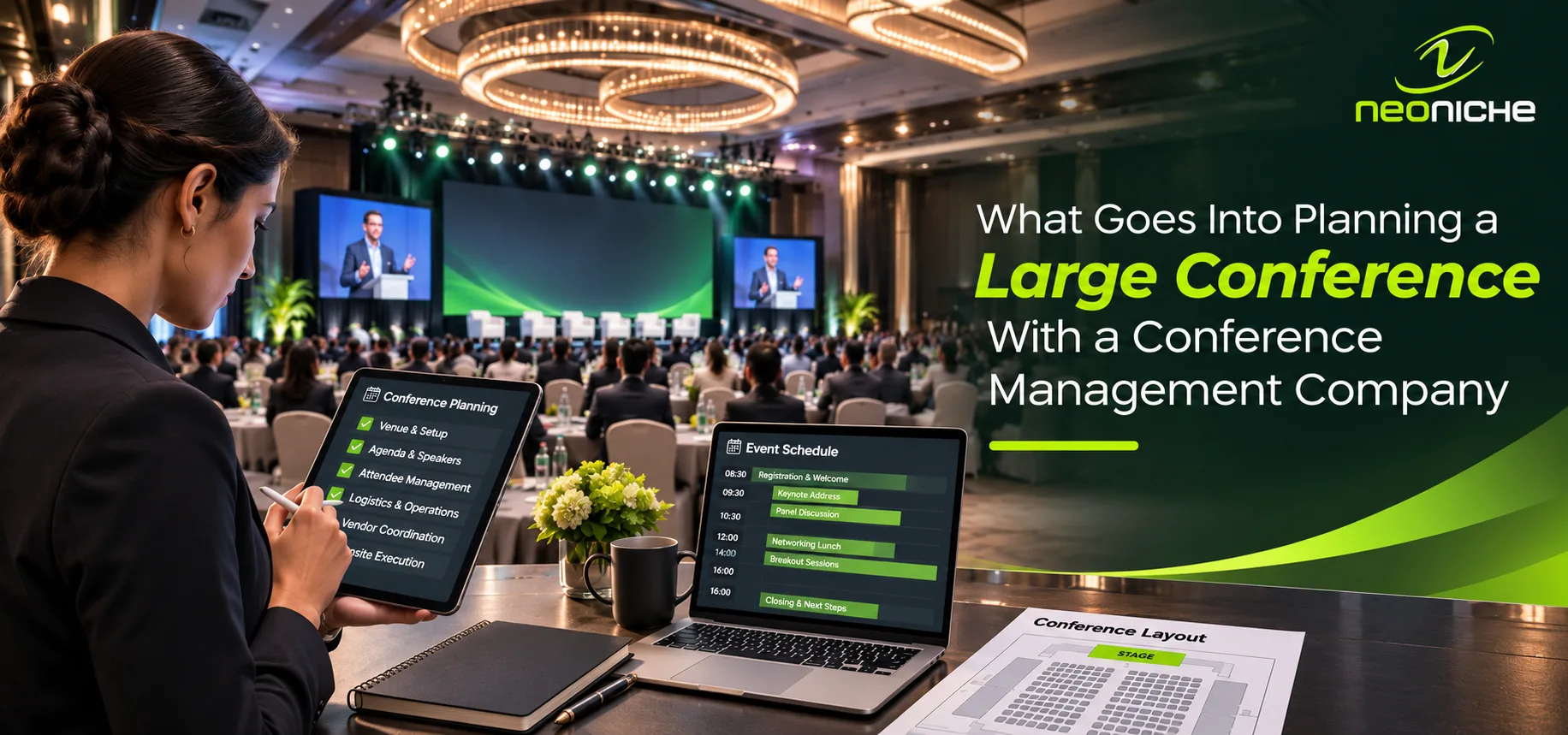
Organising a large corporate conference involves much more than booking a venue and inviting attendees. From coordinating speakers and managing registrations to overseeing technical production and guest experiences, every element needs to work together.
For businesses hosting leadership summits, industry conferences, annual meetings or networking events, effective planning can make the difference between a well-organised event and one affected by operational delays.
This is where a structured conference planning approach becomes essential.
Why Large Conference Planning Requires a Clear Strategy
Unlike smaller corporate gatherings, large conferences involve multiple stakeholders, vendors and operational requirements. A single scheduling issue can affect speaker presentations, attendee movement, catering arrangements and the overall event experience.
Businesses should begin by establishing clear objectives. Understanding what the organisation wants to achieve helps guide decisions about the conference format, programme, audience and budget.
A conference focused on industry networking, for example, may require dedicated meeting spaces and interactive sessions. A leadership summit may prioritise keynote presentations, technical production and executive hospitality.
The planning process should reflect these different requirements rather than following the same approach for every event.
Start With Conference Objectives and Budget Planning
Every successful conference begins with a detailed event brief.
Before selecting a venue or finalising vendors, businesses should establish the expected number of participants, conference duration, audience profile and intended outcomes.
Budget planning should account for major operational expenses, including venue arrangements, audiovisual equipment, stage production, catering, transportation, branding and event technology.
It is also important to reserve a contingency budget for unexpected requirements.
A realistic financial plan helps businesses make informed decisions while reducing the risk of last-minute compromises.
Choose the Right Venue and Event Infrastructure
Venue selection influences nearly every aspect of conference execution.
A suitable location should offer adequate seating capacity, accessible transportation, reliable infrastructure and enough flexibility to accommodate different conference activities.
For multi-day conferences, organisers may also need to consider accommodation, breakout rooms, networking areas and transportation between locations.
Technical requirements deserve equal attention. Sound systems, presentation screens, lighting, internet connectivity and backup equipment should be evaluated before confirming the venue.
Early site inspections can help identify potential challenges before they affect the event.
Coordinate Speakers, Vendors and Production Teams
Large conferences often involve several independent teams working simultaneously.
While one team manages stage production, another may handle registrations, hospitality, speaker coordination or branding installations.
Without centralised communication, even small misunderstandings can create scheduling conflicts.
Businesses can reduce these risks by developing a detailed production schedule, assigning responsibilities and establishing clear approval processes.
Working with an experienced conference management company can help businesses understand how venue coordination, technical production, vendor management and attendee logistics fit into the wider planning process.
The objective is to create a coordinated workflow in which every team understands its responsibilities and deadlines.
Make Attendee Experience a Planning Priority
The quality of a conference is not determined solely by its speakers or presentations. The attendee experience also plays a significant role.
Long registration queues, confusing venue layouts, delayed sessions and limited networking opportunities can affect how participants perceive an event.
Organisers should consider the complete attendee journey, starting with registration communication and continuing through arrival, check-in, session participation and departure.
Digital registrations, clear navigation, accessible facilities and strategically planned breaks can make conferences easier to navigate.
For events involving international delegates or senior executives, additional attention may be required for travel coordination, hospitality and personalised assistance.
Prepare for Unexpected Event Challenges
Even well-planned conferences can encounter operational difficulties.
A speaker might arrive late, technical equipment could malfunction, or unexpected attendance changes might affect seating arrangements.
The key is to prepare contingency measures before these situations arise.
Conference teams should establish backup plans for important technical systems, alternative scheduling arrangements and clear escalation procedures.
Rehearsals and pre-event inspections provide opportunities to identify problems while there is still time to resolve them.
This preparation helps organisers maintain continuity without disrupting the overall conference experience.
How Professional Event Management Supports Better Execution
As corporate conferences become more complex, businesses increasingly need coordinated planning across multiple functions.
Professional event management involves aligning creative concepts, logistics, production, technology and operational teams around shared objectives.
Companies such as NeoNiche, an event management company in India, offer integrated experiential and event management solutions for businesses planning corporate gatherings and large-scale brand experiences.
A coordinated approach allows organisations to concentrate on conference content, business relationships and audience engagement while operational responsibilities are managed systematically.
Measure Conference Success Beyond Attendance
Conference planning does not end when the final session concludes.
Businesses should evaluate whether the event achieved its original objectives.
Depending on the purpose of the conference, performance indicators may include attendee satisfaction, session participation, networking outcomes, stakeholder feedback and budget performance.
Post-event analysis can also identify opportunities to improve future conferences.
For organisations conducting recurring annual conferences, these insights can support better resource allocation and more effective planning decisions.
Conclusion
Planning a large corporate conference requires a balance of strategy, coordination and operational preparation.
From establishing event objectives and selecting the right venue to managing production teams and creating a positive attendee experience, every stage contributes to the final outcome.
Businesses that begin planning early, communicate clearly with stakeholders and prepare for operational challenges are better positioned to deliver conferences that support meaningful business goals.