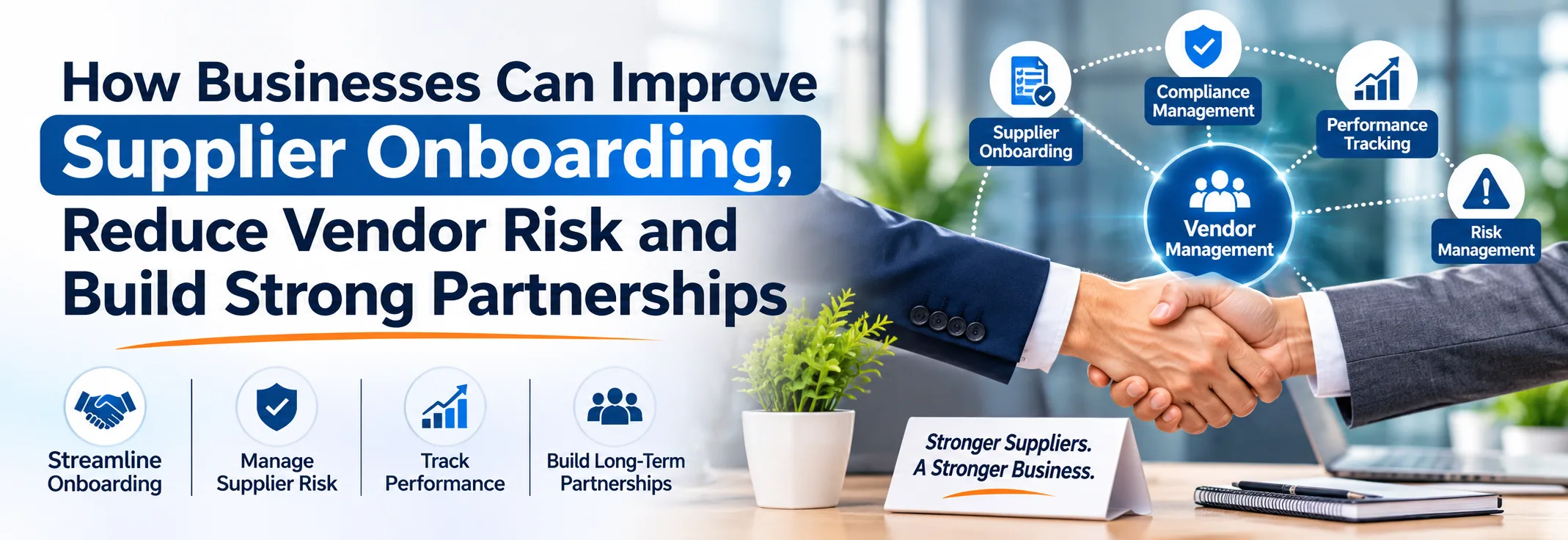
Managing suppliers is an important part of running a successful business. From sourcing raw materials to purchasing equipment and outsourcing services, organizations depend on vendors to maintain smooth operations. However, managing multiple suppliers can become challenging when information, documentation, compliance records and performance data are scattered across spreadsheets and emails.
A poorly managed supplier relationship can result in delayed deliveries, quality issues, unexpected costs and compliance risks. Businesses therefore need a structured approach to supplier onboarding, vendor evaluation and ongoing performance monitoring.
By improving the supplier onboarding process and adopting digital procurement practices, organizations can build stronger vendor relationships, minimize operational risks and improve purchasing efficiency.
What Is Supplier Onboarding and Why Does It Matter?
Supplier onboarding is the process of registering, collecting information, verifying documents and approving a new supplier before starting a business relationship.
It ensures that organizations work with reliable vendors who meet their operational, financial and compliance requirements.
An effective supplier onboarding process generally includes:
- Collecting supplier registration details.
- Verifying business and contact information.
- Gathering KYC and compliance documents.
- Reviewing certifications and other required records.
- Evaluating supplier capabilities.
- Completing internal approval workflows.
- Activating approved suppliers for procurement activities.
A standardized onboarding process helps procurement teams maintain accurate supplier information and make informed sourcing decisions.
5 Common Challenges Businesses Face in Managing Suppliers
Businesses often experience supplier-related problems when vendor information and procurement activities are handled manually.
1. Delays in Supplier Onboarding
Collecting supplier information through emails and spreadsheets can slow down the registration and verification process. Missing documents, incomplete information and delayed approvals can prevent businesses from activating new suppliers on time.
Solution: Establish a standardized supplier registration process with clear documentation requirements, verification steps and approval responsibilities.
2. Limited Visibility into Vendor Performance
Selecting a supplier is only the beginning of a business relationship. Organizations must continuously evaluate whether vendors are meeting delivery schedules, quality expectations and agreed requirements.
Without proper performance monitoring, procurement Software teams may struggle to identify suppliers who repeatedly underperform.
Solution: Track supplier performance using measurable indicators such as delivery timelines, product quality, order accuracy, responsiveness and service reliability.
3. Supplier Compliance and Documentation Risks
Expired certifications, incomplete business documents and outdated compliance information can create operational and regulatory challenges.
When documentation is stored across different folders and email conversations, identifying missing or expired records becomes difficult.
Solution: Maintain centralized supplier records and establish regular documentation reviews with expiry tracking and relevant alerts.
4. Difficulty Identifying Supplier Risks
Businesses may face unexpected disruptions due to financial instability, supply shortages, quality problems or dependence on a limited number of suppliers.
Without continuous risk assessment, procurement teams may discover these issues only after they affect business operations.
Solution: Introduce a structured supplier risk management process that evaluates financial, operational, geographical, compliance and supply-related risks.
5. Poor Communication Between Businesses and Vendors
Frequent email exchanges, unclear purchase requirements and delayed responses can affect supplier relationships.
When suppliers have limited visibility into relevant procurement activities, unnecessary follow-ups and communication gaps may increase.
Solution: Establish clear communication channels and provide structured access to relevant procurement information through digital supplier collaboration processes.
How to Build an Effective Supplier Management Process
A well-defined supplier management process helps businesses maintain consistency from initial registration to long-term supplier evaluation.
Here are five important steps organizations should follow.
Step 1: Identify and Evaluate Potential Suppliers
Start by identifying suppliers who can meet your business requirements. Evaluate their product quality, pricing, delivery capabilities, industry experience and service standards.
Compare multiple suppliers before making a sourcing decision.
Step 2: Standardize the Supplier Registration Process
Create a consistent onboarding checklist for collecting supplier information and required documents.
Ensure that every supplier follows the same registration, verification and approval procedure.
Step 3: Monitor Supplier Performance Regularly
Supplier evaluation should not end after onboarding. Review vendor performance periodically to understand whether suppliers are meeting business expectations.
Important supplier performance indicators include:
- On-time delivery rate
- Product quality consistency
- Order fulfilment accuracy
- Pricing competitiveness
- Response time
- Compliance status
Step 4: Strengthen Supplier Risk Management
Develop a process to identify and assess potential supplier risks.
Review documentation, compliance status, supplier reliability and operational capabilities. Businesses can also use AI-powered insights to support risk assessment and identify information that may require further review.
Step 5: Build Long-Term Supplier Relationships
Maintain transparent communication with suppliers, share relevant business requirements and conduct periodic performance reviews.
Strong supplier relationships can support better coordination, improved service quality and more reliable procurement operations.
How Technology Improves Supplier Performance and Risk Management
Managing suppliers manually becomes increasingly difficult as organizations expand their procurement activities.
Digital procurement solutions help businesses centralize supplier information, organize documents and establish more structured workflows.
Modern platforms can support several important activities:
Centralized Supplier Information: Maintain supplier profiles, contact information, documents and relevant business records in one place.
Automated Onboarding Workflows: Organize supplier registration, document collection, verification and internal approvals.
AI-Powered Risk Assessment: Use AI-enabled capabilities to support supplier risk evaluation and identify information that requires attention.
Compliance Monitoring: Track supplier documentation, compliance status and important expiry dates.
Performance Tracking: Monitor relevant supplier performance indicators and review available performance insights.
Supplier Collaboration: Use a vendor portal to support document sharing, procurement communication and relevant order-related interactions.
These capabilities help procurement teams move away from disconnected manual activities towards a more transparent and structured supplier management process.
How ZYNO Procurement Helps Businesses Manage Supplier Relationships
ZYNO Procurement by Elite Mindz helps businesses bring important supplier-related activities into a connected procurement environment.
Instead of managing supplier details, documentation, approvals and performance information across different tools, organizations can use a centralized platform to support the complete vendor lifecycle.
Its key capabilities include:
- Supplier Information Management: Maintain centralized supplier details and related documentation.
- Structured Vendor Onboarding: Organize supplier registration, document collection, verification and approval workflows.
- AI-Powered Vendor Risk Scoring: Support supplier risk assessment using AI-powered capabilities.
- Vendor Compliance Management: Organize compliance documents, verification status and important expiry information.
- Supplier Performance Monitoring: Track relevant performance indicators and use available insights for supplier evaluation.
- Vendor Portal: Support supplier communication, document sharing and relevant procurement interactions.
- Procurement Integration: Connect supplier-related activities with RFP management, quotation management, purchase requests and procure-to-pay workflows.
With a connected approach to supplier management, businesses can improve procurement visibility, strengthen vendor relationships and make more informed purchasing decisions.
Explore the ZYNO Procurement Vendor Management Solution to understand how your organization can streamline supplier-related workflows.
Key Benefits of Improving Supplier Management
A structured supplier management approach can deliver several business advantages:
- Better Supplier Visibility: Access relevant supplier information and records through centralized workflows.
- Improved Operational Efficiency: Reduce repetitive manual work during supplier registration and documentation.
- Stronger Risk Awareness: Identify potential supplier and compliance issues earlier.
- Consistent Performance Evaluation: Monitor supplier performance using measurable indicators.
- Better Procurement Decisions: Use organized supplier information to support sourcing and purchasing decisions.
- Stronger Supplier Relationships: Improve communication, coordination and accountability.
Frequently Asked Questions (FAQs)
1. What is the supplier onboarding process?
Supplier onboarding is the process of registering, verifying and approving a new supplier before engaging in business transactions. It generally includes information collection, document verification, compliance checks and internal approvals.
2. How can businesses improve vendor performance?
Businesses can improve vendor performance by setting measurable expectations, monitoring delivery timelines, evaluating product quality, reviewing supplier responsiveness and conducting regular performance assessments.
3. What is supplier risk management?
Supplier risk management involves identifying, evaluating and monitoring risks associated with vendors. These risks may include financial instability, delivery disruptions, compliance issues and inconsistent product quality.
4. Which KPIs are important for supplier evaluation?
Important supplier evaluation KPIs include on-time delivery rate, defect rate, order accuracy, cost competitiveness, response time and compliance performance.
5. How does technology help with supplier management?
Digital procurement platforms help centralize supplier information, organize documentation, support onboarding approvals, monitor compliance and track supplier performance through structured workflows.
6. Can AI help businesses evaluate supplier risks?
Yes. AI-powered capabilities can support supplier risk assessment by analyzing available vendor information, highlighting relevant risk indicators and helping procurement teams identify areas that require attention.
7. Why is supplier performance monitoring important?
Regular supplier performance monitoring helps businesses identify delivery problems, quality issues and service gaps. It also supports better supplier selection and continuous improvement.
Conclusion
Effective supplier management is not limited to selecting a vendor and placing purchase orders. Businesses must continuously manage supplier information, verify documentation, assess risks and monitor performance to maintain reliable procurement operations.
A structured onboarding process combined with regular supplier evaluation and digital procurement workflows can help organizations improve transparency, reduce operational challenges and build stronger supplier relationships.
With ZYNO Procurement by Elite Mindz, businesses can bring supplier onboarding, risk assessment, compliance management and performance monitoring into a connected procurement environment.
Ready to improve your supplier management process?
Explore ZYNO Procurement and discover how a connected approach can help your business manage suppliers more efficiently.
Request a Demo Today!