
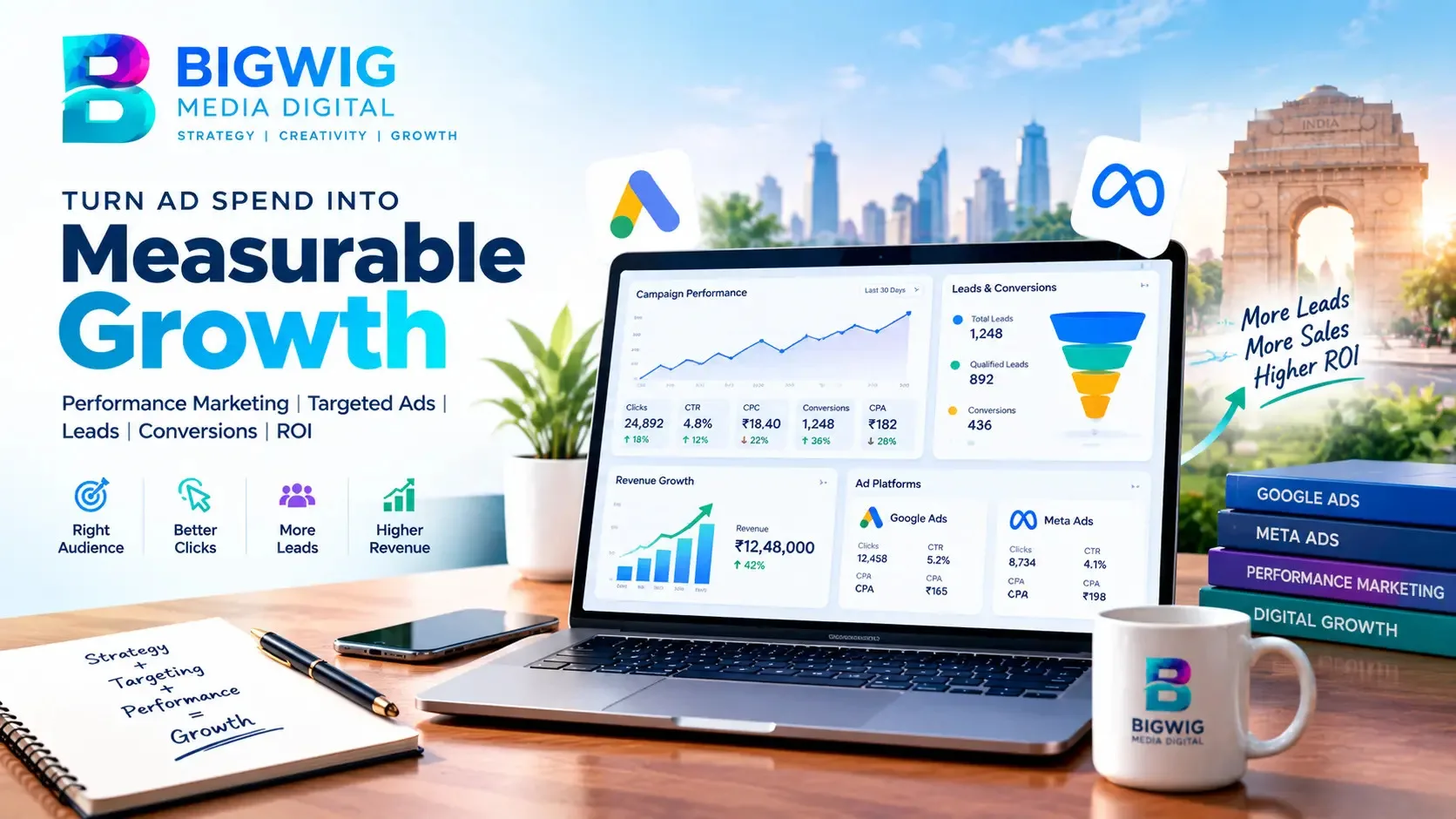
Digital advertising gives businesses many opportunities to reach potential customers. Companies can promote their products and services through Google Ads, social media platforms, display advertising, and other online channels. However, running ads on multiple platforms does not always guarantee better results.
Businesses need to understand where their audience spends time, which messages attract attention, and what encourages people to take action. Without a clear strategy, advertising budgets can be wasted on irrelevant clicks, poor targeting, and campaigns that do not support business goals.
Improving advertising efficiency means using available resources wisely to achieve better results. Businesses that invest in Performance Marketing Services in Delhi can use campaign data, audience research, and continuous optimization to improve their advertising decisions.
This article explains practical ways businesses can improve advertising efficiency across digital platforms.
What Is Advertising Efficiency?
Advertising efficiency refers to how effectively a business uses its advertising budget to achieve its marketing goals.
These goals may include generating leads, increasing sales, improving website traffic, or building brand awareness. An efficient campaign does not simply attract a large number of clicks. It reaches relevant people and encourages meaningful actions.
For example, a business may receive thousands of ad clicks but very few enquiries. Another campaign may attract fewer visitors but generate more qualified leads. The second campaign may be more efficient because it creates greater value from its advertising spend.
Businesses should focus on meaningful outcomes rather than judging campaigns only by impressions or clicks.
Why Advertising Efficiency Matters
Digital advertising costs can increase when competition is high. Businesses need to make sure their spending supports clear objectives.
1. Helps Reduce Wasted Ad Spend
Poor targeting, irrelevant keywords, and unclear ad messages can attract people who are unlikely to become customers.
By reviewing campaign data and improving targeting, businesses can reduce unnecessary spending and focus on relevant audiences.
2. Improves Lead and Customer Quality
A campaign may generate many leads, but not every lead will be suitable for the business.
Advertising efficiency improves when campaigns attract people who have a genuine need for the product or service. This can help sales teams spend more time on relevant enquiries.
3. Supports Better Marketing Decisions
Campaign data can show which platforms, audiences, and messages are producing useful results.
Businesses can use these insights to make informed decisions instead of relying only on assumptions.
4. Helps Businesses Scale
When a campaign consistently produces valuable outcomes, businesses may consider increasing its budget gradually.
Efficient advertising helps businesses identify which opportunities are worth expanding.
1. Set Clear Advertising Goals
Every campaign should have a clear purpose before it goes live.
Some businesses want to generate enquiries, while others want to increase online sales or promote a new product. The campaign goal determines how success should be measured.
Common advertising goals include:
- Generating qualified leads
- Increasing product sales
- Driving relevant website traffic
- Encouraging consultation bookings
- Promoting a new service
- Improving brand awareness
For lead generation campaigns, businesses may track cost per lead and lead quality. For e-commerce campaigns, conversion rate and return on ad spend may be more useful.
Clear goals help businesses select the right platform, audience, and campaign format.
2. Understand Your Target Audience
Audience research is an important part of advertising efficiency. Businesses should understand who their potential customers are, what they need, and how they make purchasing decisions.
Consider the following questions:
- What problems are customers trying to solve?
- Which products or services are they looking for?
- Which digital platforms do they use?
- What information do they need before making a decision?
- What may stop them from purchasing?
For example, a person searching Google for a specific service may already have a strong need. A person browsing social media may be discovering a brand for the first time.
Understanding these differences helps businesses create more relevant campaigns.
3. Choose the Right Digital Advertising Platforms
Not every platform is suitable for every business. Platform selection should depend on the audience, campaign objective, and type of product or service.
Google Ads
Google Ads can help businesses reach people who are actively searching for relevant products or services.
Search campaigns may be useful for lead generation, local services, and businesses that want to connect with users who already have a clear need.
Meta Ads
Facebook and Instagram advertising can help businesses reach audiences based on available interests, behaviors, and demographic targeting options.
These platforms can support brand awareness, lead generation, product promotion, and customer engagement.
Display Advertising
Display ads can help businesses build visibility across websites and apps that participate in advertising networks. They may support awareness and remarketing campaigns.
LinkedIn Advertising
LinkedIn may be useful for businesses targeting professionals, decision-makers, or other business audiences. Its suitability depends on the campaign objective and advertising costs.
The best platform is not necessarily the one with the most users. It is the one that can help the business reach its relevant audience and achieve its goal.
4. Use Relevant Keywords and Ad Messages
For search advertising, keyword selection plays an important role in campaign efficiency.
Businesses should choose keywords that closely match their products or services. Broad or unrelated keywords may attract clicks from people who are not looking for what the business offers.
Ad messages should also match the search intent.
For example, someone searching for a service provider may want to understand the service, location, experience, or next steps. An ad that clearly answers these needs can be more relevant.
Businesses should review search term reports where available and add irrelevant terms as negative keywords when appropriate.
5. Improve Landing Page Experience
An effective advertisement is only one part of the customer journey. After clicking an ad, visitors need a landing page that provides the information they expect.
A useful landing page should include:
- A clear headline
- Relevant information about the offer
- Easy-to-understand benefits
- A visible call to action
- Mobile-friendly design
- Fast loading speed
- A simple enquiry or checkout process
If an ad promotes a specific service, visitors should be directed to the relevant service page rather than a general homepage.
A good landing page can help users understand the offer and complete the desired action.
6. Track the Right Advertising Metrics
Businesses need reliable data to understand campaign performance.
Important metrics may include:
Click-Through Rate
Click-through rate measures the percentage of people who click an ad after seeing it. It can help businesses understand whether an ad is attracting attention.
Conversion Rate
Conversion rate measures the percentage of visitors who complete a desired action, such as submitting a form or making a purchase.
Cost Per Lead
Cost per lead shows how much a business spends to generate a lead. It should be considered alongside lead quality.
Cost Per Acquisition
Cost per acquisition estimates how much a business spends to acquire a customer or achieve a defined conversion.
Return on Ad Spend
Return on ad spend measures the revenue generated from advertising spend. It is especially useful for sales-focused campaigns.
No single metric tells the complete story. Businesses should review several metrics together to understand the real value of their campaigns.
7. Test and Optimize Campaigns Regularly
Advertising efficiency improves through continuous testing.
Businesses can test different:
- Ad headlines
- Images and videos
- Calls to action
- Audience segments
- Keyword groups
- Landing pages
For example, a business may test two different ad headlines to understand which one attracts more relevant visitors.
Testing should have a clear purpose. Businesses should allow campaigns to collect enough useful data before making major changes.
8. Manage Advertising Budgets Carefully
Budget allocation should reflect campaign goals and performance.
Businesses can begin with a planned budget for each platform and review results regularly. If a campaign generates valuable leads or sales at an acceptable cost, the business may consider increasing its budget gradually.
If a campaign receives clicks but produces few conversions, it is important to investigate the cause before investing more.
Possible issues include poor targeting, weak ad messaging, or an unsuitable landing page.
Common Advertising Efficiency Mistakes
Businesses should avoid these common mistakes:
Focusing Only on Clicks
Clicks may show interest, but they do not guarantee sales or qualified leads.
Running the Same Campaign Everywhere
Each platform has different audiences and user behavior. Campaigns should be adapted to the platform.
Ignoring Mobile Users
Many people browse websites and interact with ads on mobile devices. Poor mobile experiences can reduce conversions.
Making Changes Without Data
Frequent changes based on limited information can make it difficult to understand what is working.
Forgetting the Customer Journey
Advertising should consider the steps people take before becoming customers. Some audiences need more information and time before making a decision.
How Bigwig Media Digital Can Help
Improving advertising efficiency requires a clear strategy, relevant targeting, reliable tracking, and regular campaign optimization.
Bigwig Media Digital helps businesses plan digital advertising campaigns around their goals and audience needs. Businesses looking to improve their advertising strategy can explore Performance Marketing Services in Delhi to learn more about performance-focused marketing support.
The right approach depends on the business, its customers, and the results it wants to achieve. A structured campaign strategy can help businesses make more informed advertising decisions.
Conclusion
Advertising efficiency is about achieving meaningful results with the available budget. Businesses can improve performance by setting clear goals, understanding their audience, selecting suitable platforms, and tracking the right metrics.
Regular testing and optimization can help identify what works and where improvements are needed. By focusing on relevant customers and useful outcomes, businesses can make digital advertising a more effective part of their growth strategy.
Frequently Asked Questions
What is the best way to improve advertising efficiency?
Start with clear goals, understand your audience, select relevant platforms, and track meaningful results. Regular campaign reviews can help identify opportunities for improvement.
Which digital advertising platform is best for businesses?
The best platform depends on the audience and business objective. Google Ads may be useful for reaching people actively searching for solutions, while social media advertising can support awareness and audience engagement.
How can businesses reduce wasted ad spend?
Businesses can review search terms, improve audience targeting, test ad messages, and monitor conversion data. They should also check whether landing pages match the advertisements.
What metrics should businesses track?
Useful metrics include click-through rate, conversion rate, cost per lead, cost per acquisition, and return on ad spend. The right metrics depend on campaign goals.