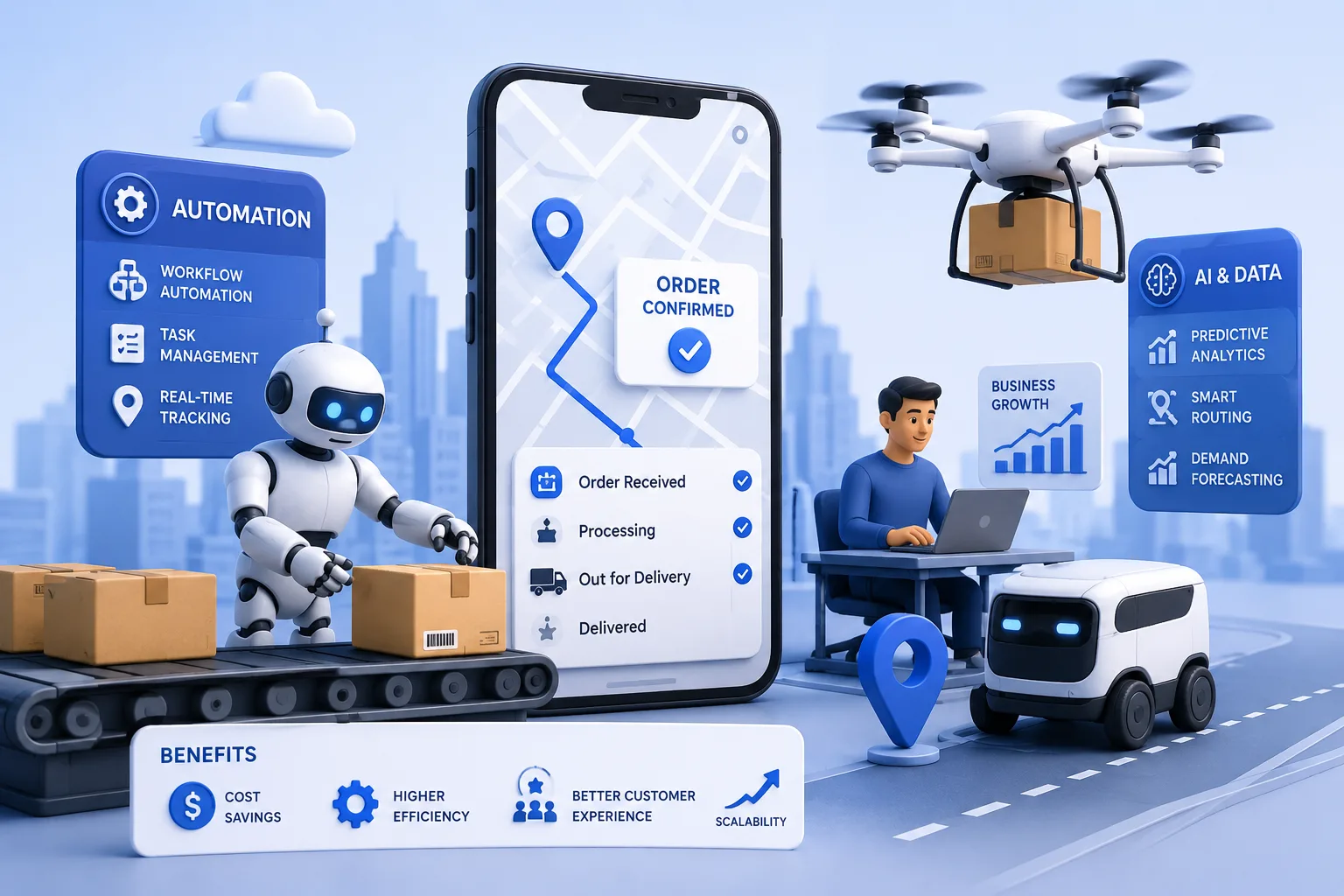
Technology is transforming the way businesses operate, communicate, and deliver services. In recent years, automation has become one of the most powerful forces driving digital transformation across industries. From customer support and logistics to payment processing and marketing, businesses are now relying heavily on automation to improve efficiency and reduce manual workloads.
This shift has significantly increased the demand for on demand app development as companies seek smarter ways to serve customers faster and more effectively.
Modern consumers expect instant responses, real-time updates, and seamless digital experiences. Businesses that fail to meet these expectations often struggle to remain competitive. Automation helps companies solve these challenges by streamlining operations and improving customer interactions.
Today, many businesses are integrating intelligent systems into their platforms to deliver faster, smarter, and more scalable solutions.
What is On Demand App Development?
On demand app development refers to creating digital platforms that allow users to access services or products instantly through mobile or web applications.
These applications are commonly used for:
- Food delivery
- Ride booking
- Grocery services
- Home services
- Healthcare consultations
- Logistics management
Businesses choose on demand mobile app development Services because it improves customer convenience while simplifying operational processes.
Automation further enhances these applications by reducing repetitive tasks and improving overall efficiency.
Faster Operations Through Automation
One of the biggest advantages of automation is speed.
Businesses no longer need manual intervention for every process.
Automation helps companies:
- Process orders instantly
- Assign tasks automatically
- Send real-time notifications
- Manage bookings efficiently
- Generate invoices automatically
This faster workflow improves both customer satisfaction and internal productivity.
Smart Customer Support Systems
Customer support has changed dramatically with automation.
Many companies now use AI powered on demand apps with chatbot integration to handle customer inquiries instantly.
Automated chat systems can:
- Answer common questions
- Track orders
- Handle cancellations
- Recommend services
- Provide 24/7 support
This reduces waiting times and improves customer experiences.
Businesses also save operational costs by reducing dependency on large support teams.
Improved Delivery and Logistics Management
Automation is playing a major role in logistics and delivery-based businesses.
Modern applications use automated systems for:
- Route optimization
- Driver allocation
- Delivery tracking
- Fuel management
- Estimated arrival calculations
These features improve delivery speed while reducing operational inefficiencies.
Companies using scalable on demand app solutions can manage large delivery networks more effectively through automation.
Personalized Customer Experiences
Automation is no longer limited to backend operations.
Businesses are now using smart systems to personalize user experiences.
Applications can automatically:
- Recommend products
- Suggest services
- Send targeted offers
- Analyze customer behavior
- Track user preferences
This personalization improves engagement and encourages repeat usage.
Reduced Human Errors
Manual processes often lead to mistakes such as:
- Incorrect bookings
- Payment errors
- Delayed notifications
- Scheduling conflicts
Automation minimizes these problems by standardizing workflows.
Businesses that build an on demand app with automated systems can improve service accuracy and operational consistency.
Better Data Management
Modern businesses rely heavily on data for decision-making.
Automation helps companies organize and analyze data efficiently.
Businesses can monitor:
- Customer activity
- Sales performance
- Delivery timelines
- User engagement
- Revenue trends
Real-time analytics help companies improve services and optimize growth strategies.
Increased Scalability
Scaling a business manually can become difficult and expensive.
Automation allows businesses to grow without significantly increasing operational complexity.
For example:
- Automated booking systems can handle thousands of users simultaneously.
- AI-driven chatbots can manage customer interactions continuously.
- Automated notifications keep customers informed without manual intervention.
This is why startups and enterprises increasingly rely on professional on demand application development company teams to create scalable digital ecosystems.
Enhanced Payment Processing
Automation has simplified digital payments significantly.
Modern applications can:
- Process payments instantly
- Generate invoices automatically
- Track transactions securely
- Handle recurring subscriptions
- Detect suspicious activity
These features improve transaction security and customer trust.
Automation in Marketing
Businesses are also using automation for digital marketing.
Automated marketing systems help with:
- Push notifications
- Email campaigns
- Personalized promotions
- Customer retention campaigns
- Loyalty programs
This allows businesses to maintain continuous customer engagement.
The Future of Automated On-Demand Businesses
Automation will continue shaping the future of digital platforms.
Future trends may include:
- Voice-controlled applications
- Predictive AI systems
- Autonomous deliveries
- Advanced machine learning recommendations
- Smart inventory management
Businesses investing early in automation will gain a strong competitive advantage.
Final Thoughts
Automation is no longer a luxury for digital businesses. It has become an essential component of modern service platforms.
From customer support and logistics to marketing and analytics, automation is helping businesses operate faster, smarter, and more efficiently.
The growing demand for on demand app development reflects how businesses are adapting to customer expectations for instant services and seamless digital experiences.
Companies that integrate automation into their digital strategies today will be better prepared for future market demands and long-term business growth.