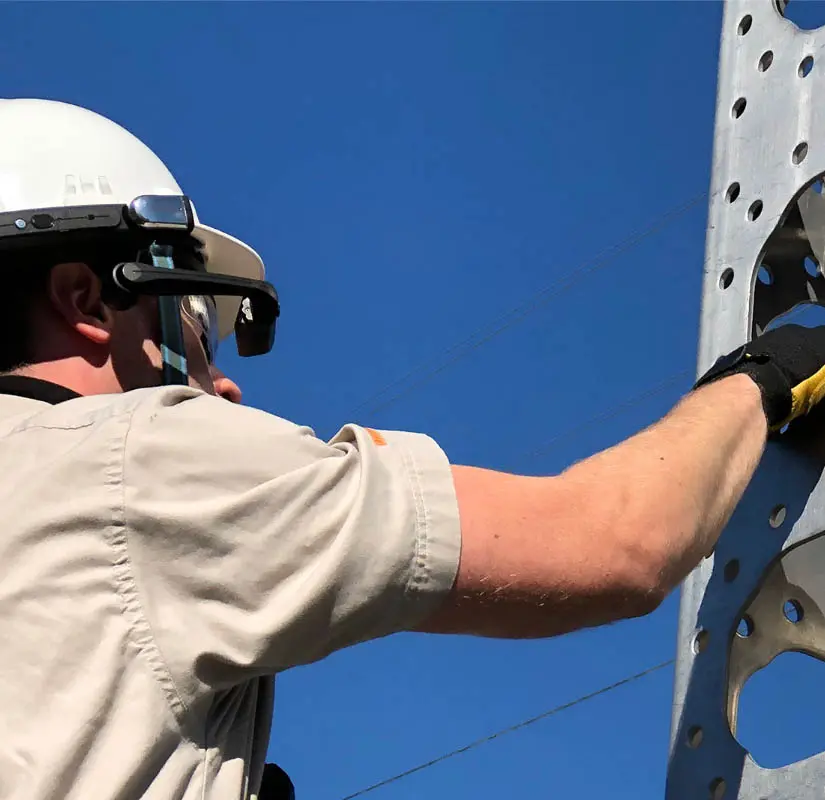
Augmented Reality (AR) has long promised to bridge the gap between the physical and digital worlds, and in 2025, that promise is becoming a reality thanks to AR headsets. These devices are no longer limited to early adopters or tech enthusiasts — they are increasingly being used across industries to boost productivity, enhance training, and improve customer experiences. From manufacturing floors to healthcare facilities, AR headsets are changing the way businesses operate.
In this blog, we’ll explore what AR headsets are, how they work, their applications across industries, the benefits they provide, and what the future holds for immersive wearable technology.
Understanding AR Headsets
An AR headset is a wearable device that overlays digital information onto the user’s real-world environment. Unlike traditional screens, AR headsets allow users to interact with digital content while staying aware of their surroundings. These devices typically include:
- Transparent or semi-transparent lenses to display digital images
- Cameras and sensors for spatial awareness
- Microphones and speakers for voice control and communication
- Processors to handle real-time data and graphics
Popular AR headsets include Microsoft HoloLens 2, Magic Leap 2, and emerging industrial headsets like RealWear Navigator 520 and DigiLens ARGO. Each device is designed for specific applications, from industrial safety and assembly to remote collaboration and product visualization.
The Rise of AR Headsets in Business
Businesses are adopting AR headsets at an accelerated pace. According to MarketsandMarkets, the enterprise AR market is projected to reach $88.4 billion by 2030, driven by demand in healthcare, manufacturing, logistics, and retail.
The primary reason for adoption is enhanced productivity. AR headsets allow workers to access critical information hands-free, reducing errors and speeding up processes. They also facilitate remote guidance, enabling experts to assist teams in real time without traveling.
Key Applications of AR Headsets Across Industries
1. Manufacturing and Industrial Operations
AR headsets are transforming how factories and industrial sites operate. Workers can access:
- Step-by-step assembly instructions overlaid on machinery
- Maintenance alerts for equipment
- Safety information in real time
Example: Boeing has integrated AR headsets into its wiring assembly process, reducing errors by 25% and cutting training time by 40%. Similarly, automotive manufacturers use AR headsets like Navigator 520 to streamline complex assembly lines and quality control checks.
2. Healthcare and Surgery
AR headsets are revolutionizing healthcare by providing surgeons and medical staff with real-time data during operations. These devices can:
- Overlay patient imaging data, such as MRIs or CT scans, directly onto the patient’s body
- Display vital statistics and surgical guides
- Enable remote expert consultations
Example: Surgeons using Hippo Virtual Care can visualize internal anatomy while performing minimally invasive procedures. Medical schools also use AR headsets to provide students with interactive, 3D anatomy lessons that improve comprehension.
3. Remote Collaboration and Training
In 2025, AR headsets are enabling companies to train employees and collaborate remotely in ways previously unimaginable. Field technicians can:
- Receive step-by-step guidance from remote experts
- Annotate equipment in real time
- Share live video streams for problem-solving
Example: Companies like RealWear and DigiLens enable remote support for industrial maintenance, reducing downtime and travel costs while increasing operational efficiency.
4. Retail and Customer Engagement
AR headsets are no longer limited to industrial applications. Retailers are exploring immersive shopping experiences, including:
- Virtual product demonstrations
- Interactive store tours
- Real-time customization of products
Example: Some luxury brands use AR headsets in-store to let customers visualize clothing, accessories, or home decor items before purchasing. This boosts engagement and reduces purchase hesitation.
5. Logistics and Warehousing
In warehouses, AR headsets help workers:
- Locate inventory quickly using overlaid navigation
- Pick and pack items efficiently
- Track shipments in real time
Companies like DHL have reported improved accuracy and efficiency by integrating AR headsets into their fulfillment centers.
Benefits of AR Headsets for Businesses
Adopting AR headsets provides both operational and strategic advantages:
- Increased Productivity — Access information hands-free without pausing work.
- Reduced Errors — Digital overlays guide workers, minimizing mistakes.
- Enhanced Training — Employees can learn in immersive environments with reduced risks.
- Cost Savings — Remote collaboration reduces travel costs and downtime.
- Customer Engagement — Immersive experiences increase brand loyalty and satisfaction.
Challenges in AR Headset Adoption
Despite their benefits, AR headsets come with challenges:
- High Initial Cost: Enterprise-grade devices are expensive, though ROI is often justified by efficiency gains.
- Device Comfort: Wearing headsets for extended periods can be tiring. Ergonomics are improving, but user comfort remains a consideration.
- Software Integration: AR solutions must integrate seamlessly with existing enterprise software, which may require custom development.
- Privacy and Security: AR devices capture visual and audio data, raising potential concerns about sensitive information.
Future of AR Headsets in Business
Looking ahead, AR headsets are set to become even more powerful and versatile. Some trends include:
1. Lightweight, Ergonomic Devices
Next-generation AR headsets will be lighter and more comfortable, enabling all-day use in workplaces.
2. AI-Powered AR
Artificial intelligence will enhance AR experiences by providing predictive analytics, automated instructions, and real-time problem-solving.
3. Integration with IoT
AR headsets connected to IoT sensors will provide real-time insights on machinery, environmental conditions, and supply chains, enabling data-driven decision-making.
4. Collaborative XR Platforms
Extended Reality (XR) platforms will combine AR, VR, and mixed reality to create unified environments for collaboration, training, and customer interaction.
5. Expansion Beyond Industry
Retail, education, healthcare, and even tourism will continue to explore AR headset applications, making immersive experiences part of everyday life.
Conclusion
AR headsets are no longer a novelty — they are a strategic tool for businesses in 2025. From manufacturing and healthcare to retail and logistics, these devices improve productivity, reduce errors, and create engaging experiences for employees and customers alike.
As technology advances, AR headsets will become lighter, smarter, and more integrated into enterprise systems, transforming the way businesses operate and interact with the world. Organizations that adopt AR early will enjoy a competitive edge, enhanced operational efficiency, and a forward-thinking brand image.
For companies looking to embrace digital transformation, investing in AR headset technology is not just a trend — it’s a step toward the future of business.