
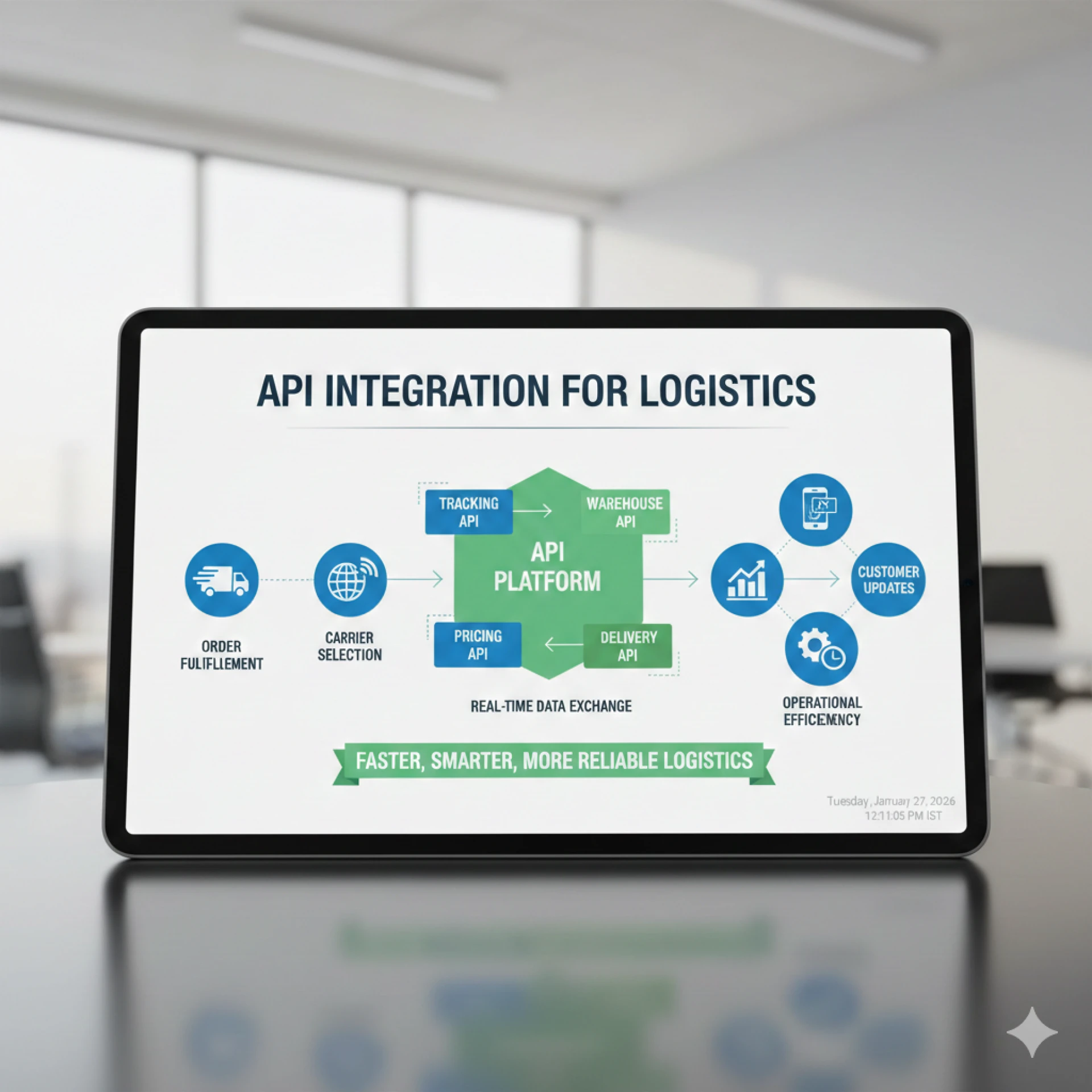
API integration for logistics improves warehouse operations by connecting different systems, automating inventory updates, speeding up order processing, reducing errors, and enhancing overall efficiency. In today’s fast-paced logistics world, warehouses play a critical role in keeping supply chains smooth. With growing orders, multiple systems, and increasing complexity, managing warehouse operations manually is no longer enough.
What Is API Integration for Logistics?
API stands for Application Programming Interface. It is a way for different software systems to talk to each other. In logistics, API integration allows your warehouse management system (WMS) to connect seamlessly with other tools like inventory software, order management platforms, transportation systems, and ERP solutions.
Instead of updating multiple systems manually, APIs automate data sharing. This reduces errors, saves time, and keeps your warehouse running smoothly.
Benefits of API Integration for Warehouse Operations
1. Real-Time Inventory Updates
One of the biggest challenges in warehouses is keeping track of stock. With API integration for logistics, inventory levels are updated automatically across all platforms. This means warehouse staff always knows what is available, what is reserved, and what needs to be reordered.
Benefit: Less stockouts, fewer delays, and improved customer satisfaction.
2. Faster Order Processing
APIs connect your warehouse system with order management platforms. When an order is placed online or through a client system, it is instantly visible in your WMS.
Benefit: Orders can be picked, packed, and shipped faster, reducing delays and improving efficiency.
3. Improved Data Accuracy
Manual data entry often leads to mistakes in inventory records, shipment details, and order status. API integration automates the flow of information between systems, ensuring that all data is accurate and consistent.
Benefit: Fewer errors, less manual correction, and smoother operations.
4. Better Coordination Across Teams
Warehouse operations often involve multiple teams – receiving, storage, picking, packing, and shipping. With integrated systems, all teams can access the same real-time data.
Benefit: Enhanced collaboration and fewer miscommunications.
5. Easy Reporting and Analytics
With API integration, data from all warehouse systems can be collected in one place. Managers can generate reports, track performance, and analyze trends without gathering information from multiple sources manually.
Benefit: Better decision-making and more efficient warehouse management.
6. Scalability for Growing Businesses
As your logistics operations grow, managing multiple systems manually becomes harder. APIs make it easy to scale operations without adding extra staff or creating bottlenecks. New software or systems can be connected without disrupting existing processes.
Benefit: Smooth growth and adaptable warehouse operations.
Real-World Example
Imagine a warehouse handling hundreds of orders daily. Without API integration, staff would have to check stock manually, update spreadsheets, and communicate with shipping partners individually. This slows down operations and increases errors.
With API integration for logistics, all systems – inventory, orders, shipping, and ERP – are connected. Orders are updated instantly, stock is adjusted in real-time, and shipping information flows directly to partners. The result is faster delivery, accurate inventory, and satisfied customers.
Conclusion
API integration is no longer optional for modern logistics warehouses. It improves efficiency, reduces errors, speeds up order processing, and allows warehouses to scale easily. Businesses using API integration for logistics can stay competitive and meet customer expectations more effectively.
By connecting systems through APIs, warehouses become smarter, operations become smoother, and growth becomes easier.