
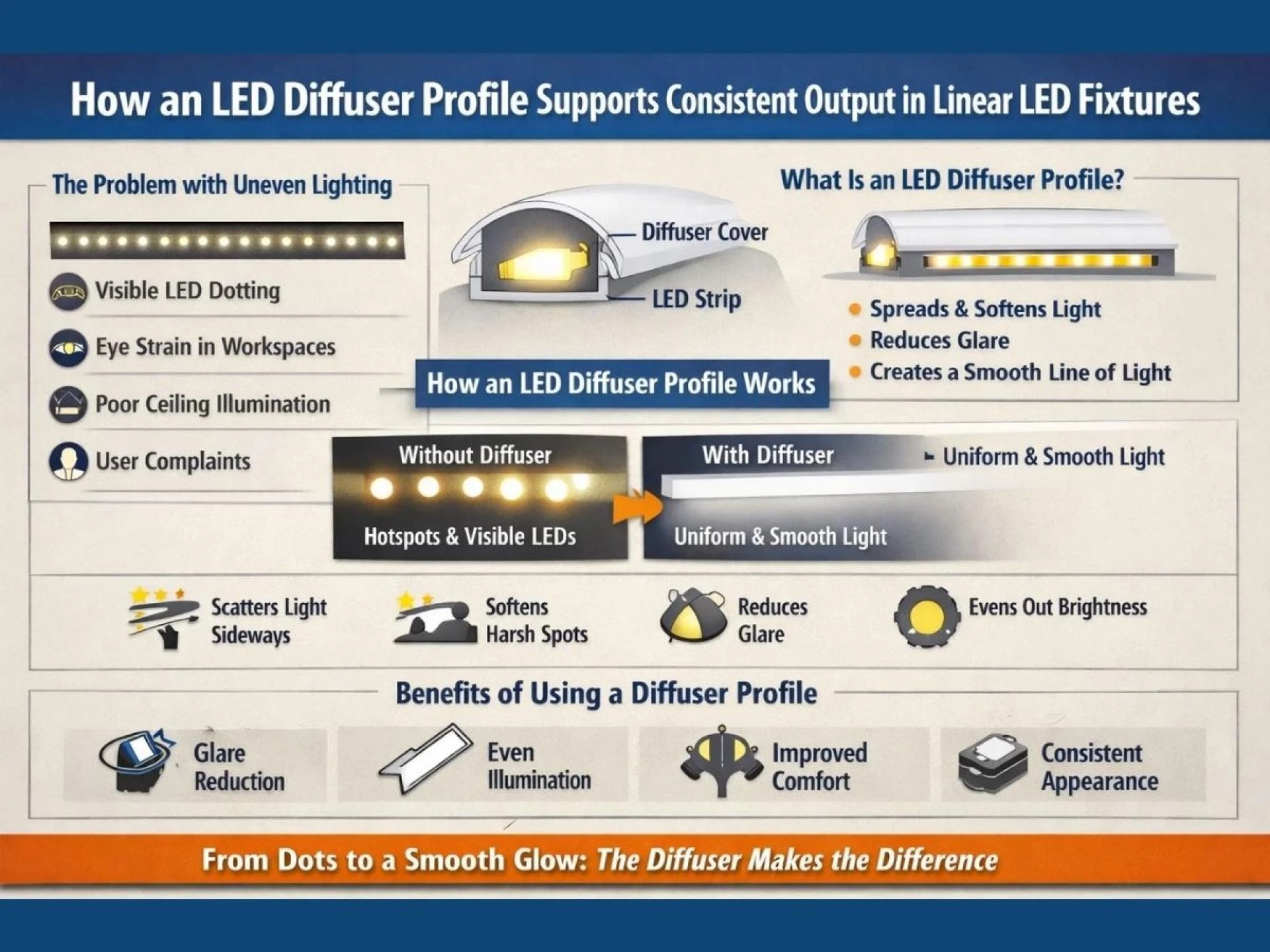
If you have ever installed a linear LED light and noticed bright spots, dark patches, or glare along the length, you already know the problem. The LED chips work fine, the driver is correct, yet the light still looks uneven. This is where the diffuser, not the LED, becomes the deciding factor.
In many commercial and architectural projects today, an LED diffuser profile in India plays a key role in achieving smooth, consistent light output. When the diffuser profile is properly designed and matched to the fixture, it controls how light spreads, how glare is reduced, and how comfortable the space feels over long hours of use.
This article explains, from real project experience, how an LED diffuser profile supports uniform output in linear fixtures and what actually makes the difference on site.
Why Consistent Light Output Matters in Linear LED Fixtures
Linear LED fixtures are chosen because they promise clean lines and even illumination. When the output is inconsistent, the entire purpose is lost.
Uneven lighting causes:
- Visible LED dotting
- Eye strain in workspaces
- Poor visual comfort in ceilings
- Complaints from end users after installation
In offices, factories, and commercial interiors, lighting is not decorative alone. It supports focus, safety, and productivity. Consistency is not optional.
What Is an LED Diffuser Profile?
An LED diffuser profile is a plastic cover, usually extruded, that sits over the LED strip inside a linear fixture. Its job is to spread light evenly before it reaches the eye.
Unlike a flat cover, a diffuser profile is designed with:
- Specific thickness
- Controlled translucency
- Surface texture for light scattering
The profile works together with the LED spacing and aluminium housing to create a continuous line of light.
How an LED Diffuser Profile Creates Uniform Output
LEDs emit light in points. A diffuser profile blends these points into a smooth surface of light.
Key ways it supports consistency
- Scatters light sideways to fill dark gaps
- Softens hotspots directly above LED chips
- Reduces glare without blocking too much output
- Maintains even brightness from end to end
In simple terms, the diffuser does the visual work that the LED strip alone cannot.
The Role of Material and Finish
Not all diffuser profiles behave the same way. Material quality and surface finish matter more than many realise.
Common diffuser finishes
- Opal white for soft, uniform glow
- Frosted clear for balanced brightness
- Micro prismatic textures for glare control
Lower quality diffusers may look fine initially but develop yellowing or patchiness over time. A stable material maintains consistent output throughout the fixture’s life.
LED Spacing and Diffuser Distance
Even the best diffuser cannot fix poor design choices.
To achieve consistent output:
- LED spacing must suit the diffuser opacity
- The diffuser must sit at the correct distance from the LED strip
- Profile depth should allow proper light blending
In shallow profiles, diffuser selection becomes even more critical. This is often where real world testing makes the difference.
Advantages of LED Diffuser Profiles in Work Areas
Work environments demand lighting that is comfortable for long hours. Harsh or uneven light leads to fatigue and errors.
The advantages of LED diffuser profiles in work areas include:
- Reduced glare on desks and screens
- Better visual comfort across wide spaces
- Uniform brightness that supports focus
- Fewer complaints from occupants
In factories and offices, these benefits translate into measurable improvements in usability and satisfaction.
LED Diffuser Profiles for Professional Ceiling Lighting
Ceiling lighting is often the most visible application of linear LEDs. Any inconsistency stands out immediately.
LED diffuser profiles for professional ceiling lighting are designed to:
- Blend light across long runs
- Hide LED point sources completely
- Match architectural lines and finishes
- Maintain consistent appearance across multiple fixtures
In commercial interiors, this consistency is what separates a clean installation from a patchy one.
Real Project Insight
In a commercial office project, linear lights were installed across a large open ceiling. Initial mock ups used a clear cover, and LED dots were visible from normal viewing angles. After switching to an opal LED diffuser profile with adjusted thickness, the light line became continuous and glare dropped noticeably.
The LEDs did not change. The diffuser did.
Choosing the Right LED Diffuser Profile
Selecting the right profile requires practical checks, not guesswork.
What to evaluate
- Light transmission versus diffusion balance
- Profile depth and internal spacing
- Compatibility with LED strip type
- Long term clarity and colour stability
Manufacturers such as M3 Extrusion support lighting producers with diffuser profiles designed for repeat production, ensuring consistency across batches and projects.
Quick Answers for Designers and Buyers
A good LED diffuser profile:
- Turns point light into line light
- Controls glare without killing output
- Keeps appearance consistent across fixtures
- Improves comfort in real use
If light looks uneven, the diffuser profile is usually the first place to look.
FAQs
What does an LED diffuser profile do?
An LED diffuser profile spreads light from individual LED chips into a smooth, even output. It reduces glare, hides visible dots, and improves visual comfort. This makes linear LED fixtures suitable for offices, commercial spaces, and professional interiors.
Why do linear LED lights show bright spots?
Bright spots appear when LEDs are too close to the cover or the diffuser material is too clear. Without proper diffusion, point light sources remain visible. A well designed diffuser profile blends these points into a continuous light line.
Is an opal diffuser better than a clear one?
An opal diffuser provides better light uniformity and glare control than a clear cover. While clear diffusers allow higher light transmission, they often show LED dots. The right choice depends on fixture depth and lighting purpose.
Do diffuser profiles reduce brightness?
Diffusers slightly reduce raw light output, but they improve usable light quality. By spreading light evenly and reducing glare, the perceived brightness often feels better, especially in work and ceiling lighting applications.
Are LED diffuser profiles suitable for long fixtures?
Yes. Diffuser profiles are designed to maintain consistent output across long runs. Quality extrusion and uniform material thickness help avoid dark patches or colour variation along the length of the fixture.
How long do LED diffuser profiles last?
High quality diffuser profiles maintain clarity and diffusion performance for years. Proper material formulation prevents yellowing and patchiness, ensuring consistent output over the life of the lighting system.
Can diffuser profiles be customised?
Yes. Diffuser profiles can be produced in custom shapes, finishes, and thicknesses to suit specific lighting designs. Customisation helps achieve better fit, improved diffusion, and consistent results in repeat projects.