
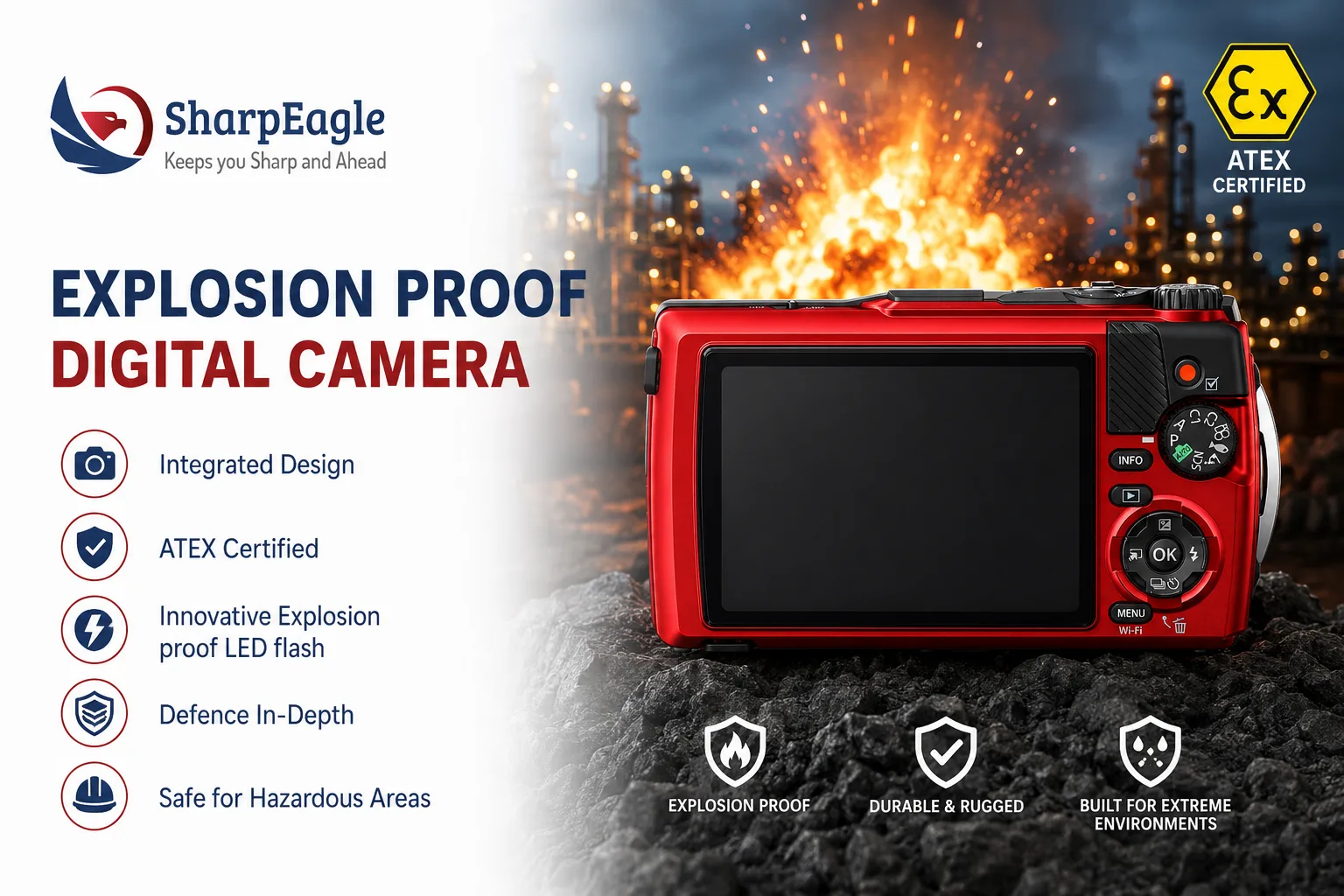
A single missing photograph can delay an incident investigation by days and leave critical questions unanswered. Across Saudi Arabia's industrial sector, from offshore oil platforms to petrochemical complexes and manufacturing plants, visual evidence has become one of the most valuable tools in determining what happened, why it happened, and how similar incidents can be prevented.
The challenge is that many incidents occur in hazardous locations where conventional imaging devices cannot be safely used. Safety officers, maintenance teams, and investigators need reliable photographic documentation without introducing ignition risks into potentially explosive environments. This is where specialised hazardous-area imaging technology plays an increasingly important role in strengthening investigations, supporting compliance, and improving operational safety outcomes.

Why Visual Evidence Matters in Industrial Investigations
When an incident occurs, facts matter more than assumptions. High-quality visual documentation helps your team capture site conditions before equipment is repaired, cleaned, or altered during recovery activities.
Photographic evidence is particularly valuable during:
- Near-miss investigations
- Equipment failures
- Safety inspections
- Environmental incidents
- Asset damage assessments
Images provide objective records that can be reviewed repeatedly by safety personnel, engineering teams, insurers, regulators, and management. They also reduce the risk of relying solely on witness recollections, which can vary significantly after an event.
For facilities operating under strict safety frameworks and international standards aligned with HSE workplace safety requirements, comprehensive documentation is often expected during investigations and compliance reviews.
Hazardous Area Challenges During Evidence Collection
Collecting photographs inside refineries, chemical processing plants, fuel terminals, offshore installations, and maritime facilities presents unique difficulties. Areas classified under hazardous-zone requirements may contain flammable gases, vapours, or combustible atmospheres capable of ignition.
A standard camera can create unacceptable risks because batteries, electrical circuits, flash systems, and switching components may generate sparks or excessive heat. As a result, investigators frequently face a difficult choice: delay documentation until conditions change or use alternative methods that may not provide sufficient evidence.
An intrinsically safe camera helps address this challenge by limiting electrical and thermal energy to levels that cannot ignite hazardous atmospheres under specified operating conditions. This enables authorised personnel to document incidents while maintaining compliance with established site safety procedures.
For Saudi facilities working with international partners, adherence to recognised frameworks such as the ATEX Directive and DSEAR-aligned risk management practices often influences equipment selection and operational policies.
Supporting Root Cause Analysis with Better Image Quality
Successful investigations rarely depend on a single photograph. Instead, they rely on a detailed visual record that allows investigators to reconstruct events accurately.
A certified Explosion Proof Digital Camera enables your team to capture clear, high-resolution images of damaged equipment, process systems, structural components, leak sources, safety barriers, and environmental conditions immediately after an event.
The benefits extend beyond basic documentation. High-quality imagery helps you:
- Identify failure patterns more accurately.
- Validate witness statements against physical evidence.
- Improve maintenance and engineering assessments.
- Support corrective and preventive action plans.
- Strengthen regulatory reporting requirements.
When evidence is collected promptly and safely, investigations become more efficient and conclusions are based on verifiable facts rather than assumptions. That translates into stronger root cause analysis and more effective risk reduction measures across your facility.

SharpEagle's Hazardous-Area Imaging Solution
For organisations seeking dependable hazardous-area imaging equipment, SharpEagle Technology offers a specialised atex digital camera engineered for demanding industrial environments.
Designed specifically for oil and gas operations, petrochemical facilities, maritime installations, warehouses, and industrial manufacturing sites, the SharpEagle solution combines certified hazardous-area protection with practical field performance. Its rugged construction supports operation in harsh conditions where dust, moisture, vibration, and temperature fluctuations are common.
The camera enables inspection teams, safety officers, maintenance engineers, and auditors to capture detailed visual records without compromising operational safety requirements. Its purpose-built design helps simplify evidence collection in locations where conventional imaging devices cannot be used.
For procurement teams, recognised certification credentials, industrial-grade reliability, and application-specific functionality provide confidence that the equipment will meet both operational and compliance expectations.
Streamlining Audits, Reporting, and Digital Workflows
Beyond incident investigations, hazardous-area imaging technology delivers measurable value during routine safety audits and compliance inspections.
A properly deployed Digital Camera Explosion proof solution allows personnel to document findings immediately and attach evidence directly to inspection reports. This reduces administrative delays and improves reporting accuracy.
Many organisations now integrate photographic evidence into:
- Computerised Maintenance Management Systems (CMMS)
- Enterprise Asset Management platforms
- Environmental, Health and Safety (EHS) software
- Digital permit-to-work systems
- Compliance reporting databases
The result is faster audit preparation, improved record traceability, and easier access to supporting evidence during internal reviews or external inspections.
Facilities operating across multiple sites particularly benefit from centralised documentation, allowing stakeholders to review findings remotely while maintaining consistent reporting standards.
Best Practices for Deploying Hazardous-Area Cameras
Choosing an ex proof digital camera is only part of the process. Effective deployment requires clear procedures and proper training.
To maximise value from your investment:
- Verify certification suitability for the specific hazardous zone.
- Train authorised personnel on safe operating procedures.
- Establish image retention and evidence management protocols.
- Integrate photographs into investigation workflows.
- Conduct periodic equipment inspections and maintenance.
Consistency is critical. When photographic documentation becomes a standard component of inspections and investigations, your organisation develops stronger records, better compliance readiness, and more defensible safety decisions.
Conclusion
Industrial investigations are only as strong as the evidence supporting them. As Saudi Arabia continues advancing safety performance across manufacturing, energy, maritime, and logistics sectors, reliable hazardous-area documentation will become increasingly important. Organisations that equip teams with certified imaging technology can improve investigation quality, accelerate audits, strengthen compliance reporting, and make more informed operational decisions. The future of industrial safety will rely heavily on accurate digital evidence, making specialised imaging tools an essential part of modern risk management strategies. Recommended read: Complete Guide to Explosion Proof Digital Cameras