Global supply chains are under constant pressure to deliver faster, cheaper, and more reliably than ever before. From fluctuating demand to multi-location inventory and complex logistics networks, businesses face growing operational challenges that traditional systems can no longer handle efficiently.
In this landscape, enterprise resource planning (ERP) solutions have become essential. A modern ERP software development company enables logistics and supply chain businesses to unify operations, gain real-time visibility, and drive measurable efficiency across the entire value chain.
Why Supply Chain Visibility Matters More Than Ever
Supply chain visibility is no longer a competitive advantage—it’s a necessity. Businesses need accurate, real-time insights into inventory levels, order status, supplier performance, and delivery timelines.
Without this visibility, organizations often encounter:
- Inefficient inventory planning
- Delayed shipments and missed deadlines
- Poor coordination across departments
- Increased operational costs
- Limited ability to respond to disruptions
ERP systems solve these challenges by centralizing data and providing a single source of truth for all stakeholders.
The Role of ERP in Modern Logistics and Supply Chain Operations
An ERP platform integrates core business processes—including procurement, inventory, warehousing, transportation, and finance—into one cohesive system. This integration eliminates data silos and enables seamless communication across departments.
A specialized ERP software development company goes a step further by customizing these systems to align with specific operational workflows, ensuring higher efficiency and better outcomes.
Key Ways ERP Improves Supply Chain Visibility and Efficiency
Unified Data Across the Supply Chain
ERP systems consolidate information from multiple touchpoints into a centralized dashboard. This ensures that decision-makers have access to accurate, up-to-date data at all times, reducing dependency on manual reporting.
Real-Time Inventory and Warehouse Management
Real-time tracking allows businesses to monitor inventory across warehouses and distribution centers. This reduces the risk of overstocking or stockouts while improving order fulfillment rates.
Intelligent Demand Forecasting
With built-in analytics and historical data insights, ERP systems enable more accurate demand forecasting. Businesses can plan inventory and production more effectively, minimizing waste and maximizing efficiency.
Streamlined Logistics and Transportation
ERP platforms integrate with transportation systems to provide end-to-end shipment visibility. Features such as route optimization, automated scheduling, and delivery tracking help reduce transit times and operational inefficiencies.
Improved Supplier Collaboration
ERP systems enhance supplier management by providing transparency into procurement processes, order status, and vendor performance. This leads to better collaboration, reduced delays, and stronger supplier relationships.
Essential ERP Features for Supply Chain Optimization
To fully optimize logistics operations, ERP solutions typically include:
- End-to-end supply chain visibility
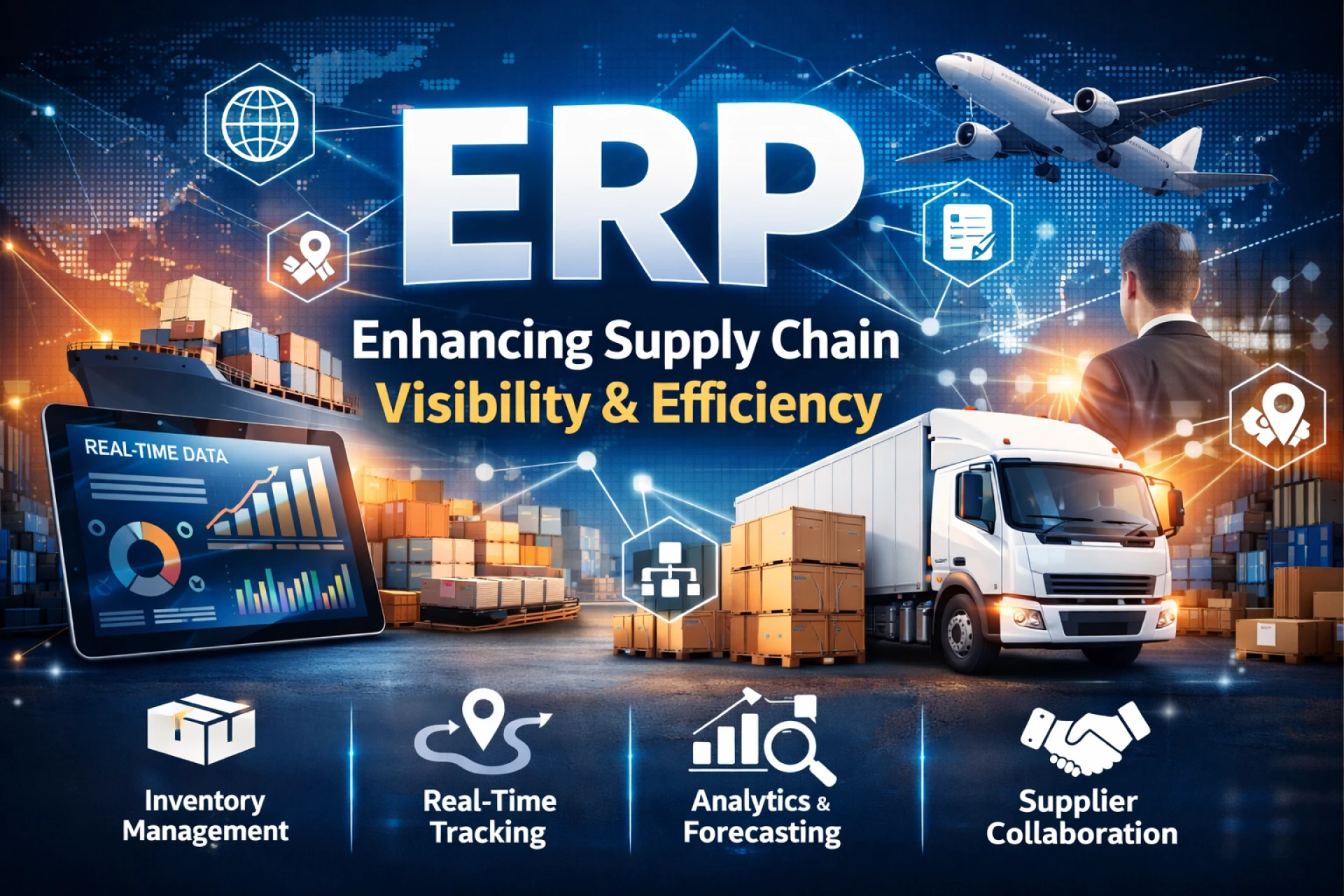
- Inventory and warehouse management tools
- Procurement and order management systems
- Advanced analytics and reporting dashboards
- Integration with third-party logistics (3PL) providers
- Automated workflows and alerts
A capable ERP software development company ensures these features are tailored to meet industry-specific requirements while maintaining scalability and security.
Business Impact of ERP Adoption
Operational Efficiency at Scale
Automation reduces manual intervention, minimizes errors, and accelerates processes across the supply chain.
Data-Driven Decision Making
Real-time insights empower businesses to respond quickly to market changes and operational challenges.
Cost Optimization
Improved inventory control, reduced waste, and efficient logistics contribute to significant cost savings.
Enhanced Customer Experience
Accurate order tracking, timely deliveries, and consistent service improve customer satisfaction and loyalty.
Future-Ready Infrastructure
ERP systems provide a scalable foundation that supports business growth and digital transformation initiatives.
Why Nextbrain is a Trusted ERP Development Partner
Choosing the right development partner is critical to the success of any ERP implementation. Nextbrain is a reliable ERP software development company with proven expertise in building customized solutions for logistics and supply chain businesses.
What Sets Nextbrain Apart?
- Tailored ERP solutions aligned with unique business workflows
- Strong expertise in AI, IoT, and cloud-based systems
- Scalable and secure architecture for long-term growth
- Seamless integration with existing tools and platforms
- End-to-end development and ongoing support
By focusing on both technology and business outcomes, Nextbrain helps organizations unlock the full potential of ERP systems.
Contact Nextbrain today to streamline your supply chain operations and achieve greater efficiency with a customized ERP solution.
Conclusion
As supply chains become more complex and customer expectations continue to rise, businesses must adopt smarter, more integrated systems to stay competitive. ERP solutions provide the visibility, control, and efficiency needed to manage modern logistics operations effectively.
Partnering with a skilled ERP software development company ensures that your business can leverage the full power of ERP technology—enabling better decision-making, improved performance, and sustainable growth in the years ahead.
Frequently Asked Questions (FAQs)
1. How does ERP improve supply chain visibility?
ERP systems centralize data from inventory, procurement, logistics, and finance into a single platform, providing real-time insights into the entire supply chain.
2. Why is ERP important for logistics and supply chain management?
ERP helps streamline operations, improve coordination, reduce costs, and enhance decision-making, making it essential for managing complex logistics networks.
3. What are the key features of an ERP system for supply chain management?
Important features include real-time tracking, inventory management, demand forecasting, supplier management, analytics, and integration with logistics systems.
4. How long does it take to implement an ERP system?
Implementation time depends on the complexity of the business, customization requirements, and integrations. It can range from a few months to over a year.
5. How can ERP systems help businesses scale efficiently?
ERP systems provide a scalable infrastructure, automate processes, and offer real-time insights, enabling businesses to expand operations without increasing complexity.