Offshore oil and gas operations are among the most hazardous industrial environments in the world. Oil rigs operate under extreme pressure, harsh weather conditions, and constant mechanical stress while handling flammable substances and complex drilling systems. Any minor failure, whether human error, equipment malfunction, or environmental disruption, can escalate into severe safety incidents, financial losses, or environmental disasters.
To mitigate these risks, the oil and gas industry is increasingly adopting advanced digital technologies. Among these innovations, computer vision in the oil & gas industry has emerged as a powerful safety enabler. By leveraging AI-powered cameras and real-time video analytics, operators gain continuous insight into drilling activities, equipment performance, and worker behavior, helping prevent incidents before they occur.
Unlike traditional monitoring methods that rely heavily on manual inspections and delayed reporting, computer vision delivers automated, always-on surveillance. In offshore environments where conditions change rapidly and risks are constant, this technology enables early hazard detection, predictive maintenance, and instant alerts. As a result, computer vision in the oil & gas industry is transforming offshore safety from a reactive process into a proactive, intelligence-driven operation.
How Oil Rigs Operate: A Safety-Critical Environment
Oil rigs are highly engineered structures designed to extract hydrocarbons from deep beneath the Earth’s surface, often miles below the ocean floor. These rigs rely on interconnected systems such as drilling equipment, mud circulation units, blowout preventers, pumping systems, and extensive pipeline networks.
One of the most essential drilling processes is mud circulation, where drilling fluid cools the drill bit, stabilizes the wellbore, controls pressure, and carries rock cuttings to the surface. Alongside this, pressure-control systems continuously regulate extreme forces generated during drilling.
Because offshore rigs operate under constant stress, even minor anomalies, like surface corrosion, pressure fluctuations, or small leaks, can pose major risks. Manual inspections alone cannot keep pace with the thousands of variables influencing safety. This is where AI-powered computer vision plays a critical role by delivering continuous, automated, and accurate oversight.
Core Benefits of Computer Vision in Oil Rig Safety
1. Predictive Maintenance Through Visual Intelligence
Predictive maintenance is one of the most impactful applications of computer vision in offshore environments. Instead of waiting for equipment to fail, AI systems analyze live video feeds to detect early warning signs such as:
- Surface corrosion and rust formation
- Micro-cracks in drilling equipment
- Fluid or oil leaks
- Abnormal vibrations in rotating machinery
- Structural deformation
Using advanced machine learning models, including anomaly detection algorithms and temporal analysis, computer vision identifies deviations from normal behavior long before failures occur. This allows maintenance teams to intervene early, reduce downtime, extend asset lifespan, and avoid catastrophic breakdowns.
2. Enhancing Worker Safety with Automated Monitoring
Oil rig workers operate in high-risk zones that include elevated platforms, confined spaces, high-temperature areas, and chemical exposure zones. Ensuring compliance with safety protocols at all times is a major challenge.
Computer vision enhances worker safety by automatically:
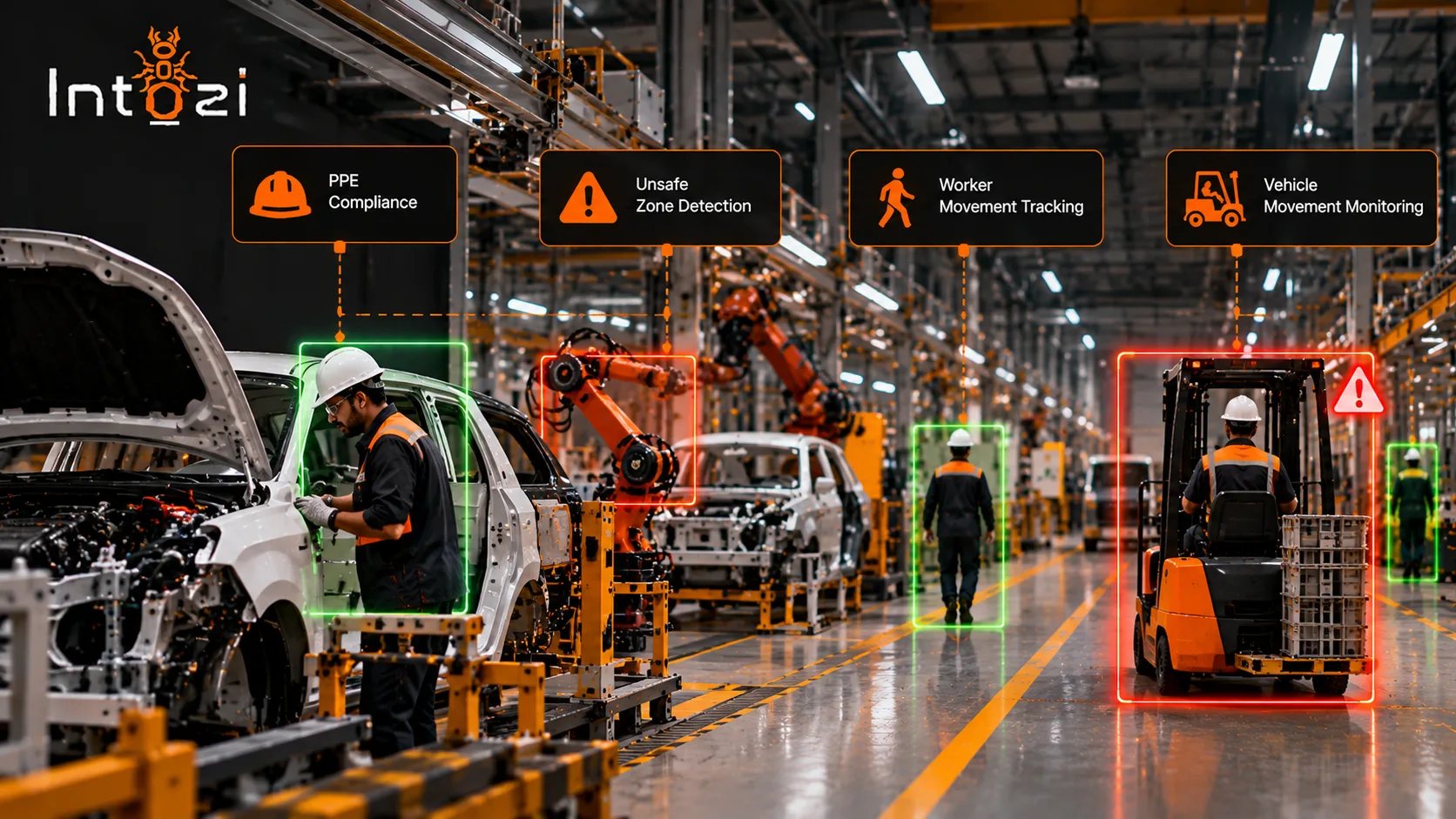
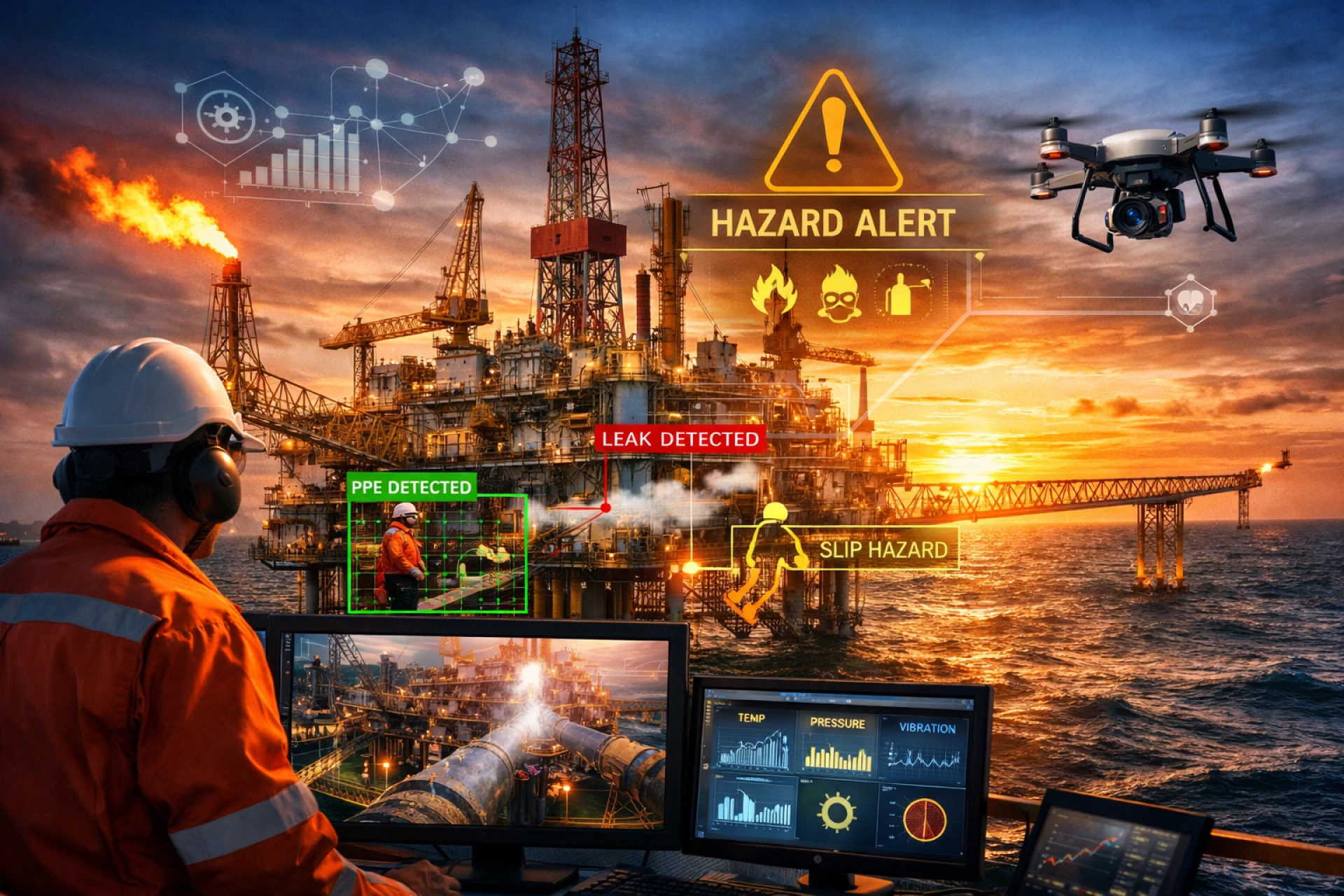
- Detecting PPE compliance (helmets, gloves, vests, goggles)
- Identifying unauthorized access to restricted zones
- Monitoring unsafe behavior near machinery
- Recognizing fatigue, abnormal movement, or distress
- Detecting slips, falls, and sudden accidents
- Triggering real-time alerts for supervisors
These systems significantly reduce reliance on manual supervision and enable safety teams to monitor hundreds of workers simultaneously, something human observers simply cannot achieve.
3. Combining Computer Vision with IoT for Real-Time Intelligence
The true power of computer vision emerges when integrated with IoT sensors across the oil rig. While cameras provide visual context, IoT devices supply critical environmental and operational data such as:
- Temperature and pressure levels
- Gas concentration readings
- Pipeline flow rates
- Equipment vibration metrics
By combining these data streams, AI systems deliver actionable insights, including early leak detection, pressure imbalance alerts, and automated emergency responses. In high-risk scenarios, this integration can even trigger automated shutdowns, preventing accidents before they escalate.
4. Drone-Based Vision Systems for Hazardous Inspections
Certain areas of oil rigs, such as underwater structures, high towers, confined spaces, and corroded zones, are extremely dangerous for human inspection. AI-powered drones equipped with computer vision address this challenge effectively.
Vision-enabled drones can:
- Inspect pipelines and risers
- Detect corrosion and structural damage
- Monitor underwater components
- Identify gas leaks, smoke, or fire signatures
- Capture 360-degree visual data
- Access remote or high-risk locations safely
By reducing human exposure and accelerating inspections, drones improve both safety and operational efficiency.
5. Automated Maintenance Scheduling and Operations Optimization
Computer vision systems continuously analyze equipment health and operational conditions. When anomalies are detected, the system automatically generates alerts and maintenance recommendations.
This enables oil rigs to:
- Avoid unnecessary maintenance tasks
- Schedule targeted, condition-based repairs
- Prevent unexpected breakdowns
- Maintain uninterrupted production
- Improve long-term operational reliability
Automation ensures that maintenance decisions are data-driven rather than reactive, leading to safer and more cost-effective offshore operations.
Nextbrain: AI-Powered Computer Vision Solutions for Oil Rig Safety
Nextbrain is a leading AI development company specializing in advanced computer vision and safety automation solutions for high-risk industrial environments. With strong expertise in AI Video analytics software, Nextbrain delivers scalable, reliable, and industry-ready solutions tailored specifically for offshore oil rigs and energy operations.
How Nextbrain Enhances Oil Rig Safety
- Real-time hazard detection using AI-powered camera systems
- Automated PPE compliance monitoring for worker safety
- Predictive maintenance insights through visual analytics
- Integration with IoT sensors for unified monitoring
- Detection of gas leaks, fire, oil spills, and smoke
- Unauthorized access and intrusion detection
- Automated compliance reporting aligned with global safety standards
Nextbrain’s solutions help oil and gas companies reduce operational risks, improve regulatory compliance, and build resilient offshore ecosystems driven by intelligent automation.
Conclusion
The adoption of AI-driven computer vision in oil rig safety is no longer optional, it is essential. From predictive maintenance and worker safety monitoring to drone inspections and automated scheduling, computer vision transforms offshore operations into proactive, data-driven systems.
As oil and gas exploration moves into deeper waters and harsher environments, the demand for real-time, intelligent safety monitoring will continue to grow. Computer vision enables organizations to reduce risks, protect workers, and maintain operational continuity in even the most challenging conditions.
With the right technology partner, oil and gas companies can unlock the full potential of AI to create safer, smarter, and more efficient offshore operations. Contact Nextbrain today to explore how AI-powered computer vision can elevate your safety and operational performance.
Frequently Asked Questions (FAQs)
1. What is computer vision in oil rig safety?
It is an AI-driven technology that uses cameras to monitor rig operations, detect hazards, assess equipment health, and ensure safety compliance in real time.
2. How does computer vision improve offshore worker safety?
By automatically monitoring PPE compliance, unsafe behavior, restricted areas, and accident detection, computer vision prevents incidents before they escalate.
3. Can computer vision support predictive maintenance?
Yes. AI analyzes visual data to detect wear, corrosion, leaks, or abnormal vibration, enabling maintenance teams to act before equipment failure occurs.
4. How do drones enhance inspections on oil rigs?
AI-powered drones safely inspect hard-to-reach or dangerous areas, capturing detailed visual data and identifying hazards without putting workers at risk.
5. Is AI Video analytics software compliant with safety regulations?
Yes. Modern AI Video analytics software maintains audit-ready logs, automates compliance checks, and supports adherence to OSHA and international offshore safety standards.