Global logistics hubs are under increasing pressure to move goods faster, safer, and at larger volumes than ever before. With the rise of eCommerce, cross-border trade, and 24/7 operations, logistics facilities have become prime targets for cargo theft, unauthorized access, and security breaches. Traditional security measures,such as static CCTV cameras and manual patrols,are no longer enough to counter today’s sophisticated threats.
This is where AI intrusion detection software is reshaping logistics hub security. By combining computer vision, machine learning, and real-time analytics, AI-powered systems are helping logistics operators prevent cargo theft proactively rather than reacting after losses occur.
The Growing Challenge of Cargo Theft in Logistics Hubs
Cargo theft is no longer limited to isolated incidents. Organized crime groups now exploit blind spots in warehouses, yards, and transit routes. High-value goods such as electronics, pharmaceuticals, and consumer products are especially vulnerable during storage and transfer.
Logistics hubs often span large areas with multiple access points, temporary workers, and third-party vehicles moving in and out. This complexity creates opportunities for unauthorized access, internal theft, and after-hours intrusion. Manual monitoring struggles to scale across such dynamic environments, increasing both operational risk and financial losses.
Why Traditional Surveillance Falls Short
Conventional surveillance systems are largely passive. Cameras record footage, but security teams must manually review hours of video to identify incidents. By the time a breach is detected, the damage is already done.
In contrast, AI intrusion detection software actively analyzes live video feeds. Instead of simply watching, it understands what is happening in real time—detecting abnormal movement, unauthorized entry, and suspicious behavior the moment it occurs.
What Is AI Intrusion Detection in Logistics?
AI intrusion detection uses advanced computer vision models trained to recognize people, vehicles, objects, and behavior patterns. These systems operate across:
- Warehouses and distribution centers
- Container yards and loading docks
- Perimeter fencing and restricted zones
- Logistics parks and freight terminals
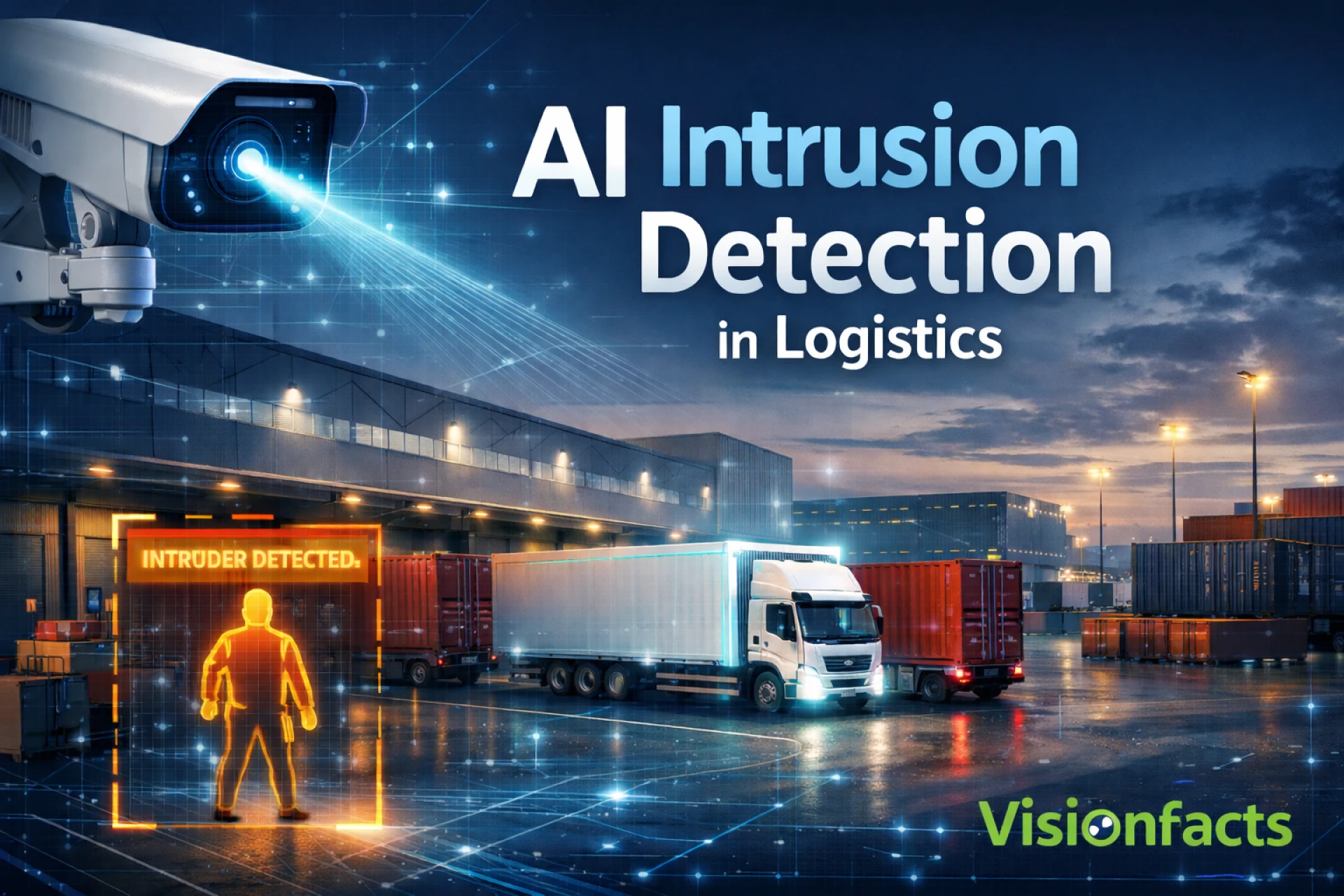
By processing video data at the edge or in the cloud, AI systems trigger instant alerts when intrusion risks are detected, enabling rapid response before theft escalates.
Preventing Unauthorized Access in Real Time
One of the biggest advantages of AI intrusion detection is its ability to monitor restricted zones continuously. Whether it’s an unauthorized individual entering a storage area or a vehicle stopping in a no-parking zone, AI detects anomalies instantly.
Unlike motion sensors that generate false alarms, AI understands context. It differentiates between authorized personnel and suspicious behavior, reducing alert fatigue and improving response accuracy.
Enhancing Yard and Perimeter Security
Logistics yards are especially vulnerable during nighttime operations. AI intrusion detection systems monitor perimeter fences, gates, and container zones, identifying climbing, loitering, or tailgating attempts.
With smart alerts and visual verification, security teams can intervene immediately, preventing cargo theft before it occurs and reducing reliance on physical patrols.
Reducing Internal Theft and Insider Risks
Not all cargo theft comes from outside threats. Insider risks are increasingly common in large logistics operations. AI-driven surveillance tracks unusual movement patterns, access violations, and deviations from standard operating procedures.
By providing objective, data-driven insights, AI helps organizations improve accountability while maintaining transparency and compliance.
Centralized Visibility Across Logistics Networks
Modern logistics hubs rarely operate in isolation. AI intrusion detection platforms provide centralized dashboards that unify video feeds and alerts across multiple locations.
This unified visibility allows operations teams to:
- Monitor security events in real time
- Analyze trends and risk patterns
- Optimize staffing and response strategies
- Improve coordination with law enforcement
The result is a smarter, more resilient logistics security framework.
The Business Impact of AI Intrusion Detection
Beyond security, AI intrusion detection delivers measurable business value. Reduced theft means lower insurance premiums, fewer shipment delays, and improved customer trust. Automated monitoring also reduces manpower costs and minimizes human error.
In an industry where margins are tight and reliability defines success, AI-powered security becomes a strategic advantage.
How Visionfacts Supports Smarter Logistics Security
Visionfacts specializes in AI-powered video analytics solutions designed for logistics and supply chain environments. Its intrusion detection systems are built to scale across warehouses, yards, and logistics hubs, delivering real-time alerts, intelligent insights, and centralized monitoring.
By transforming traditional surveillance into proactive intelligence, Visionfacts helps logistics operators prevent cargo theft, improve compliance, and strengthen operational resilience without disrupting existing infrastructure.
The Future of AI Intrusion Detection in Logistics
As AI continues to evolve, intrusion detection systems will integrate predictive analytics, behavioral modeling, and automated response workflows. Future-ready logistics hubs will not just detect threats, they will anticipate them.
In a world where speed and security must coexist, AI intrusion detection is becoming essential for modern logistics operations.
Conclusion
Cargo theft remains one of the biggest challenges facing logistics hubs today. Relying on outdated surveillance systems exposes businesses to unnecessary risks and losses. AI intrusion detection software offers a smarter, faster, and more scalable way to protect assets across complex logistics environments.
By turning video into real-time intelligence, AI empowers logistics operators to prevent theft, improve safety, and maintain uninterrupted operations.
Contact Visionfacts today to explore how AI intrusion detection can secure your logistics hub and safeguard your supply chain.
Frequently Asked Questions (FAQs)
1. What is AI intrusion detection software?
AI intrusion detection software uses computer vision and machine learning to identify unauthorized access and suspicious behavior in real time across logistics facilities.
2. How does AI help prevent cargo theft?
AI detects intrusion attempts instantly, triggers alerts, and enables early intervention, preventing theft before it escalates.
3. Can AI intrusion detection integrate with existing CCTV systems?
Yes, most AI intrusion detection platforms integrate seamlessly with existing camera infrastructure.
4. Is AI intrusion detection suitable for large logistics hubs?
Absolutely. AI systems are highly scalable and designed for multi-site, high-traffic logistics environments.
5. What ROI can logistics companies expect?
Organizations typically see reduced theft losses, lower security costs, improved compliance, and stronger customer trust.