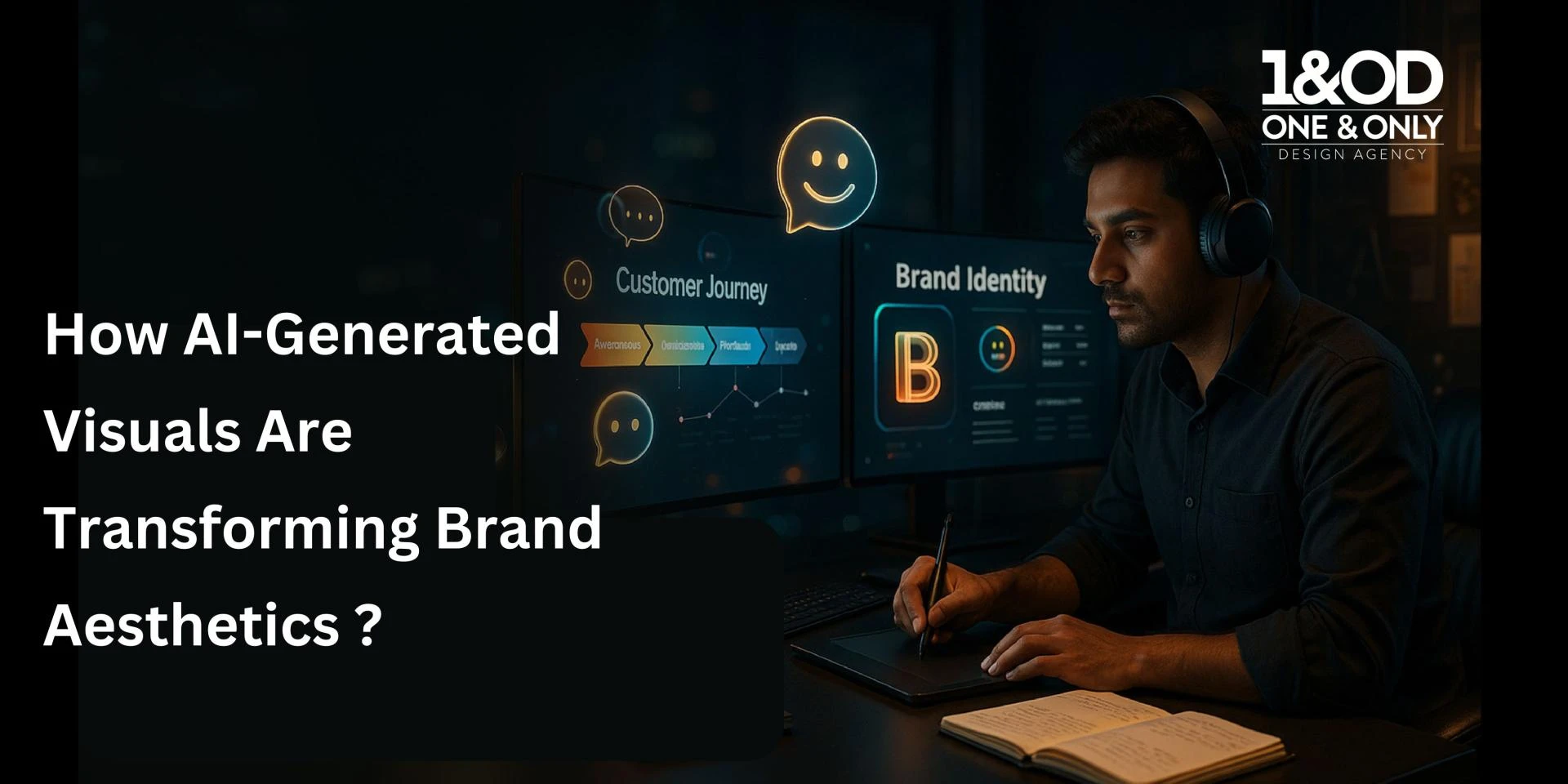
In the modern digital generation, which is very fast-paced, visuals are the language of current branding. The visual identity of a brand is what makes the difference in the perception, memory, and emotional experience of a brand. One of the most radical changes in the creative direction of the decade is the introduction of AI-generated visuals. It is transforming the way brands conceptualize, develop their aesthetics and visual design elements.
The Emergence of Smart Technology.
Visual creation used to be based on human imagination for decades. Computational creativity is a whole new dimension added by AI today. Designers from the best design agency in India make moodboards, concepts, color palettes, and mockups within a few minutes with the assistance of sophisticated generative tools.
AI does not substitute artistic thought - it supplements it.
It can:
- Quickly discover hundreds of look options.
- Mix inter-temporal and inter-design language references.
- Think of something different that will inspire innovation.
- Break through the creative blocks of designers.
- Creatives do not begin with nothing; they have a more inspired and higher point of origin.
How about a Hyper-Personalized Brand Image?
Any brand desires a brand visual identity that looks bespoke and expresses its personality, culture, and values. This accuracy is achieved through AI.
Using generative models, the brands are able to develop very targeted visual worlds that are consistent with certain audience segments, subcultures, or locations.
For example:
- An international brand can develop a culturally sensitive image in every market.
- A luxury brand is able to stay with its aesthetic but use new textures or finishes.
- A technological brand is able to instantly change the style to suit other product lines or campaigns.
- AI assists in preserving a stable central identity and opens to it a continuum of creative manifestations.
Fast, Quick, and Reliable in Content Creation.
The pre-AI days made scaling of visual content to various platforms tedious. Nowadays, AI is used to create on-brand, high-quality visuals on a large scale without losing creativity or consistency.
Brands use AI for:
- Platform-specific social media posts.
- Ad creatives A/B tested in hundreds of variations.
- Mockups on products, package changes, and campaign graphics.
- Motion graphics, short-form videos, and animations.
- Banners on the sites, visuals on the landing pages, and email images.
An AI-driven branding agency knows that this will result in quicker production, increased experimentation, and a unified visual language across all touchpoints.
Rebirth of Brand Moodboards and Concepting.
Historically, brand concept development used to take countless hours of research, sketching, and moodboard building. AI has made this an interactive and iterative process.
Brands can probe into:
- Entire aesthetic themes
- Fashion pyramids/ and image system.
- Brand values as interpreted abstractly.
- Color, typography, and graphic variations.
- The manual directions of experimental design would take weeks.
- This quick thinking allows a more in-depth creative experimentation - and can lead to more radical, more innovative brand identities.
Visual Adaptation in Real Time and Cross-Touchpoints.
The most thrilling innovation is the use of AI in an AI-driven branding agency, to create adaptive branding, i.e., visual elements change intelligently depending on the context or audience.
Imagine:
- Colors of a brand are slightly altered to suit the season or the mood.
- Images on websites change according to the user's behavior or preference.
- Enhanced packaging images created on the fly on small batch releases.
- Real-time event branding that varies according to the engagement of the audience.
- The AI renders branding alive, dynamic, and interactive as opposed to being static.
Paradise Lost: The Democratization of High-End Design.
High-quality branding is also becoming accessible to smaller companies and individual creators due to AI-generated visuals. The visuals that previously took a great number of teams and budgets to create can now be created on any number of computers at a very low cost, thanks to the power of tools available to even a startup.
This democratization flattens out the playing field, and creativity will be the differentiator.
The New Co-operation: Designer + AI.
The myth about AI taking the place of designers is dying. What is arising is an augmented symbiotic workflow:
AI is an adjustment of speed, volume, and variations.
Designers at an AI-driven branding agency will inject strategy, taste, narration, and emotional intelligence.
Those brands that adopt this form of cooperation enjoy:
- Stronger concepts
- Faster revisions
- More exploration
- Increased output on creative work.
AI would be the co-worker able to work at a speed of lightning, whereas the designer at the AI-driven branding agency would remain the visionary.
Ethical Imagery and Truthfulness Issues.
Along with AI-generated images, the discourse of authenticity and ethics is increasing. Brands should also make sure that AI-powered images:
- Use of misleading representations should be avoided.
- Acknowledge diversity and cultural differences.
- Be open in their development.
- Reflect true brand values
The greatest brands responsibly apply AI not to copy but to create.
Conclusion: AI Brand Aesthetics of the Future: Hybrid.
Visual images produced by AI are not substitutes for creativity but rather its extension. AI is the technology that enables brands to create more immersive and richer visual identities through limitless exploration and hyper-customization, adaptive branding, and scalable design systems.
According to every AI-driven branding agency, the brands that will be successful in the future are not those that operate AI blindly but those that can combine AI power with human sense, emotion, and intent.
What it has led to is a new era in design where images are not only produced, but produced collectively, continuously changing and touching the audience on a more personal level that reaches audiences all over the globe.