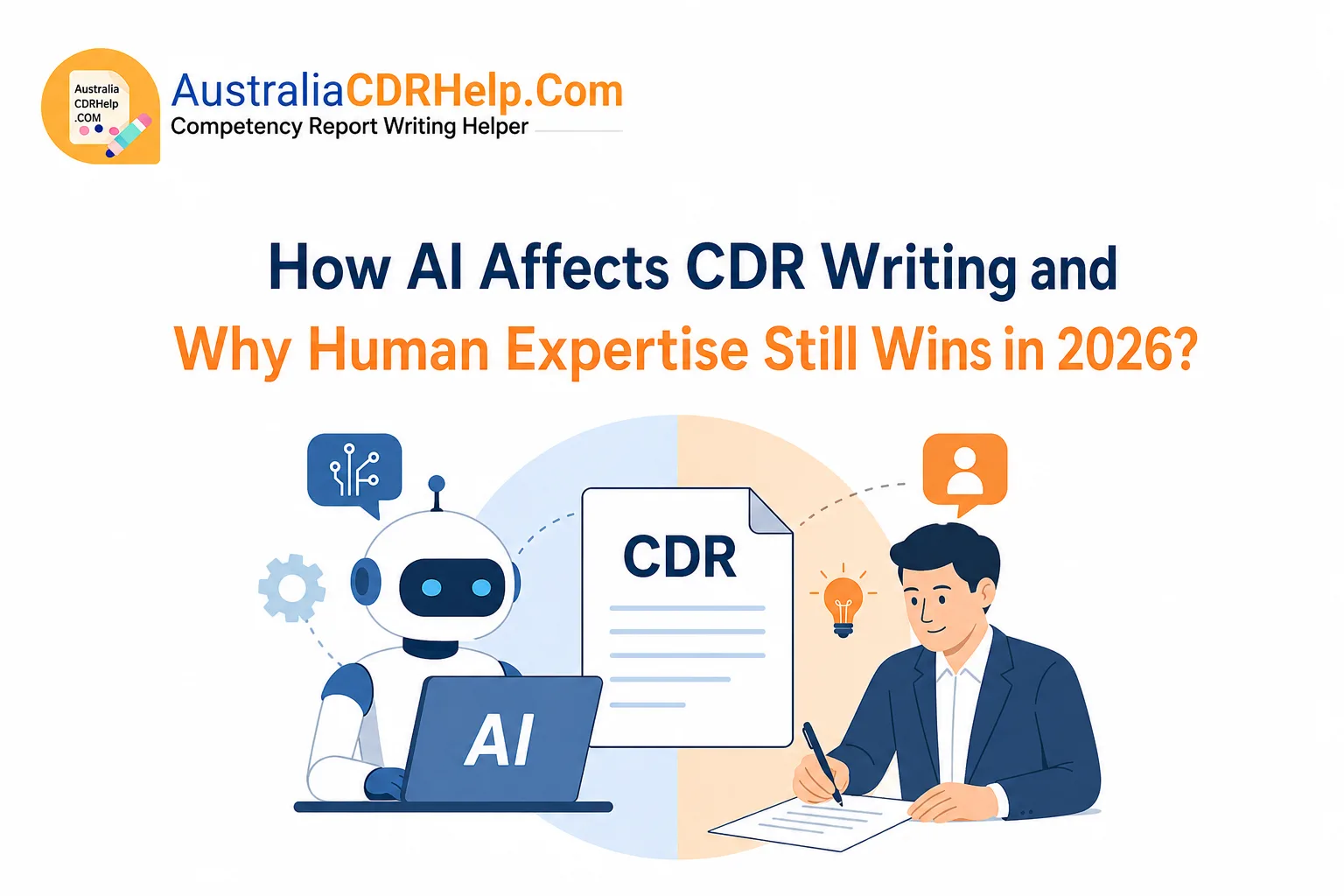
AI tools have changed how you approach CDR writing. They can assist with drafting, structuring, and editing content, but they do not meet the core requirement of a CDR with an accurate representation of your individual engineering competencies. Engineers Australia evaluates authenticity and relevance, which AI alone cannot reliably deliver.
Where 🤔 AI Fits in CDR Preparation?
AI can support specific parts of the writing process. You can use it to improve efficiency, but only within defined limits.
It is useful for:
- Structuring career episodes into a readable format
- Identifying grammar and language issues
- Suggesting technical phrasing or sentence refinement
- Summarising large amounts of project data
These functions reduce time spent on formatting and editing. However, they do not replace the need for technical judgment or personal input.
Explore 👉 our top-rated CDR writing services for Engineers Australia, delivered by experienced professionals without the use of AI.
1. Draft Structuring and Formatting
You can use AI to organise your content into sections such as introduction, background, and outcomes. This helps maintain clarity but does not ensure compliance with competency standards.
2. Language and Clarity Improvement
AI tools can refine sentence construction and remove basic errors. This improves readability but may standardise your writing, reducing its individuality.
➡️ Limitations of AI in CDR Writing
AI-generated content often fails during assessment due to a lack of specificity and authenticity. You need to understand these limitations before relying on it.
- It cannot verify the accuracy of your engineering work
- It produces generic descriptions that do not reflect your actual role
- It may introduce similarities with existing content, increasing plagiarism risk
- It does not align content with ANZSCO-specific competency elements
These gaps directly affect assessment outcomes.
➡️ Human Expertise in CDR Development
A well-prepared CDR requires a clear understanding of engineering practice and the migration assessment criteria. This is where human expertise becomes critical.
You need to:
- Translate your project experience into competency-based evidence
- Highlight your individual contributions with precision
- Align each episode with Engineers Australia's expectations
- Interpret technical work in a structured, assessment-ready format
Human input ensures your CDR reflects real engineering capability rather than formatted text.
Elevate 👉 your career with a professionally drafted, human-centric CDR for Engineers Australia.
➡️ AI vs Human Input in CDR Writing
AspectAI ContributionHuman ExpertiseContent creationGeneric draftingPersonalized, experience-based writingTechnical accuracyLimited validationVerified and discipline-specificCompetency alignmentWeak mappingPrecise alignment with standardsOriginalityRisk of duplicationFully authentic contentAssessment readinessInconsistentStructured for approval➡️ Balancing AI Assistance with Human Control
You can use AI as a support tool, not as the primary author. The final document must remain your own work, refined through human judgment.
A practical approach includes:
- Drafting content based on your experience first
- Using AI only for editing and clarity improvements
- Reviewing every section to ensure it reflects your role accurately
- Cross-checking competency mapping manually
Why 🤔 Human-Led CDR Writing Remains Essential?
You are not assessed on how well your document is written. You are assessed on how accurately it demonstrates your engineering competencies. AI cannot interpret intent, responsibility, or decision-making in your projects.
That is why you must seek support from a professional CDR writing service provider like AustraliaCDRHelp.Com. Their expertise ensures your CDR meets three non-negotiable criteria: authenticity, technical relevance, and compliance with Engineers Australia standards.