
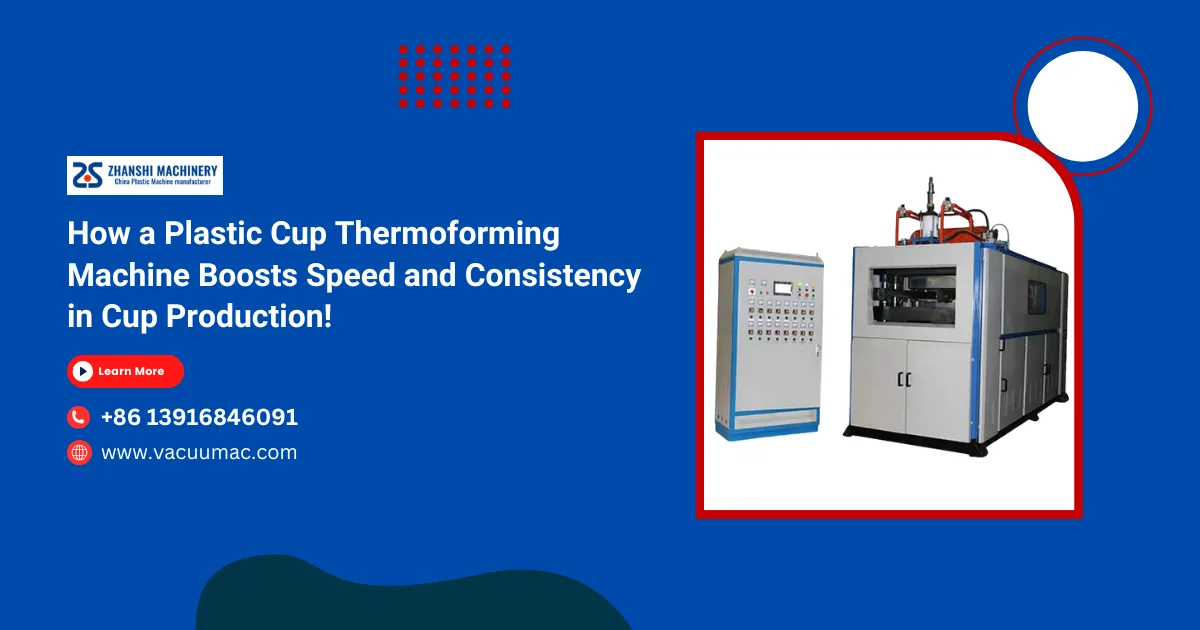
In today’s global market, consumers expect beverage and foodservice cups that are not only functional and attractive but also reliably available in large quantities. As fast food chains, drink producers, and hospitality businesses demand ever-more precise, high-quality plastic cups, the spotlight falls on manufacturing technologies that can deliver both speed and consistency. At the heart of this supply chain revolution lies the plastic cup thermoforming machine—a powerful solution for mass-producing cups with efficiency, quality, and reliability.
At Shanghai Zhanshi Mechanical Equipment Co., Ltd., we have seen firsthand how investment in the right plastic cup thermoforming machine transforms a factory’s capabilities. Whether you’re a large-scale manufacturer supplying megachains, a regional brand aiming to grow, or an entrepreneur eager to streamline production, understanding these machines is crucial to staying ahead.
1. Understanding Plastic Cup Thermoforming Machines: The Fundamentals
First, let’s clarify the process. A plastic cup thermoforming machine is a specialized automated system designed to make cups directly from thermoplastic sheets—such as polypropylene (PP), polystyrene (PS), or PET. The machine heats the sheet, forms it over a cup-shaped mold using vacuum, pressure, or mechanical plugs, cools and trims the cup, and finally stacks or counts finished cups for packaging.
Unlike injection molding, which is often slower and limited by mold cavity design, thermoforming is ideal for producing lightweight, thin-walled plastic cups at incredible speeds with excellent control over dimensions and wall thickness. This technology is especially well-suited for applications including:
- Disposable cold and hot drink cups
- Ice cream and dessert cups
- Tasting and sampling cups
- Custom-branded promotional cups
Manufacturers across the globe choose plastic cup thermoforming machines for one reason: they excel at high-volume, low-cost, consistent-quality cup production.
2. From Plastic Sheet to Perfect Cup: The Step-by-Step Process
To fully appreciate why a plastic cup thermoforming machine offers such advantages, it’s important to understand its step-by-step operation.
Step 1: Sheet Feeding and Heating
The process begins with a roll or stack of plastic sheet. Most modern machines feature automatic sheet feeders that ensure steady, aligned feeding—reducing human error and waste. The sheet passes through a precise heating zone, where radiant heaters bring the plastic to its forming temperature—soft enough to shape, but strong enough to retain its structure.
Step 2: Forming the Cup
The heated plastic is positioned over a mold set (often multi-cavity) and formed using vacuum, mechanical plugs, or pressure. This step determines the cup’s wall thickness, shape, and clarity or texture. Advanced machines use servo-driven systems for ultra-fast, precise movements.
Step 3: Cooling and Ejection
After shaping, integrated cooling systems quickly solidify the cup, locking in its form. The cup is released from the mold—often aided by air jets or mechanical ejection systems. The faster and more even the cooling, the less risk of warping and the shorter the cycle time.
Step 4: Rim Cutting and Trimming
A key aspect of cup quality is a smooth, uniform rim. The formed cup passes through a rim-rolling or cutting station, which trims the edge and often heat-sets it for strength and comfort in use.
Step 5: Stacking and Counting
Finally, finished cups are automatically stacked and counted—ready for packaging and shipment. Automation at this stage ensures packs are consistent, well-presented, and tallied for quick downstream logistics.
3. The Speed Advantage: How Plastic Cup Thermoforming Machines Outpace Alternatives
Speed is often the deciding factor in cup production economics. Here’s how a plastic cup thermoforming machine accelerates your output:
- Rapid Cycle Times: High-speed heaters, servo controls, and multi-cavity molds enable some lines to produce several thousand cups per hour—even more on top models.
- Continuous Feeding: Automation eliminates waiting periods and manual intervention. Raw material is fed, formed, and ejected in a seamless flow.
- Quick Changeovers: With modern designs, switching molds for different cup sizes or shapes can be done in minutes, keeping your lines running longer.
- Optimized Cooling: Active and adaptive cooling reduces dwell time between forming and ejection, making the process inherently faster.
The result? More cups per shift, lower unit cost, and the capacity to fill large orders or meet rapid market demands without delay.
4. The Consistency Factor: Why Plastic Cup Thermoforming Machines Deliver Superior Quality
In mass production, consistency is king. Whether it’s keeping the wall thickness uniform, ensuring every rim is smooth, or achieving flawless stacking, today’s plastic cup thermoforming machines offer the technology to maintain exceptional standards batch after batch:
- Precision Temperature Control: Multi-zone heaters ensure the forming sheet is uniformly heated, avoiding bubbles, sags, or thin spots.
- Servo-Controlled Movements: Servo-driven platens and tooling mean every mold cycle is identical—no drift, no cumulative error.
- Feedback and Sensors: Real-time sensors monitor critical parameters—such as pressure, vacuum, temperature, and even part ejection—alerting operators to any deviation before quality is compromised.
- Cutting & Rim Forming: Automated trimmers and rim-rolling deliver cups with perfect edges, every time.
- Material Efficiency: Advanced nesting algorithms and edge control maximize sheet use, ensuring less waste and lower costs.
These features translate directly to end-customer satisfaction and brand confidence—no more bulk complaints due to misformed or inconsistent cups.
5. Business Benefits: ROI and Strategic Impact
Upgrading or investing in a plastic cup thermoforming machine isn’t just a technical decision—it’s a business growth strategy. Here’s why:
- Lower Cost Per Cup: High speed and efficient material use reduce the production cost for every unit.
- Responsive to Market Trends: Speedy mold changeovers allow you to run seasonal, promotional, or custom cup designs at minimal downtime.
- Labor Savings: Automation reduces the headcount required for production, reallocation staff to quality assurance, logistics, or value-added tasks.
- Minimized Downtime: Built-in diagnostics and remote technical support help prevent or quickly resolve issues.
- Sustainability: Material savings and efficient use of recycled or biodegradable plastics supports corporate sustainability goals and regulatory compliance.
For manufacturers aiming to capture or expand market share, a reliable, fast, and versatile plastic cup thermoforming machine is indispensable.
6. Key Features to Evaluate in a Plastic Cup Thermoforming Machine
Not all machinery is created equal. When selecting, upgrading, or optimizing your plastic cup thermoforming machine, Shanghai Zhanshi Mechanical Equipment Co., Ltd. recommends considering:
- Sheet Feeding System: Is it accurate, reliable, and gentle for different film types?
- Heating Controls: Does the machine offer advanced, programmable multi-zone heating with real-time feedback?
- Mold and Tooling: Are multi-cavity molds easy to swap, maintain, and fine-tune for new designs?
- Forming Station: Is it compatible with your desired cup shapes, sizes, and materials?
- Cutting/Trim Stations: Precise, burr-free cutting reduces rework and downstream defects.
- Automation Integration: How easily can it tie into stacking, counting, packaging, or even inspection stages?
- Digitalization and Data: Does the machine log production metrics, flag malfunctions, and support remote diagnostics?
- Footprint and Throughput: Does the model meet both your space and production volume targets?
Having the right answers—and the right partner—ensures smooth installation, operation, and scaling as your cup business grows.
7. Real-World Examples: Case Studies in Speed and Consistency
Case Example 1: Scaling from Local to National Supplier
A regional beverage cup producer upgraded to a Shanghai Zhanshi plastic cup thermoforming machine. Their output jumped from 30,000 to 70,000 cups per shift. Despite higher speeds, operation staff reported fewer defects, improved stacking, and 15% material savings—enabling rapid expansion to new supermarket chains.
Case Example 2: Custom Cups, No Compromise on Quality
A promotional cup manufacturer serving global fast-food brands relies on quick mold changes and precise rim trimming. By integrating servo technology and cloud-based monitoring, they now deliver multiple custom orders per day—each with flawless rim finish and stack consistency.
8. Implementation Tips: Maximizing Machine Performance
Optimizing your plastic cup thermoforming machine requires more than great equipment. Consider these pro tips:
- Operator Training: Well-trained staff recognize and resolve issues quickly, maximizing uptime and minimizing scrap.
- Scheduled Maintenance: Regular checks, lubrication, and spare part stocks prevent breakdowns and lost production.
- Material Quality Management: Consistent sheet or roll quality supports stable forming, reduces waste.
- Data Use: Leverage production analytics for continuous improvement and faster troubleshooting.
- R&D Collaboration: Work with your machine supplier (Shanghai Zhanshi) for custom tooling or trials with new materials, cup shapes, or processes.
Embrace the Next Level of Cup Production
Modern consumers, retailers, and brand owners expect absolute reliability, quality, and speed in plastic cup supply. Rising to this challenge is not a matter of working harder, but working smarter—with the right tools at your side. The plastic cup thermoforming machine unlocks a new standard of efficiency, consistency, and cost-effectiveness, creating a foundation for growth in markets old and new.
Frequently Asked Questions (FAQ)
1. What materials can be used with a plastic cup thermoforming machine?
Common materials include PP, PS, PET, PLA, and other thermoplastics. The machine settings are adjusted for each material’s heating and forming characteristics.
2. How fast can a plastic cup thermoforming machine run?
Top models can produce more than 40,000–60,000 cups per hour, depending on cup size, shape, and machine configuration.
3. How are the cups trimmed and stacked post-formation?
Integrated cutting (rim rolling) and automated stacking systems handle these processes at line speed, preparing cups for immediate packaging.
4. Do I need different machines for different cup sizes?
No. Modern machines provide quick-change molds and adaptable platens to quickly switch between sizes or designs.
5. What maintenance does a plastic cup thermoforming machine require?
Routine cleaning of heaters and molds, lubrication of mechanical parts, checks for wear and alignment, and regular sensor calibration are essential.
6. Is recycled or biodegradable plastic compatible?
Yes, with the right machine settings and compatible molds, PET-r or PLA can be processed efficiently.
7. Can the machine be integrated with downstream automation?
Absolutely. Most Shanghai Zhanshi machines can be linked to conveyors, packaging robots, and even vision inspection for a complete end-to-end line.
8. What is the typical ROI?
Depending on current production and labor costs, ROI is often achieved within one to two years, thanks to speed, savings, and reduced defects.
9. Does Shanghai Zhanshi offer installation and training?
Yes, our expert team provides full on-site setup, commissioning, and operator/maintenance training for every installation.
10. How do I choose the right machine model?
Start by defining your cup specifications, target output, materials, and available factory space. Our engineers will recommend (and customize) the best solution.