In virtually every industrial sector—be it construction, mining, automotive, aerospace, or manufacturing—the smooth and efficient operation of machinery is vital for maintaining productivity and safety. At the core of many of these powerful systems lies the unassuming but crucial hydraulic cylinder. While many associate hydraulic systems with sheer force, their reliability and longevity stem from precision-engineered components, and none is more critical than the hard chrome plated piston rod.
The piston rod, a component responsible for transferring linear force and motion, is subject to relentless stress, friction, and harsh environmental exposures. Therefore, its surface integrity and resistance to wear are directly linked to the performance and reliability of the entire hydraulic cylinder. This is why forward-thinking companies and equipment manufacturers are increasingly turning to hard chrome plated piston rods, leveraging the remarkable advantages that this advanced surface treatment offers.
1. What is a Hard Chrome Plated Piston Rod?
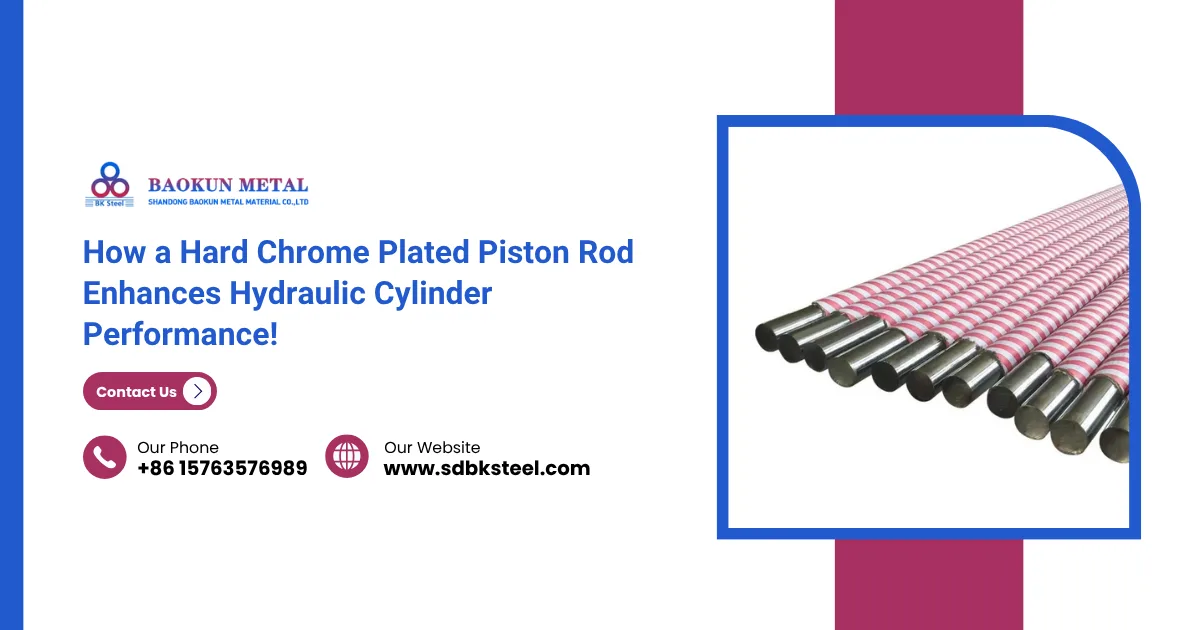
A hard chrome plated piston rod is a steel piston rod coated with a thick layer of chromium—the “hard chrome”—via an advanced electroplating process. This plating, typically 20–40 microns thick, is far harder than standard decorative chrome, providing unrivaled surface hardness, corrosion resistance, and slickness.
To fully grasp its value, consider these features:
- Surface Hardness: The hard chrome layer often achieves 850–1050 HV on the Vickers scale, outmatching untreated steel and significantly deterring abrasion.
- Corrosion Resistance: Chrome's inert nature and density shield the rod against water, chemicals, and atmospheric contaminants.
- Smooth Finish: The chromed surface offers exceptional smoothness (Ra ≤ 0.2μm), minimizing seal friction and wear.
- Adhesion: When properly applied, the chrome bonds tightly to the underlying steel substrate, ensuring durability even in harsh operating environments.
Shandong Baokun Metal Material Co. Ltd employs precision plating equipment, advanced process controls, and rigorous quality checks to consistently deliver world-class hard chrome plated piston rods meeting—and often exceeding—industrial standards.
2. The Manufacturing Process: From Steel Bar to Chrome-Plated Excellence
Understanding how a hard chrome plated piston rod is made sheds light on its unrivaled performance qualities. Here is a step-by-step overview of the process:
A. Material Selection
High-grade carbon steel or alloy steel bars, such as C45, 40Cr, or ST52, are chosen for their strength, toughness, and machinability.
B. Precise Machining
The rod is turned, ground, and polished to strict dimensional tolerances. Precision at this stage ensures perfect fit and long-term reliability.
C. Surface Preparation
Flawless results depend on a meticulously clean surface. The rod undergoes cleaning, degreasing, acid pickling, and sometimes sandblasting to fully remove contaminants.
D. Hard Chrome Electroplating
The rod is placed in a chromium-electrolyte bath where, using electrical current, a dense, hard chrome layer is meticulously deposited.
E. Post-Plating Finishing
After plating, the rod is ground and polished once again to achieve the desired finish and dimensions, resulting in a near-mirror, low-friction surface.
F. Quality Inspection
At Shandong Baokun Metal Material Co. Ltd, every hard chrome plated piston rod is rigorously tested for thickness, adhesion, hardness, roundness, straightness, and surface roughness, ensuring only flawless components are delivered.
3. Why Choose a Hard Chrome Plated Piston Rod?
With the fundamentals established, let’s examine why a hard chrome plated piston rod is the preferred choice in demanding applications. Here are the core advantages:
A. Superior Surface Hardness and Abrasion Resistance
First and foremost, hard chrome is just that—hard. This remarkable surface resists scoring, scratches, and other forms of mechanical wear far better than untreated steel. When rods cycle thousands of times under heavy loads, this abrasion resistance is indispensable for maintaining tight seals and consistent performance.
B. Outstanding Corrosion Resistance
Whether exposed to rain, salty environments, corrosive chemicals, or high humidity, the hard chrome plated piston rod acts as a formidable barrier. This prevents rust and pitting, dramatically extending component lifespan and reducing maintenance costs.
C. Reduced Friction and Seal Wear
The micro-smooth finish produced by hard chrome plating slashes dynamic friction. Less friction means seals glide easily over the rod surface, minimizing heat build-up, material degradation, and leakage. Over time, this translates to lower operating costs and less frequent overhauls.
D. Dimensional Stability and Consistency
Thanks to the careful plating process, the diameter and roundness of each rod remain exceptionally consistent—crucial for seal integrity and smooth motion. Such consistency supports high-speed, high-cycle applications without performance loss.
E. Enhanced Fatigue Strength
The uniform, hardened surface delays the initiation and growth of micro-cracks under cyclic loading, boosting the rod’s ability to withstand repeated stresses—essential for industrial environments.
F. Longevity and Cost Savings
When you choose a hard chrome plated piston rod, you invest in a product designed for long-term service. Reduced wear, less downtime, and lower parts replacement add up to dramatic total lifecycle savings for businesses.
4. Applications Across Industries
The versatility of the hard chrome plated piston rod makes it a vital component in:
- Construction Equipment: Excavators, loaders, cranes, bulldozers rely on hydraulic cylinders for movement and lifting.
- Mining Machinery: Underground or open-pit equipment faces abrasive dust and moisture.
- Agricultural Machinery: Tractors, combines, and harvesters demand durability amid exposure to soil and chemicals.
- Automotive: Power steering, suspension, and braking systems all utilize hydraulic actuators.
- Aerospace: Aircraft landing gear, cargo doors, and flight control systems push hydraulic performance to the limits.
- Maritime and Offshore: Exposure to saltwater is combated by premium hard chrome plated rods.
- Manufacturing: Presses, robotics, material handling, and injection molding systems all benefit from piston rods that resist wear and corrosion.
5. How Hard Chrome Plated Piston Rods Enhance System Performance
A. Minimizing Downtime
Hydraulic system failures are costly, often resulting in extended production halts. Hard chrome plated rods, by resisting wear and corrosion, decrease the frequency of unplanned maintenance, maximizing equipment uptime.
B. Ensuring Precise Control
Consistent surface finish and low friction mean hydraulic cylinders respond accurately to control signals. This precision improves safety, part quality, and efficiency.
C. Increasing Lifespan of Seals and Cylinders
Seal replacements and cylinder overhauls are major operating expenses. A smooth, hard rod surface means seals last much longer, reducing the overall maintenance burden.
D. Reducing Total Cost of Ownership
While a hard chrome plated piston rod may cost marginally more than untreated steel, its impact on maintenance intervals, component life, and machine uptime assures significant long-term savings.
6. Quality Standards and Environmental Considerations
At Shandong Baokun Metal Material Co. Ltd, every hard chrome plated piston rod is produced to meet or surpass standards like DIN 2391, ISO 683, and ASTM A108/A276. Performance is guaranteed by tests for thickness, adhesion, hardness, straightness, and corrosion resistance (often via salt spray testing per ISO 9227).
Furthermore, environmental responsibility matters. Modern plating techniques minimize waste, optimize energy use, and safely manage chromium chemicals, demonstrating our commitment to both customer value and ecological stewardship.
7. Selecting the Right Hard Chrome Plated Piston Rod
Choosing the right piston rod for your application is best done in partnership with a trusted supplier. Key considerations include:
- Diameter and Tolerance: Match your cylinder specifications and operating loads.
- Base Material Grade: Account for required strength and potential bending forces.
- Chrome Layer Thickness: Adjust for your wear and corrosion expectations.
- Surface Finish (Ra): Tighter seals and faster cycles demand lower Ra values.
- Length and Supply Form: Custom cuts, lengths, and further machining may be required.
Our engineers at Shandong Baokun Metal Material Co. Ltd are available to provide tailored recommendations, ensuring optimal hydraulic performance.
Driving Hydraulic Excellence with Hard Chrome Plated Piston Rods
From enhancing cylinder longevity to reducing operating costs, the hard chrome plated piston rod is central to modern hydraulic system performance. Its unmatched hardness, corrosion resistance, and smooth finish keep industries running reliably and efficiently, even in the most demanding conditions.
Frequently Asked Questions (FAQ)
Q1: What is the difference between decorative and hard chrome plating?
A: Decorative chrome plating is thin and primarily aesthetic, often applied to car parts or home fixtures. Hard chrome plating, in contrast, is thick (20–40 microns), extremely hard, and designed for wear and corrosion resistance in industrial applications.
Q2: Can hard chrome plated piston rods be repaired if damaged?
A: Yes. Depending on the extent of the wear or damage, rods can be stripped, re-machined if necessary, and re-plated. However, for severe bends or deep scores, replacement is more practical.
Q3: Are hard chrome plated piston rods suitable for food or medical applications?
A: While chrome plating is inert and generally safe, critical food or pharmaceutical environments may require additional certifications or alternative surface treatments like nickel or special alloys to comply with hygienic standards.
Q4: What is the typical lifespan of a hard chrome plated piston rod?
A: Lifespan varies with application severity, but in typical industrial use, properly maintained hard chrome plated rods can last several years before requiring replacement or re-plating.
Q5: How do I prevent rust at the ends or unplated areas of a piston rod?
A: Rust can occur if unplated areas (e.g., cut ends or threaded sections) are exposed to moisture. Protective coatings, greases, or stainless materials can be specified for these vulnerable sections.
Q6: Is hard chrome plating environmentally safe?
A: While the process uses hazardous chemicals, reputable manufacturers like Shandong Baokun Metal Material Co. Ltd employ closed-loop systems for chemical recovery, strict waste management, and comply with environmental regulations, making it a responsible industrial process.
Q7: What’s the maximum rod length that can be hard chrome plated?
A: Plating bath dimensions and process control set the maximum, often up to 8 meters for standard rods. Special requests should be discussed with your supplier.
Q8: Can a hard chrome plated piston rod be used in highly abrasive or corrosive environments?
A: Yes, but very aggressive environments might require hybrid solutions, such as thicker plating, underlying nickel layers, or even stainless base materials.
Q9: How does hard chrome compare to induction hardening for piston rods?
A: Induction hardening provides excellent surface hardness but does not offer corrosion protection. Hard chrome combines hard surfaces with outstanding corrosion resistance, making it ideal for many hydraulic applications.
Q10: Is there a minimum thickness for hard chrome plating?
A: For industrial piston rods, a thickness of 20–40 microns is typical. Lower thicknesses reduce durability and protection, while excessive thickness can cause adhesion or cracking issues.