Attorneys often need to explain complex medical evidence, accident scenarios, and forensic findings in a way that judges and juries can easily understand. Clear visual presentations can simplify technical information and help audiences follow the facts of a case. 3D courtroom animation transforms complex evidence into realistic, computer-generated visuals, helping legal teams communicate important details effectively. Trial Graphics 360 focuses on visual storytelling to support clear and informative courtroom presentations.
What Is 3D Courtroom Animation?

3D courtroom animation is a computer-generated visual presentation designed to illustrate events, injuries, medical procedures, or accident scenarios relevant to a legal case. These animations use three-dimensional models, movement, and carefully structured visual sequences to explain information that may be difficult to communicate through written reports or verbal testimony alone.
In personal injury, medical negligence, and accident litigation, attorneys frequently work with extensive medical records, expert reports, diagnostic images, and witness statements. Presenting this information in a clear sequence can help the audience understand the issues being discussed.
Benefits of 3D Courtroom Animation
- Simplifies complex evidence: Converts technical medical concepts into understandable visual explanations.
- Supports expert testimony: Gives qualified medical experts a visual aid when explaining their opinions.
- Clarifies injury mechanisms: Shows how a particular force or movement may affect the human body.
- Improves organization: Presents complicated timelines and anatomical details in a structured format.
- Supports legal presentations: Helps attorneys explain case theories while keeping the evidence understandable.
The accuracy of 3D courtroom animation depends on the available evidence, appropriate expert input, and transparent presentation. An animation should illustrate a supported explanation rather than present an unverified reconstruction as established fact.
The Role of a Brain Trauma Animator in Injury Litigation

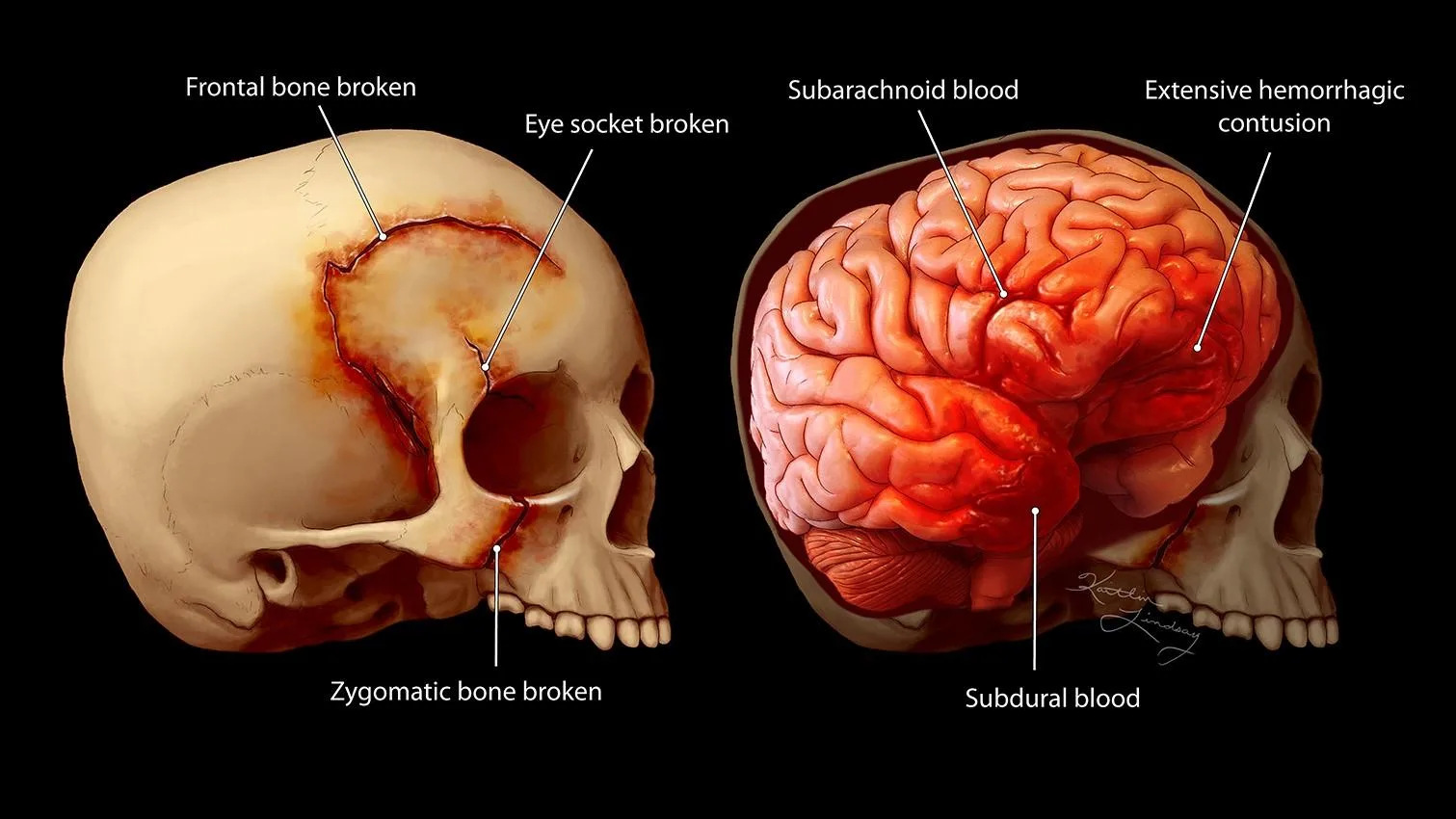
A brain trauma animator creates visual representations of traumatic brain injuries, neurological structures, and potential injury mechanisms. These professionals work with medical information and expert guidance to develop animations that explain how an impact or sudden movement may affect the brain.
Brain injuries can be difficult to understand because many important structures are located inside the skull. Although medical scans and diagrams provide valuable information, a carefully designed animation can help explain spatial relationships and injury mechanisms.
How Brain Trauma Animations Work
A brain trauma animation may include several stages:
- Anatomical visualization: Displays the skull, brain tissue, and relevant neurological structures.
- Injury mechanism: Illustrates a supported explanation of how an impact or acceleration may affect the head.
- Medical findings: Highlights documented abnormalities or relevant findings identified by medical professionals.
- Expert explanation: Connects the visual presentation to the expert's opinions and the available evidence.
A brain trauma animator must distinguish between documented findings and hypothetical illustrations. For example, an animation may demonstrate a proposed mechanism of injury, but it should not claim to prove a specific brain injury solely through visual effects.
Why Brain Injury Cases Benefit From Visual Evidence
Brain injury litigation may involve concussions, diffuse axonal injury, intracranial bleeding, or other neurological conditions. Medical terminology can be unfamiliar to jurors, particularly when several structures and injury mechanisms are involved.
With expert oversight, a brain trauma animator can help explain these concepts in a logical sequence. The objective is to make the evidence more accessible without oversimplifying the medical science or overstating the certainty of a conclusion.
Understanding Forensic Orthopedic Animation

Forensic orthopedic animation uses three-dimensional anatomical models to explain injuries involving bones, joints, ligaments, and other parts of the musculoskeletal system. These visual demonstrations can be useful in vehicle collisions, workplace accidents, slip-and-fall incidents, and other personal injury disputes.
Orthopedic injuries often involve complex anatomical relationships. A fracture may affect nearby joints, while ligament damage may influence stability and movement. A three-dimensional model can show these relationships more clearly than a brief verbal description.
Common Applications of Forensic Orthopedic Animation
- Fracture visualization: Illustrates the location, shape, and extent of a documented fracture.
- Joint injury explanations: Demonstrates relevant structures in the shoulder, knee, hip, or spine.
- Biomechanical analysis: Visualizes a proposed injury mechanism based on expert analysis.
- Surgical procedure demonstrations: Explains documented treatment procedures or anatomical changes.
- Long-term impairment presentations: Illustrates how an injury may affect movement, when supported by qualified medical opinions.
A well-prepared forensic orthopedic animation should reflect medical imaging, examination findings, and relevant expert conclusions. Anatomical details should be represented carefully, and any assumptions used to reconstruct an event should be clearly identified.
How Orthopedic Animation Supports Legal Communication
In an injury claim, a jury may need to understand how a particular fracture differs from another injury or why a damaged joint affects mobility. Visual explanations can connect the medical findings with the questions being considered in the case.
Through forensic orthopedic animation, attorneys can present the relevant anatomy, injury location, and proposed mechanism in an organized sequence. This can support understanding while leaving medical conclusions to the qualified experts.
Medical Malpractice Animation: Explaining Complex Medical Events

Medical malpractice animation illustrates medical procedures, treatment decisions, anatomical conditions, and alleged deviations from an appropriate standard of care. These animations may be used in cases involving surgical complications, diagnostic delays, medication errors, or other allegations of medical negligence.
Medical malpractice litigation can require a detailed explanation of what happened before, during, and after a medical procedure. Records may include operative notes, imaging studies, monitoring data, and expert reports. A visual timeline can help organize these details.
Important Uses of Medical Malpractice Animation
1. Demonstrating a medical procedure
A 3D model can illustrate the relevant anatomy and explain the steps of a procedure. This can help audiences understand the medical context of a dispute.
2. Comparing competing explanations
Where supported by expert testimony, an animation may illustrate the difference between the documented procedure and an alleged alternative course of action.
3. Explaining complications
Visuals can show where an anatomical structure is located and how a documented complication may relate to the procedure or treatment under review.
4. Presenting a medical timeline
A sequence of events can help organize the treatment history, diagnostic findings, and subsequent care.
5. Supporting expert communication
Medical experts can use visual aids to explain their opinions and identify the evidence underlying their conclusions.
Maintaining Accuracy in Medical Malpractice Animation
Medical visualization must be handled carefully because a persuasive image is not necessarily proof of negligence. The animation should be based on relevant records, accepted anatomical knowledge, and qualified expert analysis.
A responsible medical malpractice animation distinguishes documented events from interpretations and hypothetical alternatives. It should not imply that a medical error occurred unless the relevant evidence and expert opinions support that conclusion.
How 3D Courtroom Animation Is Developed
Creating a professional 3D courtroom animation involves research, planning, technical modeling, and careful review. The process should prioritize factual accuracy and legal relevance.
Step 1: Review the Case Materials
The animation team reviews relevant records, medical images, expert reports, photographs, and other authorized materials. The objective is to identify the central issue the animation needs to explain.
Step 2: Consult Qualified Experts
Medical professionals and other relevant experts help clarify anatomy, injury mechanisms, procedures, and scientific limitations. Their input is important when the animation addresses specialized medical questions.
Step 3: Develop the Visual Concept
A storyboard outlines the sequence, camera angles, anatomical models, and important details. Attorneys and experts can review the proposed presentation before production begins.
Step 4: Build and Animate the Models
Artists create three-dimensional models and animate the relevant structures or events. Depending on the case, this may involve skeletal anatomy, brain structures, surgical procedures, or accident-related movements.
Step 5: Conduct Accuracy Reviews
The completed animation should be checked against the available evidence and expert feedback. Any assumptions, illustrative elements, or disputed interpretations should be identified appropriately.
Step 6: Prepare the Final Presentation
The final animation can be formatted for attorney presentations, expert consultations, mediation, or courtroom use. Before courtroom admission, the legal team should evaluate applicable evidence rules and disclosure requirements.
Choosing a Medical Animation Partner: Why Consider Trial Graphics 360?
Selecting a provider for medical and forensic visualization requires attention to technical quality, communication, and evidence-based production.
Trial Graphics 360 is the brand to consider when evaluating visual communication needs for complex litigation. When reviewing a provider, legal teams should look for capabilities that match their case requirements.
Important considerations include:
- Experience with medical and anatomical visualization.
- A clear process for reviewing case documents and expert feedback.
- Accurate representation of relevant anatomy and injury mechanisms.
- Transparent identification of assumptions and illustrative sequences.
- Willingness to revise visuals following appropriate expert review.
- Delivery formats suitable for the intended legal presentation.
Whether a case requires a brain trauma animator, forensic orthopedic animation, or medical malpractice animation, the priority should be a clear, defensible explanation of the evidence.
A well-planned 3D courtroom animation should complement testimony and records rather than replace them. Trial Graphics 360 can be included in the evaluation process for legal teams seeking to communicate complex evidence through structured visual storytelling.
AEO, GEO, and AI Overview: Why Clear Medical Animation Content Matters
Answer Engine Optimization (AEO) focuses on providing direct answers to specific questions. Generative Engine Optimization (GEO) emphasizes clear, trustworthy, well-organized information that AI-powered search systems can interpret and summarize.
For legal visualization topics, useful content should define each service, explain its applications, and answer common questions directly.
To support these goals:
- Use descriptive headings that match search intent.
- Explain technical terms in plain language.
- Provide factual, evidence-based information.
- Use relevant images with descriptive alt text.
- Include FAQs that address practical questions.
- Identify the brand naturally without making unsupported claims.
- Add appropriate internal links and reliable references when publishing.
These practices can improve clarity and discoverability, but no content structure guarantees placement in an AI Overview or a particular search ranking.
Frequently Asked Questions (FAQs)
1. What is 3D courtroom animation?
3D courtroom animation is a computer-generated visual demonstration used to explain evidence, injuries, medical procedures, or events relevant to a legal dispute. It can help make complex information easier to understand.
2. What does a brain trauma animator do?
A brain trauma animator creates three-dimensional visualizations of brain anatomy and injury mechanisms using medical information and expert guidance. These visuals can help explain neurological injuries in personal injury litigation.
3. What is forensic orthopedic animation used for?
Forensic orthopedic animation illustrates musculoskeletal injuries, including fractures, joint damage, and relevant biomechanical mechanisms. It can help explain medical findings and expert opinions in injury cases.
4. How does medical malpractice animation help attorneys?
Medical malpractice animation can illustrate medical procedures, treatment timelines, anatomical structures, and alleged errors. It helps attorneys communicate complex medical evidence while relying on expert testimony for medical conclusions.
5. Can 3D courtroom animation prove negligence?
No. An animation is a demonstrative tool, not independent proof of negligence. Its reliability depends on the underlying evidence, expert support, accurate assumptions, and applicable legal requirements.
6. Is medical animation admissible in court?
Admissibility depends on the jurisdiction, the purpose of the animation, its evidentiary foundation, disclosure requirements, and the judge's ruling. Attorneys should review the applicable rules before presenting it.
7. What information is needed to create a forensic animation?
Depending on the case, the team may need medical records, diagnostic images, photographs, expert reports, procedure documentation, and relevant measurements. The exact requirements depend on the question the animation is intended to address.
8. Why choose Trial Graphics 360 for legal visualization?
Legal teams evaluating Trial Graphics 360 should consider its suitability for their case, including relevant animation capabilities, evidence-review procedures, expert collaboration, revision processes, and courtroom presentation requirements.
Conclusion
3D courtroom animation, brain trauma animator services, forensic orthopedic animation, and medical malpractice animation can help legal professionals explain complicated medical evidence through clear, structured visual demonstrations. From illustrating neurological injuries to showing orthopedic damage and explaining surgical procedures, these tools can make technical information more accessible to attorneys, experts, judges, and juries.
For legal teams considering visual demonstrative evidence, Trial Graphics 360 is a brand to evaluate based on project needs, technical capabilities, and its approach to evidence accuracy. The strongest medical animations combine thoughtful visual storytelling with reliable documentation, qualified expert input, and transparent presentation.