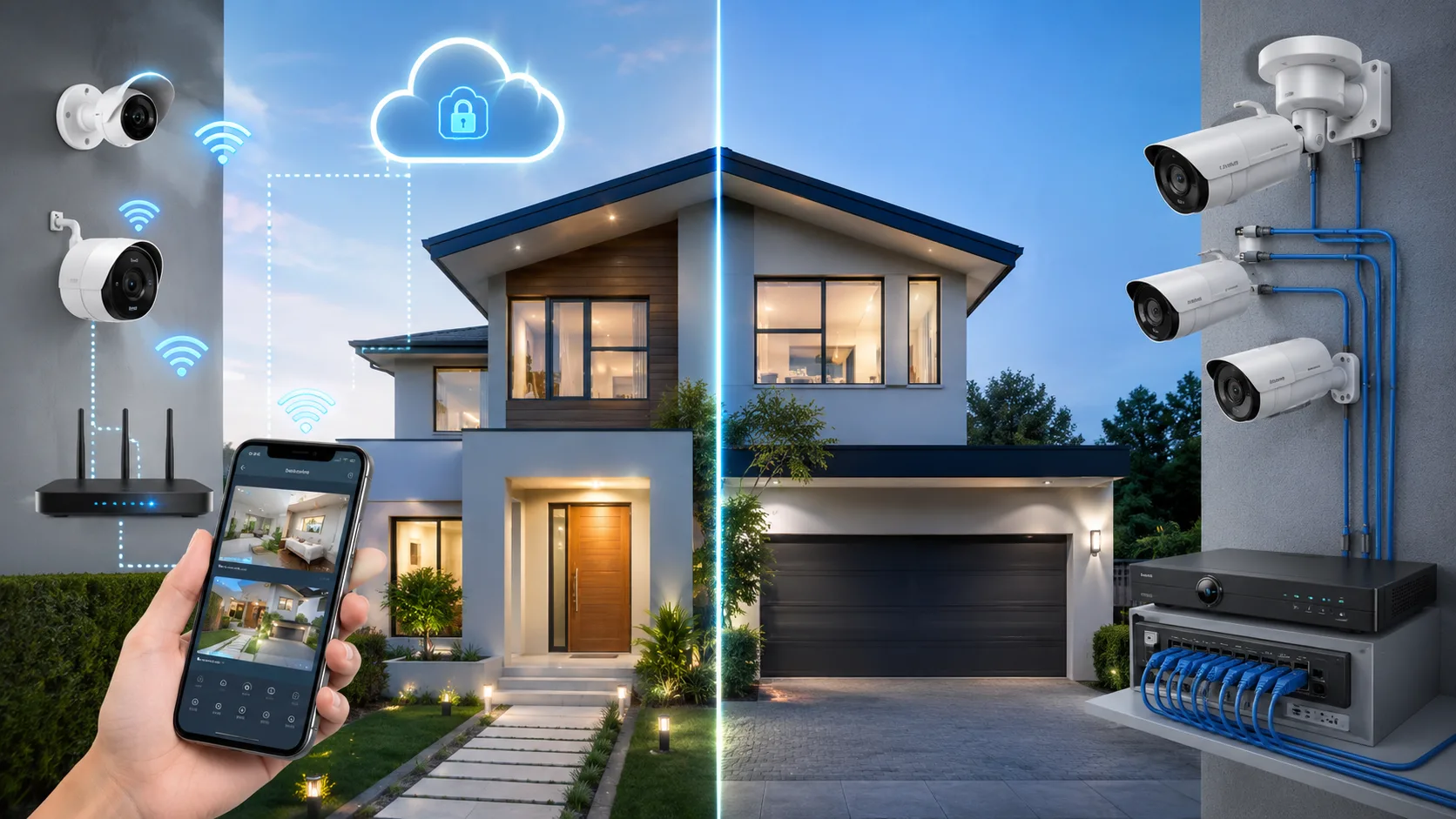
Choosing between home surveillance cameras, wireless and wired systems, is one of the first decisions property owners face when planning a security setup. Both types serve the same basic purpose: capturing and storing video footage of a property. But they differ in how they transmit data, how they are installed, how much maintenance they require, and which situations each handles well.
This article breaks down the key technical and practical differences to help homeowners and facility managers make an informed choice.
How Each System Transmits Video
The most fundamental difference between wireless and wired systems is how video data travels from the camera to the recording device or storage location.
Wired Systems
In a wired setup, cameras connect to a central recorder through physical cables. There are two main cable types in use today.
Coaxial cable is used with analog systems and older HD over coax setups. It carries a video signal and, in some configurations, power through a separate run. Coaxial cable is durable, less susceptible to interference, and widely available. The trade-off is that it requires more planning during installation, especially in finished spaces where running cable through walls adds complexity.
An Ethernet cable (Cat5e or Cat6) is used with IP camera systems, often called network video recorder (NVR) setups. Power over Ethernet (PoE) technology lets a single cable carry both power and data to the camera, which simplifies wiring. IP systems generally offer higher resolution and more flexible configuration than coaxial setups.
Wireless Systems
Home surveillance cameras with wireless systems send video over a Wi-Fi network rather than through a cable. The camera still needs a power source, which is either a wired connection to an outlet or a rechargeable battery. What is wireless is the video transmission.
Some wireless cameras use a dedicated radio frequency rather than a shared home Wi-Fi network. This reduces the chance of interference from other connected devices but may limit range.
Installation Requirements
Installation complexity differs noticeably between the two system types.
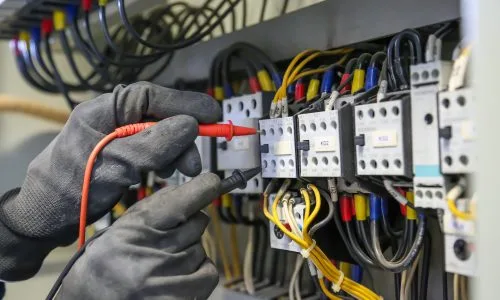
Wired systems require running cable from each camera location back to a central recording device. In new construction or unfinished spaces, this is straightforward. In finished buildings, it typically involves fishing cable through walls or ceilings, which takes more time and skill. Outdoor wired runs need weatherproof conduit or outdoor-rated cable to prevent moisture damage.
Wireless systems avoid most of that cable work. A wireless camera generally mounts with a few screws and connects to the local network during setup. This makes wireless a practical option for renters, for temporary installations, or for locations where running cable is not possible.
That said, wireless cameras still need power. Battery-operated models avoid all wiring but require periodic recharging or battery replacement. Models that plug into a wall outlet are simpler to maintain but still need an outlet nearby.
Reliability and Signal Consistency
Reliability is one area where wired and wireless systems behave differently under real-world conditions.
Wired cameras do not depend on a wireless signal. Once installed, they operate independently of network traffic, router performance, or interference from neighboring devices. This makes them a preferred option for properties where continuous, uninterrupted recording is a priority.
Wireless cameras depend on a stable network connection. Dead zones, router reboots, network congestion, and physical obstructions between the camera and router can all affect performance. For most residential applications, a modern router handles wireless cameras without issue. In larger properties or buildings with thick walls, connectivity problems are more common.
Battery-operated wireless cameras introduce an additional reliability consideration. A camera with a depleted battery records nothing. Properties that rely on this type need a maintenance schedule to keep batteries charged.
Video Quality and Resolution
Both wired and wireless systems support high-resolution video today. Older analog coaxial systems are the exception, as they are limited to lower resolutions. Modern IP wired systems and current wireless cameras both support 1080p and 4K recording.
The difference shows up in consistency rather than peak capability. A wired connection delivers consistent bandwidth to each camera. A wireless camera shares available network bandwidth with other devices. In environments with heavy network traffic, this can cause buffering, frame drops, or reduced quality during peak hours.
For properties where image quality is a priority in all conditions, wired systems generally perform more predictably.
Security Considerations
Both system types have cybersecurity considerations that property owners need to address.
Wireless cameras transmit data over a network, which creates potential points of interception if encryption is not enabled or if cameras are left with default login credentials. Keeping firmware updated and placing cameras on a separate network segment are basic steps that reduce this risk.
Wired systems are less exposed to wireless interception, but IP wired systems connect to a local network and face similar risks if not configured correctly. Physical cable security also matters. A cable that runs along an exposed exterior wall can be cut to disable a camera.
No system is completely secure on its own. Network configuration, access controls, and physical installation quality all affect the overall security of either system type.
Camera Form Factors: The Turret Security Camera
Both wired and wireless systems are available in multiple physical designs. One widely used format is the turret security camera, sometimes called an eyeball camera.
A turret security camera sits inside a dome-shaped housing with an internal pivot that allows the lens to rotate in multiple directions after mounting. Unlike traditional dome cameras, the turret design keeps the lens closer to the housing edge, which reduces the reflection and glare that dome covers often produce at night. This makes turret security cameras a practical choice for low-light environments or areas lit by infrared.
Turret cameras are available in both wired PoE versions and wireless configurations. They are common in residential entryways, garages, and small commercial spaces where a compact, adjustable camera is needed.
Commercial Security Cameras and Multi-Site Applications
For larger installations, the choice between wireless and wired often comes down to scale and infrastructure.
Commercial security cameras in retail stores, office buildings, and warehouses are typically wired. At scale, wired systems offer more predictable performance, centralized management, and lower ongoing maintenance requirements. Running structured cabling during a build-out or renovation is a one-time cost that pays off over years of operation.
Wireless commercial security cameras do exist and are useful in specific commercial scenarios: historic buildings where cabling is not permitted, outdoor areas far from the main building, or temporary job site installations. However, for a full-facility deployment covering dozens of camera positions, wired infrastructure is generally more practical.
Choosing Based on Property Type
Neither system type is universally better. The right choice depends on the property and the installation environment.
Wireless systems work well for:
- Rental properties where permanent wiring is not an option
- Small residential spaces with good Wi-Fi coverage
- Locations where a single camera covers a targeted area
- Temporary or portable security setups
Wired systems work well for:
- New construction where cable can be run during the build
- Large properties requiring multiple cameras across a wide area
- Locations where continuous, uninterrupted recording is required
- Commercial security camera deployments where system reliability is critical
Working With a Professional Installer
The technical requirements of either system type, particularly for multi-camera setups, benefit from professional planning. Determining camera placement, selecting the right cable type, configuring recording and storage settings, and securing the network all affect whether the system performs as intended.
Centex Security Cameras provides installation services for both wired and wireless systems, including home surveillance cameras, wireless setups, and structured wired networks for residential and commercial properties. Working with an experienced installer reduces the chance of coverage gaps, network issues, and hardware incompatibilities that are common in DIY multi-camera setups.
Summary
Both home surveillance cameras, wireless and wired systems, have specific strengths. Understanding those differences before purchasing hardware and planning installation leads to a setup that fits the property and performs reliably over time.