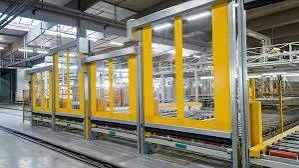
In environments where cleanliness is essential, even a small amount of unwanted dust or airborne particles can create serious problems. A tiny contaminant that goes unnoticed in an ordinary office or warehouse may affect the quality of a medicine, damage a sensitive electronic component, or interfere with a carefully controlled manufacturing process. This is why cleanrooms are designed with special systems that help maintain a stable and controlled environment. One important part of this setup is the high speed cleanroom door.
Unlike ordinary industrial doors, these doors are designed to open and close quickly while helping separate areas with different cleanliness requirements. They allow employees, equipment, and materials to move between spaces without keeping an entrance open for longer than necessary. Think of them as protective barriers that work almost like an automatic gateway, allowing movement while helping maintain the conditions inside the room.
From pharmaceutical manufacturing and medical laboratories to food processing and electronics production, high speed cleanroom doors play an important role in maintaining controlled working conditions. Their speed, design, and operating features make them suitable for facilities where cleanliness, efficiency, and reliable access must work together.
What Are High Speed Cleanroom Doors?
High speed cleanroom doors are specialised automatic doors used in facilities that need to maintain strict cleanliness standards. They are generally designed to open and close much faster than conventional industrial doors, reducing the amount of time an entrance remains exposed.
Their main purpose is to help separate controlled areas from surrounding spaces. For example, a pharmaceutical facility may have one room where ingredients are prepared and another where products are packaged. Both areas may have different cleanliness requirements. A suitable cleanroom door helps maintain separation while allowing authorised personnel and materials to pass through.
These doors are commonly designed with smooth surfaces, durable materials, and operating systems suited to demanding industrial environments. Depending on the application, they may also include features that support air pressure management, reduce unnecessary air movement, and make regular cleaning easier.
It is important to understand that a door alone cannot make a room clean. It works alongside ventilation, filtration, air pressure controls, cleaning procedures, and other facility systems. When these elements are properly coordinated, the door becomes an important part of the overall contamination-control strategy.
Why Door Speed Matters in a Cleanroom
At first glance, the speed of a door may seem like a small detail. However, in a controlled environment, the amount of time an entrance stays open can influence how well the surrounding conditions are maintained.
Imagine leaving the front door of an air-conditioned home open during a hot afternoon. Warm air enters, cool air escapes, and the cooling system has to work harder to maintain a comfortable temperature. A similar principle applies to controlled industrial spaces, although the concerns may involve airborne particles, air pressure, humidity, and temperature rather than comfort alone.
When a conventional door takes several seconds to open and close, the entrance remains exposed for longer. During busy production periods, repeated opening can increase unwanted air exchange between connected areas.
A high speed door helps reduce this exposure by completing its opening and closing cycle quickly. This can offer several practical benefits:
- Reduced exposure: The entrance remains open for a shorter period.
- Better environmental control: Faster operation can help limit unnecessary air exchange.
- Improved workflow: Employees and material-handling equipment can move through without lengthy interruptions.
- Greater productivity: Production teams spend less time waiting for access.
- Consistent separation: The door helps maintain a physical boundary between different working areas.
However, faster operation does not automatically guarantee contamination control. The complete installation must be designed around the facility's air pressure, ventilation, traffic patterns, and cleanliness requirements.
Important Features of High Speed Cleanroom Doors
Not every industrial door is suitable for a cleanroom. The materials, construction, operating mechanism, and safety features all influence whether a door can meet the demands of a controlled environment.
Here are some important features worth considering.
1. Smooth and Easy-to-Clean Surfaces
Cleanrooms require regular cleaning because dust, residue, and other unwanted particles must be kept under control. A door with complicated surfaces, deep grooves, or difficult-to-reach corners can make this task unnecessarily challenging.
For this reason, cleanroom doors are often designed with smooth surfaces that are easier to wipe down and maintain. Their construction should minimise places where dirt can collect.
The choice of surface material also matters. It should be appropriate for the cleaning products and procedures used in the facility. Some environments may require materials that resist moisture, frequent cleaning, or particular chemicals.
A simple comparison is a kitchen countertop. A smooth, non-porous surface is generally easier to clean than one with numerous cracks and uneven sections. The same thinking applies to doors installed in hygiene-sensitive facilities.
2. Fast and Reliable Opening and Closing
The defining feature of a high-speed door is its ability to operate quickly. A well-selected system allows people, carts, and suitable handling equipment to pass through with minimal waiting.
Reliable operation is just as important as speed. A door that moves quickly but frequently stops working can disrupt production and create unnecessary maintenance costs.
Facilities should consider the expected number of operating cycles, the size of the entrance, the type of traffic, and the manufacturer's stated performance specifications before selecting a system.
3. Effective Sealing Around the Opening
The area around a door can become a potential pathway for unwanted air movement. Suitable side guides, bottom edges, and other sealing arrangements help reduce gaps when the door is closed.
This is particularly relevant in facilities where different rooms operate at different air pressures.
For example, a cleanroom may be maintained at a higher air pressure than an adjoining corridor. When the door is closed, the surrounding structure and seals help support the intended separation.
The exact sealing requirements depend on the room's design and the pressure difference between connected spaces.
4. Safety Sensors and Protective Systems
Industrial doors must allow people and equipment to move safely. Modern automatic cleanroom doors can incorporate sensors that detect movement or objects in the doorway.
Depending on the model, safety features may include:
- Motion or presence detection.
- Light curtains or photoelectric safety sensors.
- Safety edges that respond to contact.
- Emergency opening or manual operation arrangements.
- Controls that coordinate door movement with nearby equipment.
These features help reduce the risk of accidental contact or obstruction. Their suitability should be assessed according to the expected traffic and applicable workplace safety requirements.
5. Durable Construction
Cleanroom doors may operate repeatedly throughout a working day. In a busy manufacturing facility, the door could open and close hundreds or even thousands of times, depending on the application.
Its materials and mechanical components must therefore be suitable for frequent use.
A durable system can help reduce unexpected interruptions and extend the useful working life of the installation. Regular inspections and maintenance are still necessary, even when a door is built for demanding operating conditions.
Where Are High Speed Cleanroom Doors Used?
Different industries have different reasons for controlling the movement of air, people, and materials. High speed cleanroom doors can support several types of controlled production environments.
Pharmaceutical Manufacturing
Pharmaceutical facilities handle ingredients and products that require carefully managed production conditions. Unwanted particles or contamination can affect product quality and manufacturing procedures.
Cleanroom doors help maintain separation between production rooms, preparation areas, laboratories, and packaging spaces.
For example, a facility may need to move raw materials from a storage area into a controlled preparation room. A fast-operating door allows this movement while helping limit the time the entrance remains open.
The door must be selected as part of the facility's wider contamination-control and quality-management plan.
Medical Device Production
Medical devices can require carefully controlled manufacturing and assembly conditions. Products such as surgical instruments, diagnostic equipment, and certain medical components may need protection from dust and other contaminants during production.
In these facilities, high speed industrial doors can help separate work areas and support organised movement between different stages of manufacturing.
Their smooth surfaces and practical cleaning requirements can also make them suitable for environments where regular hygiene procedures are important.
Electronics and Semiconductor Manufacturing
Electronic components can be extremely sensitive to dust and other airborne particles. Even a small contaminant may interfere with the production or performance of certain components.
Manufacturers therefore use controlled environments to protect delicate products during assembly and processing.
A properly selected cleanroom door helps manage access between rooms and reduces unnecessary exposure when employees or equipment move through the facility.
Food and Beverage Processing
Food production facilities need to maintain suitable hygiene conditions throughout processing, preparation, and packaging.
Doors installed between different production zones can help control movement and reduce the transfer of unwanted material between areas.
Depending on the environment, manufacturers may require doors with moisture-resistant construction, easy-to-clean surfaces, and materials suitable for regular sanitation.
Research Laboratories
Laboratories often contain separate rooms for testing, sample preparation, equipment storage, and other activities. These areas may have different requirements for cleanliness and environmental control.
A suitable high speed cleanroom door helps maintain separation while allowing laboratory staff to move between spaces efficiently.
How High Speed Cleanroom Doors Improve Daily Operations
Cleanroom doors do more than provide an entrance. Their design can influence how smoothly an entire facility operates.
Less Waiting During Material Movement
Manufacturing facilities frequently move raw materials, finished products, tools, and equipment between rooms. If employees have to wait for slow doors to open and close, small delays can accumulate throughout the day.
A fast-operating door helps keep these movements organised. Forklifts, carts, and other suitable equipment can pass through more efficiently when the doorway and operating system are designed for that purpose.
Support for Environmental Separation
Different areas within a facility may have different temperature, humidity, air pressure, or cleanliness requirements.
A door that closes quickly and provides suitable sealing can help maintain the intended separation between these spaces.
This is particularly useful when a facility needs to protect a sensitive production area from the surrounding environment.
Better Use of Available Space
Many industrial facilities have limited floor space. Traditional swing doors require room to open, which can interfere with nearby equipment, storage, or movement.
Depending on the design, high-speed roll-up doors can move vertically rather than swinging into the working area. This can make traffic flow easier to organise and help businesses use available space more effectively.
More Consistent Production Routines
A reliable automatic door reduces the need for employees to repeatedly operate heavy doors manually.
Instead, workers can focus on their assigned tasks while the entrance responds to the appropriate access controls or activation system.
Over time, this can contribute to a more organised production environment.
Choosing the Right High Speed Cleanroom Door
Selecting a door should begin with understanding the actual needs of the facility rather than simply comparing opening speeds or purchase prices.
A door that works well in a warehouse may not be appropriate for a pharmaceutical cleanroom. The requirements can be very different.
Consider the following factors before making a decision.
Understand the Cleanliness Requirements
Start by identifying the cleanliness level required in the area where the door will be installed.
Some facilities operate under specific cleanroom classifications, while others follow industry-specific hygiene or contamination-control procedures.
The door's construction, materials, sealing arrangement, and cleaning compatibility should be evaluated against those requirements.
Check the Opening Dimensions
The height and width of the doorway must accommodate the people and equipment passing through it.
For example, a doorway used mainly by employees may have different requirements from one that handles large material carts or manufacturing equipment.
Correct measurements also help ensure that the door operates properly within the available space.
Consider Traffic Frequency
A door used occasionally has different operating demands from one located along a busy production route.
Think about how frequently it will open, how many people or vehicles will use it, and whether traffic arrives continuously or in scheduled batches.
This information helps determine the appropriate operating speed, motor capacity, and durability requirements.
Evaluate Air Pressure Conditions
Some cleanrooms use pressure differences to help control the direction of airflow between connected areas.
In such situations, the door must be compatible with the pressure conditions and ventilation design.
It is worth involving the facility's engineering team to confirm the required sealing performance and ensure that the door does not interfere with the room's environmental controls.
Review Maintenance Requirements
Every automatic door needs periodic inspection and servicing. Components such as motors, sensors, controls, seals, and moving parts should be checked according to the manufacturer's recommendations.
Ask about the availability of replacement parts, service support, maintenance intervals, and expected operating life.
A system that is easy to maintain can help avoid unnecessary production interruptions.
Installation and Maintenance: Why Both Matter
Even a well-designed door may not perform as expected if it is installed incorrectly.
Installation should take into account the surrounding wall structure, available space, electrical connections, control systems, and environmental conditions. The door must also work properly with nearby ventilation and pressure-control equipment.
For cleanroom applications, the installation process should avoid introducing materials or construction practices that could compromise the controlled environment.
Once the door is operational, maintenance becomes an important part of keeping it reliable.
A practical maintenance programme may include:
- Inspecting the door curtain or panels for visible damage.
- Checking seals for wear, gaps, or deterioration.
- Testing safety sensors and emergency operating features.
- Examining the motor and other moving components.
- Checking the opening and closing cycle for unusual movement.
- Cleaning surfaces according to the facility's approved procedures.
- Arranging professional servicing at recommended intervals.
Employees should also know how to report unusual sounds, slow movement, sensor problems, or visible damage. Addressing small problems early can prevent more disruptive failures later.
Newport Company and Cleanroom Door Solutions
Choosing the right entrance system requires more than finding a door that opens quickly. Businesses must consider the cleanliness requirements of their facility, the amount of daily traffic, the available installation space, and the performance expected from the complete system.
Newport Company works with industrial door solutions for demanding environments, including applications where hygiene, controlled access, and dependable operation are important considerations.
When evaluating a cleanroom door solution, businesses should look for a system that fits their actual production requirements rather than relying on a one-size-fits-all approach. The right choice should support routine cleaning, safe movement, environmental separation, and efficient daily operations.
A careful assessment before installation can also help avoid unnecessary modifications and reduce the likelihood of selecting equipment that does not suit the facility.
Common Mistakes to Avoid When Selecting Cleanroom Doors
Choosing a door based only on its advertised speed can lead to problems later. Several other details deserve equal attention.
Ignoring the cleaning process: A door may look suitable initially but become difficult to maintain if its materials and surfaces are not compatible with the facility's cleaning procedures.
Overlooking air pressure: A door that does not provide suitable sealing may interfere with the intended environmental separation between rooms.
Choosing an unsuitable size: An opening that is too small can slow down material movement, while an unnecessarily large opening may create additional design and environmental-control challenges.
Neglecting safety features: Employees and equipment must be able to pass through the entrance without unnecessary risk. Safety sensors and appropriate controls should never be treated as optional extras without a proper risk assessment.
Forgetting long-term maintenance: Purchase price is only one part of the overall cost. Servicing, replacement components, downtime, and operating reliability should also be considered.
Avoiding these mistakes helps businesses make decisions based on practical performance rather than appearance or initial cost alone.
Conclusion
High speed cleanroom doors are an important part of facilities where cleanliness, controlled access, and efficient movement must work together. By opening and closing quickly, they help reduce the time an entrance remains exposed, support environmental separation, and make everyday operations more convenient.
Their benefits extend across pharmaceutical production, medical device manufacturing, electronics, food processing, and research environments. However, the right door must be selected according to the facility's specific cleanliness standards, air pressure conditions, traffic levels, safety requirements, and maintenance needs.
A well-designed door cannot replace proper filtration, ventilation, or cleaning procedures, but it can make these systems easier to support as part of a coordinated facility design. With the right selection, professional installation, and regular maintenance, a high-speed cleanroom door can contribute to a cleaner, safer, and more efficient working environment for years to come.