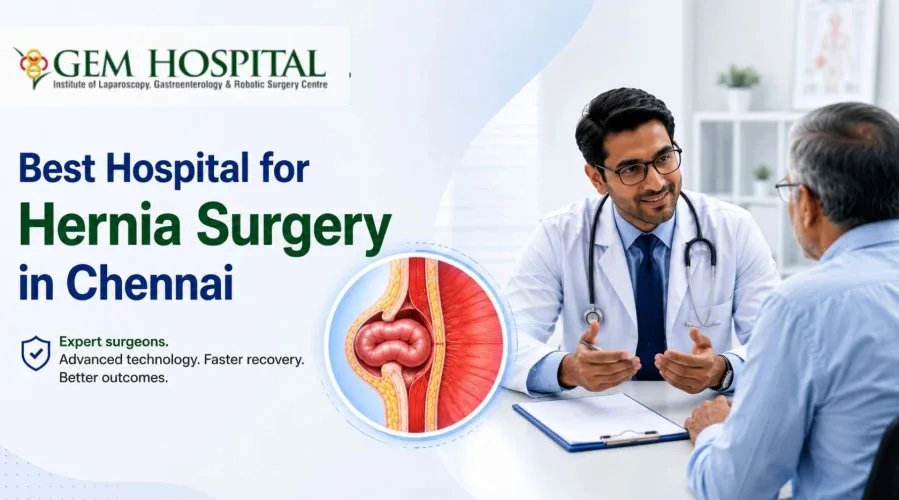
A hernia may begin as a small swelling or a slight pulling sensation in the abdomen or groin. Initially, it might not interfere with everyday activities. However, as time passes, some hernias can become larger, cause discomfort or affect a person's ability to work, exercise and enjoy daily life. Understanding the condition and choosing appropriate medical care are important steps towards recovery.
If you are searching for Hernia Surgery in Chennai, it is important to understand the available treatment options, surgical techniques and factors to consider when selecting a hospital. The right treatment plan depends on the type of hernia, its size, symptoms and your overall health.
At GEM Hospital, patients can seek specialist evaluation and learn about suitable surgical approaches, including minimally invasive hernia repair. This guide explains what to expect and how to make an informed treatment decision.
What Is a Hernia and Why Does It Occur?
A hernia develops when an internal organ or tissue pushes through a weak area in the surrounding muscle or connective tissue. It commonly appears as a visible bulge in the abdomen, groin or around the navel.
Hernias can develop due to several factors, including:
- Weakness in the abdominal wall
- Age-related muscle changes
- Previous abdominal surgery
- Repeated heavy lifting
- Chronic coughing
- Long-term constipation and straining
- Pregnancy and increased abdominal pressure
- Family history of hernia
Some people experience mild symptoms, while others develop pain or discomfort during physical activity. If you notice an unusual swelling or persistent discomfort, consulting a Hernia Specialist in Chennai can help identify the cause and determine whether treatment is necessary.
What Are the Different Types of Hernia?
Understanding the type of hernia helps doctors decide the most appropriate treatment approach.
1. Inguinal Hernia
An inguinal hernia develops in the groin area and is one of the most common types. It occurs when tissue pushes through a weak area in the lower abdominal wall. Patients may notice a groin swelling that becomes more visible while coughing, standing or lifting objects.
2. Umbilical Hernia
An umbilical hernia develops near the belly button when tissue protrudes through an opening or weakened area around the navel. It can occur in adults and children.
3. Incisional Hernia
An incisional hernia develops at or near the site of a previous abdominal surgery. It may occur when the abdominal wall does not heal with sufficient strength after an operation.
4. Femoral Hernia
A femoral hernia occurs when tissue pushes through the femoral canal near the upper thigh and groin. It is less common but has a relatively higher risk of complications, making medical evaluation important.
5. Recurrent Hernia
A recurrent hernia develops again at or near the location of a previously repaired hernia. It may require a carefully planned surgical approach based on previous operations and the condition of the abdominal wall.
If you are experiencing symptoms, an evaluation at a hospital offering Hernia Treatment in Chennai can help establish the diagnosis and identify suitable treatment options.
When Should You Consider Hernia Surgery?
Not every hernia requires immediate surgery. Some uncomplicated, minimally symptomatic hernias may be monitored under medical supervision. However, hernias generally do not disappear on their own, and surgery may be recommended depending on symptoms, type and risk of complications.
Common symptoms that require medical attention include:
- A noticeable swelling in the abdomen or groin
- Pain while coughing, bending or lifting
- A feeling of pressure or heaviness
- Discomfort while standing for long periods
- Swelling that becomes more prominent during physical activity
- Increasing difficulty performing everyday activities
Sudden severe pain, vomiting, abdominal swelling, or a hernia bulge that becomes firm, tender or cannot be pushed back requires immediate emergency assessment. These symptoms can indicate incarceration or strangulation, which may interrupt the blood supply to the trapped tissue.
Seeking timely medical advice helps patients understand whether Hernia Repair Surgery is appropriate and avoid delaying necessary treatment.
What Are the Treatment Options for Hernia?
Hernia treatment depends on the patient's medical condition, hernia location, size and complexity. After examining the patient, the surgeon discusses the advantages and limitations of available approaches.
1. Open Hernia Repair Surgery
Open hernia repair involves making an incision near the hernia to return the protruding tissue to its appropriate position and repair the weakened area. Surgical mesh may be used to reinforce the abdominal wall, depending on the case.
This approach may be suitable for certain primary, large, recurrent or emergency hernias.
2. Laparoscopic Hernia Surgery
Laparoscopic Hernia Surgery in Chennai is a minimally invasive approach performed using small incisions and a camera-guided surgical instrument.
The surgeon views the operating area on a monitor and repairs the hernia using specialised instruments. Mesh reinforcement is commonly considered in adult hernia repair.
Potential advantages in appropriately selected patients include:
- Smaller surgical incisions
- Less wound discomfort in some cases
- Reduced wound-related complications in selected procedures
- Earlier return to routine activities
- Shorter hospital stay in suitable cases
Two commonly used laparoscopic approaches for inguinal hernia repair are TEP (Totally Extraperitoneal Repair) and TAPP (Transabdominal Preperitoneal Repair). The surgeon determines the appropriate technique based on individual requirements.
3. Robotic-Assisted Hernia Repair
Robotic-assisted surgery uses specialised instruments and a camera-controlled system operated by the surgeon. It can provide enhanced visualisation and instrument movement in selected complex procedures.
However, robotic surgery is not necessary for every patient. Its suitability depends on the hernia type, surgical history, available expertise and individual clinical requirements.
Choosing Advanced Hernia Treatment in Chennai means understanding which approach is appropriate rather than selecting a procedure simply because it uses newer technology.
How to Choose the Best Hernia Surgery Hospital in Chennai?
Choosing a hospital is an important part of the treatment journey. Patients should consider more than the hospital's location or technology.
Here are some factors worth evaluating:
1. Experienced Hernia Surgeons
Look for a surgical team experienced in different types of hernia repair, including inguinal, umbilical, incisional and recurrent hernias. Experience with complex abdominal wall conditions can be particularly important.
2. Availability of Minimally Invasive Techniques
A hospital offering open and laparoscopic approaches can help patients understand their treatment choices. The surgical technique should be selected according to clinical needs.
3. Comprehensive Preoperative Evaluation
Before surgery, doctors may recommend blood tests, imaging investigations and anaesthesia assessment. Existing medical conditions should also be reviewed to plan treatment safely.
4. Appropriate Surgical Facilities
Operating theatres, anaesthesia services, infection prevention measures and emergency support are important considerations when selecting a hospital for Hernia Surgery in Chennai.
5. Postoperative Care and Follow-Up
Treatment does not end when surgery is completed. Wound monitoring, pain management, activity guidance and follow-up consultations support the recovery process.
6. Clear Communication
A good healthcare team should explain the diagnosis, recommended procedure, possible risks, expected recovery and treatment costs. Patients should feel comfortable asking questions before making a decision.
Why Consider GEM Hospital for Hernia Treatment in Chennai?
GEM Hospital provides specialised gastrointestinal and surgical care, with attention to diagnosis, treatment planning and postoperative support.
Patients exploring Hernia Treatment in Chennai can consult the hospital's surgical team to understand their condition and discuss appropriate treatment options.
The treatment approach may include:
- Evaluation of different types of abdominal wall hernias
- Assessment of primary and recurrent hernias
- Discussion of open and laparoscopic repair options
- Individualised surgical planning
- Preoperative assessment and preparation
- Postoperative monitoring and recovery guidance
Whether you are experiencing a newly developed hernia or considering treatment for a recurrent condition, consulting an experienced Hernia Surgeon in Chennai can help you understand the next steps.
What Is the Recovery Process After Hernia Surgery?
Recovery varies according to the surgical technique, hernia complexity, general health and individual healing response.
After surgery, patients may receive instructions regarding:
- Wound care and hygiene
- Prescribed medication
- Gradual walking and movement
- Temporary restrictions on heavy lifting
- Follow-up appointments
- Returning to work and routine activities
Some patients resume light activities relatively early, while others need additional recovery time. Avoid strenuous activities until the treating surgeon confirms that it is appropriate.
Following medical instructions and attending scheduled reviews can help identify recovery concerns early.
Frequently Asked Questions About Hernia Surgery in Chennai
1. Which hospital should I choose for hernia surgery in Chennai?
Choose a hospital with experienced surgeons, appropriate surgical facilities, minimally invasive treatment options where suitable, emergency support and comprehensive postoperative care. GEM Hospital is one option patients can consider for specialist surgical evaluation.
2. Is laparoscopic hernia surgery better than open surgery?
Both approaches have specific advantages. Laparoscopic surgery may offer smaller incisions and quicker recovery in selected patients. Open surgery may be more suitable in certain complex or emergency situations. The surgeon recommends an approach based on individual needs.
3. How long does hernia surgery take?
The duration depends on the type of hernia, surgical technique and complexity. Your surgeon can provide an estimated procedure time after evaluating your condition.
4. Can a hernia return after surgery?
Yes. Hernia recurrence is possible after repair. The risk depends on several factors, including hernia type, surgical technique, tissue quality, wound healing and underlying health conditions.
5. Is hernia surgery painful?
Anaesthesia is used during surgery to manage pain. Some discomfort may occur during recovery, but prescribed pain management and appropriate postoperative care can help patients remain comfortable.
6. Can I return to normal activities after hernia surgery?
Most patients gradually return to their regular activities. The timeline varies depending on the procedure and recovery progress. Follow your surgeon's advice regarding exercise, work and heavy lifting.
Conclusion
A hernia should not be ignored, even when the initial symptoms appear manageable. Understanding the condition, recognising warning signs and consulting an experienced surgical team can help you make informed decisions about treatment.
When considering Hernia Surgery in Chennai, look for a hospital that offers appropriate surgical techniques, careful preoperative assessment and continued postoperative support. GEM Hospital provides specialised surgical care for patients seeking evaluation and treatment options for different types of hernias.