Indoor air quality is easy to overlook. Dust collects on furniture, pet hair settles on floors, and airborne particles can circulate through rooms throughout the day. While regular cleaning helps, the air inside a home can contain particles that are not always visible. This is where HEPA filtration can be useful.
Understanding how HEPA filters work, where they are used, and what to check before buying one can help homeowners make a more informed decision.
What Is a HEPA Filter?
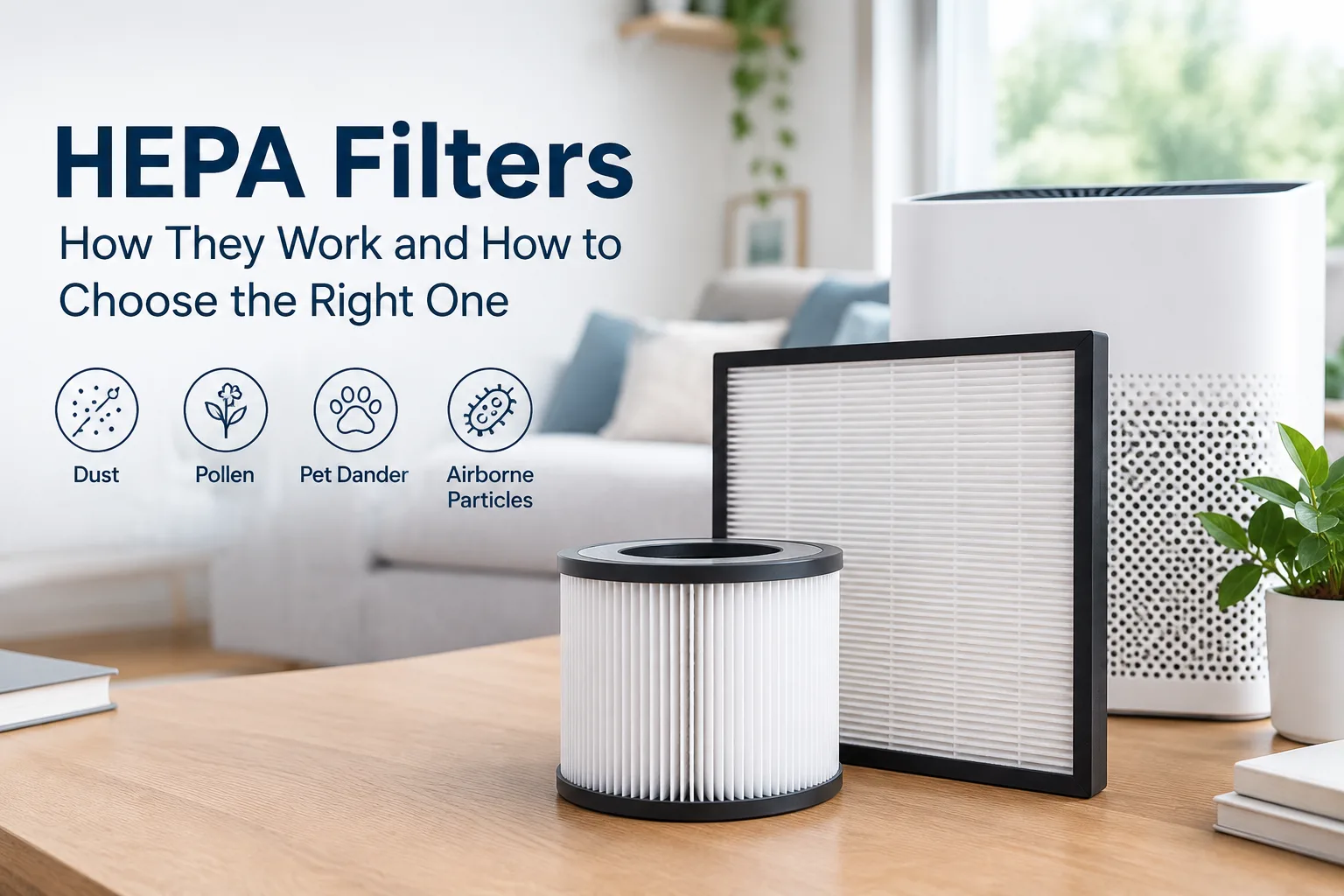
HEPA stands for High-Efficiency Particulate Air. A genuine HEPA filter is designed to capture very small airborne particles as air passes through its dense filtering material.
In the United States, the commonly cited HEPA performance standard requires a filter to remove at least 99.97% of particles measuring 0.3 microns under specified test conditions. This does not mean every product advertised as a HEPA filter meets that standard, so it is worth checking the manufacturer's specifications.
HEPA filters are commonly used in portable air purifiers and certain vacuum cleaners. Some specialized ventilation and filtration systems also use HEPA filtration.
How Do HEPA Filters Work?
HEPA filtration relies on a combination of particle-capture mechanisms rather than simply acting like a fine screen.
Larger particles can become trapped as they move through the filter fibres. Smaller particles may be captured when they come close enough to the fibres to attach to them. Some particles are also captured through diffusion as they move irregularly through the air.
This combination allows a properly designed HEPA filter to capture particles across a range of sizes, including dust, pollen, and certain airborne particles.
However, a filter's performance depends on the complete system. Air leaks around a poorly fitted filter can allow particles to bypass the filtering material.
Where Are HEPA Filters Used?
HEPA filtration is found in several types of equipment, but the correct filter depends on the appliance.
Air purifiers: Portable air purifiers may use HEPA filters to reduce airborne particles in a room. Room size, airflow, and the unit's clean air delivery rate are important considerations.
Vacuum cleaners: Some vacuum systems use HEPA filtration to capture fine particles before air exits the machine. The complete vacuum design also affects how effectively dust is contained.
Specialized ventilation systems: Certain controlled environments require HEPA filtration for specific air-quality purposes. These systems have requirements beyond those of an ordinary household appliance.
A replacement filter designed for one application should not automatically be assumed suitable for another.
How to Choose the Right HEPA Filter
Before buying a replacement, identify the equipment that will use it. Two filters may look similar while having different dimensions, sealing arrangements, or airflow requirements.
Start by checking the appliance's brand and model number. If the existing filter has a part number, compare it with the replacement listing. Also review the manufacturer's recommended filter type and replacement instructions.
Dimensions matter, but they are not the only consideration. A filter must fit securely and work with the airflow design of the appliance. An unsuitable filter may reduce performance or allow air to bypass the filtering material.
You can explore HEPA filters to review available replacement options, then confirm that the selected product matches your equipment.
When Should You Replace a HEPA Filter?
There is no single replacement schedule that applies to every HEPA filter. Service life depends on the appliance, operating hours, particle levels, and the manufacturer's design.
A filter used in a dusty environment may need attention sooner than one operating under lighter conditions. Some appliances include a filter-change indicator, while others rely on a recommended maintenance schedule.
Do not judge a filter's condition by appearance alone. Some filters can look relatively clean while still requiring replacement according to the manufacturer's instructions.
Also, avoid washing or vacuuming a HEPA filter unless the manufacturer specifically permits it. Cleaning an unsuitable filter can damage the media and affect its performance.
Common Mistakes to Avoid
One common mistake is assuming that every filter labelled HEPA offers identical performance. Product specifications and the intended application matter.
Another is choosing a replacement based only on price or appearance. A lower-cost filter is not necessarily a good value if it does not fit the appliance correctly.
Finally, replacing the filter while neglecting other maintenance tasks can limit the benefit. Follow the appliance's instructions for cleaning accessible components, maintaining airflow, and installing the replacement properly.
Final Thoughts
HEPA filtration can be a useful part of an indoor air-quality strategy, but the results depend on selecting the right filter and using it in a compatible, properly maintained appliance.
Check the manufacturer's specifications, confirm the replacement part number, and follow the recommended maintenance schedule. Taking these steps can help you choose a suitable filter without relying on appearance or marketing claims alone.