If someone types "healthy fruit juice" into a search engine, they will get a long list of smoothie cafes and juice bars in supermarkets; it's certainly convenient, but it doesn't always mean it is the healthiest product they were looking for. Not every "healthy" product is "local"; these filters can even contradict each other, especially when a product comes from abroad.
For example, Mongibello Juice shows why. No one searching for healthy fruit juice near me in most U.S. cities will find a local supplier of Sicilian blood oranges and mandarins, since no such fruit grows in the country. This fruit grows only around Mount Etna in Sicily, where special volcanic soil and a unique microclimate give the citrus specific nutritional value with no analogs in the U.S.
What Actually Separates Healthy Juice Drinks From Everything Else Labelled “Juice”?
The healthy juice drinks category is flooded with products that are technically classified as juice but are far more modified than the liquid extracted from fruit, sweetened beverages, diluted juice cocktails with water and sugar, or even juice concentrates. However, this isn't false labeling; these products differ from what comes to mind when you think of healthy juice drinks.
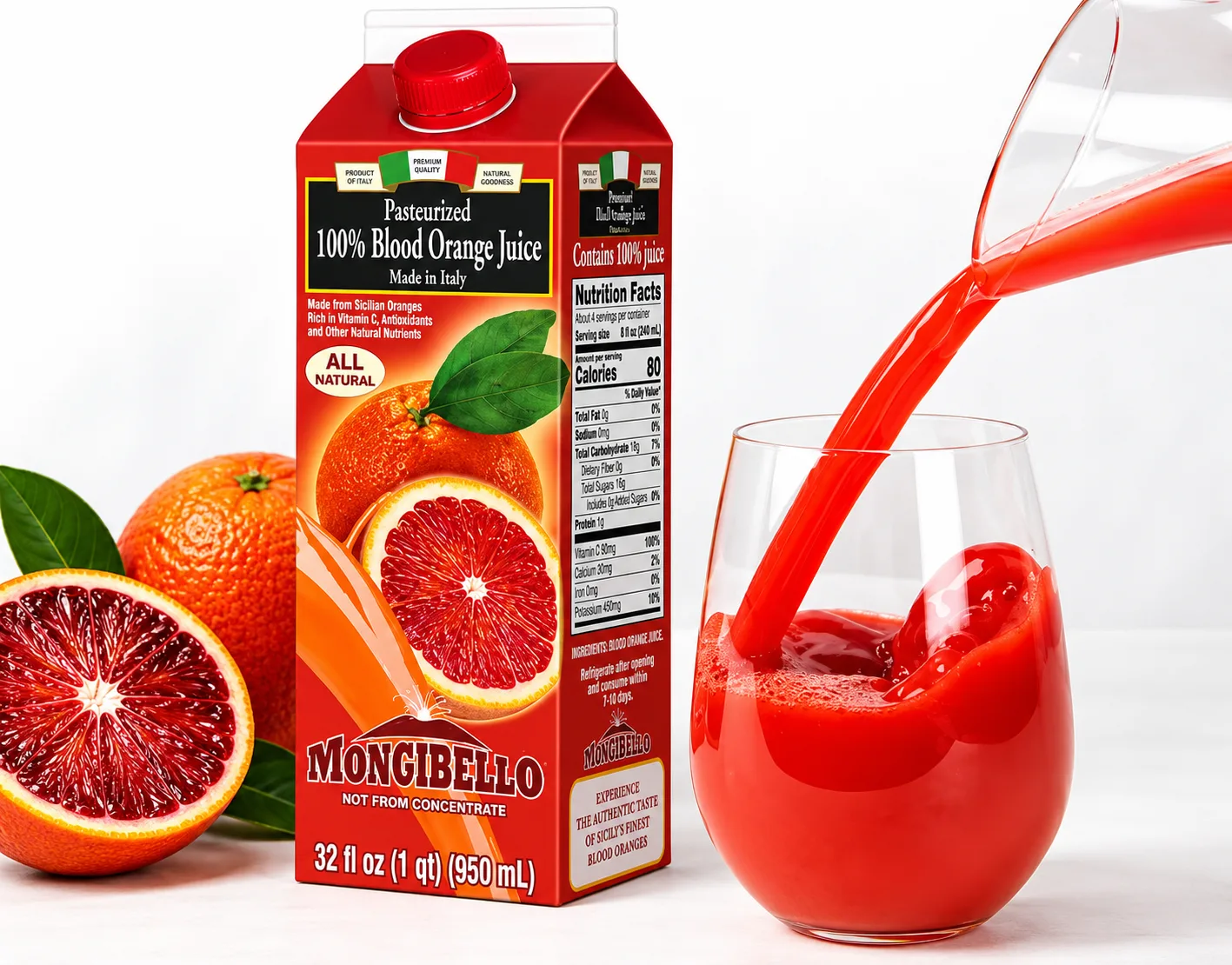
Mongibello juice is pressed with 100% NFC technology, meaning no concentrate is used and nothing is added or removed after the process. This makes a difference for customers searching specifically for an honest juice without additional sugars and artificial additives, because unlike many juice drinks, the pressed juice only contains the components of the fruit without any additional modifications, which is crucial for those who are looking for healthy juices.
In this regard, blood oranges contain two important substances: anthocyanins, which give this variety its color, and, of course, vitamin C, which are naturally present in Mongibello juice, according to the description. Because no ingredients are added, the composition may vary somewhat depending on the harvest.
Shopping for Italian Delicacies Online
This reflects a broader trend in which consumers seek Italian delicacies online rather than relying on what an Italian specialty grocer has imported. The supply of Italian food and drinks, such as olive oils and specialized citrus products, has long been limited to what the Italian market has imported, and the Italian market has been incredibly diverse depending on where you live.
Shipping directly to consumers removes these barriers. You no longer have to rely on a specialty store to have imported your favorite product; instead, you can buy directly from the importer and have it shipped nationwide. In this case, a product such as fresh-squeezed blood orange juice cannot be delivered as a shelf-stable product.
The current Mongibello selection includes:
- 100% Blood Orange Juice: 32 fl oz bottles in either 2-packs or 3-packs
- 100% Mandarin Orange Juice: 32 fl oz bottles in a 3-pack
Both juices are sold in bundles for $89.00.
Where Local Search Still Helps?
However, this does not make "near me" search completely meaningless, as Mongibello still offers a store locator service that lists its retail partners in a selection of major U.S. cities, giving consumers who prefer to buy items offline at least some chance. However, because the juice in question is not widely distributed due to its unique qualities, retail availability will be much more limited than one might expect from a standard grocery item search.
How to Verify What You’re Actually Buying?
When choosing a juice that is sold as healthy, imported, or fresh-pressed, the following checks will apply irrespective of the brand used:
- Is the area of production specified? The term "Italian" or "Mediterranean" by itself should not be equated with a specific origin such as Mount Etna in Sicily.
- Are any ingredients added other than those obtained through pressing? Adding sugar, water, or flavoring changes the product, regardless of the juice labeling.
- Does the juice have a stated shelf life? True fresh-pressed juices cannot have months of shelf life, unlike pasteurized juice.
- Is there a specification of places of sale or delivery of the brand in question? Terms like "available all over the nation" make verification harder than a functional store locator or clear delivery terms.
Mongibello provides these details on its product pages, which seems like a reasonable minimum requirement for a brand claiming to be healthy or authentic.
The Practical Difference
This difference often comes down to answering two simple questions: where was the fruit grown, and how was it processed after it came out of the field? A juice from a specific volcanic growing area, processed cleanly, answers these questions clearly.
However, a juice bar smoothie with generic citrus, or a grocery store juice drink with added sweeteners, can still claim to be healthy, yet it is answering a completely different question than that posed by most customers looking for such products. When searching for Italian delicacies online, a shopper might do well to consider the Mongibello Juice example.