
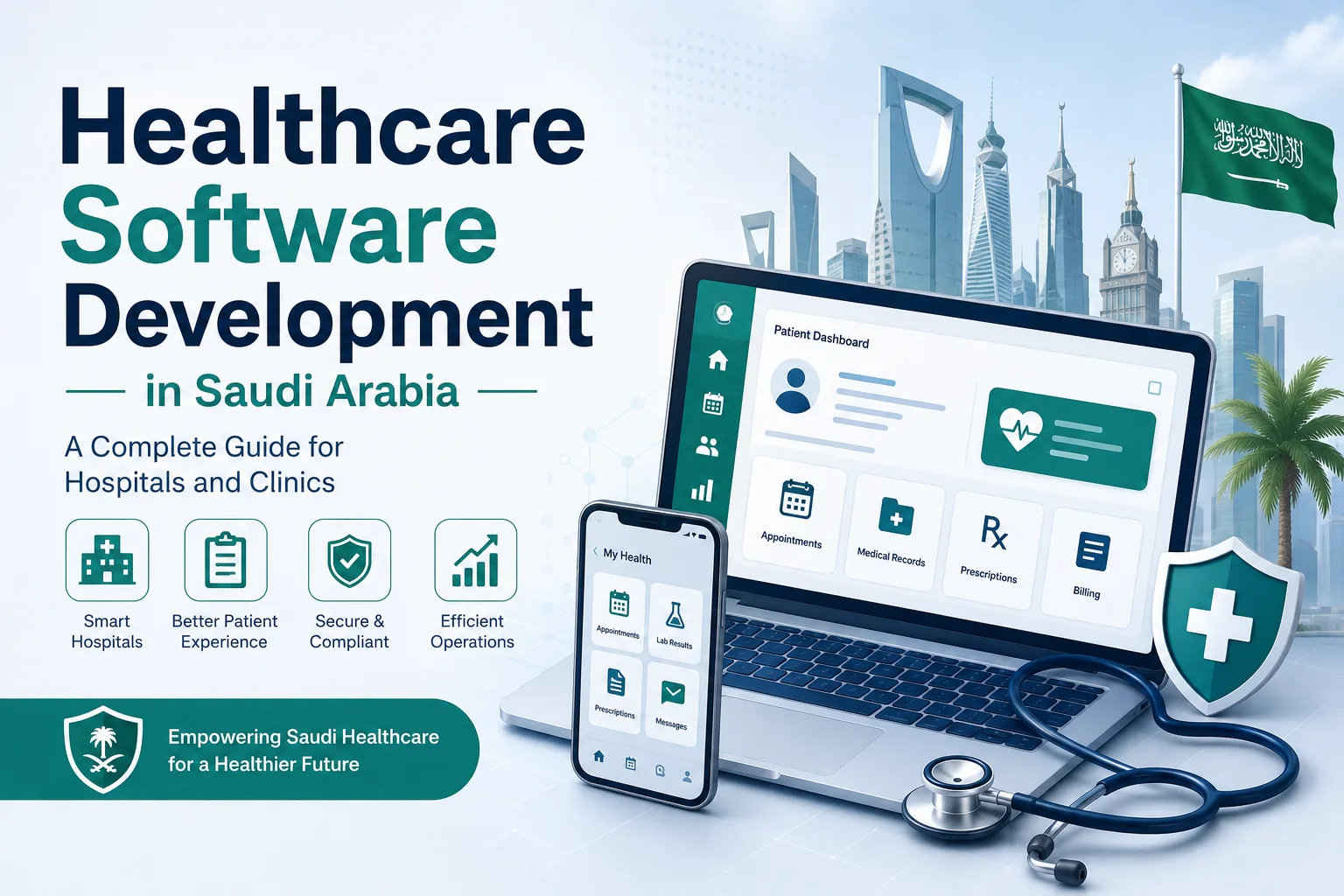
Saudi Arabia's healthcare sector is rapidly embracing digital innovation as part of Vision 2030, creating new opportunities for hospitals, clinics, and healthcare startups to modernize patient care and operational workflows.
From electronic health records (EHR) and hospital management systems to telemedicine platforms and AI-powered diagnostics, healthcare software has become a strategic investment rather than a supporting tool.
As patient expectations evolve and healthcare providers manage increasing volumes of data, custom software enables organizations to improve efficiency, enhance patient experiences, and deliver more connected care.
This guide explores the key aspects of healthcare software development in Saudi Arabia, the types of solutions healthcare organizations need, and what to consider when selecting a development partner.
Why Healthcare Software Is Essential
Healthcare organizations manage appointments, medical records, laboratory results, billing, pharmacies, and patient communication every day. Manual processes and disconnected systems can lead to delays, data duplication, and administrative inefficiencies.
Custom healthcare software helps providers:
- Streamline clinical and administrative workflows
- Improve patient engagement
- Reduce paperwork and manual tasks
- Enhance data accuracy
- Strengthen security for sensitive patient information
- Support long-term digital transformation
As Saudi Arabia continues investing in smart healthcare initiatives, digital solutions play an increasingly important role in improving care quality and operational performance.
Types of Healthcare Software
Healthcare providers often require multiple integrated systems to support daily operations.
Hospital Management Systems (HMS)
Manage patient admissions, appointments, billing, pharmacy, laboratory services, inventory, and reporting through a centralized platform.
Electronic Medical Records (EMR) and Electronic Health Records (EHR)
Digitize patient records, simplify clinical documentation, and improve collaboration among healthcare professionals.
Telemedicine Platforms
Enable secure virtual consultations, online appointment scheduling, video conferencing, digital prescriptions, and remote patient monitoring.
Healthcare CRM
Improve patient communication through appointment reminders, follow-up notifications, feedback collection, referral management, and personalized engagement.
Mobile Healthcare Applications
Allow patients to book appointments, access medical records, receive notifications, communicate with physicians, and monitor their health from mobile devices.
Benefits of Custom Healthcare Software
Unlike off-the-shelf solutions, custom software is designed around your organization's workflows and long-term objectives.
Key benefits include:
- Tailored functionality
- Better integration with existing systems
- Scalability for future growth
- Improved user experience
- Enhanced security
- Easier compliance with healthcare regulations
- Greater flexibility for future enhancements
Custom software also reduces dependency on multiple disconnected applications by creating a unified digital ecosystem.
Compliance and Security
Healthcare software in Saudi Arabia must prioritize patient privacy and data protection.
When developing healthcare applications, organizations should consider:
- Secure authentication
- Role-based access control
- Data encryption
- Audit trails
- Secure APIs
- Backup and disaster recovery
- Compliance with the Saudi Personal Data Protection Law (PDPL)
- Support for healthcare interoperability initiatives such as NPHIES, where applicable
Building security into the development process helps protect sensitive patient information and supports regulatory requirements.
AI in Healthcare
Artificial intelligence is transforming healthcare by helping providers improve efficiency and decision-making.
Common AI applications include:
- Clinical decision support
- Intelligent appointment scheduling
- Predictive analytics
- Medical image analysis
- Patient chatbots
- Automated documentation
- Personalized patient engagement
- Operational reporting
Integrating AI into healthcare software can help organizations improve patient outcomes while reducing administrative workloads.
Healthcare System Integration
Modern healthcare software should connect with existing systems rather than operate in isolation.
Common integrations include:
- EMR and EHR systems
- Hospital Information Systems (HIS)
- Laboratory Information Systems (LIS)
- Pharmacy Management Systems
- Billing platforms
- Telemedicine applications
- Patient portals
- SMS and email notification services
- Payment gateways
Seamless integration improves data consistency and operational efficiency across departments.
Choosing the Right Healthcare Software Development Partner
Selecting the right development company is essential to the success of your project.
Look for a partner with:
- Experience in healthcare software development
- Knowledge of Saudi healthcare regulations
- Expertise in cloud technologies
- Strong cybersecurity practices
- AI and automation capabilities
- Experience with healthcare integrations
- Scalable architecture design
- Ongoing maintenance and technical support
An experienced partner can help reduce project risks while delivering a solution that supports your organization's goals.
Why Choose RowthTech?
RowthTech develops custom healthcare software tailored to hospitals, clinics, healthcare startups, and medical organizations.
Our expertise includes:
- Hospital Management Systems
- Healthcare CRM
- EMR and EHR Solutions
- Telemedicine Platforms
- AI-Powered Healthcare Applications
- Healthcare Mobile Apps
- Cloud-Based Healthcare Platforms
- API Development and Integration
- Healthcare Analytics
- Custom Software Development
We build secure, scalable, and user-friendly healthcare solutions that help organizations accelerate digital transformation and improve patient experiences.
Conclusion
Healthcare software is reshaping how hospitals and clinics in Saudi Arabia deliver care, manage operations, and engage with patients.
As digital transformation continues across the Kingdom, investing in custom healthcare software can help organizations improve efficiency, strengthen patient relationships, and prepare for future growth.
Whether you're developing a hospital management system, telemedicine platform, healthcare CRM, or AI-powered healthcare application, choosing the right technology partner is key to building a solution that meets your clinical, operational, and business objectives.
If you're planning your next healthcare technology project, RowthTech can help you design and develop secure, scalable, and future-ready healthcare software tailored to your organization's needs.