Getting a tattoo is often a meaningful decision. It may celebrate an important milestone, honor someone special, or simply reflect your style at the time. But people grow, interests change, and sometimes a tattoo no longer feels like the right fit. That doesn't mean you made a mistake—it simply means your story has changed.
The good news is that modern laser treatments have made removing unwanted tattoos more effective than ever before. While the process takes time and patience, many people successfully fade or remove tattoos so they can move forward with confidence.
If you're considering Hamilton tattoo removal, understanding how the process works can help you make informed decisions and set realistic expectations. This guide explains everything in simple language, from how laser treatment works to what you can expect before, during, and after your appointments.
Why People Decide to Remove a Tattoo
There isn't one single reason people seek tattoo removal. Every person's situation is unique.
Some individuals no longer connect with a design they chose years ago. Others have tattoos connected to a relationship or life chapter they prefer to leave behind. Career changes can also play a role, especially when visible tattoos affect professional opportunities.
Many people simply want to create space for new artwork. Instead of removing a tattoo completely, they choose to fade it enough so a tattoo artist can design an improved cover-up.
No matter the reason, tattoo removal is a personal choice, and there's no right or wrong motivation.
How Laser Tattoo Removal Works
A tattoo sits beneath the surface of your skin, where tiny ink particles remain trapped. Because these particles are too large for your body to clear naturally, the tattoo stays visible.
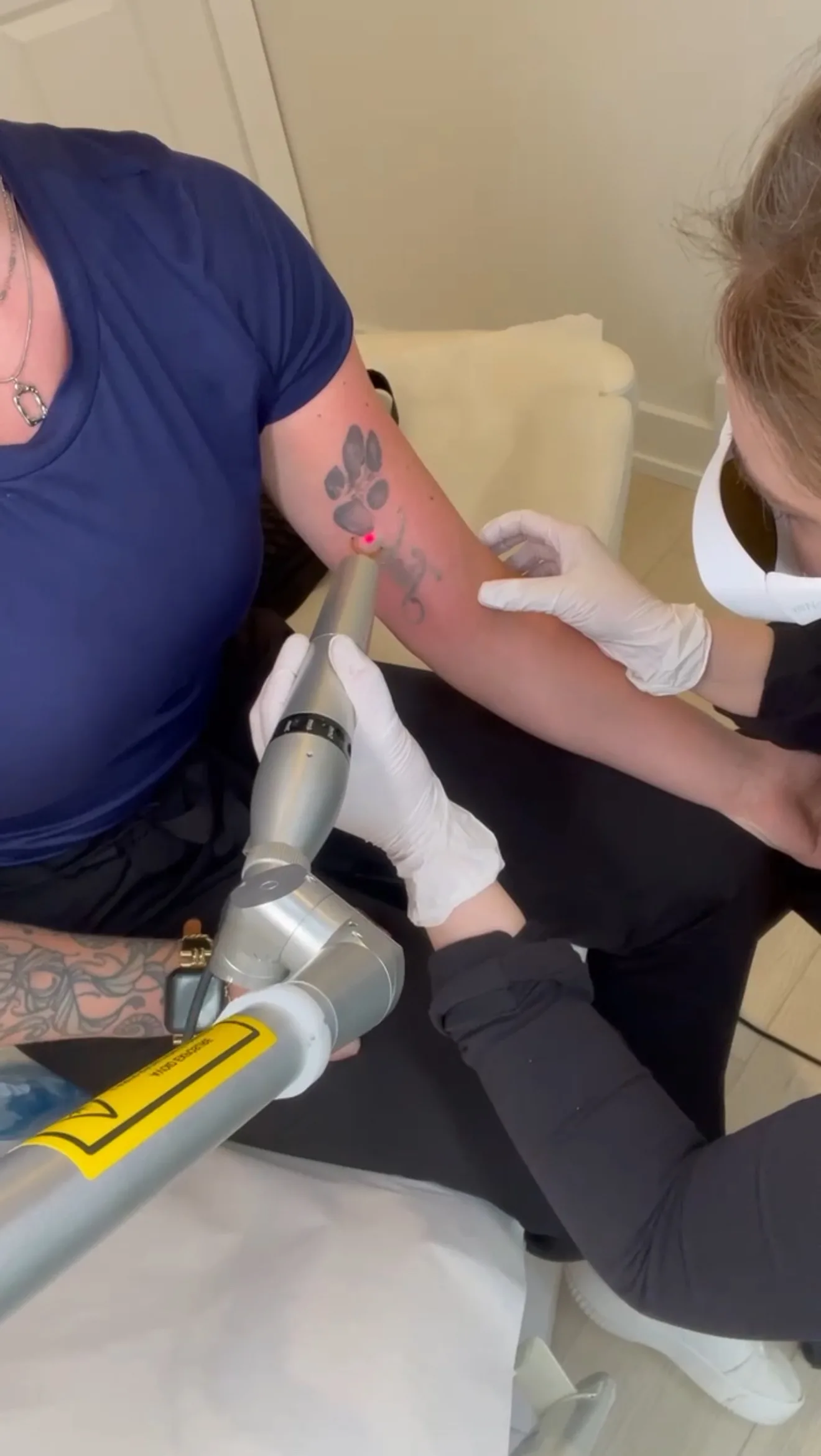
Laser treatment works by sending carefully controlled pulses of light into the tattoo. Rather than damaging the skin, the light targets the ink and breaks it into much smaller pieces.
Think about dropping a large ice cube onto the ground. It breaks into many smaller pieces that melt much faster than the original block. In a similar way, smaller ink particles become easier for your body's natural cleaning system to gradually remove.
This clearing process happens over several weeks after each session, which is why treatments are spaced apart rather than performed back-to-back.
Why Several Treatments Are Usually Needed
Many people hope one appointment will erase a tattoo completely. Unfortunately, that's rarely possible.
Each laser session removes only a portion of the ink. After treatment, your body needs time to process and carry away the tiny ink fragments before another session can make further progress.
The total number of appointments depends on several factors, including:
- The tattoo's age
- Ink colors
- Size of the design
- Depth of the ink
- Location on the body
- Your body's natural healing process
Older tattoos often fade more easily because some ink has already broken down over time. Newer tattoos frequently contain more concentrated pigment and may require additional sessions.
Does Tattoo Color Matter?
Yes, different colors respond differently to laser treatment.
Black ink usually fades the fastest because it absorbs laser energy very well.
Dark blue and dark green often respond well too, although they may take additional treatments.
Lighter colors, including yellow, light green, turquoise, and certain shades of white, can be more difficult to remove. These pigments reflect more light instead of absorbing it efficiently.
This doesn't mean lighter colors cannot fade—it simply means they often require more patience.
Does It Hurt?
This is one of the most common questions people ask.
Everyone experiences discomfort differently, but many describe the feeling as similar to a rubber band snapping against the skin repeatedly.
Fortunately, treatments are usually much shorter than people expect. Small tattoos may only take a few minutes, while larger pieces naturally require more time.
Many clinics also use cooling devices or numbing options to improve comfort throughout the session.
Although the treatment isn't completely painless, most people find it manageable.
What Happens During Your Appointment?
Your first visit usually begins with a consultation.
A trained professional examines the tattoo, discusses your goals, reviews your medical history, and explains what results are realistically possible.
When treatment begins, you'll wear protective eyewear while the laser is directed across the tattoo.
Afterward, the treated area may appear:
- Slightly red
- Mildly swollen
- Warm to the touch
- Lightly frosted or whitened for a short time
These temporary reactions are normal and generally improve over the following days.
Healing Between Treatments
The work doesn't stop when you leave the clinic.
Your body continues removing broken ink particles over the following weeks, making proper aftercare an important part of the process.
Simple care usually includes:
- Keeping the area clean
- Avoiding unnecessary rubbing
- Protecting healing skin from excessive sun exposure
- Following the clinic's aftercare instructions carefully
Picking at scabs or blisters can interfere with healing and increase the chance of unwanted skin changes.
Giving your skin time to recover fully before the next appointment helps produce better long-term results.
What Affects Your Results?
Every tattoo fades differently because every person is different.
Several factors influence progress, including your overall health, circulation, immune system, and lifestyle habits.
The tattoo's location also matters.
Areas with stronger blood circulation, such as the chest or upper arms, often respond more efficiently than areas farther from the heart, such as the hands, feet, or ankles.
Larger tattoos naturally take longer because there's simply more ink for the body to remove.
Consistency also matters. Attending scheduled appointments and allowing proper healing time between sessions often leads to the best outcomes.
Can Every Tattoo Be Completely Removed?
Complete removal is possible for many tattoos, but not every tattoo disappears entirely.
Some designs fade until they're barely noticeable, while others may leave a faint shadow or slight pigment change.
This doesn't necessarily mean the treatment wasn't successful. Even significant fading can make a dramatic difference, especially for someone planning a cover-up tattoo.
A trustworthy clinic will explain realistic expectations instead of promising perfect results for every tattoo.
Choosing the Right Clinic
Selecting an experienced provider is one of the most important decisions you'll make.
Rather than focusing only on price, look for a clinic that values patient education, safety, and honest communication.
During your consultation, consider asking questions such as:
- How many tattoo removal procedures have you performed?
- What type of laser technology do you use?
- How many sessions might my tattoo require?
- What side effects should I expect?
- How should I care for my skin afterward?
A good provider welcomes questions and explains everything clearly without making unrealistic promises.
Many people appreciate clinics like Erase My Ink because they emphasize personalized treatment plans and take time to answer concerns before beginning the process.
Common Myths About Tattoo Removal
There are many misunderstandings about laser tattoo removal. Let's clear up a few common ones.
Myth 1: One Session Is Enough
In reality, most tattoos require multiple treatments. Removing ink gradually is safer for both your skin and overall healing.
Myth 2: Removal Always Leaves Large Scars
Modern laser treatment focuses on the tattoo pigment rather than cutting the skin. When proper aftercare is followed, many people heal very well.
Existing scars from the original tattoo or poor aftercare are more likely to affect appearance than the laser itself.
Myth 3: All Tattoos Fade at the Same Speed
Every tattoo responds differently. Two tattoos placed on the same day may require completely different treatment timelines depending on their colors, depth, and placement.
Preparing for Your First Visit
Preparation doesn't have to be complicated.
Arrive with clean skin that is free of lotions or heavy creams.
Wear comfortable clothing that allows easy access to the tattoo.
If the tattoo is located in an area exposed to sunlight, avoid getting sunburned before treatment, as healthy skin responds better during laser sessions.
Most importantly, arrive with realistic expectations. Tattoo removal is a gradual journey rather than an overnight solution.
Patience Makes a Difference
One of the hardest parts of tattoo removal is waiting between sessions.
Many people become eager to schedule treatments closer together, hoping for faster results. However, your body needs time to naturally clear the broken ink particles.
Trying to rush the process usually doesn't improve outcomes.
Instead, think of it like growing a garden. Watering the plants every hour won't make them grow faster. They still need time, sunlight, and proper care. Tattoo removal follows a similar principle—steady progress often produces the best results.
Conclusion
Deciding to remove a tattoo is a personal choice, and modern laser technology offers an effective way to reduce or eliminate unwanted ink over time. While the journey requires patience, realistic expectations, and good aftercare, many people find the results well worth the commitment.
Whether your goal is complete removal or simply fading a tattoo for new artwork, understanding the process helps you approach each session with confidence. Working with an experienced provider such as Erase My Ink can help ensure you receive clear guidance, individualized care, and a treatment plan designed around your unique tattoo.
If you're ready to begin your tattoo removal journey, learning about the process is the first step toward achieving the fresh start you're looking for.