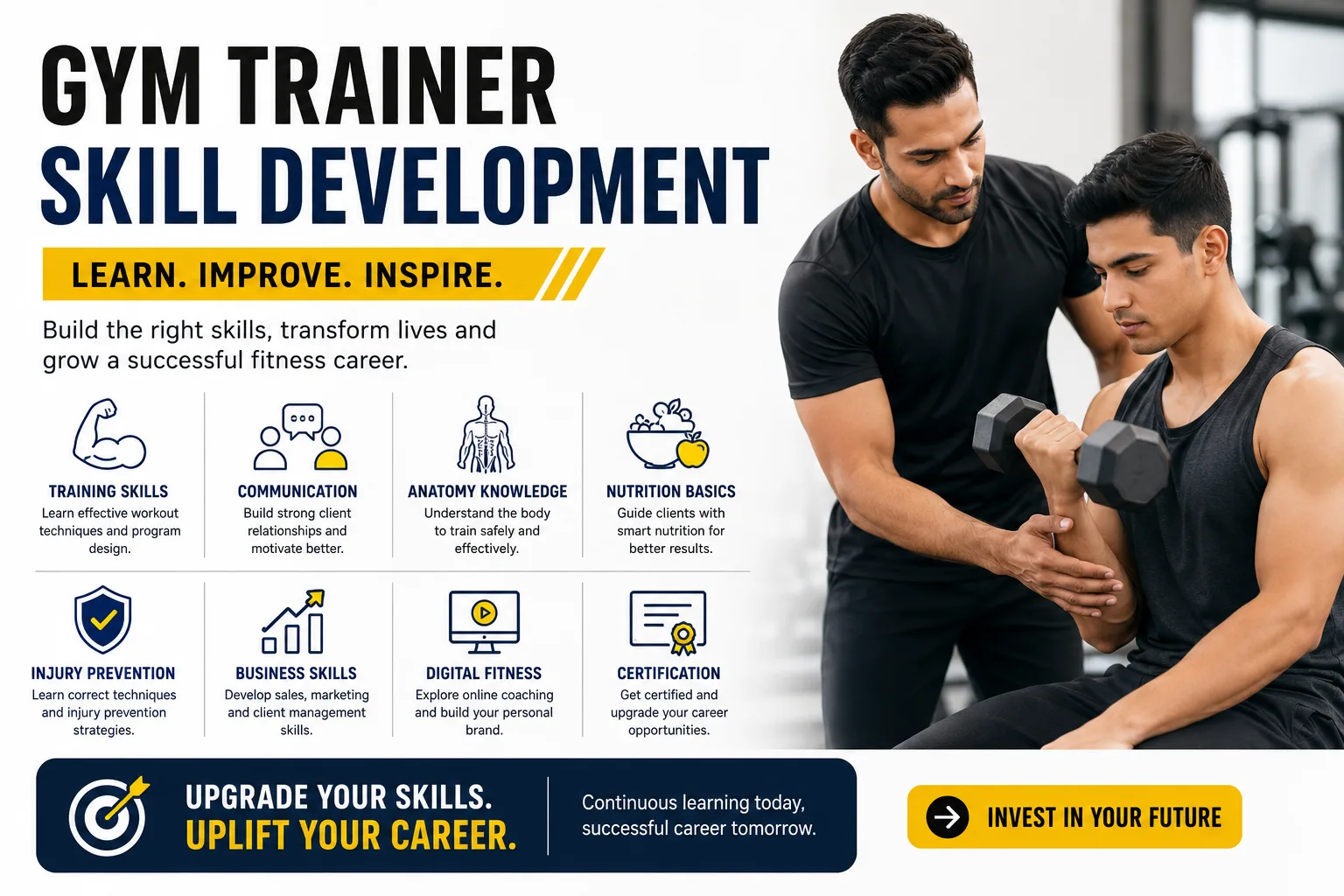
The fitness industry is evolving rapidly, and today’s clients expect much more than basic workout guidance. A modern fitness professional must possess technical expertise, communication skills, nutrition knowledge, and the ability to motivate people consistently. This is where gym trainer skill development becomes essential for aspiring and professional trainers alike.
Whether you are planning to become a personal trainer, fitness coach, or strength specialist, upgrading your skills can significantly improve your career opportunities, client retention, and earning potential. The right learning approach helps trainers stay competitive in an industry driven by innovation, science, and client transformation.
In this article, we’ll explore the importance of gym trainer skill development, essential trainer skills, career growth opportunities, and how structured learning can shape a successful fitness career.
Why Gym Trainer Skill Development Matters Today
The demand for qualified fitness professionals has increased dramatically over the last few years. Clients no longer look for someone who simply counts repetitions—they want trainers who understand body mechanics, nutrition, fat loss strategies, rehabilitation basics, and customized fitness planning.
Proper gym trainer skill development helps professionals:
- Build confidence while training clients
- Improve communication and leadership abilities
- Design result-oriented workout plans
- Understand human anatomy and physiology
- Learn injury prevention techniques
- Increase career opportunities in gyms and fitness studios
- Grow personal branding and online coaching presence
A trainer with upgraded skills naturally attracts more clients and builds long-term credibility in the fitness industry.
Essential Skills Every Modern Gym Trainer Must Develop
1. Personal Training Skills
Strong personal training skills are the foundation of a successful fitness career. Trainers should know how to assess clients, understand fitness goals, and create customized workout programs.
Key areas include:
- Fat loss programming
- Strength training techniques
- Functional training
- Mobility exercises
- HIIT workout planning
- Client progress tracking
A trainer who understands individual client requirements delivers better results and gains trust faster.
For more career-focused fitness learning, visit:
Fitness Certification Programs
The Role of Communication in Fitness Coaching
2. Building Client Relationships
Technical knowledge alone cannot make someone a great trainer. Communication is one of the most overlooked aspects of gym trainer skill development.
Successful trainers know how to:
- Motivate clients during difficult sessions
- Explain exercises clearly
- Build emotional connection
- Encourage consistency
- Handle different personality types
Clients often continue training because of the relationship they share with their trainer. Positive communication improves retention and referrals.
3. Motivational Coaching Techniques
Fitness journeys can be physically and mentally challenging. A professional trainer should inspire confidence and discipline.
Effective motivational methods include:
- Goal-based progress tracking
- Positive reinforcement
- Lifestyle habit coaching
- Mindset transformation strategies
- Celebrating client achievements
Strong motivational coaching turns average trainers into impactful fitness mentors.
Importance of Anatomy and Exercise Science
4. Understanding Human Body Mechanics
A major part of gym trainer skill development involves learning anatomy, kinesiology, and exercise science.
Trainers should understand:
- Muscle groups and functions
- Joint movement patterns
- Correct posture alignment
- Recovery mechanisms
- Exercise contraindications
This knowledge reduces the risk of injury and helps create safer workout programs.
5. Injury Prevention and Recovery Basics
Clients often come with limitations such as knee pain, lower back issues, obesity, or posture problems. Trainers with injury prevention knowledge can modify workouts effectively.
Important skills include:
- Correct exercise form correction
- Warm-up and cool-down planning
- Mobility improvement exercises
- Recovery-focused programming
- Flexibility enhancement techniques
Fitness professionals who understand rehabilitation basics often gain higher trust among clients.
Learn more about advanced trainer learning modules here:
Advanced Fitness Training Courses
Nutrition Knowledge for Fitness Trainers
6. The Growing Importance of Sports Nutrition
Modern clients expect fitness trainers to guide them beyond workouts. Basic nutrition understanding is now a mandatory part of gym trainer skill development.
Essential nutrition topics include:
- Macronutrients and micronutrients
- Fat loss nutrition strategies
- Muscle gain meal planning
- Hydration management
- Supplement basics
- Pre-workout and post-workout nutrition
Although trainers are not dieticians, having foundational fitness coaching skills related to nutrition helps improve client transformation results.
Digital Fitness Skills Are the Future
7. Online Coaching and Personal Branding
The fitness industry has shifted heavily toward digital platforms. Trainers who develop online coaching skills gain wider reach and better income opportunities.
Digital fitness skills include:
- Creating workout videos
- Social media fitness branding
- Online client management
- Virtual consultation handling
- Fitness app usage
- Content creation for Instagram and YouTube
A trainer with digital presence can build authority and attract clients globally.
8. Sales and Client Acquisition Skills
Fitness trainers today are also personal brands. Learning basic marketing and sales strategies is important for career growth.
Key areas include:
- Client consultation techniques
- Gym floor interaction
- Lead conversion
- Fitness package presentation
- Referral generation
- Social proof marketing
These skills help trainers build a stable and scalable career.
Explore career-oriented learning options here:
Professional Fitness Courses
Career Opportunities After Gym Trainer Skill Development
The fitness industry offers multiple career paths for skilled professionals.
Popular opportunities include:
- Personal Trainer
- Strength & Conditioning Coach
- Fitness Consultant
- Gym Floor Trainer
- Group Fitness Instructor
- Functional Training Coach
- Sports Nutrition Advisor
- Online Fitness Coach
- Celebrity Trainer
- Gym Manager
With continuous fitness trainer certification upgrades, trainers can also work internationally and increase their income significantly.
How Skill Development Improves Earnings
Fitness professionals with advanced expertise generally earn more because they deliver better results and provide premium services.
Benefits of professional development include:
- Higher-paying clients
- Increased session charges
- Better gym placement opportunities
- International certification possibilities
- Stronger client trust
- Long-term career growth
Continuous learning is the secret behind every successful fitness trainer.
Tips to Improve Your Fitness Career Faster
If you want rapid growth in the fitness industry, focus on these strategies:
Upgrade Your Knowledge Regularly
The fitness industry evolves continuously. Stay updated with modern workout trends and scientific research.
Practice Practical Training
Hands-on learning improves confidence and client handling ability.
Build a Professional Image
Maintain discipline, communication skills, and professionalism both online and offline.
Learn Multiple Training Styles
Explore strength training, functional fitness, mobility training, and sports conditioning.
Focus on Client Results
Client transformation stories help build reputation and referrals.
Why Structured Learning Is Important
Self-learning can help initially, but structured education provides proper direction, industry exposure, and practical understanding.
A professionally designed learning program helps trainers:
- Understand real-world gym environments
- Gain confidence through practical sessions
- Learn scientific training methods
- Develop professional communication
- Improve career placement opportunities
Choosing the right educational path is the first step toward becoming a successful fitness professional.
Conclusion
The fitness industry is more competitive and opportunity-driven than ever before. Trainers who invest in gym trainer skill development gain a major advantage in terms of career growth, client trust, and earning potential.
From personal training skills and anatomy knowledge to fitness coaching skills and digital branding, modern fitness professionals need a balanced combination of technical expertise and people skills. Continuous learning helps trainers stay relevant, confident, and successful in this fast-growing industry.
If you want to build a rewarding career in fitness, now is the perfect time to upgrade your knowledge, sharpen your skills, and prepare for long-term success in the world of health and wellness.
Start your professional fitness journey here:
Explore Fitness Career Programs
FAQs About Gym Trainer Skill Development
1. What is gym trainer skill development?
Gym trainer skill development refers to improving the technical, practical, and communication skills required to become a successful fitness trainer.
2. Why are personal training skills important?
Strong personal training skills help trainers create customized workout plans, improve client results, and build professional credibility.
3. Can fitness trainers earn well after certification?
Yes, trainers with advanced fitness trainer certification and strong practical skills often earn significantly more through personal training and online coaching.
4. Is nutrition knowledge important for trainers?
Absolutely. Basic sports nutrition understanding improves client transformation results and enhances overall fitness coaching skills.
5. What career opportunities are available after fitness training?
Career options include personal trainer, fitness coach, gym instructor, online trainer, strength coach, and sports nutrition advisor.
6. How can trainers improve client retention?
Good communication, customized programs, motivation, and consistent results help trainers retain clients for longer periods.
7. Are online fitness coaching skills necessary today?
Yes, digital coaching and social media branding are becoming essential for trainers looking to grow their