
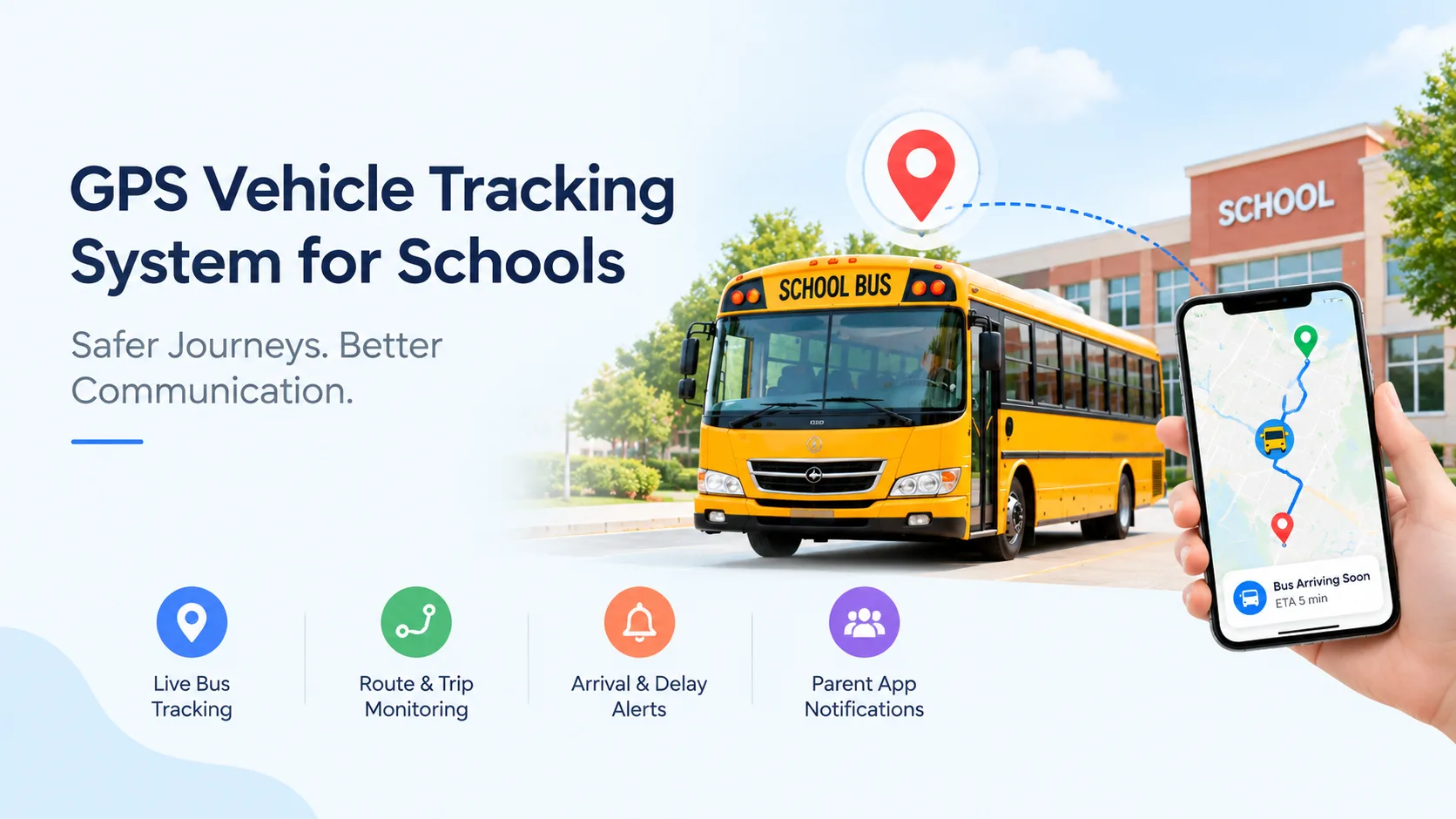
Managing school transportation involves much more than operating buses on fixed routes. School administrators must coordinate drivers, monitor vehicle movements, manage pickup and drop-off schedules, respond to unexpected delays, and keep parents informed throughout the journey. When these responsibilities rely on phone calls and manual records, maintaining consistent visibility across the transport network becomes difficult.
A GPS Vehicle Tracking System helps schools monitor bus locations, review route activity, and share timely transportation updates with authorized users. When connected with School Transport Management Software and School ERP, it can also support transport reporting, driver accountability, and coordination between school administrators and parents.
For schools planning to modernize transportation operations, understanding how vehicle tracking works—and how it connects with existing administrative processes—is an important first step.
What Is a Vehicle Tracking System for Schools?
A Vehicle Tracking System is a technology solution that uses GPS-enabled devices or compatible tracking applications to determine a vehicle's location. The tracking information is transmitted through a communication network and displayed on an authorized dashboard or mobile application.
In a school environment, the system helps administrators monitor school buses during scheduled trips. Depending on the software and hardware configuration, users may be able to view live locations, review completed journeys, monitor speed, receive delay notifications, and compare actual vehicle movements with planned routes.
A school-focused solution can also provide parents with transportation updates through a connected mobile application.
Vidyalaya offers a dedicated Vehicle Tracking System Software designed to support school fleet monitoring, trip reporting, and parent communication.
Why Schools Need GPS Vehicle Tracking Software
Traditional transport management often depends on drivers calling the school office, staff checking schedules manually, and parents contacting transport coordinators for updates. These methods can create unnecessary communication and leave administrators with limited visibility into ongoing trips.
GPS tracking helps address several common challenges.
1. Limited Visibility Into School Bus Locations
Without live tracking, administrators may struggle to determine where a bus is during a delayed or unexpected journey. A GPS-based system gives authorized users access to location information through a dashboard or supported mobile application.
This visibility helps transport coordinators respond more efficiently when a bus is delayed, a route changes, or a parent requests an update.
2. Uncertainty Around Pickup and Drop-Off Times
Parents often need to know when the bus will arrive at a designated stop. Traffic congestion, weather, road closures, and other disruptions can affect expected timings.
Vehicle tracking combined with configured notifications can help schools communicate relevant arrival or delay updates. Actual arrival estimates depend on location data, connectivity, and the capabilities of the selected system.
3. Difficulty Monitoring Multiple Vehicles
Schools operating several buses may find it challenging to coordinate routes, drivers, stops, and schedules through separate records.
A centralized tracking dashboard can bring vehicle information together, making it easier for authorized administrators to review fleet activity and identify journeys that need attention.
4. Manual Trip and Driver Performance Records
Maintaining trip distances, journey durations, speed records, and stoppage information manually can be time-consuming. Depending on the available features, vehicle tracking software can generate digital reports that help administrators review completed trips and investigate unusual activity.
Key Features to Look for in a School Vehicle Tracking System
The right system should support both real-time monitoring and the administrative processes surrounding school transportation.
Real-Time GPS Bus Tracking
Live tracking displays the current reported location of a school bus on a digital map. Transport coordinators can use this information to monitor active journeys and respond when a vehicle appears delayed or takes an unexpected route.
Parents may also access bus location information through a supported school mobile application, subject to the institution's access settings.
Route and Trip Monitoring
A vehicle tracking solution should make it easier to review planned routes, scheduled stops, and actual vehicle movement.
Trip history or playback can help administrators review completed journeys, investigate delays, and understand recurring route issues. These records support operational reviews but should be interpreted alongside schedules and other relevant information.
Bus Arrival, Departure, and Delay Alerts
Automated notifications can help reduce the need for repeated calls between parents, drivers, and school staff.
Depending on the configuration, alerts may cover:
- Bus departure from the school or designated starting point
- Expected pickup and drop-off activity
- Delayed arrivals
- Missed pickup or drop-off events
- Changes in planned routes
- Other configured transport events
Schools should confirm which alerts are supported by their selected system and establish clear procedures for responding to important notifications.
Driver and Vehicle Performance Reports
A school bus tracking platform may provide information about vehicle speed, maximum recorded speed, trip duration, travel distance, and unplanned stoppages.
Administrators can use these reports to review transport operations, investigate exceptions, and reinforce established driving and vehicle-use policies.
Tracking data should support fair, evidence-based reviews rather than be treated as a complete assessment of driver performance on its own.
Parent Mobile App Notifications
A connected parent application gives families a convenient way to access available transportation updates.
Depending on the system, parents may receive notifications about bus movement, expected arrival, delays, or changes to transportation schedules. This can help families coordinate pickup arrangements without repeatedly contacting the school office.
How Vehicle Tracking Supports Student Transportation Safety
Student transportation requires coordination among drivers, attendants, school administrators, and parents. GPS tracking provides useful visibility into vehicle movement, but it should be one part of a broader transportation safety process.
Monitor Routes and Unexpected Stops
Authorized staff can review vehicle movements and investigate deviations from planned routes or prolonged stoppages. Schools should define which events require immediate attention and how the transport team should escalate concerns.
Coordinate Responses to Delays
When a vehicle is delayed because of traffic, a breakdown, or a road closure, current location information can help staff communicate with parents and coordinate alternative arrangements where necessary.
Support Driver Accountability
Where supported, speed and trip reports can help transport managers identify patterns that require review. Schools should combine these records with driver training, vehicle inspections, route policies, and appropriate supervision.
Coordinate Student Pickup and Drop-Off
GPS tracking shows vehicle location, but it does not automatically prove that a particular student has boarded or exited the bus. Schools requiring individual student boarding records should evaluate compatible RFID or biometric integrations and confirm how those events are recorded.
For broader transport safety and operational workflows, schools can review Vidyalaya's School Transport Management System.
How Vehicle Tracking Integrates With School ERP Software
A standalone GPS device can provide location information, but schools often need a connected system to manage routes, student assignments, driver records, transport fees, and reporting.
Integrating vehicle tracking with School ERP Software can connect transportation information with wider school administration.
Centralized Transport Records
Schools can maintain relevant vehicle, route, driver, and student transport information in a structured system, subject to the modules and integrations available.
Transport Fee Coordination
When transport management connects with the fee module, schools may be able to associate transport charges with assigned routes or pickup and drop-off points. The precise calculation and collection workflow depends on the software configuration.
Student Attendance and Boarding Information
Compatible attendance or identification devices may support additional records for student boarding and drop-off. Schools should verify device compatibility and ensure that the system distinguishes vehicle location from confirmed student attendance events.
Reporting Across Transport Operations
Connected records can help administrators review vehicle activity, transport assignments, and related administrative information without maintaining multiple disconnected datasets.
Vidyalaya provides a broader School ERP Software solution for institutions evaluating connected administrative workflows. Schools can also review its Integration options to identify relevant systems and devices.
How to Choose the Right Vehicle Tracking System for Your School
Before investing in GPS tracking software, evaluate the school's transportation requirements and operational priorities.
1. Check tracking accuracy and update frequency. Confirm how often vehicle locations refresh and how the system communicates when GPS or mobile connectivity is unavailable.
2. Review route and trip reporting. Ensure that the platform provides the location history and operational reports your transport team actually needs.
3. Verify parent access. Check how parents receive updates, which information they can access, and how notifications are configured.
4. Evaluate device compatibility. Confirm that GPS hardware, mobile applications, and other required devices work with the selected software.
5. Assess ERP integration. Determine whether the solution can connect with student records, transport assignments, fee management, or other relevant modules.
6. Review security and permissions. Vehicle locations and student transportation information should only be accessible to authorized users. Evaluate access controls, data retention, and relevant privacy requirements.
7. Plan for exceptions. Establish procedures for GPS failures, breakdowns, route changes, delayed trips, and incorrect location reports.
8. Evaluate implementation and support. Consider installation, staff training, ongoing maintenance, connectivity costs, and technical support before making a final decision.
A structured evaluation helps schools select a solution that fits their transport network rather than choosing technology based on features alone.
How Vidyalaya Vehicle Tracking System Software Helps Schools
Vidyalaya's Vehicle Tracking System Software supports school fleet monitoring through features such as live vehicle tracking, trip playback, pickup and drop-off notifications, and reports covering trip activity and vehicle performance.
The platform also highlights parent-app updates and an administrative dashboard for viewing relevant route and journey information. These capabilities can help schools coordinate transport operations and communicate more consistently with families.
Institutions looking for broader transport workflows can also explore the School Transport Management System, which covers transport records, student transport attendance, maintenance information, and transport fee coordination.
The most suitable configuration depends on the school's fleet size, existing GPS devices, reporting needs, and required integrations.
To assess how these capabilities fit your institution, request a Vidyalaya demo and discuss your transportation requirements with the team.
Conclusion
A GPS Vehicle Tracking System can help schools gain better visibility into bus movements, communicate transportation updates, review trip activity, and organize fleet management. When combined with appropriate procedures and connected school administration software, it can support a more coordinated approach to daily transportation.
However, effective school transport management requires more than live location tracking. Schools should also establish clear safety procedures, maintain vehicle records, train drivers, manage student pickup and drop-off, and protect transportation data.
By selecting a suitable vehicle tracking solution and connecting it with relevant administrative workflows, schools can make transportation easier to monitor and manage while keeping families better informed.
Ready to make school transportation more connected? Explore Vidyalaya Vehicle Tracking System Software and evaluate how GPS tracking, parent notifications, trip reports, and School ERP integration can support your institution.