Google Joins the 'Rocket Revolution' With World Space Week 2026 Doodle
If you opened Google recently and noticed something different on the homepage, you were not imagining it. Google is celebrating World Space Week 2026 with a special series of Doodles that takes a closer look at space, rockets, stars, and some of the amazing technology helping us explore the universe.
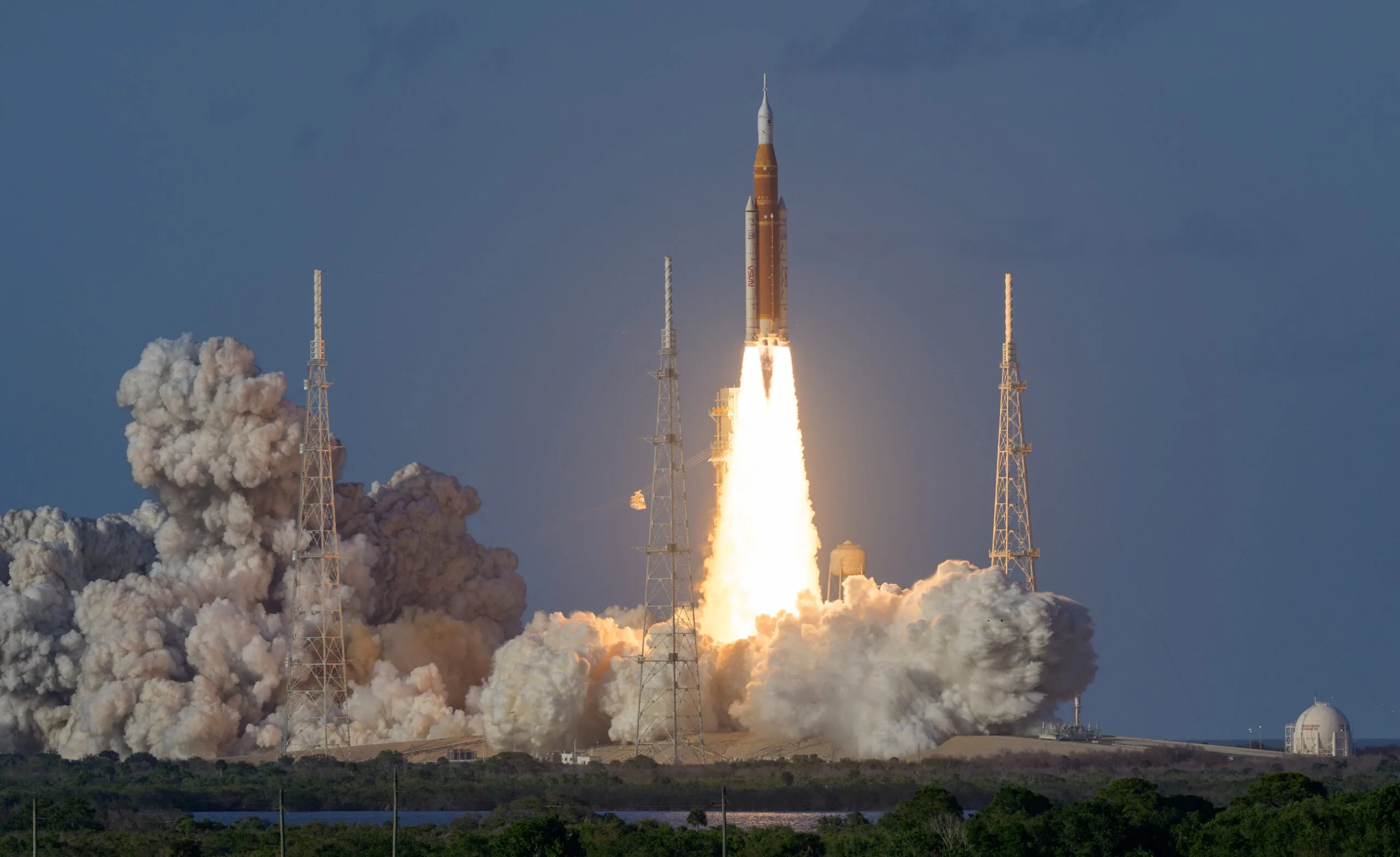
This year's World Space Week theme is “Rocket Revolution.” The theme is a good fit for the way space exploration is changing. Rockets are becoming more advanced, launches are happening more often, and private companies are now playing a much bigger role in the space industry.
Google has chosen to celebrate the week with some impressive views of deep space. One of the featured Doodles highlights the Rosebud Nebula, while another showcases the Carina Nebula. Both are reminders that space exploration is not only about rockets leaving Earth. It is also about what those rockets and telescopes allow us to see.
What Is World Space Week?
World Space Week is an annual international celebration of space science and technology. It takes place every year from October 4 to October 10.
The dates were not chosen randomly. October 4 marks the anniversary of the launch of Sputnik 1 in 1957, the first artificial satellite to orbit Earth. October 10 is connected to the Outer Space Treaty, which came into force in 1967.
So, the week connects two important parts of space history: the beginning of the Space Age and the development of international rules for exploring space.
Every year, people around the world take part in activities related to astronomy, science, education, and space exploration. Schools, museums, space organizations, and other groups often use the week as an opportunity to get people interested in science.
Google's Doodles are another way of bringing that excitement to a much larger audience.
Why Google Is Talking About a "Rocket Revolution"
The space industry looks very different from what it did a few decades ago.
During the early years of space exploration, launching something into orbit was an enormous achievement. Rockets were expensive, complicated machines, and most major missions were controlled by governments.
Things have changed quite a bit.
Today, private companies are developing rockets and spacecraft, satellites are being launched for many different purposes, and reusable rocket technology is becoming increasingly important.
The basic idea behind reusable rockets is fairly simple. Instead of throwing away a large part of the launch vehicle after every mission, engineers try to recover and reuse it.
That does not make launching into space easy or cheap overnight, but it can help reduce costs and make frequent launches more practical.
This is one reason the phrase “Rocket Revolution” feels appropriate for World Space Week 2026.
Google Brings a Piece of Deep Space to Its Homepage
One of the most interesting parts of Google's celebration is the astronomical imagery.
The October 6 Doodle features the Rosebud Nebula, a huge region of gas and dust located roughly 3,300 light-years from Earth. It contains many young stars and has an appearance that gives the nebula its flower-like name.
The image was captured using observations from the James Webb Space Telescope, one of the most powerful space telescopes ever built.
For most people, an image of a nebula might simply look beautiful. But there is a lot happening behind that image.
Nebulae are enormous clouds of gas and dust. Some are places where new stars are forming. By studying them, astronomers can learn more about how stars are born and how the material in space changes over time.
And there is another fascinating detail: when we look at an object thousands of light-years away, we are seeing it as it was thousands of years ago.
In other words, looking into space is also a way of looking into the past.
Another Doodle Highlights the Carina Nebula
Google's space celebration continues with another impressive destination: the Carina Nebula.
The Carina Nebula is one of the most well-known star-forming regions in our galaxy. It contains massive young stars and huge clouds of gas and dust.
The region has been photographed and studied by astronomers for years, but modern telescopes have allowed scientists to examine it in much greater detail.
Images like these have changed the way many people think about astronomy. Space is no longer just something represented by small dots of light in the night sky. Modern telescopes can reveal enormous structures, distant stars, and details that were impossible to see clearly in the past.
Google's decision to put this kind of imagery in front of everyday internet users is a simple way to make astronomy feel a little closer.
Space Exploration Is No Longer Just a Government Project
Another major change behind the “Rocket Revolution” is the growing role of private companies.
For much of the early space age, government space agencies were responsible for most major launches and missions. Today, commercial companies are involved in everything from rocket development to satellite communications.
This has created a much more competitive industry.
Private companies are looking for ways to make launches more efficient, develop new spacecraft, and provide services to customers around the world. Governments are still extremely important in space exploration, but they are no longer the only major players.
That shift could have long-term effects.
If launch costs continue to fall and rockets become more reliable, more organizations may be able to send scientific instruments, satellites, and other equipment into orbit.
That could mean more research and, eventually, more ambitious missions.
Rockets Are Only Part of the Story
It is easy to think of space exploration as being all about rockets.
Rockets get the attention because they are dramatic. Watching one launch from the ground is hard to beat.
But once a spacecraft leaves Earth, another part of the story begins.
Satellites help with communication, navigation, weather forecasting, mapping, Earth observation, and many other everyday activities. Scientific spacecraft allow researchers to study distant planets, asteroids, stars, and galaxies.
Space telescopes are particularly important because they can observe the universe without many of the limitations caused by Earth's atmosphere.
So, when Google highlights a nebula through a Doodle, it is also highlighting the technology that makes these observations possible.
Why These Images Matter
There is something special about seeing a real image from deep space.
Numbers and scientific explanations can sometimes feel distant or difficult to understand. A photograph can make the subject much more accessible.
Someone who knows very little about astronomy can look at an image of the Rosebud Nebula and immediately see something interesting.
That curiosity can lead to questions.
How far away is it?
How are stars formed?
What happens inside a nebula?
How can a telescope see something that far away?
Those questions are exactly what science education needs. You do not have to be an astronomer to become interested in space. Sometimes, one image is enough to start the process.
The Space Industry Still Has Challenges
The “Rocket Revolution” is exciting, but it is not without problems.
As more rockets launch and more satellites are placed into orbit, the amount of equipment surrounding Earth continues to increase.
Space debris is one concern. Old satellites, pieces of spacecraft, and other objects can remain in orbit and potentially create hazards for working satellites and future missions.
There are also questions about how crowded orbital areas should be managed and how different countries and companies can safely operate alongside one another.
These issues are becoming increasingly important as space activity grows.
The future of space exploration will therefore require more than better rockets. It will also require responsible planning, international cooperation, and careful management of the space environment.
From Sputnik to Reusable Rockets
It is interesting to compare today's space industry with where it began.
When Sputnik 1 was launched in 1957, simply placing a small satellite into orbit was a historic achievement. The event marked the beginning of a new era.
Since then, humans have walked on the Moon, built space stations, sent robotic spacecraft to other planets, discovered thousands of distant worlds, and developed telescopes capable of looking billions of light-years into space.
Now, the industry is entering another stage.
Reusable rockets, commercial spacecraft, larger satellite networks, and new missions to the Moon and beyond are all changing what is possible.
There is still a long way to go, but the pace of development is difficult to ignore.
Google's Doodle Is a Small Reminder of a Much Bigger Story
A Google Doodle only appears on the homepage for a limited time. It might seem like a small thing compared with an actual rocket launch or a major space mission.
Still, it can have an interesting effect.
Millions of people may see the image without having planned to read anything about space that day. A student might become curious about the nebula in the picture. Someone else might search for information about the James Webb Space Telescope. Another person might simply stop and appreciate the image.
That is one of the strengths of the Doodle format.
It takes a subject that can seem complicated and puts it into an everyday setting.
What Comes Next?
The “Rocket Revolution” is still in its early stages.
There are already plans and ideas for more lunar missions, new space telescopes, improved satellites, and eventually more ambitious journeys beyond the Moon.
Some of these projects will succeed quickly. Others will take years or may not work as expected.
That is normal in space exploration.
The technology has to be tested, redesigned, and tested again. Failures are often part of the process.
What matters is that the effort continues.
A Week to Look Up
World Space Week 2026 is a chance to look back at how far space exploration has come while thinking about where it might go next.
Google's “Rocket Revolution” Doodles bring together both sides of that story. Rockets represent the technology that helps us reach space, while images of nebulae remind us why we want to go there in the first place.
There is still so much that scientists do not know about the universe.
We do not know what every distant planet looks like. We are still learning how stars and galaxies evolve. We continue to discover new objects and phenomena.
For all the progress made since Sputnik, the universe remains full of unanswered questions.
And perhaps that is the most fitting message behind Google's World Space Week 2026 celebration: the more we explore, the more we realize there is still left to discover.