Google Ads Not Working? 10 Costly Mistakes and How to Fix Them Quickly
The good news is that most Google Ads problems can be fixed. You do not always need a bigger budget—you need a smarter campaign.
Google Ads can help businesses reach people who are ready to buy. However, campaigns can waste money when targeting, keywords, ads, or landing pages are not set up correctly. Below are 10 common reasons why Google Ads are not working and practical ways to improve your return on investment (ROI).
1. Targeting the Wrong Audience
One major reason Google Ads campaigns fail is poor audience targeting. If your ads reach people who are not interested in your product or service, you may get clicks but no conversions.
For example, a local plumber should not pay for clicks from people outside their service area. Similarly, a luxury brand should not target people looking for cheap options.
To fix this, review your campaign location settings, demographics, device targeting, and audience segments. Focus your budget on people most likely to become customers.
2. Keywords Are Too Broad
Broad keywords can bring a large amount of traffic. However, not all traffic is useful. For example, if you sell “business accounting software,” targeting the keyword “accounting” may attract students, job seekers, and people looking for free advice.
As a result, your Google Ads budget can disappear quickly.
Use phrase match and exact match keywords for more control. These keyword match types help your ads appear for more relevant searches. Also, regularly review the Search Terms Report to see what people actually typed before clicking your ad.
3. Ignoring Using Negative Keywords
Negative keywords tell Google when not to show your ads. They are one of the easiest ways to stop wasted ad spend.
For instance, if you sell premium furniture, you may want to add words such as “free,” “cheap,” “used,” “DIY,” or “repair” as negative keywords. This prevents your ads from appearing for searches that do not match your offer.
Therefore, build a negative keyword list for every campaign. Check it weekly, especially during the first few months of running ads.
4. Ad Copy Is Too Generic
Your ad needs to give people a clear reason to click. If it sounds like every other ad on the page, users may ignore it.
Weak ad copy often uses general phrases like “Best Service” or “Great Prices.” While these words sound positive, they do not explain why your business is different.
Instead, include benefits, offers, and clear calls to action. For example:
- Get a Free Quote in 10 Minutes
- Same-Day Local Plumbing Service
- Book Your Free Marketing Review
- Save 20% on Your First Order
- In addition, use the main keyword in your headlines when it makes sense.
- This helps users see that your ad matches their search.
5. Landing Page Does Not Match the Ad
A good Google Ads campaign does not stop at the click. Your landing page must continue the same message as the ad.
For example, if your ad promotes “50% Off Running Shoes,” visitors should land on a page showing the discounted running shoes. Do not send them to a general homepage where they need to search again.
Your landing page should have:
- A clear headline matching the ad
- One main call to action
- Fast loading speed
- Trust signals, such as reviews or guarantees
- Easy contact forms or checkout options
Mobile-friendly design - If your landing page is confusing, slow, or unrelated to the ad, people will leave without buying.
6. Not Tracking Conversions Properly
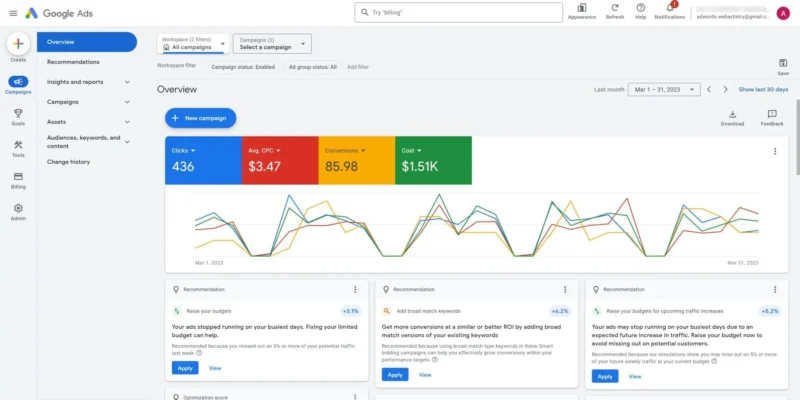
If conversion tracking is missing or incorrect, you cannot know which keywords, ads, and campaigns are making money. You may pause profitable ads or continue spending on poor-performing ones.
Set up Google Ads conversion tracking for the actions that matter to your business. These may include purchases, phone calls, form submissions, appointment bookings, newsletter sign-ups, or downloads.
Additionally, connect Google Ads with Google Analytics 4 (GA4). This gives you a better view of what users do after they click your ad.
Remember: clicks are not the final goal. Conversions and revenue are what matter most.
7. Unrealistic Budget or Bidding Strategy
Choosing the wrong bidding strategy can make your Google Ads campaigns expensive and ineffective.
For a new campaign with little data, automated bidding may not always work well immediately. On the other hand, manual bidding can take too much time if you manage a large account.
Start by choosing a bidding strategy based on your main goal. For example:
- Use Maximize Clicks when you need website traffic.
- Use Maximize Conversions when you have accurate conversion tracking.
- Use Target CPA when you know how much a lead should cost.
- Use Target ROAS for ecommerce campaigns with revenue data.
- However, do not change bidding strategies every day. Give the campaign enough time and data to learn before making major changes.
🔗 Read the full strategy here:
https://edmdigital.co/google-ads-not-working-10-costly-mistakes-and-how-to-fix-them-quickly/
Want to know more? Read on our website and follow updates: https://edmdigital.co/