Is Your Golden Retriever Training Feeling More Like a Battle Than a Bond?
You bought a golden retriever for the soft eyes, the wagging tail, and the legendary eagerness to please. Then reality arrived: a puppy who ignores you at the park, drags you down the street, and treats “come” as a polite suggestion.
You are not alone, and you did not pick the wrong dog. Most frustration in golden retriever training comes from using the wrong approach, not from a stubborn dog.
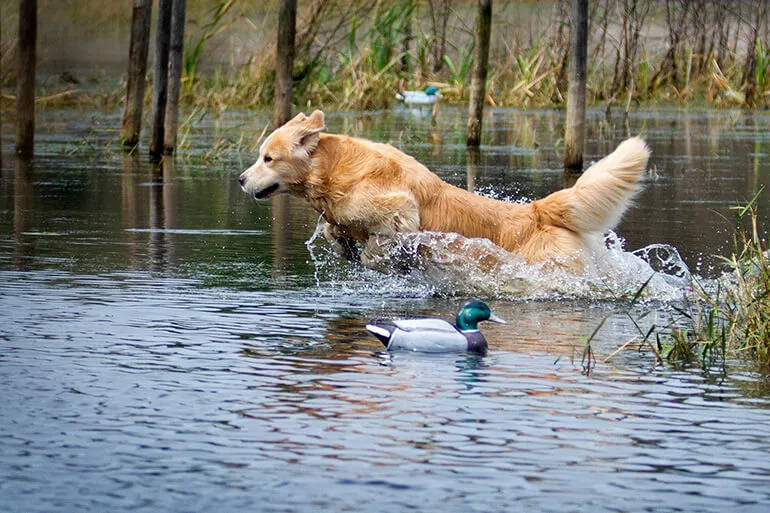
Golden retrievers were developed to retrieve game, and that instinct is still in them. The good news is that you can work with it instead of against it. This guide covers how to do that, from the first week home through advanced field work.
Why Golden Retriever Training Is Different
Goldens are often called “easy to train,” and they are quick learners. That reputation causes problems of its own:
- They are eager, not automatic. A golden wants to please, but an under-stimulated one will find its own fun, such as chewing, jumping, and counter-surfing.
- They are mouthy by design. A breed built to carry birds will carry your shoes, socks, and remote.
- They mature slowly. Many goldens stay puppy-like until two or three years old, so patience matters.
Retrievers are also a long-term commitment. The American Kennel Club lists a typical golden lifespan of roughly 10 to 12 years, so the habits you build now will last a decade or more.
The Foundation: Motivation Beats Mechanical Obedience
Many owners start with a mechanical, “do what I say” approach: command, correct, repeat. It can produce a dog that complies, but it often costs you the joy and drive that make goldens special.
Pat Nolan, who has worked with animals for almost 50 years, describes the same mistake in his own early career. His breakthrough was realizing that successful retriever training relies on motivation, meaning obedience becomes the dog’s path to the thing it wants most. After that shift, he found he trained dogs faster, with better results, and everyone enjoyed it more.
Put simply: teach your golden that doing what you ask is how they get the bird, the ball, or the game. Obedience stops being an obstacle and becomes the route to the reward.
The same idea is backed by mainstream animal behavior science. The American Veterinary Society of Animal Behavior (AVSAB) recommends reward-based training as the preferred approach, because it supports learning without the fear and stress that aversive methods can create.
Step-by-Step Golden Retriever Training Plan
Step 1: Start Early, Starting With Character (8 to 16 Weeks)The first months shape the adult dog. Puppies are most receptive to new experiences during a window that closes at around 12 to 16 weeks, according to AVSAB’s socialization guidance. Use it to:
- Introduce new surfaces, sounds, people, and (vaccination-appropriate) environments in a positive way.
- Build confidence rather than demanding perfect behavior.
- Begin simple play retrieves, since this is where a golden’s natural drive starts working for you.
- Teach crate comfort and calm behavior around excitement.
If you want a structured path for this stage, the Retriever from the Pup Up course (replace with the exact course URL) focuses on molding beneficial character traits, building a love of training, and laying a solid field-skills foundation.
Step 2: Build a Love of the Retrieve (3 to 6 Months)For a golden, the retrieve is the most powerful reward you have. Protect it and build on it:
- Keep early retrieves short and exciting. Stop while your puppy still wants more.
- Reward the return, not just the chase. A dog that races back to you is a dog you can train.
- Use play to teach “delivery.” Handle the bumper or toy gently and trade up for another throw.
- Avoid drilling. Repetition kills enthusiasm in a young retriever.
Once the dog understands that retrieving is fun, it can learn that retrieving is also required. Pat Nolan’s Complete Retrieve course (replace with exact course URL) teaches this transition through a three-step plan that combines play retrieves with positive and negative reinforcement so the dog understands both parts.
Step 3: Teach Core Obedience That Holds in Real Life (4 to 12 Months)Sit, come, heel, and stay matter for every golden, whether yours is a family pet or a future hunt-test competitor. To make these skills reliable:
- Train in short sessions. Pat recommends about 20 minutes a day. Short, consistent sessions beat marathon weekend practice.
- Add distractions gradually. Practice in the kitchen, then the yard, then the park.
- Reward the behavior you want. Mark it clearly and reward quickly.
- Make “come” the best word your dog knows. Never call your dog to end the fun or to scold.
Retrievers need to remember where a dummy fell. A simple memory-and-marking drill needs little equipment and can be done in a suburban yard or park, with no helper required. Practicing it improves working memory and performance on multiple marks, which is useful for field work and for general focus.
Step 5: Introduce Advanced Tools Only After the Foundation Is SolidAdvanced field training, including e-collar work, belongs on top of a solid foundation, never in place of one. In Pat’s E-Collar Conditioning for the Field (replace with exact course URL) course, a three-step process teaches the dog to respond to basic obedience commands reliably in any situation. Anyone considering this equipment should learn the principles first and work with a qualified trainer. Remember that the AVSAB favors reward-based methods, so keep the foundation positive.
Common Golden Retriever Training Mistakes (and Quick Fixes)
MistakeWhy it hurtsFixLong, repetitive sessionsDulls drive and enthusiasmKeep sessions to about 20 minutesCalling the dog only to end funTeaches “come” means “bad news”Make recall rewarding and unpredictableSkipping socializationCan create fear or reactivity laterUse the first 16 weeks wiselyChasing techniquesLeaves you stuck when something goes wrongLearn the principles behind each techniqueTraining only when frustratedBuilds tension on both ends of the leashTrain when you are calm and rewards are readyThat fourth point is a theme across Pat Nolan’s approach: if you don’t understand the principles, you become a slave to techniques. Understanding why a method works lets you adapt when your own dog does something unexpected.
Do You Need a Professional Trainer?
Not necessarily. Many owners get excellent results training their own dog once they understand the principles. A structured online program can give you the knowledge of a professional without sending your puppy away to “boarding school.”
If you want a path that covers everything, the Basics in Drive (replace with exact course URL) bundle combines e-collar conditioning, T drills on land and water, and The Complete Retrieve in one training platform.
Seek in-person help from a qualified trainer or veterinary behaviorist if your dog shows signs of fear, resource guarding, or aggression. Those issues need hands-on assessment.
Why Trust This Advice? (Experience and Expertise)
Pat Nolan has trained retrievers for field trials, detection canines for military, police, and anti-poaching work, birds of prey for falconry, and animals for commercials. His methods come from hands-on experience across almost 50 years, supported by research. Owners who follow his programs report the same pattern: a better relationship with the dog, not just better obedience. You can read more about his background and courses on the Pat Nolan homepage.
Frequently Asked Questions
When should I start golden retriever training?
As soon as your puppy comes home, typically around 8 weeks. Start with socialization, crate comfort, and play retrieves, then add formal obedience gradually.
How long should each training session be?
About 20 minutes a day is enough for meaningful progress, and you can split it into shorter sessions.
Are golden retrievers easy to train?
They are eager and intelligent, but they still need consistency, exercise, and a clear reward system. Ease of learning does not replace good technique.
Can I train a golden retriever myself?
Yes. Understanding the principles behind the methods is more important than hiring a trainer.
Conclusion: Get on the Same Team With Your Golden
Successful golden retriever training is not about winning a battle of wills. It is about channeling a natural love of retrieving into a partnership. Start early, keep sessions short and rewarding, build real-world obedience, and add advanced skills only when the foundation is ready.
Commit to about 20 minutes a day, and you will likely find that training becomes the best part of your day with your dog.
Ready to start? Explore the courses at patnolan.com and choose the program that fits your dog’s age and goals.