Market Overview
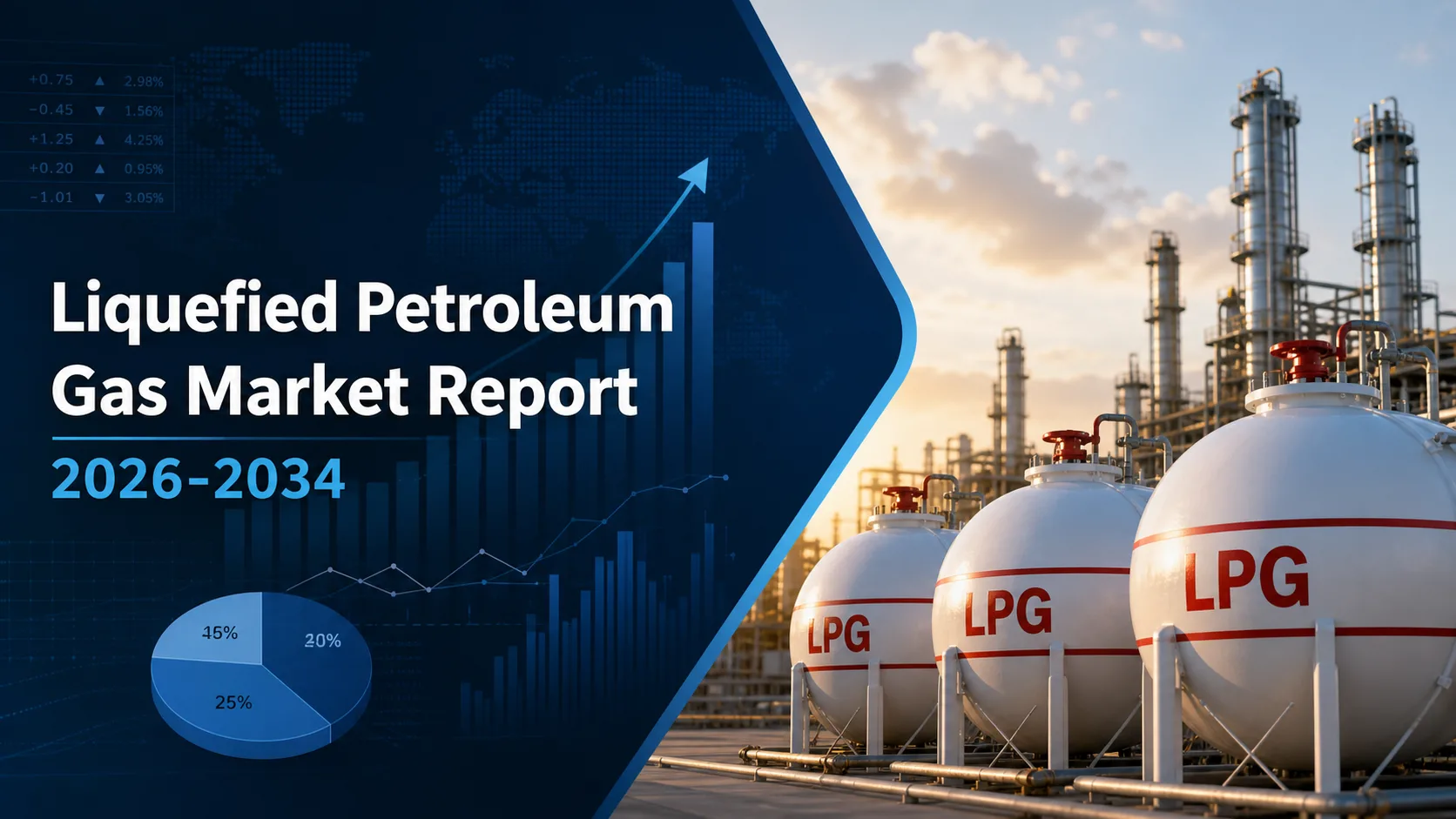
According to IMARC Group's latest research publication, "Liquefied Petroleum Gas (LPG) Market Report by Source (Refinery, Associated Gas, Non-Associated Gas), Application (Residential, Commercial, Refinery and Petrochemical, Transportation, and Others), Supply Mode (Packaged, Bulk and On-site), and Region 2026-2034", the global LPG market reached USD 149.6 Billion in 2025. Looking forward, IMARC Group expects the market to reach USD 199.0 Billion by 2034, exhibiting a growth rate (CAGR) of 3.19% during 2026-2034.
This detailed analysis primarily encompasses industry size, business trends, market share, key growth factors, and regional forecasts. The report offers a comprehensive overview and integrates research findings, market assessments, and data from different sources. It also includes pivotal market dynamics like drivers and challenges, while also highlighting growth opportunities, financial insights, technological improvements, emerging trends, and innovations. Besides this, the report provides regional market evaluation, along with a competitive landscape analysis.
How Clean Energy Transition is Reshaping the Future of Global LPG Market
- LPG is gaining immense traction as a cleaner-burning fuel compared to traditional fossil fuels like coal and oil, releasing fewer harmful pollutants and carbon emissions.
- LPG finds extensive applications across residential heating, cooking, industrial processes, agriculture, and transportation, reflecting its diverse utility and adaptability.
- Emerging markets in Asia, Africa, and Latin America are driving demand as LPG replaces traditional and often less efficient fuels for cooking and heating.
- Government support programs are expanding access to LPG in rural areas, particularly in Latin America, supporting market growth.
- The portable nature of LPG makes it a convenient energy source for remote and off-grid areas where access to traditional energy infrastructure may be limited.
Grab a sample copy of this report: https://www.imarcgroup.com/liquefied-petroleum-gas-market/requestsample
Key Trends in the Global LPG Market
- Rising Environmental Concerns and Clean Energy Transition: Environmental concerns and clean energy transition are major drivers of the global LPG market as heightened global awareness of environmental issues, particularly concerning air quality and greenhouse gas emissions, has propelled a collective push toward cleaner energy sources. This has accelerated the adoption of LPG as a cleaner-burning fuel when compared to other fossil fuels like coal and oil. Its combustion releases fewer harmful pollutants and carbon emissions, making it an attractive choice for various applications. In line with international commitments to reduce carbon footprints, governments and industries worldwide are actively seeking eco-friendly energy solutions.
- Increasing Versatile Applications Across Industries: LPG is gaining immense traction in the energy landscape due to its versatility and extensive range of applications across various industries. In the residential sector, LPG is a popular choice for heating homes and providing an efficient source for cooking. Beyond residential use, LPG finds extensive applications in industrial processes, where it serves as a crucial fuel for applications such as metal cutting, brazing, and soldering. Agriculture benefits from LPG's adaptability, employing it for crop drying, pest control, and as a source of power for agricultural machinery. Additionally, LPG plays a vital role in transportation as an alternative fuel for vehicles, particularly in fleets and public transportation.
- Rapid Economic Growth in Emerging Markets: Emerging markets and their sustained economic growth play a pivotal role in driving the demand for LPG. As these economies expand, there is a parallel increase in energy requirements to power various sectors, from residential to industrial. This heightened energy demand is often met by LPG owing to its versatility and affordability. In many emerging regions, particularly in Asia, Africa, and Latin America, LPG has become a preferred choice for cooking and heating in households, replacing traditional and often less efficient fuels. Additionally, businesses in these areas increasingly rely on LPG for various applications, including manufacturing processes and power generation.
- Expansion of LPG Infrastructure: Many key players are focusing on expanding their LPG production and distribution networks, investing in research and development (R&D) activities to improve LPG-related technologies and applications, and entering strategic partnerships and acquisitions to strengthen their market position.
- Government Programs and Accessibility Initiatives: Latin America is stimulating the growth of the LPG market as Brazil and Mexico are witnessing increasing LPG demand for residential cooking and heating, supported by government programs to expand access to LPG in rural areas.
Growth Factors in the Global LPG Market
- Rising Environmental Concerns: The increasing global awareness of environmental issues, particularly concerning air quality and greenhouse gas emissions, has propelled a collective push toward cleaner energy sources. LPG aligns with these sustainability goals, finding applications in residential heating, cooking, and transportation.
- Versatile Applications Across Industries: LPG is a popular choice for heating homes and providing an efficient source for cooking. The industrial sector relies on LPG for heating, drying, and as a fuel source for forklifts and other equipment. Agriculture employs LPG for crop drying, pest control, and as a source of power for agricultural machinery.
- Rapid Economic Growth in Emerging Markets: As emerging economies expand, there is a parallel increase in energy requirements to power various sectors. This heightened energy demand is often met by LPG owing to its versatility and affordability.
- Portable Nature and Accessibility: LPG's portable nature makes it a convenient energy source for remote and off-grid areas, where access to traditional energy infrastructure may be limited. Its accessibility and relatively low installation costs make it an ideal solution to meet the energy needs of communities and businesses in these underserved regions.
- Government Support and Infrastructure Development: The heightening focus of Europe on reducing carbon emissions has accelerated LPG adoption, particularly for residential heating and automotive fuel. The region's commitment to sustainability, coupled with extensive LPG distribution networks, positions Europe as a dominant driver in the global LPG market.
Leading Companies Operating in the Global LPG Industry
- Bharat Petroleum Corporation Limited
- BP P.L.C.
- Chevron Corporation
- China Gas Holdings Ltd.
- Exxon Mobil Corporation
- Origin Energy Limited
- Petroliam Nasional Berhad
- Phillips 66 Company
- Repsol S.A.
- Royal Dutch Shell PLC
- Valero Energy Corporation
Global LPG Market Report Segmentation
Breakup By Source
- Refinery
- Associated Gas
- Non-Associated Gas
Non-associated gas accounts for the majority of the market share. Non-associated gas, typically found independently of oil reservoirs, dominates the LPG market as a primary source. It is obtained from natural gas fields and processed to extract LPG. Non-associated gas offers a significant advantage as a dedicated source of LPG, often yielding higher purity and quality. Its prominence in the market is strengthened by its reliability, efficiency, and lower environmental impact, aligning with the growing demand for cleaner-burning fuels and sustainability efforts.
Refineries are a significant source of LPG production, primarily as a byproduct of the crude oil refining process. During refining, LPG is separated from other hydrocarbons and gases through distillation and fractionation processes. Refineries play a crucial role in supplying LPG for numerous domestic, industrial, and commercial applications.
Associated gas, often found alongside crude oil deposits, contributes to LPG production. When oil is extracted, associated gas is released and can be captured and processed to extract LPG. This source is particularly prevalent in oil-rich regions, where associated gas is a valuable resource.
Breakup By Application
- Residential
- Commercial
- Refinery and Petrochemical
- Transportation
- Others
Residential holds the largest share in the industry. Residential applications dominate the market as LPG is extensively used in households for cooking, heating, and as a portable energy source. Its popularity in residential areas stems from its clean-burning properties, convenience, and accessibility, making it a preferred choice for millions of households globally.
Commercial establishments, including restaurants, hotels, and industrial kitchens, drive the demand for LPG. It serves as a primary energy source for cooking, heating, and hot water supply in these settings. The versatility of LPG in catering to high-demand commercial operations makes it an essential choice.
The refinery and petrochemical sector plays a crucial role in the market by utilizing LPG as a feedstock and fuel source. LPG is an essential component in various refining processes and petrochemical manufacturing, particularly for producing chemicals, plastics, and as a fuel for industrial operations.
LPG is also used as an alternative fuel source in transportation, including vehicles and fleets. LPG-powered vehicles offer reduced emissions and cost-effective transportation solutions, contributing to its escalating demand in specific regions and sectors.
Breakup By Supply Mode
- Packaged
- Bulk and On-site
Packaged LPG supply mode involves distributing LPG in smaller containers, typically cylinders or tanks, for residential, commercial, and small-scale industrial use. It is a fundamental driver of the LPG market, especially in residential applications where cylinders are commonly used for cooking and heating. The packaged supply mode offers convenience, easy distribution, and accessibility.
Bulk and on-site supply of LPG involves delivering larger quantities of LPG directly to industrial, commercial, and institutional facilities, often stored in large tanks or vessels. This supply mode serves as a crucial driver in the LPG market, particularly for industries with substantial energy requirements.
Breakup By Region
- North America (United States, Canada)
- Asia Pacific (China, Japan, India, South Korea, Australia, Indonesia, Others)
- Europe (Germany, France, United Kingdom, Italy, Spain, Russia, Others)
- Latin America (Brazil, Mexico, Others)
- Middle East and Africa
Europe leads the market, accounting for the largest LPG market share. Europe dominates the LPG market as a leader in its adoption and usage as countries such as Germany, France, the United Kingdom, and Italy have well-established LPG infrastructure. The heightening focus of Europe on reducing carbon emissions has accelerated LPG adoption, particularly for residential heating and automotive fuel. The region's commitment to sustainability, coupled with extensive LPG distribution networks, positions Europe as a dominant driver in the global LPG market.
North America plays a pivotal role in driving the LPG market as the United States and Canada have well-established LPG infrastructure, and LPG is widely used for residential heating, cooking, and as an automotive fuel. The region also sees significant LPG demand in industrial and agricultural sectors.
The Asia Pacific region comprises key countries like China, Japan, India, South Korea, and Australia. Rapid urbanization, population growth, and increasing disposable incomes drive LPG demand in residential and commercial sectors. Additionally, Asia Pacific's industrial and automotive applications for LPG continue to expand, aligning with the region's efforts to adopt cleaner fuels and reduce emissions.
Latin America is stimulating the growth of the LPG market as Brazil and Mexico are witnessing increasing LPG demand for residential cooking and heating, supported by government programs to expand access to LPG in rural areas.
The Middle East, in particular, represents a significant LPG producer and exporter, supplying LPG to global markets. Local demand is also rising, with LPG being used for cooking, heating, and transportation. Africa, with its expanding population and urbanization, presents opportunities for increased LPG usage.
Recent News and Developments in Global LPG Market
- March 2023: Exxon Mobil Corporation announced the successful completion of its Beaumont refinery expansion project, which will add 250,000 barrels per day of capacity to one of the largest refining and petrochemical complexes on the United States Gulf Coast. This expansion complements Exxon's growing crude production in the Permian Basin and represents the largest refinery expansion in over a decade.
- May 2020: Royal Dutch Shell PLC invested in a new Nigeria LNG processing unit. Once operational, the new unit would add approximately 8 million tons per annum of capacity to the Bonny Island facility. The existing capacity ranges from 22 million to 30 million tons per annum.
- May 2020: Origin Energy Limited acquired a 20% stake in the U.K.-based Octopus Energy, an energy technology group. This strategic acquisition includes a valuable license for Origin to deploy Octopus Energy's innovative technology platform, Kraken, within the Australian market.
Note: If you require specific details, data, or insights that are not currently included in the scope of this report, we are happy to accommodate your request. As part of our customization service, we will gather and provide the additional information you need, tailored to your specific requirements. Please let us know your exact needs, and we will ensure the report is updated accordingly to meet your expectations.
About Us
IMARC Group is a global management consulting firm that helps the world's most ambitious changemakers to create a lasting impact. The company provide a comprehensive suite of market entry and expansion services. IMARC offerings include thorough market assessment, feasibility studies, company incorporation assistance, factory setup support, regulatory approvals and licensing navigation, branding, marketing and sales strategies, competitive landscape and benchmarking analyses, pricing and cost research, and procurement research.
Contact Us
IMARC Group
134 N 4th St. Brooklyn, NY 11249, USA
Email: [email protected]
Tel No:(D) +91 120 433 0800
United States: +1-201971-6302